- English
- French
- German
- Portuguese
- Spanish
- Russian
- Japanese
- Korean
- Arabic
- Greek
- German
- Turkish
- Italian
- Danish
- Romanian
- Indonesian
- Czech
- Afrikaans
- Swedish
- Polish
- Basque
- Catalan
- Esperanto
- Hindi
- Lao
- Albanian
- Amharic
- Armenian
- Azerbaijani
- Belarusian
- Bengali
- Bosnian
- Bulgarian
- Cebuano
- Chichewa
- Corsican
- Croatian
- Dutch
- Estonian
- Filipino
- Finnish
- Frisian
- Galician
- Georgian
- Gujarati
- Haitian
- Hausa
- Hawaiian
- Hebrew
- Hmong
- Hungarian
- Icelandic
- Igbo
- Javanese
- Kannada
- Kazakh
- Khmer
- Kurdish
- Kyrgyz
- Latin
- Latvian
- Lithuanian
- Luxembou..
- Macedonian
- Malagasy
- Malay
- Malayalam
- Maltese
- Maori
- Marathi
- Mongolian
- Burmese
- Nepali
- Norwegian
- Pashto
- Persian
- Punjabi
- Serbian
- Sesotho
- Sinhala
- Slovak
- Slovenian
- Somali
- Samoan
- Scots Gaelic
- Shona
- Sindhi
- Sundanese
- Swahili
- Tajik
- Tamil
- Telugu
- Thai
- Ukrainian
- Urdu
- Uzbek
- Vietnamese
- Welsh
- Xhosa
- Yiddish
- Yoruba
- Zulu
BLOG LIST
Fluconazole powder is a broad-spectrum antifungal active pharmaceutical ingredient (API) with the molecular formula C13H12F2N6O and a molecular weight of 306.27 g/mol. While its name occasionally appears alongside muscle-building body supplements in search queries, its actual role is medicinal rather than anabolic. This white crystalline powder (CAS: 86386-73-4) works by inhibiting ergosterol synthesis on the fungal cell membrane, disrupting fungal integrity and halting reproduction. For B2B formulators, pharmaceutical manufacturers, and supplement brands, understanding its true function is the starting point for making confident, compliant sourcing decisions.
Understanding Fluconazole Powder: Uses and Properties
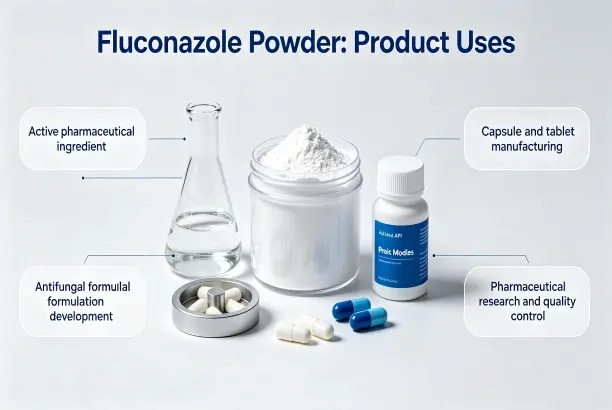
What Fluconazole Powder Actually Does
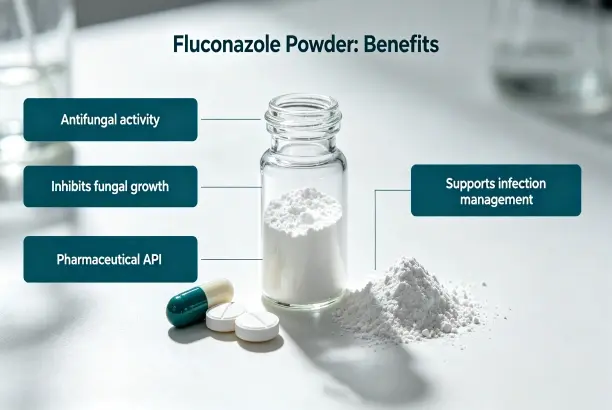
In order to block the process of ergosterol manufacture, fluconazole powder acts in a very precise manner. It does this by inhibiting the enzyme lanosterol 14-alpha-demethylase, which belongs to the fungal cytochrome P450. The fungal cell barrier becomes unstable in the absence of ergosterol, which results in the cessation of growth. As a result of this, it is an effective antifungal medication that is recommended for the first-line treatment of systemic candidiasis, cryptococcal meningitis, and dermatophyte disorders. In comparison to earlier antifungals such as amphotericin B, fluconazole powder is much less harmful to the liver. Additionally, it provides excellent results in cerebrospinal fluid, which is an essential component in the treatment of serious systemic infections.
Clarifying the Muscle Building Connection
It is not because of any anabolic impact that individuals search for "fluconazole powder muscle building body supplements," but rather because the relationship originates from a practical concern in the management of sports health. Individuals who have been using antibiotics or corticosteroids for an extended period of time, such as bodybuilders and fitness enthusiasts, are at risk of developing fungal overgrowth. There are instances when antifungal medications, like fluconazole powder, are included in additional health programs in order to assist in maintaining the equilibrium of microorganisms throughout rigorous training sessions. Because of this circumstance, an increasing number of business-to-business (B2B) vitamin and nutraceutical companies are proposing the addition of pharmaceutical-grade antifungal active pharmaceutical ingredients (APIs) to their specialised health management product lines.
Safety Profile and Key Physical Properties
Fluconazole powder is a white, crystalline material that has a melting point between 138°C and 142°C and almost no smell. It dissolves slowly in water (about 5 mg/mL), but much more easily in ethanol and methanol, which lets you use a variety of preparation methods. Protein binding is between 11% and 12%, which means that a lot of the free drug is still bioavailable in plasma. It can be absorbed regardless of pH, which makes it a good choice for people who are taking proton pump inhibitors. For sensitive groups, like pregnant women, it needs to be used with close professional supervision. Drug companies need to include this in product labels and compliance paperwork.
Comparing Fluconazole Powder with Other Antifungal Powders
Spectrum, Selectivity, and Formulation Advantages
When business-to-business buyers compare antifungal APIs, fluconazole powder, itraconazole, terbinafine, and ketoconazole are judged on three things: their range of activity, how well they work with other ingredients, and how well they are regulated. Here is how they compare in important areas of procurement:
- Fluconazole vs. Ketoconazole: The FDA has limited the widespread use of ketoconazole because it has a well-known risk of hepatotoxicity. Fluconazole powder took its place in most clinical programs because it was safer and more bioavailable when taken by mouth as a powder or in tablet form.
- Fluconazole vs. Itraconazole: Itraconazole kills more mold, but it needs to be absorbed by acid, so people who take medicines to lower their stomach acid can't rely on it. Fluconazole powder's ability to be absorbed regardless of pH gives it an advantage when formulating for a wide range of patients.
- Fluconazole vs. Terbinafine: Terbinafine works best for dermatophyte nail infections but not so well for systemic candidemia. Fluconazole powder has a bigger therapeutic window, which means that supplement and drug makers that want to treat a wide range of fungi can use it.
These differences have a direct effect on which APIs are prioritized by buying teams in the pharmaceutical, veterinary, and nutritional sectors. Differences in regulations are also important. For example, fluconazole powder is approved by the FDA for more than one use, which makes it easier for international exporters to keep track of their paperwork.
Procurement Guide for Fluconazole Powder in Global B2B Markets
Certifications and Quality Benchmarks That Matter
When buying antifungal APIs on a global business-to-business level, strict certification checks must be done before a purchase is made. When buyers buy from approved makers, they can be sure that each batch of fluconazole powder meets pharmacopeial standards. For example, USP, BP, or EP monographs say that the assay purity should be between 98.0% and 102.0% on a dried basis, and there are strict limits for Impurities A, B, and C.
When quality control is done at the batch level, it usually includes four analysis areas:
- HPLC purity testing to find process impurities and breakdown products per ICH Q3A standards, confirming the 98% specification
- Residual solvent analysis by GC to keep Class 2 and Class 3 solvents below the limits set by USP <467>
- Laser diffraction particle size distribution (PSD) testing to ensure that all solid and topical formulations dissolve evenly
- XRPD polymorphism testing to confirm the correct solid form, since different polymorphs have important effects on how well they dissolve and how long they last
All of these quality checkpoints work together to protect buyers from batch inconsistency, regulatory non-compliance, and formulation failures further down the line. If a supplier can't show a Certificate of Analysis that can be checked and includes all four dimensions, they should be carefully thought over again.
Packaging, MOQ, and Logistics
In real life, procurement also includes managing wait times and making sure that the packing is correct. As a standard, exports come in 25 kg drums for large production runs and 1 kg metal foil bags for samples and small batches. A minimum order quantity of 1 kg makes it easy for R&D and pilot-scale buyers to get started. Delivery takes between 3 and 7 business days after payment is received. We accept telegraphic transfer, Alipay, XT, PayPal, and Western Union as payment methods. This wide range of options makes it easy for international buyers from many areas to buy from us.
How to Use Fluconazole Powder Correctly in Body Supplements and Medical Applications
Dosage Protocols and Formulation Integration
Both safety and effectiveness depend on the exact dose and how well it is integrated into a transport grid. Fluconazole powder is the main active ingredient in tablets and IV drips used to treat systemic candidiasis and cryptococcal meningitis in therapeutic pharmaceutical forms. It is made into flavored water-based suspensions for pets and birds that are used in veterinary medicine. To improve skin flow and hair deposition in topical dermatology studies, jet-milled grades with D90 < 10 µm are mixed with gels and creams to optimize skin flux.
When making multi-ingredient supplements, formulators need to think about how drugs combine with each other, especially with warfarin, cyclosporine, and some oral hypoglycemics. For stability in high humidity, Karl Fischer titration tracking and keeping it at a controlled room temperature in a hermetically sealed container are needed. If you keep fluconazole powder in a dry, cool place in sealed containers, it will last for two years.
Why Choose Certified Fluconazole Powder Suppliers?
In business-to-business (B2B) markets for medicines and nutraceuticals, decisions about the location of the source of goods have repercussions that continue to be felt for a substantial length of time after the first transaction. These repercussions persist throughout the duration of the business relationship. When a single batch of a product is flawed as a consequence of insufficient quality control, it may lead to legal complications, product returns, and serious damage to the company's image, all of which can take years to rectify. Whenever you cooperate with a competent source, the risk changes into a variable that you have the ability to control.
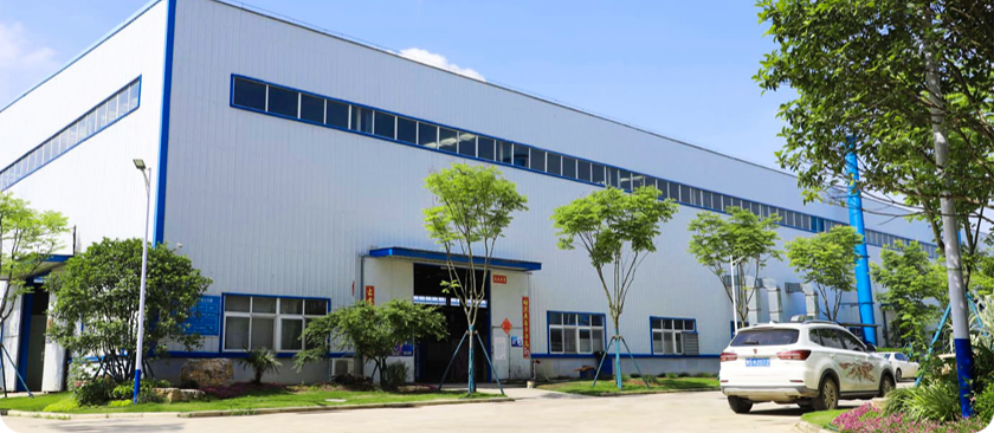
The factory that Jianbei Biotechnology Co., Ltd. runs ensures that it satisfies the criteria of the Good Manufacturing Practice (GMP). The company has three manufacturing lines that are entirely dedicated to production, in addition to two quality labs that are independent of one another. Among the many certifications that the firm has are FDA registration, ISO, HALAL, HACCP, Kosher, Organic Food, and Good Manufacturing Practices. Some of these certificates are shown below. The United States of America, the European Union, and the Middle East all have industry requirements that they meet; thus, they are compliant with those norms. The Jianbei firm, which is located in Guangzhou Software Park, is the owner of fifteen national innovation patents and has mature research and development personnel. The level of scientific depth and production capacity that they provide for each and every request is not matched by any other company.
Conclusion
Fluconazole powder plays a specific and well-established role in pharmaceutical manufacturing, animal medicine, and specialized health management. It is not used to build muscle but rather as an antifungal API that has been clinically proven to work. When B2B procurement teams decide to source this ingredient, they need to look at the purity requirements, the validity of the certification, how well it works with other ingredients, and how reliable the supplier is. When those criteria are met by a partner whose credentials have been checked and whose batch quality stays the same, the buying process is much less uncertain. Jianbei is a good choice for businesses that need a reliable supply chain because of its infrastructure and compliance portfolio.
FAQ
1. Is fluconazole powder safe to include in body supplement formulations?
For the most part, fluconazole powder is not an ingredient in food supplements. It is an active medicinal ingredient (API). Adding it to any body supplement product needs to be approved by the government and have strong scientific support. Before adding it to products for consumers, B2B buyers should talk to legal counsel.
2. What is the difference between fluconazole powder and tablet forms for B2B use?
Formulators have more options when it comes to the powder form for encapsulation, suspension preparation, and topical matrix integration. The quantity and shape of tablet forms are set ahead of time. When companies make their own dosage forms, the powder grade gives them more exact control over particle size, rate of breakdown, and bioavailability.
3. How should bulk fluconazole powder be handled and stored?
Keep it somewhere dry and cool, away from water and strong damaging agents. For the two-year shelf life to remain valid, the containers must be sealed. A Certificate of Analysis must be sent with bulk orders, and Karl Fischer titration should be used to keep an eye on the moisture content while the goods are being stored.
4. What certifications should I verify before purchasing?
Check for FDA registration, GMP compliance, ISO certification, and a current COA with HPLC purity data, at the very least. HALAL and Kosher approvals make it easier to get into places where people follow religious dietary rules.
Partner with Jianbei — Your Trusted Fluconazole Powder Manufacturer
Jianbei Biotechnology Co., Ltd. sells pharmaceutical-grade fluconazole powder that is 98% pure, fully certified, and of uniform quality from batch to batch. This is backed by two independent labs and GMP facilities. Our supply chain moves quickly, whether you need small amounts for research and development or large amounts for production. To get a price and Certificate of Analysis, email sales@bqingbio.com right now.
References
1. Journal of Antimicrobial Chemotherapy — Rex, J.H. et al., "Fluconazole versus amphotericin B in the treatment of candidemia," 1994.
2. Clinical Infectious Diseases — Pappas, P.G. et al., "Clinical Practice Guidelines for the Management of Candidiasis," 2016.
3. Drug Metabolism and Disposition — Niwa, T. et al., "Involvement of CYP2C19 and CYP3A4 in fluconazole metabolism," 2005.
4. International Journal of Pharmaceutics — Bhattachar, S.N. et al., "Solubility and dissolution testing of azole antifungal APIs," 2011.
5. USP–NF Monograph: Fluconazole — United States Pharmacopeial Convention, 2023.
6. Veterinary Dermatology — Meason-Smith, C. et al., "Antifungal therapy in companion animals: current clinical applications," 2018.

When procurement teams search for reliable peptide APIs, one question surfaces repeatedly: how do you verify that every batch of semaglutide raw powder meets the exact same standard as the last? This guide answers that question directly. Whether you are an R&D director at a nutraceutical company, a pharmaceutical formulation manager, or an international ingredient distributor, understanding GMP compliance and batch-to-batch consistency is non-negotiable when sourcing bulk peptide actives for weight management and glycemic control formulations.
Understanding Bulk Semaglutide Raw Powder and Its Applications
Raw powder semaglutide, which has the chemical formula 910463-68-2, is a man-made peptide that has 31 amino acids and has the ability to bind to GLP-1 receptors for an extended period of time. This substance is found in molecular form, and its formula is C187H291N45O59. There are 4113.58 grams of it. It is possible for albumin to attach and unbind again due to the presence of a C18 fatty diacid side chain at position 26, which also significantly boosts the molecule's half-life to around 165 hours, which is much longer than the half-life of native GLP-1.
Why Bulk Powder Over Finished Formulations?
It is considerably more advantageous to get semaglutide raw powder API in the shape of a big white powder rather than pre-formulated injectables when it comes to purchasing this substance in large quantities. You are able to choose the dose, and the formulators have greater control over the design of the delivery mechanism, regardless of whether it is an injection beneath the skin or an oral tablet with SNAC boosters. When you purchase in bulk, the cost per unit is reduced. Additionally, the powder form makes it simpler to manage the cold chain leading up to the reconstitution process.
Key Biological Functions
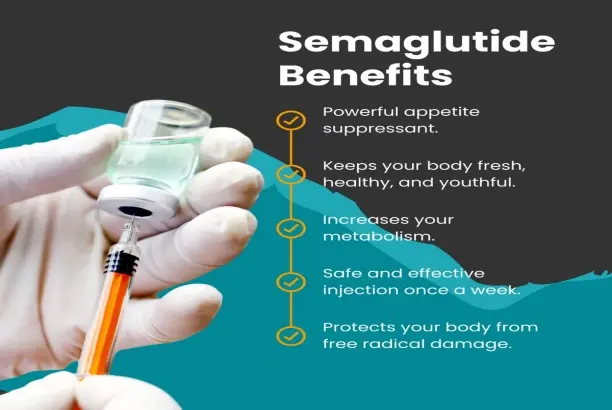
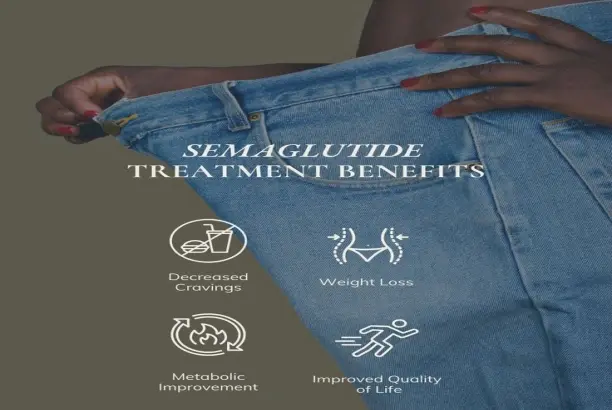
A research that was conducted in a clinical setting demonstrates that semaglutide raw powder is effective in controlling blood sugar levels after a meal, reducing blood sugar fluctuations, and assisting those who are obese or overweight in losing a significant amount of weight. In addition to this, it demonstrates genuine advantages for the protection of the heart. A series of studies published in the journal NEJM SUSTAIN in 2021 showed that it was beneficial in treating a variety of metabolic health issues. Because of this, it became a highly common active pharmaceutical ingredient (API) in many formulation methods, including those for pharmaceuticals and nutraceuticals.
Ensuring Quality: GMP Standards for Semaglutide Raw Powder Production
Quality assurance is not a box to be checked; it is a way of making things all the time. Peptide APIs like semaglutide raw powder need to be made in environments where all the variables can be controlled, from the amino acids that are used to the final freezing process.
GMP Compliance in Peptide Manufacturing
For production to be GMP-approved, it needs to be done in a controlled cleanroom with approved synthesis methods (mostly solid-phase peptide synthesis, or SPPS) and strict quality tracking during the process. At Jianbei Biotechnology, we have a GMP-standard workshop with three dedicated production lines and two separate quality laboratories. This keeps the workflows for synthesis, testing, and packaging separate.
Analytical Verification: HPLC and Beyond
Accuracy in analysis is essential to the stabilisation of batches. In order to guarantee that the quality is at least 98%, the primary testing technique that we use is known as High-Performance Liquid Chromatography (HPLC). Each Certificate of Analysis (CoA) is responsible for controlling and listing the important impurity profiles. These profiles include deletion sequences, oxidation byproducts, and D-amino acid isomers. The level of analytical precision that is described here is consistent with what is anticipated for items of pharmaceutical grade.
When compared to a generic vendor, a reliable peptide API provider is distinguished by the fact that they maintain comprehensive records of each manufacturing batch. Because our batch records have complete audit trails, purchasers are able to comply with the regulations that are imposed by the FDA, ISO, HACCP, and GMP in international markets.
Comparing Semaglutide Raw Powder with Alternatives: Making Informed Procurement Decisions
In the process of evaluating GLP-1 receptor agonist active pharmaceutical ingredients (APIs), procurement managers often study semaglutide raw powder in conjunction with liraglutide or tirzepatide. The numbers indicate that this is the case:
Raw semaglutide powder has a greater affinity for binding to GLP-1 receptors than liraglutide does, and it is also less likely to be broken down by DPP-4 enzymes. Liraglutide is a more common form of semaglutide. Consequently, completed formulations may be used for dosages that are administered once per week. As a result of the fact that it acts on two distinct GIP/GLP-1 receptors, tirzepatide is more complex to control and produce. Those teams who are interested in using glycaemic control and weight management APIs that have a significant amount of clinical data behind them should continue to utilise semaglutide raw powder as their preferred option.
Supplier Selection Criteria That Matter
There's more to picking the right bulk peptide provider than just comparing prices. The most important things for B2B buying teams are these:
- Certifications on file: Check that the company's FDA registration, GMP, ISO, HALAL, HACCP, Kosher, and organic food certifications are all up to date and can be checked. Jianbei has all of these.
- Analytical documentation: Each batch should come with a CoA that has been checked by HPLC and includes information on purity, moisture content, and residue analysis.
- Packaging integrity: Semaglutide raw powder should be sent in 25 kg drums or 1 kg bags made of tightly sealed aluminum foil to keep it from getting wet or oxidizing while it's being shipped.
- Delivery reliability: Look for a provider with set lead times. For example, Jianbei ships within 3–7 working days after receiving proof of payment.
All of these factors work together to lower the risk of buying and protect the quality of formulations that come after. If you check them up front, you can avoid the expensive reformulation rounds that come from using sources of varying quality.
Bulk Procurement Process: A Step-by-Step Guide
It takes more than just making a purchase order to order GLP-1 peptide API in bulk. This is what a streamlined procurement workflow looks like in real life.
Step 1: Define Your Specifications
Before you start looking for sellers, make sure you know what purity level (≥98%), amount (minimum order: 1 kg), and packaging style you need. Knowing your formulation needs up front speeds up the supplier qualification process.
Step 2: Request Documentation
Before you place a large order, make sure you get the full CoA, the GMP certificate, and any other regulatory documents that are important. A trustworthy company that makes semaglutide raw powder will gladly give these to you.
Step 3: Confirm Logistics and Payment
Jianbei accepts Alipay, XT, PayPal, and Western Union, so buyers from other countries have a lot of options. All powder goods are only meant to be exported. Documentation for international shipping, following customs rules, and cold-chain packaging are all planned ahead of time to make sure everything goes smoothly.
Maintaining Product Integrity Post-Purchase: Storage and Handling Best Practices
Just obtaining a high-purity peptide API is not sufficient on its own. You will be able to determine whether or not that quality is preserved in your final recipe by determining how well you can keep and manage it.
The raw powder of semaglutide should be stored in a location that is dry, cold, and away from both direct light and moisture. As long as it is stored in a container that is hermetically sealed and at the appropriate temperature, the product maintains its complete functionality for a period of up to two years from the date it was manufactured. After it has been opened, it should be immediately closed again, and it should be kept out of the air as much as possible.
In order to prevent particles and bacteria from entering the goods, handling should only take place in regulated cleanrooms inside manufacturing environments. By drawing sample aliquots from each drum or bag as part of quality sampling methods, internal quality control teams are able to verify that the incoming batch is consistent with the specifications provided by the supplier before the material is put into production. It is normal practice for pharmaceutical-grade procurement operations to conduct verification procedures consisting of two steps.
Conclusion
Getting bulk peptide API from the right supplier is the first step to getting consistent quality. Every part of the supply chain, from GMP-certified synthesis and HPLC-verified purity to proper cold-chain packaging and documented batch traceability, affects how well your formulation works in the end. When R&D teams and production managers get semaglutide raw powder from a qualified and experienced manufacturer, it gives them the building blocks they need to make reliable, effective weight management and metabolic health goods.
FAQ
1. What is the minimum order quantity for bulk semaglutide peptide API?
The smallest amount you can buy is 1 kg, and it comes in metal foil bags that can't be opened. There is also 25 kg drum storage for bigger amounts, which can be used for both pilot-scale and commercial manufacturing.
2. How is purity verified before shipment?
Using HPLC as the main analytical method, purity is confirmed to be ≥98%. With each batch comes a Certificate of Analysis that lists the physical properties, impurity profiles, and purity. This paperwork helps with regulatory submissions and quality control review within the company.
3. What is the shelf life of the bulk powder?
The product stays stable for up to two years if it is kept packed in a dry, cool place. Avoid letting air in after opening and quickly reseal to keep the medicine's potency.
4. What certifications does the supplier hold?
Jianbei has FDA registration, GMP, ISO, HALAL, HACCP, Kosher, and organic food certifications. These cover the main regulatory systems needed to enter markets in the U.S., Europe, and around the world.
Partner with Jianbei for Certified Bulk Semaglutide Raw Powder Supply
Jianbei Biotechnology runs a GMP-compliant facility with three production lines and two separate labs. The facility has 15 national invention patents and all the necessary international certifications. We are a reliable source for semaglutide raw powder, and we offer ≥98% pure API with full batch documentation, multiple payment options, and reliable delivery in 3–7 days. To get a sample, a CoA, or information on bulk prices, email our team at sales@bqingbio.com right now.
References
1. Marso, S. P. et al. — New England Journal of Medicine, 2016. "Semaglutide and Cardiovascular Outcomes in Patients with Type 2 Diabetes."
2. Wilding, J. P. H. et al. — New England Journal of Medicine, 2021. "Once-Weekly Semaglutide in Adults with Overweight or Obesity."
3. Knudsen, L. B., & Lau, J. — Frontiers in Endocrinology, 2019. "The Discovery and Development of Semaglutide for the Treatment of Type 2 Diabetes."
4. Davies, M. et al. — The Lancet, 2021. "Semaglutide 2·4 mg Once a Week in Adults with Overweight or Obesity, and Type 2 Diabetes (STEP 2)."
5. U.S. Food and Drug Administration — FDA Drug Approval Package, 2021. "Wegovy (Semaglutide) Injection 2.4 mg Approval Documentation."
6. International Council for Harmonisation of Technical Requirements for Pharmaceuticals for Human Use (ICH) — ICH Q7 Guideline, 2000. "Good Manufacturing Practice Guide for Active Pharmaceutical Ingredients."
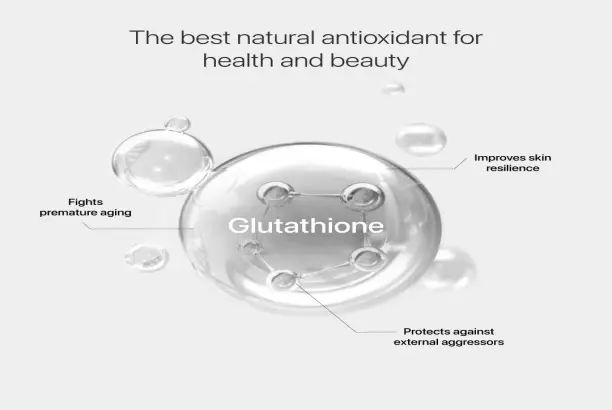
Solubility and formulation compatibility are always at the top of the list of considerations for formulators and procurement managers when they are evaluating reduced glutathione as a functional ingredient. L-glutathione powder, which is the physiologically active reduced form (GSH) with the chemical formula C10H17N3O6S and the molecular weight 307.32, is easily soluble in water and plays a significant role in the defence against free radicals, the detoxification of the liver, and the whitening of the skin. In order to construct medicines that truly deliver on their effectiveness promises, it is vital to have a solid understanding of how this tripeptide operates in a variety of formulation contexts.
Understanding L-Glutathione Powder and Its Solubility
The Chemistry Behind GSH Solubility
Glycine, L-glutamic acid, and L-cysteine are the three components that come together to form this substance. It has been given the CAS number 70-18-8 of its own. The antioxidant capacity derives from the free thiol (-SH) group that is situated on the cysteine residue. This group is responsible for the antioxidant capacity. As a consequence of this group, it is also particularly sensitive to changes in the environment that surrounds it. This white crystalline powder is 98% pure, as shown by high-performance liquid chromatography (HPLC), and this L-glutathione Powder dissolves well in water at room temperature. Both of these characteristics are significant. Due to this fact, it is a very useful component for product systems that include the utilisation of water.
The same thing is true for solubility as it is for bioavailability. Bioavailability is determined by the same factor. Reduced glutathione dissolves more rapidly in powder form than it does in broken tablets or cream matrices, where the active element must first pass through layers of inert substances. Therefore, powdered reduced glutathione is more convenient. Glutathione powder is a more convenient route of delivery than glutathione capsules. The structure of GSH stays intact when it is dissolved in water with a pH that falls between 3.5 and 6.0. When there is a higher and more alkaline pH level, the thiol group is able to oxidise with more ease. As a consequence of this, the active form of GSH is transformed into its inactive form, which is GSSG. One consequence of this is that the utility of the component is reduced.
Temperature is another aspect that may be measured, and it is also feasible to measure heat. A modest acceleration of the dissolving process may be achieved with the use of heat, whereas the oxidative breakdown process can be accelerated through prolonged contact with heat. In the context of production operations, where heat is used to help in the mixing of materials, this is a handling attribute that is of the utmost significance.
Key Considerations for Formulation Compatibility
pH Range and Co-Ingredient Interactions
It is essential to keep reduced glutathione within its ideal pH range, which is usually between 3.5 and 6.5, so that the product's effectiveness stays high throughout its shelf life. To keep the pH in this range, formulators who work on beauty serums or liquid supplements for the mouth often use citrate or phosphate buffer systems.
Choosing the right co-ingredient has a huge effect on how well the show turns out. Before committing to a formulation, you should look at these core compatibility dynamics:
- Vitamin C (Ascorbic Acid): A well-known pair that works well together. Vitamin C changes degraded glutathione back to its active form. This makes the antioxidant cycle last longer in the body and in the mixture. This mix is often found in serums that make skin look better and vitamins that help the immune system.
- N-Acetyl Cysteine (NAC): Another nutrient that works well with others. NAC helps the body make its own GSH by acting as a cysteine precursor. When NAC is mixed with reduced glutathione in oral formulations, it delivers substances from outside the body and restores substrates.
- Iron and Copper Ions: The oxidation of thiols is sped up by iron and copper ions, which work through Fenton-type processes. When looking for excipients, making sure they have low heavy-metal content keeps the GSH purity of the product intact for as long as it lasts.
These interactions for L-glutathione powder go beyond chemistry; they also affect what a product can say about itself, like "advanced antioxidant complex" or "brightening + detox formula." If you understand them early on in the development process, you can avoid expensive changes later on.
Formulation Type Comparison: Serums, Capsules, and Creams
Water-based serums provide the highest bioavailability for external use when combined with penetration enhancers. This is due to the fact that they allow reduced glutathione to dissolve immediately. The best approach to provide antioxidants and assist the liver in detoxification is via the use of capsules. This is due to the fact that capsules shield the substance from the acid produced by the stomach, particularly when they are enteric-coated. Cream and emulsion systems are the most challenging components because the oil-water interaction may hasten the oxidation process if antioxidant co-stabilizers such as tocopherol are not included in the formulation.
Comparative Analysis for Procurement Decision Making
Powder vs. Capsule vs. Cream: What Procurement Teams Need to Know
Purchase decisions made by businesses to businesses are not often determined by a single metric. The equation takes into account a number of factors, including solubility, absorption potential, manufacturing flexibility, and cost, among others. The powder form provides you with the greatest number of alternatives for preparing the drug. It may be easily included in water-based systems, capsule fills, sachets, and tablets that contain carbonation. As a result of the additional stages and expenses associated with the ingredients, the profit margins of OEM customers are less flexible when it comes to the production of capsules and creams.
Furthermore, pure L-glutathione Powder with a purity level of 98% works very well in terms of customisation. Formulators are able to manage the precise amount and alter the quality of the other ingredients when they utilise a pure active ingredient. This allows them to conform to the claims that are made by the market, such as for skin whitening, liver protection, or immune support. Blended premixes may make it simpler to get materials, but also make it more difficult to differentiate oneself from the competition.
In the process of approving products, buying managers need to be able to differentiate between materials that are manufactured for cosmetics and those that are manufactured for pharmaceuticals. In order to sell nutraceuticals and pharmaceutical products in the United States market, you need to have FDA clearance, GMP compliance, and evidence that the product's purity has been validated by HPLC. It is feasible for items to be sold in more locations throughout the globe if they have organic approval and HALAL/KOSHER status among their certifications.
Procurement Insights: Sourcing High-Quality L-Glutathione Powder
What to Look for in a Qualified Supplier
Finding a reliable producer of reduced glutathione is more than just looking at prices. A seller that can help a product succeed in the long term meets the following criteria:
- Certifications on file: The FDA registration, GMP, ISO, HALAL, KOSHER, HACCP, and Organic Food certifications show that the quality management system is strong. Each certificate meets a different market or regulatory need.
- Transparent testing documentation: For pharmaceutical and nutraceutical buyers, it is a must to have HPLC-verified certificates of analysis (CoA) for every batch, with heavy metal, microbial, and residual solvent data available upon request.
- Manufacturing infrastructure: A factory that has a GMP-compliant workshop, several dedicated production lines, and separate laboratories inside the factory shows that it has the capacity and quality control depth to do its job.
- Logistics readiness: The product can be packed in 1 kg metal foil bags or 25 kg drums, and it can be delivered 3–7 working days after payment. There is also no minimum order quantity, so L-glutathione powder can be used for both small-scale testing and large-scale production.
Jianbei Biotechnology's reduced glutathione powder ships with all of the above — GMP-certified production, a shelf life of two years under sealed storage in a dry, cool environment, and multi-currency payment support including T/T, PayPal, Alipay, and Western Union.
Practical Applications and Case Studies
Real-World Performance Across Product Categories
The use of reduced glutathione has been found to be beneficial in three primary application areas that are tailored to meet the requirements of our business-to-business customers:
In field testing for skin-brightening products, formulators that combine 2–3% dissolved GSH with stable Vitamin C in serum bases have been able to reduce melanin index scores. This is the case for skin-brightening topicals. The suppression of tyrosinase, which causes the formation of melanin to transform into pheomelanin, which is lighter, is the source of this phenomenon. A better overall appearance may be achieved by protecting the skin from ultraviolet (UV) radiation and eliminating free radicals.
Enteric-coated tablets containing 250–500 mg of reduced glutathione per dose have been found to protect the liver in clinical studies, particularly in groups with high levels of oxidative stress indicators. These pills are included in liver health supplements. Therefore, the solubility profile of L-glutathione Powder guarantees that it will dissolve well in the environment of the gut once the coating has been broken.
One of the issues that constantly crop up in the process of developing new goods is the presence of water instability in ready-to-drink product forms. Over the course of many days, GSH degrades in open liquid systems. Among the available choices, nitrogen-flushed packing, ready-to-use bases with a pH of around 3.5, and liposomal delivery systems that include encapsulation are suitable possibilities. By taking this into consideration at the formulation design stage, it is possible to minimise costly product recalls and failures that occur throughout the shelf life of the product.
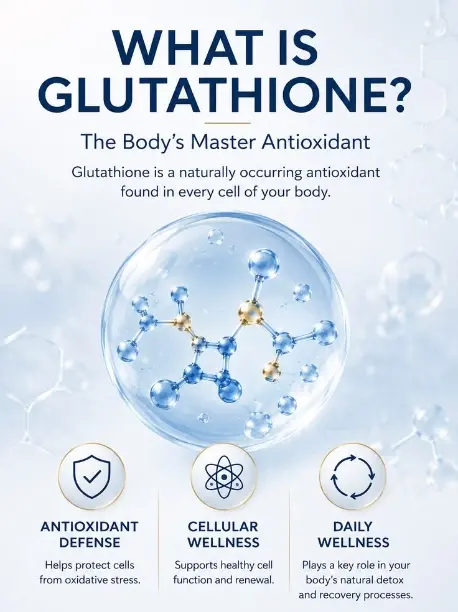
Conclusion
When making a reduced glutathione product, solubility and formulation compatibility are not just extras; they are what make the product work. Every choice made earlier affects what the final consumer experiences, from controlling the pH level and choosing the right co-ingredients to making sure the supplier is certified and planning how to deliver the goods. Buying teams that focus on getting high-purity, HPLC-verified L-glutathione powder from GMP-certified sources set their brands up to compete in a market where claims about functionality need to be backed up by real performance data.
FAQ
1. What is the recommended dosage of reduced glutathione in oral supplement formulations?
Standard amounts of mouth supplements range from 250 mg to 1,000 mg per dose, based on the health claim they are meant to support. Usually, 500 mg is used per capsule in liver support blends, and 250 to 500 mg is used per serving in immune and antioxidant blends.
2. How does solubility affect performance in topical cosmetic formulations?
Higher solubility lets active GSH spread out more evenly across a serum or lotion matrix, which helps it penetrate the skin more evenly. Particles that don't dissolve well make it harder for them to reach target tissue and weaken the antioxidant and brightening effects.
3. Can reduced glutathione be used in ready-to-drink beverages?
Long-term, it is chemically unstable in open water systems. For RTD drinks, the best ways to keep them stable are nitrogen washing, low-pH formulation, or liposomal packaging.
4. What certifications should I verify before purchasing in bulk?
Check for GMP compliance, FDA registration, an HPLC-backed COA, and HALAL or KOSHER approval if the people you want to sell to need it. Documentation from HACCP and ISO helps make sure that functional foods are safe to eat.
Partner with Jianbei for Premium L-Glutathione Powder Supply
Jianbei Biotechnology has 98% pure pharmaceutical-grade L-glutathione powder that is GMP certified, FDA registered, and comes with full HPLC documentation. As a reliable supplier, we ship all over the world with a 1 kg minimum order and delivery in 3–7 working days. Get a sample or talk about bulk pricing with our team right away by emailing sales@bqingbio.com.
References
1. Pizzorno, J. (2014). Glutathione! Integrative Medicine: A Clinician's Journal, 13(1), 8–12.
2. Forman, H. J., Zhang, H., & Rinna, A. (2009). Glutathione: Overview of its protective roles, measurement, and biosynthesis. Molecular Aspects of Medicine, 30(1–2), 1–12.
3. Sinha, R., et al. (2018). Oral supplementation with liposomal glutathione elevates body stores of glutathione and markers of immune function. European Journal of Clinical Nutrition, 72(1), 105–111.
4. Weschawalit, S., et al. (2017). Glutathione and its antiaging and antimelanogenic effects. Clinical, Cosmetic and Investigational Dermatology, 10, 147–153.
5. Masella, R., et al. (2005). Novel mechanisms of natural antioxidant compounds in biological systems: Involvement of glutathione and glutathione-related enzymes. Journal of Nutritional Biochemistry, 16(10), 577–586.
6. Townsend, D. M., Tew, K. D., & Tapiero, H. (2003). The importance of glutathione in human disease. Biomedicine & Pharmacotherapy, 57(3–4), 145–155.
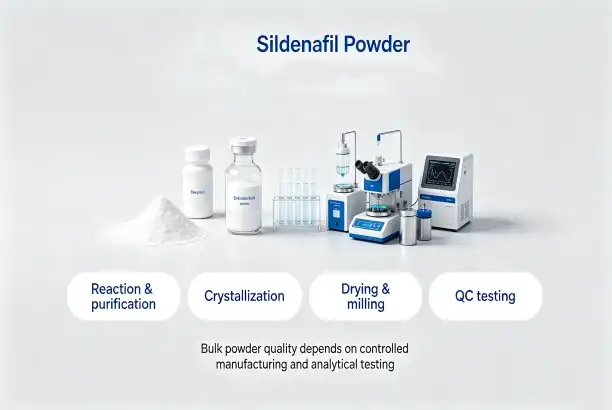
Sourcing the right active pharmaceutical ingredient starts with understanding what happens before the powder reaches your production floor. Sildenafil powder bulk — the high-purity API used in treatments for erectile dysfunction (ED) and pulmonary arterial hypertension (PAH) — demands rigorous manufacturing discipline and airtight quality control at every stage. This guide walks procurement managers, R&D directors, and product developers through the full production picture, from synthesis to shipment, so you can make confident, informed sourcing decisions.
Understanding the Sildenafil Powder Bulk Manufacturing Process
Raw Material Selection and Synthesis Stages
To make manufacturing-grade sildenafil citrate, base chemicals that meet strict purity standards must first be carefully chosen. The final compound has the molecular formula C28H38N6O11S, a molecular weight of 666.70, and the CAS number 171599-83-0. It is made through several steps of organic reactions. Each reaction stage aims to produce a white, crystalline powder that is at least 98% pure, which is checked by HPLC before the batch moves on to the next step. Sildenafil powder bulk is monitored throughout these synthesis stages to ensure ultimate potency.
Production Equipment and Batch Consistency
To get the same particle shape every time, GMP-compliant facilities use closed-loop processors, controlled crystallization units, and proven cooling systems. It is common for micronization equipment to be built in to improve particle size distribution (PSD), which has a direct effect on how quickly and bioavailably ingredients dissolve in later formulations. To help with scaling up without lowering quality, batch records keep track of all the variables, such as temperature, liquid amount, and reaction time.
It makes a huge difference if the factory is well organized. Jianbei Biotechnology has a GMP-standard workshop with three dedicated lines for production. Two separate quality laboratories help the workshop run smoothly. This infrastructure lets batch production and real-time monitoring of the process happen at the same time, which cuts down on turnaround time without skimping on quality.
Packaging and Storage for Bulk Shipments
Keeping the substance safe during long transport routes is possible with the right control. Jianbei ships the API in 25 kg drums and 1 kg aluminum foil bags, both of which are made to keep out light and moisture. If you store sealed items in a dry, cool place, they will last up to two years. This is an important measure for buying teams that manage long inventory cycles.
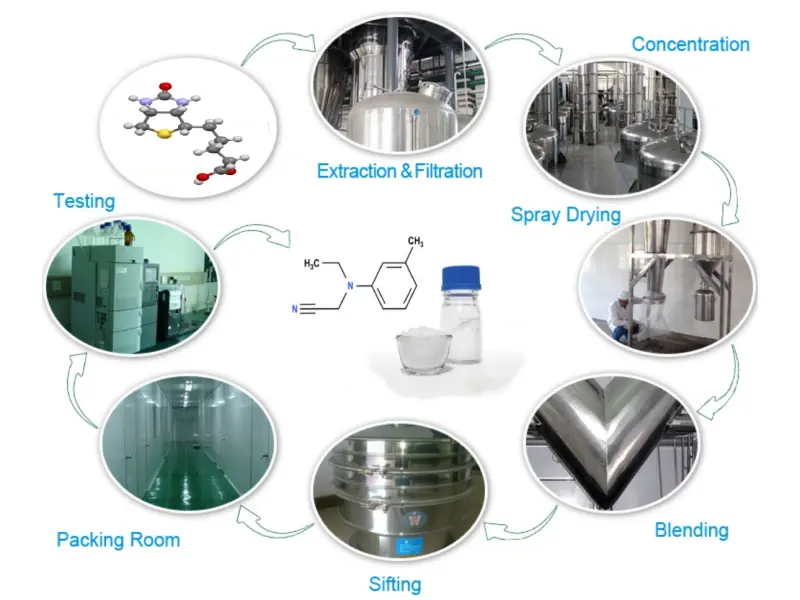
Quality Control Measures in Sildenafil Powder Bulk Production
Analytical Testing Protocols
HPLC, or high-performance liquid chromatography, is the main test method used to prove the sample and find impurities. UV spectroscopy and GC work with HPLC to find any leftover solvents or structural by-products that might make the pharmaceutical less safe. Loss on drying (LOD) readings make sure that the amount of wetness stays within acceptable limits, and heavy metal screens keep elements that were added during synthesis from getting into the material. The analysis of sildenafil powder bulk ensures the absence of structural by-products.
Regulatory Compliance and Certification
API providers that want to sell their products in the U.S. must meet foreign pharmacopeia standards, such as USP and EP benchmarks. Jianbei's sildenafil citrate powder is certified to meet FDA, GMP, ISO, HALAL, HACCP, Kosher, and Organic Food standards. This means that it meets all of the compliance needs of buyers around the world. These credentials are not marketing claims; they are real papers that can be checked out during the seller qualification process.
In-Process Control and Stability Assessment
Quality assurance is more than just testing the finished product. At each step of the chemical process, Jianbei's two separate labs keep an eye on important quality factors. If there are any deviations, they are caught early and fixed before they make it into finished batches. Studies of stability done in settings that are in line with ICH standards show that API that is stored correctly keeps its 98% specification for 24 months.
All of these quality checks work together to make sure that every kilogram that leaves the facility meets the same standards as the last. Procurement managers and quality auditors can check this standard by looking at written group records and certificates of analysis from a third party.
Comparing Sildenafil Powder Bulk to Other Forms and Competitors
Bulk Powder vs. Finished Dosage Forms
When manufacturers buy API in sildenafil powder bulk form instead of pre-made tablets or oral suspensions, they get a big advantage. When you buy in bulk, you can choose the exact excipients you need, change the dosage strength for OEM product lines, and cut the cost per unit by a large amount when you buy in bulk. Tablet and suspension forms lock down the recipe, making it harder for manufacturers to make their end product stand out.
Sildenafil vs. Alternative PDE5 Inhibitors
Compared to vardenafil (higher PDE5 selectivity) and tadalafil (longer half-life of 17.5 hours), sildenafil citrate has been the standard compound in its class for a long time. Its shorter onset window and long clinical history make it the API of choice for companies that want to get into the ED treatment market. Generic versions that use pharmaceutical-grade bulk API have the same bioavailability as brand-name goods at a much lower cost, as long as the supplier's quality paperwork backs up the claim of similarity.
Procurement Considerations for Sildenafil Powder Bulk
Evaluating Supplier Credentials
When looking for a reliable API provider, the first thing you should do is make sure that the seller has current, auditable certifications and not just makes promises. Before you decide on a provider, make sure you get stability data packages, GMP audit results, certificates of analysis, and paperwork for FDA registration. Suppliers who are ready to send samples to a third-party lab for testing before a purchase show that they are honest, which directly lowers the risk of buying sildenafil powder bulk.
Here are the main things that make a sildenafil API provider trustworthy:
- Certified quality infrastructure: A GMP-compliant workshop, independent quality control labs, and validated analytical instruments are all examples of certified quality infrastructure.
- Complete documentation package: Every shipment should come with a full set of paperwork, including a COA, an MSDS, batch records, regulatory certificates (FDA, ISO, HACCP, HALAL, and Kosher), and a stability report.
- Flexible order scaling: MOQ starts at 1 kg, and drum packing can hold up to 25 kg. This makes it possible to buy in trial batches or on a large scale for business use.
- Transparent payment terms: Alipay, PayPal, Western Union, telegraphic transfer, and XT are all accepted, which makes foreign purchases easier.
These attributes collectively reduce the due-diligence burden on procurement teams and provide a clear basis for long-term supplier partnerships.
Logistics and Customs Compliance
When a medicinal API is shipped internationally, it needs to be correctly labeled, classified by HS code, and accompanied by paperwork that follows the import rules of the target country. Jianbei's export-only service model is designed to meet the needs of international buyers. The delivery window is 3–7 working days after payment confirmation, which fits with production schedules and doesn't require too much safety stock.
Ensuring Safety and Effective Use of Sildenafil Powder Bulk
Handling and Storage Best Practices
Sildenafil powder bulk is a strong PDE5 inhibitor that raises cGMP levels in the corpus cavernosum. This makes blood vessels wider and helps treat erectile dysfunction. At the API level, proper handling needs closed-system transfer equipment, the right personal safety gear, and storage that is separate from materials that are not suitable. Maintaining storage conditions in a dry, cool area below 30°C stops hydrolytic degradation and keeps the chemical stability of the product for two years.
If formulators use this API in solid oral dosage forms, they need to make sure that the blend is uniform at the dosage strength they choose. This is because the particle size distribution affects the uniformity of the content in low-dose pills. This step of validation is easier when you work with a supplier that gives you micronization data along with standard COA parameters.
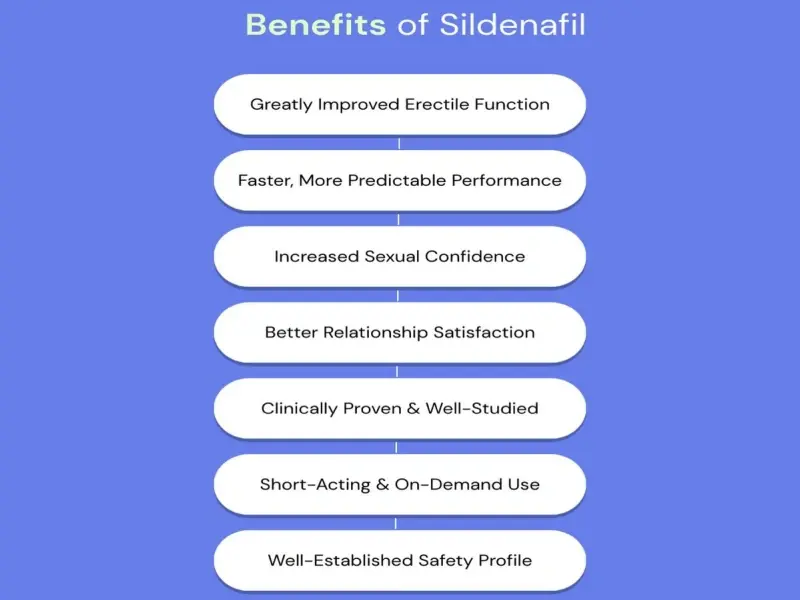
Conclusion
Pharmaceutical-grade sildenafil API is made and checked for quality in a lot more ways than just chemical synthesis. It includes methods that have been tested and proven to work, multiple levels of analytical testing, approved regulatory compliance, and a clear supply chain that procurement professionals can check on their own. The most reliable way to source with confidence is to find a supplier with a proven GMP facility, a full portfolio of certifications, and proof of batch consistency. Jianbei Biotechnology is a good partner for nutraceutical manufacturers, pharmaceutical compounders, and international ingredient distributors looking for a reliable sildenafil powder bulk source because it has three lines of production, two independent labs, and a full certification suite.
FAQ
1. What purity grade should pharmaceutical-grade sildenafil API meet?
Pharmaceutical-grade sildenafil citrate should have an HPLC test that shows it is at least 98% pure on a dry basis. When the crystallization and purification protocols are optimized, premium batches of sildenafil powder bulk often have more than 99.0%.
2. How is batch-to-batch consistency verified?
Each batch goes through an HPLC test, a residual solvent test, a moisture (LOD) test, a heavy metal screening test, and an eye check. Every package comes with a certificate of analysis that lists all the results.
3. What certifications should an API supplier hold for U.S. market access?
FDA registration, GMP compliance, and ISO approval are the very least that should be expected. Extra certifications like HACCP, HALAL, and Kosher make it easier for specialty product lines to get into new markets.
4. What is the standard shelf life for sealed sildenafil citrate powder?
It can be used again after two years if it is kept in a sealed jar in a dry, cool place. The seller should give you stability data to make sure of this under documented storage conditions.
Source Your Sildenafil Powder Bulk Manufacturer Through Jianbei
Jianbei Biotechnology is a licensed company that makes sildenafil powder bulk. It has three production lines, a GMP-standard workshop, two independent quality control labs, and a full compliance portfolio that includes FDA, ISO, GMP, HACCP, HALAL, and Kosher standards. We ship worldwide and offer a delivery window of 3–7 business days. We also accept a number of payment methods to make foreign deals easy. You can email our team at sales@bqingbio.com right now to ask for a certificate package, a product list, or a trial.
References
1. United States Pharmacopeia (USP 46-NF 41) — United States Pharmacopeial Convention, 2023.
2. European Pharmacopoeia, 11th Edition — Council of Europe, 2023.
3. Guidance for Industry: Q7 Good Manufacturing Practice Guidance for Active Pharmaceutical Ingredients — U.S. Food and Drug Administration, 2016.
4. ICH Harmonised Guideline Q1A(R2): Stability Testing of New Drug Substances and Products — International Council for Harmonisation, 2003.
5. Sildenafil: A Review of Its Pharmacodynamic and Pharmacokinetic Properties — British Journal of Clinical Pharmacology, 1999.
6. Pharmaceutical Manufacturing Handbook: Production and Processes — Wiley-Interscience, 2008.
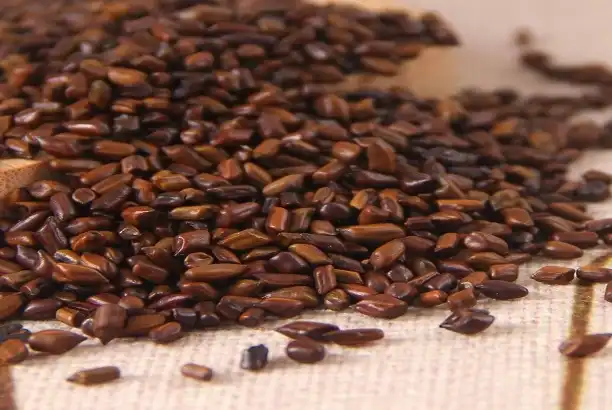
Cassia seed extract is a standardized botanical ingredient derived from the mature seeds of Cassia obtusifolia L. or Cassia tora L. It concentrates bioactive anthraquinones — including emodin, chrysophanol, and physcion — alongside polysaccharides and flavonoids that drive its functional value. In the global nutraceutical and pharmaceutical supply chain, this extract addresses critical formulation needs: vision support, digestive health, lipid management, and antioxidant activity. For R&D directors and procurement managers sourcing high-purity botanical raw materials, understanding its composition and extraction science is the essential starting point.
Understanding Cassia Seed Extract: Composition and Core Active Compounds
It's surprising how different the biochemical profile of cassia seeds is. Besides the well-known anthraquinone class, the seeds also have free amino acids, carbohydrates, and naphthopyrone glycosides. Each of these has its own molecular role to play. What makes this ingredient appealing to businesses is that it works in more than one way, which supports claims of wider product variety.
Key Bioactive Compounds and Their Functions
The functional properties of cassia seed extract are derived from three different kinds of chemicals, which are as follows:
- Emodin, chrysophanol, obtusin, and aurantio-obtusin are all examples of anthraquinones. Anthraquinones are the primary marker chemicals. Anthraquinones include emodin, chrysophanol, obtusin, and aurantio-obtusin. Through the use of HPLC fingerprinting, this was verified. They are responsible for the peristaltic-stimulating and lipid-lowering actions that the extract is capable of producing. These compounds offer constant and predictable potency across batches, which is highly significant for supplement manufacturers that wish to make claims about how well their products function. The standard specification for these compounds is 98%, and the chemical formula is CAS 481-74-3.
- Polysaccharides: A research that was published in the Journal of Ethnopharmacology substantiates the fact that cassia polysaccharides have observable anti-inflammatory and antioxidant properties. The fact that these compounds assist in preserving the liver and maintaining the health of the lining of the gut indicates that the element may be used for reasons other than those often associated with laxatives.
- Chemicals known as flavonoids are responsible for improving the effectiveness of antioxidants and may potentially be beneficial in reducing inflammation. As a result, flavonoids are now able to be used in a greater number of cosmetic items and functional beverages.
When experts in the procurement industry have a solid understanding of this trio, they are able to evaluate the quality of the components and ensure that the specifications are in accordance with the requirements of the end product. In comparison to the search for a generic botanical powder, the search for a brown fine powder that has known quantities of active chemicals in all three categories of compounds is much more beneficial.

Advanced Extraction Methods for Cassia Seed Extract
Everything that comes after extraction technology depends on it: purity, bioavailability, batch uniformity, and the ability to defend against regulations. Traditional solvent extraction methods are still used because they don't cost much to set up, but they have well-known problems, such as leaving behind leftover solvent contamination, breaking down heat-sensitive anthraquinones, and big differences between batches. When buying cassia seed extract on a large scale from other businesses, these factors directly affect the quality risk.
Modern Extraction Technologies Worth Knowing
The way high-specification plant products are made has changed because of three new technologies:
- Supercritical CO2 Extraction: The supercritical CO2 extraction method uses pressurized carbon dioxide to specifically separate lipophilic anthraquinones at low temperatures. It doesn't need any solvents. It keeps heat-sensitive compounds safe without leaving behind solvents, which makes it perfect for use in pharmaceutical and cosmetic products. Scalability is still something to think about, but the quality profile that is produced makes the investment worth it for high-end product lines.
- Ultrasonic-Assisted Extraction (UAE): High-frequency sound waves break down cell walls, releasing chemicals inside cells more effectively than normal maceration. This is called ultrasonic-assisted extraction (UAE). UAE cuts the time needed for extraction by up to 60% compared to old ways of doing things, and it also increases the yield of anthraquinone. This method works well in GMP manufacturing settings where throughput and consistency are important.
- Microwave-Assisted Extraction (MAE): Microwave energy is focused on heating the plant material from the inside out, quickly releasing bioactives into the solvent phase. Studies show that MAE can produce more polysaccharides with less solvent. This is helpful for companies that want to meet ISO 14001 environmental standards and improve product quality at the same time.
These improvements in extraction help buying teams immediately. Higher-purity extracts mean lower amounts of contaminants in finished products, more accurate label claims, and less scrutiny from regulators. It is a valid and important part of your due diligence to ask a provider exactly what extraction platform they use.
Procurement Insights: Quality Criteria and Supplier Selection
To get large amounts of plant products, you need more than a good price. Because plant-based products, especially those that contain anthraquinone, are risky, they need to be carefully checked for quality at every step of the buying process for cassia seed extract.
Non-Negotiable Quality Benchmarks
The following is a list of the quality requirements that purchasing managers that have a great deal of expertise always prioritise:
- Check the quantity of aurantio-obtusin and emodin against the standard that has been provided. This is an active assay that has been confirmed by HPLC. Both authentic and counterfeit Cassia obtusifolia may be distinguished from one another via the use of fingerprint comparisons.
- Compliance with heavy metals refers to the presence of total heavy metals that are below 10 parts per million (ppm) (Pb < 3 ppm, As < 1 ppm, Cd < 1 ppm, Hg < 0.1 ppm). This is an essential requirement for the regulations of California's Prop 65 and the European Union's EC 1881/2006.
- From a microbiological point of view, the total plate count was lower than 1,000 colony-forming units per gram, and Salmonella and E. coli were not found in accordance with the guidelines set out by the AOAC.
- Pesticide screening consisting of multi-residue analysis of over 500 compounds utilising GC-MS/LC-MS for pesticide screening that satisfies the standards set out by USP <561> for authorised organic integrity.
With certifications, institutions are able to provide evidence that the test data is accurate, which is something that raw assay data cannot provide on its own. In addition to being certified as ISO, GMP, HACCP, HALAL, Kosher, and Organic Food, Jianbei's extract is also registered with the Food and Drug Administration (FDA). Full certifications that cover all of the main regulatory systems in North America, Europe, and the Middle East are included in this comprehensive package of certifications.
The format of the product is also a significant consideration when it comes to arranging purchases. In either 1 kilogramme of metal foil packets or 25 kilogramme drums, the extract is shipped as a fine brown powder. There is a need for a minimum order of one kilogram, and the delivery time might range anywhere from three to seven business days after the payment has been completed. The product may be stored for a period of twenty-four months in a dry, cold location that has a cover.

Application Scenarios and Use Cases in B2B Markets
This plant product can be used in a lot of different industries because it has a lot of different uses. Understanding the differences between the different sectors helps product developers make better decisions about how to formulate products using cassia seed extract.
In nutraceuticals, the extract works well in digestive health capsules, detox blends, and formulas that support metabolism. Along with lutein and zeaxanthin, it is a good ingredient for eye health vitamins because it lowers lipids and improves vision. For example, it has been shown to reduce eye strain and improve clarity in cases of dry eyes and fuzzy vision.
In personal care and cosmetics, the flavonoid and polyphenol content protects against free radicals, which is important for anti-aging serums and treatments for the eye area. The stability of the formulation is directly affected by how pure the extraction is; the 98% specification makes sure that botanical resins don't get in the way of emulsion systems too much.
In functional food and beverage, cassia seed powder is a functional food and drink ingredient that works well in herbal teas and weight loss drinks. It has a mild taste and works well with most beverage bases. This gives OEMs a unique plant story to add to more saturated ingredients like senna or dandelion.
Future Trends and Opportunities in Cassia Seed Extract Procurement
In the market for botanical extracts across the world, clean-label, organically certified, and sustainably farmed substances are gaining more and more popularity. When it comes to botanicals that include anthraquinone, regulatory surveillance is becoming more prevalent. A clear distinction is made between confirmed manufacturers and unconfirmed market dealers of cassia seed extract as a result of this, which increases the quality bar for sellers who adhere to the standards.
In the world of business, green extraction technologies are gaining more and more popularity. New methods, such as enzyme-assisted extraction and subcritical water extraction, make use of fewer organic solvents while still maintaining the substance's biological integrity. These innovative procedures are becoming more popular. In the event that the regulations are altered, those who work in procurement and cultivate relationships with manufacturers who are investing in these technologies will be able to maintain a competitive advantage over their rivals.
Pay close attention to the tactic of purchasing in large quantities as well. As the population of the globe continues to age and individuals become more resistant to looking at computers, there is an increasing need for dietary supplements that aid in digestion and improve vision. It is important to arrange a long-term supply agreement with a reputable manufacturer in order to ensure that costs remain steady and that supplies continue to come in.
Conclusion
Cassia seed extract is one of the most interesting plant ingredients out there. It has many bioactive compounds, such as anthraquinones, polysaccharides, and flavonoids, which meet real product needs in the nutraceuticals, skincare, and functional food industries. If that promise turns into market-ready, compliant, high-performance goods, extraction technology and supplier verification are what make that happen. When product developers and procurement teams are trying to find ingredients in a crowded market, the best way to stand out and gain regulatory confidence is to focus on certified, HPLC-verified, GMP-manufactured extract.
FAQ
1. What is the recommended dosage of cassia seed extract in supplement formulations?
The amount of an ingredient that is usually in dietary supplements varies from 200 mg to 500 mg per serving, depending on what the supplement is supposed to do and how complicated the formula is. Always ask your governing team for dose advice that is specific to your area.
2. How does organic cassia seed extract differ from conventional grades?
If an extract is certified as organic, it means that the raw material was grown without using synthetic fertilizers or pesticides and was processed according to certified organic handling guidelines. This label helps with upscale placement, clean label claims, and following USDA NOP or similar organic guidelines. Price increases are normal, but they are fair because of the extra work that goes into a licensing check.
3. What certifications should I require from a cassia seed extract supplier?
Ask for FDA approval, GMP, HACCP, and ISO documents at the very least. For foreign markets, HALAL and Kosher approvals make it easier to sell goods. For responsible buying, you must get third-party lab results that include numbers of heavy metals, pesticide residues, and microbes.
4. What is the shelf life and storage requirement for this extract?
For 24 months, sealed keeping in a dry, cool place keeps the product's quality is maintained. If you store it the right way, aluminum foil bags (1 kg) and 25 kg drums can stay stable on the shelf for a long time.
Partner with Jianbei — Your Trusted Cassia Seed Extract Supplier
Pharmaceutical-grade cassia seed extract is made by Jianbei Biotechnology, which has 15 national invention patents, three dedicated production lines, and a GMP-certified workshop with two separate quality labs. Our extract has been certified by FDA, ISO, GMP, HACCP, HALAL, Kosher, and Organic, so it is ready to be sent anywhere in the world. We make buying easy by offering a 1 kg MOQ, 3–7 day wait times, and a number of payment methods. To get samples and mass prices right away, email our team at sales@bqingbio.com.
References
1. Journal of Ethnopharmacology – Zhao, Y. et al. (2015). Biological activities and chemical constituents of Cassia obtusifolia seeds.
2. Food Chemistry – Xie, J. et al. (2017). Antioxidant activities and polysaccharide characterization of Cassia tora L. seed extracts.
3. Industrial Crops and Products – Liu, Z. et al. (2019). Optimization of ultrasonic-assisted extraction of anthraquinones from Cassia obtusifolia seeds.
4. Phytotherapy Research – Kim, D.H. et al. (2016). Lipid-lowering effects of Cassia tora L. anthraquinone compounds in metabolic syndrome models.
5. Journal of Agricultural and Food Chemistry – Huang, Q. et al. (2018). Supercritical CO2 extraction of bioactive compounds from Cassia seeds: yield, composition, and antioxidant capacity.
6. Evidence-Based Complementary and Alternative Medicine – Wang, L. et al. (2020). Hepatoprotective and ocular health properties of Cassia obtusifolia standardized extracts: a review.
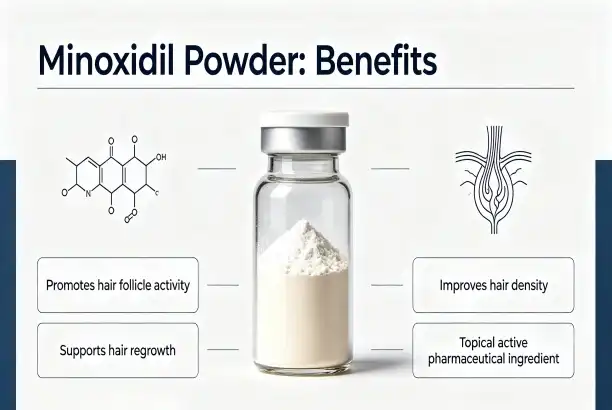
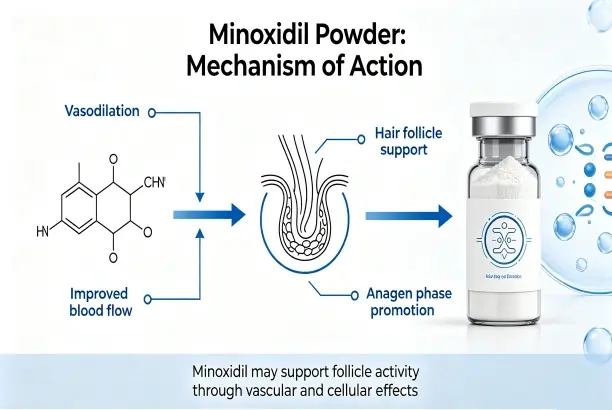
Minoxidil powder is a high-purity Active Pharmaceutical Ingredient (API) with the molecular formula C9H15N5O and a molecular weight of 209.25. Classified under CAS number 38304-91-5, it presents as a white or off-white crystalline powder tested at 98% purity via HPLC. As a potent peripheral vasodilator and potassium channel opener, this API stimulates hair follicle epithelial cell proliferation, promotes hair regrowth, and increases hair density. It serves as the foundational raw material for pharmaceutical-grade topical formulations targeting androgenetic alopecia and alopecia areata globally.
Understanding Minoxidil Powder: Chemical and Physical Properties
Before making a choice regarding the packaging strategy, individuals in charge of research and development as well as product management need to have a crystal-clear vision of what the minoxidil powder really looks like on paper and in the laboratory. This is necessary in order to make an informed decision.
Core Chemical Identity
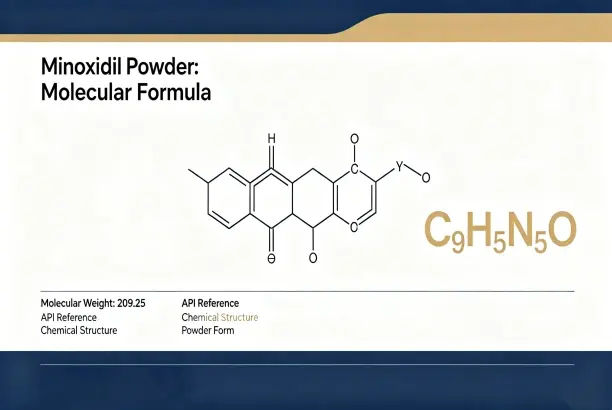
For instance, the chemical name for minoxidil is 6-(1-Piperidinyl)-2,4-pyrimidinediamine 3-oxide (CAS 38304-91-5), and it is a member of the family of chemicals that are referred to as piperidinopyrimidine medicines. The chemical structure of this substance may be represented by the formula C9H15N5O, and its molecular weight is 209.25 grams per molecular unit. The unforeseen effect that it had on hypertrichosis made it possible for it to become the most effective active pharmaceutical ingredient (API) for hair loss that is now available. Oral antihypertensive medication was the first formulation of this medication. In accordance with the findings of high-performance liquid chromatography (HPLC), the level of purity reaches a minimum of 98% when it is at the pharmaceutical grade level. This criterion, which is of the utmost significance, must be adhered to by any company that claims that it is bioequivalent.
Solubility, Stability, and Storage
Due to the fact that the active pharmaceutical ingredient (API) is only slightly soluble in water (about 2 mg/mL), it is necessary to use co-solvents such ethanol or propylene glycol in order to achieve the therapeutic concentrations of 20 mg/mL to 50 mg/mL. Because it is sensitive to ultraviolet light and high temperatures, it must be kept in a container that limits the passage of air and light. This is because it shows characteristics of being sensitive to both temperatures and ultraviolet light. A maximum of two years is the maximum period of time that food may be stored properly, provided it is maintained in an atmosphere that is dry, cold, and covered with containers during the course of that time. The structure of the formulation is directly regulated by these physicochemical characteristics, which also have an influence on everything from the choice of the solvent to the design of the container. In addition, the formulation structures are directly governed by these factors.
Pharmaceutical Development Challenges and Solutions with Minoxidil Powder
Even formulation teams with a lot of experience run into technical problems over and over again when they try to use this minoxidil powder. Being able to understand them early on saves a lot of time during development.
Solubility and Bioavailability Hurdles
There is still the most significant issue, which is low solubility in water. Whenever there is a change in temperature, precipitation may occur when the substance is dissolved in ethanol-only solutions. Finding the optimal proportion of propylene glycol to ethanol and applying a low amount of heat (about 50 degrees Celsius) throughout the dissolving process in order to make the mixture solid and consistent is one way that has been shown to be effective. Due to the fact that they ensure that the active pharmaceutical ingredient (API) is distributed uniformly and prevent the spray valve from being obstructed, micronised particle grades, in which d90 is less than 10 microns, are essential for foam and suspension compositions.
Regulatory Compliance Pathways
The FDA and EMA criteria need more than just a clean Certificate of Analysis in order to be satisfied. A comprehensive compliance document includes the certificate of analysis (COA), the material safety data sheets (MSDS/SDS), the good manufacturing practice (GMP) certificate, and stability data that demonstrates conformance with USP/EP monographs. In addition, businesses that sell their products in North America are obligated to ensure that their manufacturing facilities are registered with the Food and Drug Administration (FDA). The minoxidil active pharmaceutical ingredient (API) offered by Jianbei Biotechnology comes with all of the essential documentation, including FDA registration, ISO, HALAL, HACCP, Kosher, and GMP certifications. When it comes to matters of documentation, this makes things a great deal simpler for purchasing teams.
Comparison of Minoxidil Powder with Other Dosage Forms
Choosing the right method for delivery is a smart choice. This is a clear comparison of the main forms:
- Powder API (Raw Material): Has the longest shelf life, up to two years when stored properly; can be made into solutions, foams, and compounded medications with the most freedom; and can be precisely concentrated from 2% for over-the-counter (OTC) solutions to 15% for clinical compounds. During production, it requires strong solubilization skills.
- Topical Solution (Liquid): This is the most common form used in business, and it comes in 2% and 5% strengths. Easy to make, but can break down due to oxidation if the integrity of the packaging is compromised.
- Foam Formulation: Fast drying and a non-greasy feel are what customers want. Needs micronized powder grades for steady aerosol dispersal, which adds a step in the process that raises the cost per unit.
Product developers care a lot about these differences. Minoxidil powder allows for the most flexible formulations and the cheapest way to make a lot of products. This is especially helpful for companies that have to manage a lot of different SKUs or are joining new markets. When procurement managers know the pros and cons of each format, they can make sure that their buying decisions are in line with their pipeline goals.
Procurement Insights: Sourcing and Supply Chain for Minoxidil Powder
It is a lot more difficult to locate pharmaceutical-grade active pharmaceutical ingredients (APIs) on a wide scale than it is to obtain normal chemicals. These are the things that purchasing managers need to prioritise:
- Ensure that the firm is registered with the Food and Drug Administration (FDA), that it adheres to good manufacturing practices (GMPs), and that it does HPLC-validated batch testing before you commit to placing an order with them. A risk in the supply chain is posed by a vendor that is unable to provide a complete COA within twenty-four hours.
- Jianbei distributes minoxidil active pharmaceutical ingredient (API) in 25-kilogram drums and 1 kg aluminium foil bags. This kind of packaging allows the API to be used for both pilot-scale manufacturing and full-scale production. Three to seven business days following the confirmation of payment, delivery will take place. Different ways of payment, including Western Union, Alipay, and TT, are all accepted.
- The bare minimum for an order is: Since the minimum order quantity (MOQ) begins at one kilogram, it is simple to utilise for research and development samples, and it is also simple to scale up for big orders. It is possible for well-known businesses to operate continuous production lines as well as new brands that are experimenting with new recipes to benefit from this versatility.
Two distinct quality control laboratories, three specialised manufacturing lines, and a workshop that adheres to the GMP standard are all available at Jianbei Biotechnology. In addition to this, they have a large quantity of goods on hand so that customers do not have to be concerned about supply issues. The firm is well positioned to become a long-term supplier of minoxidil powder to markets all over the globe since it has facilities that have been authorised and shipping that is rapid.
Future Trends and Innovations in Minoxidil API Development
The industry for hair regrowth and skincare products continues to expand. According to analysis conducted by Grand View Research, the worldwide market for alopecia treatments was estimated to be worth around 8.6 billion US dollars in 2022 and is projected to continue expanding at a pace of 8.1% annually until the year 2030. This application programming interface (API) is being utilised differently as a result of many different sorts of new ideas:
In order to enhance the depth of follicular penetration, nanoparticle carrier systems and liposomal encapsulation are currently being researched. If successful, this might imply that lower quantities of active pharmaceutical ingredients (API) are required to get the same therapeutic effects. For the purpose of treating hair loss, compounded formulae that mix minoxidil with finasteride or dutasteride are a relatively recent speciality in the field of clinical pharmacy. Concerns about sustainability, such as the use of more environmentally friendly solvents and bulk packaging that is capable of being recycled, are also playing a more significant part in the selection of suppliers by customers in Europe and North America.
In the event that research and development teams pursue these approaches, they will discover that any sophisticated delivery system still requires raw ingredients that are of a high purity and are consistently characterised. Every notion farther down the line is constrained by the strength of the API foundation.
Conclusion
Minoxidil powder is one of the most important and long-lasting drugs used to treat hair loss. Because of its exact chemical makeup, ability to dissolve in different substances, and ability to be mixed with many other ingredients, it is the main ingredient used in topical solutions, foams, and compounded prescriptions all over the world. Buying decisions depend on how pure something is, how accurate the paperwork is, how reliable the supply is, and how quickly logistics can respond. As transportation methods improve, the most important thing that stays the same is that you must start with a fully approved, high-purity crystalline API. Companies that find a reliable source are now in a good position to take advantage of a market that is growing quickly.
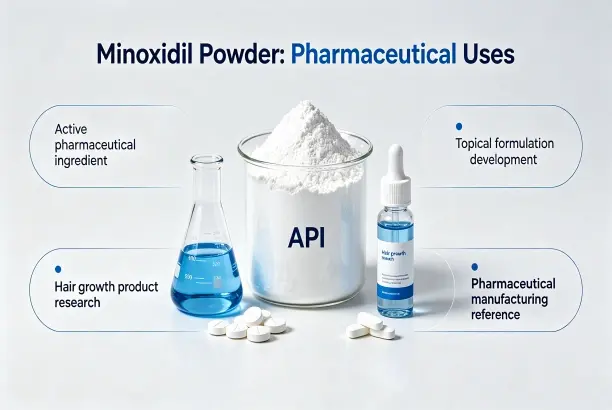
FAQ: Frequently Asked Questions
1. What purity level is required for pharmaceutical-grade minoxidil API?
For pharmaceutical uses, the quality must be at least 98%, which can be proven by HPLC. This standard ensures that bioequivalence and legal requirements are met in both the FDA and the EMA.
2. Why does minoxidil solution sometimes develop a yellow tint?
This usually means that UV light or poor storage temperatures have caused oxidation decay. This can't happen if you store things in dry, cool places and use containers that don't let air or light in.
3. What documents should accompany a bulk shipment?
The Certificate of Analysis, MSDS/SDS, GMP Certificate, FDA registration paperwork, and stability data that meet the needs of the USP/EP monograph are all part of a full compliance package.
4. What is the difference between micronized and standard particle grades?
When mixed with liquids, standard grade dissolves completely. For foam and suspension formats, micronized grade (d90 < 10 microns) is needed to make sure even distribution and keep the aerosol valve from getting clogged.
Partner with Jianbei — Your Trusted Minoxidil Powder Manufacturer
Jianbei Biotechnology sells minoxidil powder that is safe for use in medicine. Their production is GMP-certified, and they have a full set of foreign safety certifications, such as FDA, ISO, HALAL, HACCP, and Kosher. We can help with R&D sampling through commercial-scale supply because we keep a lot of stock on hand; the minimum order quantity (MOQ) is just 1 kg, and shipping is within 3–7 business days. To get prices and specs, you can email our export team at sales@bqingbio.com.
References
1. Rossi, A., et al. "Minoxidil Use in Dermatology, Side Effects and Recent Patents." Recent Patents on Inflammation & Allergy Drug Discovery, 2012.
2. Gupta, A.K., & Talukder, M. "Topical Minoxidil: A Review of Its Use in Androgenetic Alopecia." Journal of Dermatological Treatment, 2022.
3. Blume-Peytavi, U., et al. "A Randomized Double-Blind Placebo-Controlled Pilot Study to Assess the Efficacy of a 24-Week Topical Treatment by Minoxidil." Journal of the American Academy of Dermatology, 2007.
4. Grand View Research. "Alopecia Treatment Market Size, Share & Trends Analysis Report." Grand View Research Industry Report, 2023.
5. Suchonwanit, P., Thammarucha, S., & Leerunyakul, K. "Minoxidil and Its Use in Hair Disorders: A Review." Drug Design, Development and Therapy, 2019.
6. United States Pharmacopeia. "Minoxidil Topical Solution Monograph." USP-NF Official Monographs, 2021.
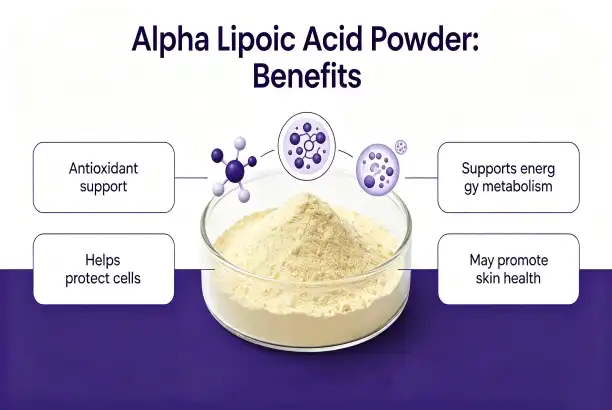
Alpha lipoic acid powder sits at the center of modern nutraceutical, cosmetic, and pharmaceutical formulation — and for good reason. As a "universal antioxidant," this light yellow crystalline powder (CAS: 62-46-4, molecular formula C8H14O2S2) neutralizes free radicals in both water-soluble and fat-soluble environments. Yet its most underestimated challenge isn't sourcing — it's stability. For R&D directors, product managers, and procurement specialists, understanding how thioctic acid behaves under real-world conditions is essential to protecting both formulation integrity and commercial investment.
Understanding Alpha Lipoic Acid Powder and Its Stability Issues
Alpha lipoic acid powder is scientifically defined by its 1,2-dithiolane ring structure. It has a disulfide bond that makes it naturally reactive and gives it great protective power. Because it has a molecular weight of 206.33 g/mol and a melting point between 60 and 62°C, even small amounts of heat during processing can cause it to break down before it gets to the customer.
Why Stability Matters in B2B Formulation
Stability affects how well a product works, how long it lasts, and how well it meets legal requirements. When ALA breaks down, the powder changes color from pale yellow to amber or brown, which is a clear sign that its effectiveness has been lost. Supplement brands and food companies that have to follow FDA or GMP rules can have trouble with batch inconsistency because of instability. This can lead to compliance issues and expensive reformulation cycles. A standard for 98% purity, confirmed by HPLC, is only useful if the purity stays the same throughout the whole duration of the product.
The Four Core Environmental Triggers
The 1,2-dithiolane ring in ALA is very sensitive to oxidant and heat stress. The four main things that speed up environmental degradation are:
- Heat: When temperatures rise above 60°C, ring-opening polymerization starts, which changes bioactive monomers into inactive polymer chains.
- Light: UV and visible light speed up photodegradation, making sulfurous chemicals that change the smell and the way it works.
- Moisture: Adding water makes the disulfide bond more likely to break, which lowers the test values over time in a way that can be measured.
- Oxygen: Oxygen in the air starts reactive chain reactions, especially when packaging is open or not packed well enough.
These four things rarely happen by themselves; when they work together, they speed up power loss much more than any one of them could by itself. Because of this linked weakness, buying teams need to check not only the quality of the raw materials, but also the whole cold chain, from making the goods to using them.
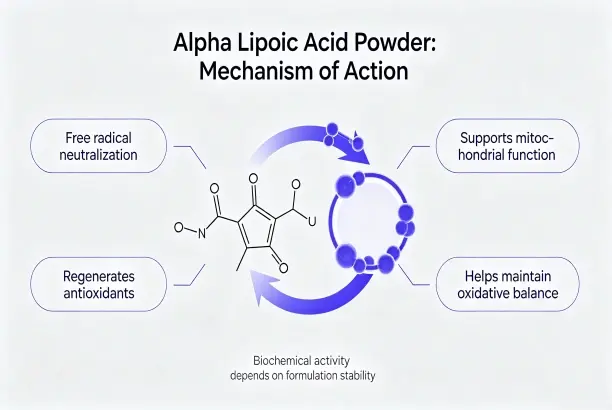
Key Challenges in ALA Stability — A Bottleneck-Breaking Approach
To keep thioctic acid stable throughout the supply chain, formulators have to deal with a number of scientific and operational problems that keep coming up. Alpha lipoic acid powder stability remains the primary focus of these technical investigations.
Chemical Degradation Pathways
The main way that the dithiolane ring breaks down is through heat-catalyzed polymerization, which can't be undone under normal processing conditions. Another way is through oxidative dimerization, which happens when ALA that has been dissolved is exposed to transition metal ions. This is a problem that is especially important in cosmetics and drinks that are liquid. A study in the Journal of Pharmaceutical Sciences shows that racemic ALA (RS-ALA) is slightly less stable than the R(+) enantiomer under the same stress conditions. This is an important difference to keep in mind when choosing raw materials for high-end products.
Problems with analysis make the situation worse. Standard HPLC testing, which is the standard way to check for 98% specification ALA, can find a drop in measurement but might miss early-stage polymerization if particle size distribution and optical rotation are not also monitored. Teams in charge of buying things should ask for COAs with more than just pure numbers.
Some strategies for reducing damage that have been shown to work in the real world include controlling pH (keeping aqueous systems slightly acidic between 4.5 and 6.0), combining chelating agents like EDTA to stop metal ion catalysts from working, and using antioxidants like ascorbic acid or tocopherols to stop oxidative chain reactions.
Formulation Solutions and Innovations to Enhance Stability
There is a big difference between traditional and advanced alpha lipoic acid powder formulations. Standard powder mixes with common excipients are useful, but they don't protect well against the above degradation processes.
Microencapsulation and Protective Technologies
Microencapsulation, which involves covering ALA particles with things like hydroxypropyl methylcellulose (HPMC), cyclodextrin inclusion complexes, or lipid-based matrices, keeps oxygen and water away from the active compound. Studies have shown that cyclodextrin-encapsulated ALA keeps more than 95% of its effectiveness after six months of rapid stability testing at 40°C/75% RH, while uncoated material only keeps about 78% of its effectiveness under the same conditions. This is a big difference for pill brands that put claims on their labels.
Nanotechnology-based transport methods, such as solid lipid nanoparticles and nanostructured lipid carriers, have two benefits: they make the drug more bioavailable by letting more molecules pass through the membrane, and they keep the drug stable for longer by protecting it from physical barriers. For people who are making anti-aging serums or antioxidant skin care, these tools make it possible to add ALA in stable amounts that are medically useful, without having to worry about the powder settling or changing color.
Excipient selection is also important. Avoiding fillers that contain leftover peroxides (common in some types of polyethylene glycol) and choosing fillers with low moisture content greatly increases the shelf life. When blending, granulating, or encapsulating, the processing temperature should stay 40 °C below as much as possible.
Procurement Insights for Stable ALA Powder — Demand Matching Approach
For informed buying of alpha lipoic acid powder to work, there needs to be more than just price per kilogram used to judge suppliers. When making decisions about buying in bulk, the following things show if a supplier can safely provide stable material:
- Purity specification and testing method: Demand an assay that is ≥98% HPLC-verified and comes with a proof of analysis that covers heavy metals, microbial limits, and leftover solvents.
- Packaging integrity: Pharmaceutical-grade ALA should not be put in regular polyethylene bags, but in 1 kg aluminum foil bags or 25 kg sealed drums that really keep out moisture and air.
- Cold chain documentation: Suppliers should give stability data that was generated in real storage conditions, not just results from stress tests that were run faster.
- Certifications: FDA registration, GMP compliance, ISO, HALAL, KOSHER, HACCP, and organic certifications signal a seller's commitment to quality processes rather than one-time testing.
The difference between powder and capsule form has real effects on longevity. When buying powder in bulk, you have more options for how to make the mix, but you have to be more careful about how you store it. The usual two-year shelf life can be safely extended by storing the food in a sealed environment that is dry and cool. However, buyers must check the warehouse conditions at both the supplier's and their own receiving facilities to do this.
It's also important for businesses to know the difference between manufactured (RS-ALA) and biological (R(+)-ALA). RS-ALA is the most common type sold in stores, and it can be used in most food and vitamin products. The naturally occurring enantiomer, R(+)-ALA, commands a higher price and is preferred in pharmaceutical and high-end nutraceutical uses where proven biological activity is a key part of the product's value.
Managing Stability Risks — How to Avoid Common Pitfalls
In production, stability problems rarely come from a single point of failure. They build up over time because of a number of small mistakes regarding alpha lipoic acid powder handling, such as inconsistent checks of suppliers, inadequate storage temperature logs, non-compliant packing substitutions during shortages of supplies, or inadequate testing of new quality control.
Most operations make the mistake of depending on the supplier's COA without doing their own receiving verification. An HPLC repeat upon receipt, along with an eye check for discoloration or clumping, finds breakdown events that happened during transport. Contractual clauses that spell out the rights to retesting and the criteria for rejecting a batch keep procurement teams from having to pay for damaged goods.
Instead of assuming, the temperature in the warehouse should be actively checked. Even in places with mild weather, ALA stored near loading docks or under skylights can be damaged by sudden temperature changes in the summer. The minimum standard for keeping specifications intact for the full two-year shelf life is a sealed aluminum package in a controlled storage setting with a temperature below 25°C and a relative humidity below 60%.
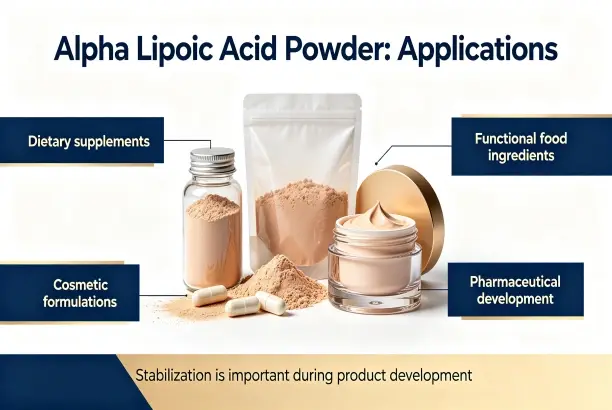
Conclusion
Managing the stability of alpha lipoic acid powder in formulation is a difficult task that involves science, processing, packing, and the supply chain. Professionals in procurement who know how products break down and choose providers who do the right thing by using GMP production, strict testing, and compliant packaging can protect both the quality of the product and the reputation of the brand. It is essential for sustainable product development to work with suppliers whose infrastructure is certified, whose stability data has been checked, and whose paperwork is ready for export.
FAQ
1. How do I verify supplier quality for ALA powder?
Ask for a full certificate of analysis that includes the HPLC test, the amount of heavy metals, the limits for microbes, and any solvents that are still present. Check the supplier's GMP, FDA, and ISO approvals against each other. Do a separate incoming HPLC retest on each batch of alpha lipoic acid powder to make sure the standard fits the COA.
2. What is the expected shelf life under ideal storage conditions?
ALA powder has a 98% shelf life if it is kept in sealed containers in a dry, cool place below 25°C and out of direct light and humidity for two years. The shield protection that is needed for this can be found in aluminum foil bags and drums that are sealed.
3. Is organic or synthetic ALA more stable?
The most common industrial grade is RS-ALA, which comes in a synthetic racemic form and is stable under normal circumstances. The naturally occurring form of ALA, R(+)-ALA, may have slightly different stability patterns in some water-based products. Proper packing, controlled storage, and handling at low temperatures are good for both.
4. What certifications should a reliable ALA supplier hold?
FDA registration is a must, along with GMP, ISO, HACCP, and HALAL or KOSHER if your target market requires it. All of these certifications show that the manufacturing quality, safety controls, and ability to export are all good.
Partner with Jianbei for Certified Alpha Lipoic Acid Powder
Jianbei Biotechnology makes alpha lipoic acid powder that is good enough to export. Their production is GMP-certified, and their purity is 98% HPLC-verified. They also have full certifications from FDA, ISO, HALAL, KOSHER, and HACCP. Jianbei can help you reach your formulation goals with a steady supply of high-quality ingredients and two independent labs. Their minimum order quantity (MOQ) is as low as 1 kg, and they deliver within 3–7 business days. To get a sample or bulk quote, email us at sales@bqingbio.com.
References
1. Biewenga, G. P., Haenen, G. R., & Bast, A. (1997). The pharmacology of the antioxidant lipoic acid. General Pharmacology: The Vascular System, 29(3), 315–331.
2. Goraca, A., Huk-Kolega, H., Piechota, A., Kleniewska, P., Ciejka, E., & Skibska, B. (2011). Lipoic acid – biological activity and therapeutic potential. Pharmacological Reports, 63(4), 849–858.
3. Shay, K. P., Moreau, R. F., Smith, E. J., Smith, A. R., & Hagen, T. M. (2009). Alpha-lipoic acid as a dietary supplement: Molecular mechanisms and therapeutic potential. Biochimica et Biophysica Acta (BBA) – General Subjects, 1790(10), 1149–1160.
4. Packer, L., Witt, E. H., & Tritschler, H. J. (1995). Alpha-lipoic acid as a biological antioxidant. Free Radical Biology and Medicine, 19(2), 227–250.
5. Carlson, D. A., Smith, A. R., Fischer, S. J., Young, K. L., & Packer, L. (2007). The plasma pharmacokinetics of R-(+)-lipoic acid administered as sodium R-(+)-lipoate to healthy human subjects. Alternative Medicine Review, 12(4), 343–351.
6. United States Pharmacopeia (USP). (2023). Alpha Lipoic Acid Monograph. USP–NF, USP Publications.
If you're sourcing botanical actives for nutraceutical, pharmaceutical, or cosmetic applications, understanding ginseng extract powder from a technical procurement standpoint is non-negotiable. This guide breaks down how extraction methods directly shape product quality, what quality metrics matter most, and how to evaluate suppliers with confidence. Whether you're an R&D director, product manager, or international buyer, the insights here will help you make smarter, lower-risk procurement decisions.
Overview of Ginseng Extract Powder
Ginseng extract powder is a pure plant ingredient derived from the roots of Panax ginseng C.A. Meyer and is tested for its ginsenoside content. Ginsenosides are triterpene saponins that have adaptogenic, immune-modulating, and antioxidant properties.
Extract Powder vs. Raw Root Powder
For all intents and purposes, raw ginseng root powder is nothing more than ground root. In addition to preserving the fibrous structure, it provides bioactive quantities that vary from batch to batch and are not always the same. On the other hand, ginseng extract powder is produced by a process that involves solvent extraction, concentration, and spray drying. This process is used to isolate the active ingredients and ensure that they are very effective. Typically, standardised grades include between 5% and 80% ginsenosides, which may be verified by high-performance liquid chromatography (HPLC). This allows for precise dosing, which is of utmost importance for those who formulate vitamins and medications.
When seen on a larger scale, this distinction is of great significance. However, when it comes to producing a line of goods for which the claims made on the label need to be substantiated, raw powder simply cannot deliver the same consistency that extract powder provides.
Industrial Applications Across Sectors
Professionally, ginseng extract powder can be used for many things, such as:
- Dietary supplements: Added to food as a supplement, either as an adaptogen on its own or mixed in with nootropics to improve brain function, immune system support, and stress resilience. High-density extract lets capsules have lower fill weights while still being effective.
- Functional beverages: Quickly mixed into energy drinks and health tonics; work with vitamin and coffee mixes. Because of how easily it dissolves, it's a good choice for people who are making drinks and need something that is clear and stable.
- Cosmeceuticals: Because it is an antioxidant, it is used in anti-aging serums and topical creams. Pharmaceutical-grade extract stays stable in emulsions of oil and water and doesn't break down easily when exposed to oxygen.
These uses across industries explain why purchasing teams in many different fields keep coming back to standard botanical extracts as a key ingredient.

Extraction Methods: From Root to Powder
The way the ginsenoside is extracted in ginseng extract powder is the single most important factor in determining its yield, stability in potency, and safety as a finished product. Knowing how this process works helps buyers judge the skills of suppliers and guess what quality results will be.
Traditional vs. Modern Extraction Technologies
For low-cost activities, traditional techniques such as water decoction and basic ethanol maceration are still employed. However, these processes are not particularly effective in extracting items, and the results might vary quite a bit from batch to batch. It is possible to make crude combinations using these methods, but when purchasers want a consistent potency that is more than 20%, these methods are not sufficient.
Using modern techniques has significantly expanded the range of possibilities:
- As a result of its ability to dissolve consistently in both polar and semi-polar saponins, ethanol reflux extraction continues to be the most effective method for obtaining high-yield ginsenosides.
- By breaking down plant cell walls via cavitation, ultrasonic-assisted extraction (UAE) is able to achieve a 20–40% higher extraction efficiency compared to conventional techniques, while simultaneously reducing the amount of time spent processing and the amount of fluid that is used.
- Supercritical CO2 extraction: When supercritical CO2 extraction is performed at low temperatures, thermolabile compounds are kept safe, and there is no need to worry about residual solvents. This is a significant advantage for applications in the pharmaceutical and cosmetic industries.
- Extraction with the assistance of enzymes: Cellulase or pectinase is used in the process of enzyme-assisted extraction in order to break down the plant matrix. Ginsenosides are made more bioavailable as a result of this, and the quantity of output from root material that contains lower levels of active chemicals is increased.
Because of these enhancements, the profiles of ginsenosides are more uniform, there is a reduced chance of heavy metals being carried over, and the powders that are produced in the end are cleaner. Consequently, this indicates that the rates of formulation failure are lower for purchasers.
Product Quality Factors and Quality Control
The quality of the powder that is made after extraction rests on a set of clearly defined, measurable factors. Before approving a supplier, procurement teams should ask for validated COAs (Certificates of Analysis) for each metric.
Key Quality Metrics to Evaluate
- Ginsenoside content: Its ginsenoside level is the main indicator of how well it works. This number should match the product specification after being checked by HPLC (High-Performance Liquid Chromatography). The standard at Jianbei is 98% pure (CAS: 90045-38-8; Molecular Formula: C₁₉H₂₄N₂O; Molecular Weight: 248.37), and HPLC is the approved test method. Different production lots of tan powder all look the same.
- Moisture content and particle size: The amount of moisture and the size of the particles affect both how stable the mixture is during transport and how it disperses when it's finished. Too much moisture speeds up degradation, and particles of different sizes change the rate of dissolution in both drinks and skin applications.
- Heavy metal and microbial controls: For export markets, heavy metal and microbial controls must be in place. Buyers who are sending goods to the U.S. must make sure they follow FDA rules. Jianbei's ginseng extract powder has a compliance package that includes FDA registration, GMP, ISO, HALAL, KOSHER, HACCP, and Organic Food certifications. This makes it easier for foreign buyers to get the paperwork they need.
Standardized vs. Non-Standardized Products
Standardized extract powders have known amounts of ginsenosides and are tested using HPLC on a batch-by-batch basis. Non-standardized products may be cheaper at first, but their potency can vary, which can lead to differences in dosage and regulatory risk. Standardized is the only choice that can be defended by any brand that makes promises about how well a product works on the label.
How to Choose and Procure the Best Ginseng Extract Powder
There's more to choosing a ginseng extract powder provider than just comparing prices per kilogram. A trustworthy provider shows clear production, a lot of certifications, and a reliable supply chain.
Supplier Evaluation Framework
When looking at possible makers or sellers of ginseng extract powder, don't forget to check the following things:
- Manufacturing infrastructure: Does the supplier run a GMP-certified facility with tested production lines? In a GMP-compliant workshop, Jianbei runs three separate production lines with the help of two separate quality control labs.
- Certification portfolio: FDA, ISO, HALAL, KOSHER, HACCP, and Organic certifications show that the product is ready for compliance in both domestic and international markets.
- Minimum order flexibility: Jianbei's minimum order quantity (MOQ) starts at 1 kg, which can be packed in 1 kg aluminum foil bags or 25 kg drums. This is a flexible structure that can handle both small pilot batches and large commercial orders.
- Delivery reliability: Items can be sent out 3–7 business days after payment, and T/T, Alipay, PayPal, and Western Union are all accepted. This keeps the buying process simple for people around the world.
- Storage and shelf life: Jianbei's extract powder stays fresh for two years if kept in a dry, cool place. This is important for buyers who need to keep track of a lot of goods.
Practical Tips on Usage and Formulation
The powdered form of ginseng extract is beneficial to the immune system because it includes ginsenosides, which stimulate macrophages to work more diligently and alter the way T cells function. Researchers published their findings in the Journal of Ginseng Research in the year 2020. The findings demonstrated that the ginsenosides Rg1 and Rb1 significantly boosted the number of immune cells, which assisted in the regulation of blood sugar and fat metabolism in both experimental and clinical models.
During the formulation process, it is recommended to test the stability of the product with additional components before beginning production of the whole batch. Ginsenosides have the potential to react with certain additives when they are handled at high temperatures or high humidity levels. Therefore, it is a good idea to get thermal stability data from your vendor before making a significant purchase.
Conclusion
The two things that set a generic botanical powder apart from a formulation-ready, compliance-approved ingredient are the way the plants were extracted and the quality control procedures used. If a procurement team works in nutraceuticals, pharmaceuticals, functional foods, or cosmetics, they need to know these differences to protect the effectiveness of their products, their standing with regulators, and the credibility of their brands. Jianbei Biotechnology's ginseng extract powder is made to meet the technical and legal needs of serious B2B buyers around the world. It is backed by 15 national idea patents, multiple certifications, and a GMP manufacturing infrastructure.

FAQ
1. What is the difference between ginseng root powder and ginseng extract powder?
Raw root powder is made from ground plants that have low bioavailability and a bioactive concentration that varies. To separate ginsenosides at a known level of strength, liquid extraction and spray drying are used on ginseng extract powder. The standard version can be used for label claims and exact dosage calculations.
2. How is ginsenoside content verified in bulk orders?
High-Performance Liquid Chromatography (HPLC) is the standard way to do an analysis. Suppliers you can trust give you batch-specific COAs along with HPLC data. Before accepting large shipments, buyers can ask for verification from a third-party lab to be extra sure.
3. Is organic ginseng extract powder worth the premium for industrial use?
When a product is labeled for health-conscious or clean-label customers, especially in the U.S. market, organic approval is important. Label claims that focus on usefulness rather than organic origin may work just as well for uses that call for approved conventional extract with confirmed heavy metal and pesticide residue data.
4. What certifications should I require from a supplier?
GMP, FDA registration, ISO, and HACCP are the bare minimum. HALAL and KOSHER approvals make it easier to get goods to more places when they are exported. It has all of these things and also an Organic Food stamp.
Partner With Jianbei — Trusted Ginseng Extract Powder Supplier for Global Markets
Jianbei Biotechnology exports ginseng extract powder that has been carefully standardized. It is made according to GMP standards, is registered with the FDA, and has a purity guideline of 98% that has been checked by HPLC. With a minimum order quantity (MOQ) of 1 kg, different payment options, and shipping in 3–7 business days, it has never been easier to source in bulk. To get a sample or a unique price, email our team at sales@bqingbio.com right now.
References
1. Nag, S. A., et al. "Ginsenosides as Anticancer Agents: In Vitro and In Vivo Activities, Structure–Activity Relationships, and Molecular Mechanisms of Action." Frontiers in Pharmacology, 2012.
2. Kim, J. H. "Pharmacological and Medical Applications of Panax ginseng and Ginsenosides: A Review for Use in Cardiovascular Diseases." Journal of Ginseng Research, 2018.
3. Leung, K. W., & Wong, A. S. "Pharmacology of Ginsenosides: A Literature Review." Chinese Medicine, 2010.
4. Park, J. D., Rhee, D. K., & Lee, Y. H. "Biological Activities and Chemistry of Saponins from Panax ginseng C.A. Meyer." Phytochemistry Reviews, 2005.
5. Christensen, L. P. "Ginsenosides: Chemistry, Biosynthesis, Analysis, and Potential Health Effects." Advances in Food and Nutrition Research, 2009.
6. Li, X. L., et al. "Ultrasonic-Assisted Extraction of Ginsenosides from Panax ginseng: Optimization and Comparison with Conventional Methods." Ultrasonics Sonochemistry, 2015.
When it comes to sourcing pharmaceutical-grade active ingredients for ED treatment and cognitive support, tadalafil powder and vardenafil powder have become two of the most strategically valuable APIs in the B2B supplement and pharma manufacturing space. Both belong to the PDE5 inhibitor class, and both are available in high-purity powder form—making them ideal for compounding labs, nutraceutical manufacturers, and specialty formulators who need flexibility, precision, and compliance. As global demand for functional health products grows, understanding these two ingredients at the procurement level is no longer optional—it's essential.
Understanding Tadalafil and Vardenafil: Mechanism, Uses, and Benefits
How PDE5 Inhibitors Work at the Molecular Level
This drug, tadalafil (CAS: 171596-29-5, molecular formula C22H19N3O4, molecular weight 389.4 g/mol), works by blocking only PDE5. It stops the PDE5 enzyme from doing its job, which raises the level of cyclic guanosine monophosphate (cGMP) in smooth muscle. This chain reaction increases blood flow and vasodilation, which is important for treating sexual dysfunction and benign prostatic hyperplasia (BPH). Vardenafil works in a similar way, but it starts working faster and lasts shorter, which makes it good for on-demand formulations.
Cognitive Enhancement: The Neurovascular Connection
More and more research is showing that blocking PDE5 may help with more than just ED. Nutraceutical companies that are making brain health products are interested in tadalafil and vardenafil because they may improve cerebrovascular circulation and possibly change neuroinflammatory signals. Frontiers in Aging Neuroscience published a study in 2021 that said tadalafil's effects on the brain may help improve memory recall in preclinical models. This is information that functional supplement makers are finding more and more useful.
Why Powder Form Offers Formulation Advantages
Formulators can use powdered APIs in a lot of different ways, rather than finished tablets. With tadalafil powder, formulators can precisely adjust the dose, make films to put under the tongue, make liquid suspensions, or encapsulate for delayed release. This adaptability is very helpful for compounding pharmacies that make prescriptions for specific patients and for companies that are releasing new supplement lines that are different from the rest. Vardenafil powder works well for fast-acting delivery systems because it dissolves more quickly. These APIs work together to help with many different product development goals in a single purchasing process.
Comparative Analysis: Tadalafil Powder vs Vardenafil Powder and Other Formulations
Clinical Efficacy and Duration: Key Differences
The main difference between vardenafil and tadalafil is how they work in the body (pharmacokinetic patterns). Tadalafil powder's half-life is up to 36 hours, which is much longer than sildenafil's 4-hour window. This means that patients can take it only once a day, which makes them more likely to stick to their schedule. Vardenafil, on the other hand, has a shorter but more effective therapeutic window of 4–6 hours and a faster onset, which makes it better for on-demand use. For B2B formulators, this difference has a direct effect on how they place their products, who they target, and how they choose dose formats.
In a number of ways that matter to buying teams, powder versions do better than regular tablets. Here are the main benefits that you should think about:
- Dosage precision: API powders let you make custom concentration levels that you can't do with pre-formed tablets, meeting the exact needs of clinical formulators and specialty compounders.
- Food-independent absorption: Tadalafil powder works the same way whether you eat or not, which makes manufacturing easier and opens up more use cases.
- Storage efficiency: Pharmaceutical powders that are bought in bulk take up less room, weigh less, and have a stable two-year shelf life when kept in dry, cool places in sealed cases.
Because of these benefits, buying in bulk is easier, and the products are better, so API powder is the best option for those who buy a lot.
Positioning Against Sildenafil and Generic PDE5 Inhibitors
Tadalafil has a much longer therapeutic window than sildenafil, which is the most well-known PDE5 inhibitor. Vardenafil, on the other hand, is much more effective at lower amounts. Generic sildenafil alternatives aren't as good a deal for companies that want to make premium or unique supplement lines as tadalafil and vardenafil powders. Supplier licenses are very important in this case. Picking an API source with FDA registration, GMP compliance, HACCP, ISO, HALAL, and Kosher qualifications lowers regulatory risk across all foreign markets by a large amount.
Procurement Guide for Tadalafil and Vardenafil Powders: Optimizing Bulk Purchase Decisions
What to Verify Before Placing a Bulk Order
Buying pharmaceutical APIs requires a lot of careful thought and research. Before making a deal with a seller, R&D leaders and procurement managers should make sure of the following:
- Purity specification: Look for ≥98% purity that can be proven by HPLC testing, which is the best way to make sure that a pharmaceutical API is real.
- Certification portfolio: A supplier's portfolio of certifications, such as FDA registration, GMP-standard manufacturing facilities, HACCP, ISO, HALAL, Kosher, and Organic certifications, shows that they are committed to following the rules in all global markets.
- Production capacity and infrastructure: A provider with specialized production lines, GMP-compliant workshops, and independent quality control labs can make sure that each batch is the same.
- Packaging standards: To keep its cleanliness while in transport, pharmaceutical-grade tadalafil powder should be sent in 1 kg aluminum foil bags or 25 kg drums.
- Lead time and MOQ: A minimum order quantity of 1 kg and a delivery window of 3–7 working days after payment are standard in the industry and allow for flexible procurement processes.
If you check these criteria ahead of time, you greatly lower the chance of getting APIs that don't meet these requirements, which can delay product launches and lead to regulatory attention.
Pricing, MOQ, and Negotiation Strategies for B2B Buyers
The wholesale price of tadalafil powder and vardenafil powder changes based on the amount ordered, the purity grade, and the location of the seller. For business-to-business buyers who are watching their budgets, starting at the MOQ level (usually 1 kg) to make sure of the quality of the batch before ordering more is a good way to control risk. International buyers can easily complete transactions when they can choose from a variety of payment methods, such as telegraphic transfer, Alipay, XT, PayPal, and Western Union. To get a constant price and priority allocation, it's better to negotiate long-term supply deals than one-time spot purchases.
Using Tadalafil and Vardenafil Powders Effectively: Dosage, Safety, and Interactions
Tadalafil powder is a BCS Class IV drug, which means it has problems dissolving on its own and needs extra care during processing. A common way to speed up dissolving and make sure the finished product has the right pharmacokinetic profile is to micronize the rigid solid. This is especially important for liquid and sublingual formulations whose goal is to quickly enter the body's systems.
When handling and storing powder, it needs to be kept in sealed containers, kept in a dry and cool place, and kept away from moisture at all costs. It can be stored for up to two years in a sealed container. Batch tracking and FIFO (first-in, first-out) methods should be used by B2B clients who are in charge of pharmaceutical stocks to keep product quality high throughout the distribution cycle.
Also, procurement teams should keep detailed records, like CoA (Certificate of Analysis), MSDS, and test results, for every batch they receive. This helps with regulatory checks and meeting customer compliance requirements later on.
Trends and Future Prospects in PDE5 Inhibitor Powders for B2B Markets
The market for PDE5 inhibitors around the world is steadily growing. Grand View Research predicts that the market for erectile dysfunction drugs will grow to more than USD 7 billion by 2030. This is because the population is getting older, people are becoming more aware of the problem, and the drugs are being used for more therapeutic purposes, such as brain health. To reach the cognitive enhancement market, compounding pharmacists and nutraceutical companies are looking into mixing tadalafil powder or vardenafil powder with nootropic actives like phosphatidylserine or lion's mane preparations more and more.
Digital tools for evaluating suppliers are also changing the way B2B buying works. Buyers now use blockchain-based batch tracking and third-party audit systems to make sure the quality of APIs on a large scale. When it comes to competitive sourcing, suppliers who post HPLC test results, batch certifications, and audit records are getting trust benefits that can be measured.
Conclusion
Tadalafil powder’s and vardenafil powders are very valuable APIs that have been shown to work in clinical trials and are being used more and more in both ED treatment and cognitive enhancement formulas. The most important thing for pharmaceutical companies, nutraceutical brands, and compounding shops is to get these ingredients from an approved, high-capacity source. Long-term product success depends on things like quality clarity, following the rules, and a reliable supply system. Your brand will be able to grow in a global market that is becoming more regulated if you focus on verified suppliers with GMP infrastructure and full certification portfolios.
FAQ
1. What makes tadalafil powder preferable to tablet-form APIs for manufacturers?
Tadalafil powder gives you more ways to make it than any other powder. Manufacturers can set exact doses, create different ways to give medicines, like pills, sublingual films, or liquid solutions, and change the formulas to meet specific absorption goals. Tablets come in a set amount and shape, which makes it hard to customize the product. If you're a compounding pharmacy or a nutritional brand, the powder form is more flexible and easy to scale up.
2. How can B2B buyers authenticate the purity of tadalafil API powder?
High-Performance Liquid Chromatography (HPLC) testing is the norm in the business world. Buyers should ask for a Certificate of Analysis (CoA) that includes HPLC data that proves the product is at least 98% pure. Using this along with third-party lab confirmation adds another level of trust. If you ask, a reputable supplier will also give you MSDS paperwork and full batch traceability records.
3. What certifications should a reliable PDE5 inhibitor powder supplier hold?
As a minimum, an FDA registration, GMP certification, ISO compliance, HACCP, HALAL, Kosher, and organic certification should be held by a reliable pharmaceutical API provider. All of these qualifications show that the product is made well, has safety features, and can be sold all over the world, especially to people in the US, EU, and Middle East.
Source Tadalafil Powder from Jianbei — Your Trusted API Manufacturer
Jianbei Biotechnology Co., Ltd. is a pharmaceutical-grade tadalafil powder producer that has FDA, GMP, ISO, HACCP, HALAL, and Kosher approvals and is 98% pure, as confirmed by HPLC. Jianbei has three production lines, a workshop that meets GMP standards, and two separate labs. With a lead time of 3–7 working days, they can deliver consistent batch quality. The MOQ is 1 kg. To get a sample or bulk quote, email our purchasing team at sales@bqingbio.com.
References
1. Porst, H., & Sharlip, I. D. (Eds.). Handbook of Sexual Dysfunction. Taylor & Francis, 2006.
2. Ghofrani, H. A., Osterloh, I. H., & Grimminger, F. "Sildenafil: From Angina to Erectile Dysfunction to Pulmonary Hypertension and Beyond." Nature Reviews Drug Discovery, 2006.
3. Bischoff, E. "Potency, Selectivity, and Consequences of Nonselectivity of PDE Inhibition." International Journal of Impotence Research, 2004.
4. Grand View Research. Erectile Dysfunction Drugs Market Size, Share & Trends Analysis Report. Grand View Research, 2023.
5. Orejuela, F. J., & Afidata, A. "Tadalafil in the Management of Pulmonary Arterial Hypertension." Therapeutics and Clinical Risk Management, 2009.
6. Bhatt, D. L., et al. "Cognitive Effects of Phosphodiesterase-5 Inhibition: Emerging Evidence and Future Directions." Frontiers in Aging Neuroscience, 2021.
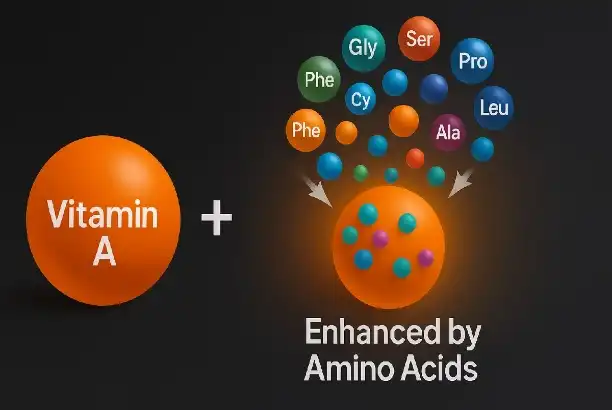
Vitamin A powder is a stabilized, high-potency micronutrient ingredient widely used in food fortification programs to address nutritional gaps across global populations. Available as a pale yellow, free-flowing powder with a 98% specification (CAS: 68-26-8, molecular formula C₂₀H₃₀O, molecular weight 286.45), it delivers retinol activity in a format compatible with diverse food manufacturing systems. For B2B procurement professionals in nutraceutical, functional food, and supplement industries, sourcing a certified, high-purity retinol powder means securing both product efficacy and regulatory confidence across domestic and international markets.
Understanding Vitamin A Powder and Its Role in Food Fortification
What Makes Retinol Powder Essential for Modern Fortification?
A lack of vitamin A continues to be a significant problem in terms of public health. Vitamin A deficiency affects around 190 million children of preschool age throughout the globe, according to the World Health Organization. Consequently, fortification is one of the most cost-effective methods that may be used to enhance nutritional quality. Powders of retinol acetate and retinyl palmitate are the two types of esterified forms that are most often used in dry fortification techniques. Each one has its own unique stability and strength profile, and it is most effective when used with certain kinds of food.
When it comes to the production of food, one of the most significant challenges is that raw retinol oil is inherently unstable. This issue may be resolved by using the powdered form. Microencapsulating or spray-drying the active ingredient inside a starch or dextrin matrix results in the formation of a free-flowing granular structure. This structure allows for the active ingredient to be equally distributed throughout dry blends, tablets, or premix packages without causing any issues with hot-spot concentration.
In addition to assisting with production, sourcing teams are able to create more convincing product claims when they have a better understanding of how this nutrient functions inside the body. Vitamin A powder helps retinal cells produce rhodopsin, promotes the generation of haemoglobin, protects against night blindness and dry eye syndrome, and maintains the functionality of the skin layer by managing keratinocyte differentiation. All of these benefits of vitamin A powder contribute to the maintenance of healthy eyes. Messages in completed products regarding eye health, face cleanliness, and immunity are directly supported by these advantages that have been demonstrated to be beneficial by medical science.

Key Considerations When Using Vitamin A Powder for Food Fortification
Dosage, Stability, and Bioavailability in Food Systems
To choose the right vitamin A powder formula, you have to weigh safety against effectiveness. The U.S. National Academies of Sciences set the Tolerable Upper Intake Level (UL) at 3,000 mcg RAE per day for adults. It is important to carefully compare fortification amounts to what people in target groups normally eat.
When it comes to matrix compatibility, the following are the most essential technical parameters that product developers and procurement teams need to take into consideration when selecting a Vitamin A supplier:
- The microencapsulated vitamin A powders that are considered standard are able to withstand temperatures of up to about 80 degrees Celsius during the production stage. Beadlet kinds that are very heat-resistant are required for use in hot-fill beverage applications. If this is not the case, the processing may result in a loss of 20–30% of the strength.
- Even when it is in powder form, vitamin A powder may still be photo-oxidized due to its sensitivity to light and oxygen. By including antioxidants in the capsule matrix, such as mixed tocopherols or BHT, it is possible to prevent the peroxide value from increasing while the capsule is being stored.
- The compatibility of the food matrix is: When used in dry cereal mixes, cheese premixes, and vitamin powders, vitamin A powder performs very well. The use of cold-water dispersible (CWD) grades is beneficial for water systems since these grades maintain homogeneity without dividing phases.
The length of time something is able to endure, and the degree of safety it provides for customers, are both directly influenced by these security criteria. Using HPLC-based potency testing when the products are received and at defined storage durations provides quality teams with the figures they need to ensure that the active Vitamin A concentration of the product remains within the ranges that are stated on the label for as long as the product is sold.
The formulation itself is important, but proper storage is just as important. Ensure that the vitamin A powder is stored in a dry and cool location, away from water and direct sunlight (if possible). There is a helpful guideline for organising the supply chain and rotating stock that states that high-quality commodities may remain effective for up to two years if they are appropriately packaged.
Comparative Insights: Choosing the Best Vitamin A Powder for Procurement
Powder vs. Other Forms: Why Powder Wins in Industrial Applications
There are some problems with making a lot of liquid retinol esters, pill mixes, and pure crystalline retinol. Vitamin A powder concentrate works better than these options in a number of business areas. It can be added to dry-mix production lines without the need for special liquid dose equipment. It has a steady particle size distribution (usually 100–400 microns) for even mixing, and it doesn't need to be kept in a cold chain like liquid forms do.
Natural beta-carotene powder, which is a form of Vitamin A carotenoid, is an alternative that is often used in goods with clean labels or that are organic. On the other hand, it is much less effective than premade retinyl esters at turning into active Vitamin A in the body. This means it is not as good for fortification programs that focus on precise IU delivery.
Supplier certification is a non-negotiable qualifier in professional procurement. A Vitamin A seller for the U.S. market must have at least the following reliable paperwork: FDA registration, GMP-compliant manufacturing, HACCP-certified methods, ISO quality management standards, and HPLC testing by a third party to confirm the product's potency. More certifications, like HALAL, Kosher, and Organic Food certification, make the ingredient more marketable to a wider range of customers.
Procurement Guide: Where and How to Buy Vitamin A Powder for Food Fortification
Evaluating Suppliers and Managing Logistics
A structured method for evaluating suppliers keeps buying teams safe from quality problems that might affect the compliance of the end product. The review should be based on three main areas: the infrastructure for making things, the accuracy of the paperwork, and the ability to handle logistics.
Jianbei Biotechnology Co., Ltd. has a GMP-standard workshop with three dedicated production lines and two separate quality laboratories. This gives them the manufacturing depth they need to make sure that output is consistent from batch to batch. The company has certifications from the FDA, ISO, HACCP, GMP, HALAL, Kosher, and Organic Food. They offer a full compliance package for both domestic supplement brands and buyers from other countries.
From a logistics standpoint, Vitamin A powder is stored in 1 kg aluminum foil bags or 25 kg drums, which makes it easy to handle both small research orders and large production amounts. Since the smallest order size is 1 kg, it can be used for recipe tests without having to commit to large inventory. Delivery is made within 3–7 business days of proof of payment, which helps meet tight start deadlines. There are many ways to pay, such as Western Union, Alipay, XT, and telegraphic transfer.
Future Trends and Innovations in Vitamin A Powder Food Fortification
Microencapsulation, Regulatory Evolution, and Market Growth
As a result of an increase in the number of individuals who desire accurate nutrition and clear labelling, the market for fortification chemicals is undergoing rapid change. New breakthroughs in nano-encapsulation and lipid-based delivery systems are making it simpler for the body to absorb vitamin A powder in problematic meal types. This is particularly true for plant-based and low-fat diets, which naturally make it more difficult for fat-soluble vitamins to be absorbed by the body.
In addition, regulatory systems are becoming more stringent throughout the globe. More foods are going to need to have vitamins and minerals added to them since the Food and Drug Administration (FDA) in the United States is mandating this. At the same time, Southeast Asia, Sub-Saharan Africa, and Latin America are putting in place their very own national fortification regulations, which results in a consistent need for ingredients that are of an export-grade vitamin A powder. The procurement teams who are able to establish connections with verified suppliers will have an economic advantage over the long run as regulatory challenges continue to increase.
The demands of consumers regarding transparency are driving businesses to provide complete traceability data, beginning with the origin of raw materials and continuing through the testing of final items. If suppliers invest money in robust quality systems and licensing today, they will be of great assistance to purchasers of ingredients in the future when laws grow more stringent.
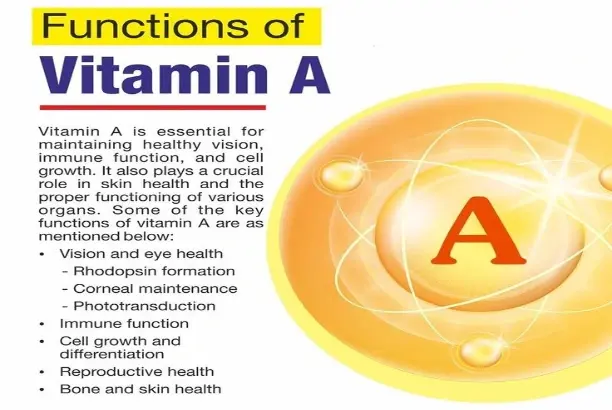
Conclusion
Vitamin A powder is still one of the most useful and adaptable micronutrients that supplement and food makers can use. The first step in making safe, effective fortified products is to find a supplier whose GMP production has been checked, who has all the necessary certifications, and who has experience with formulating. If you want to make nutritional premixes, functional cereals, or dietary supplements, you should only use high-purity, stabilized Vitamin A powder that comes from a reputable producer. This will give your products scientific integrity and market authority. Jianbei Biotechnology has the good infrastructure and technical depth that procurement teams need to do their jobs well.
FAQ
1. What is the shelf life of retinol powder in food applications?
High-grade Vitamin A powder stays fully active for up to two years if kept in a sealed jar in a cool, dry place. Exposure to heat, wetness, or light speeds up the breakdown process, so it is highly suggested that you store food in aluminum foil and keep the temperature stable.
2. How do I verify potency and purity before purchasing?
High-Performance Liquid Chromatography (HPLC) is the usual way to measure the quantity of retinol in the body. Ask your supplier for a Certificate of Analysis (CoA) that includes HPLC-confirmed potency data and, if possible, third-party verification.
3. Can retinol powder be used in both solid and liquid food matrices?
When used in dry conditions, standard microencapsulated powder works well. For liquid systems, you should specify a cold-water dispersible (CWD) grade to make sure that the mixture stays stable and doesn't settle down.
4. What certifications should a compliant vitamin A supplier hold?
Check for FDA registration, GMP, HACCP, and ISO standards at the very least. The HALAL and Kosher certifications make it easier for goods that are meant for a wide range of consumers to get into markets.
Partner with Jianbei — Your Trusted Vitamin A Powder Supplier
Jianbei Biotechnology has three dedicated production lines and two separate labs that work together to make pharmaceutical-grade vitamin A powder. Their products are certified by FDA, GMP, HACCP, ISO, HALAL, and Kosher. We make buying easy by requiring a minimum order of 1 kg, giving you a number of payment options, and delivering within 3–7 days. Reach out directly at sales@bqingbio.com to get samples, detailed data sheets, or a personalized quote.
References
1. World Health Organization. Global Prevalence of Vitamin A Deficiency in Populations at Risk. WHO Press, 2009.
2. Institute of Medicine (U.S.). Dietary Reference Intakes for Vitamin A, Vitamin K, Arsenic, Boron, Chromium, Copper, Iodine, Iron, Manganese, Molybdenum, Nickel, Silicon, Vanadium, and Zinc. National Academies Press, 2001.
3. Sommer, A., & West, K. P. Vitamin A Deficiency: Health, Survival, and Vision. Oxford University Press, 1996.
4. Tanumihardjo, S. A. "Vitamin A: Biomarkers of Nutrition for Development." The American Journal of Clinical Nutrition, 2011.
5. Food and Agriculture Organization of the United Nations. Food Fortification Technology and Quality Control. FAO Food and Nutrition Paper, 1996.
6. Allen, L., de Benoist, B., Dary, O., & Hurrell, R. Guidelines on Food Fortification with Micronutrients. World Health Organization & FAO, 2006.
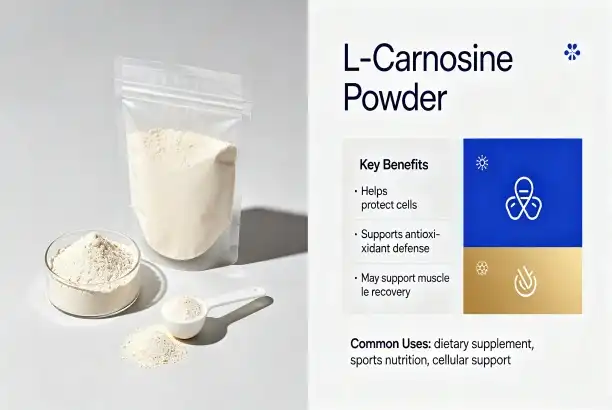
When formulators and procurement managers ask what truly separates a premium ingredient from a commodity one, the answer often comes down to functional depth. L-carnosine powder — a naturally occurring dipeptide with the molecular formula C9H14N4O3 and a molecular weight of 226.23 — delivers on multiple biological fronts simultaneously. Verified at 98% purity (CAS: 305-84-0) and tested via HPLC, it offers antioxidant, anti-glycation, and anti-inflammatory activity within a single white crystalline compound. That combination of measurable purity, multi-pathway efficacy, and formulation versatility is precisely what elevates it above standard peptide ingredients in competitive supplement, skincare, and functional food markets.
Understanding L-Carnosine and Its Core Bioactive Properties
Beta-alanine and L-histidine make up L-carnosine, a dipeptide that is naturally found in large amounts in heart muscle, brain cells, and skeletal muscle. It is technically unique because it works in multiple ways; it doesn't just work on one thing; it works on oxidative stress, reactive carbonyl species, and cellular aging all at the same time.
The Anti-Glycation Mechanism That Sets It Apart
Many people say that taking extra L-carnosine can help your body's functions because it can reduce Reactive Carbonyl Species (RCS) like methylglyoxal, which is a glycation activator that causes Advanced Glycation End-products (AGEs) to build up. AGEs cross-link collagen, turn skin yellow, and strengthen tissues throughout the body. A study in Biochemistry (Hipkiss, 1998) found that L-carnosine acts as a "sacrificial" buffer, reacting with carbonyl groups before they reach functional proteins. This protects the integrity of cells in a way that regular antioxidants can't.
Synergistic Compatibility With Other Actives
L-carnosine works well on its own, but it also works well with CoQ10, vitamin C derivatives, resveratrol, and collagen peptides. This synergistic compatibility lets product developers make layered antioxidant systems that don't clash with each other, which is a huge benefit when making premium multi-active products for anti-aging or cognitive health lines.

Key Quality and Performance Attributes That Matter to B2B Buyers
It's not enough to just look at a standard sheet to choose the right L-carnosine powder ingredient. Managers in charge of buying things need to be sure that every batch will work the same, follow the rules, and hold up in a variety of delivery formats.
Here are the main qualities that make pharmaceutical-grade L-carnosine different from lower-quality options:
- 98% minimum purity is verified by HPLC, which ensures bioactive uniformity and eliminates formulation instability caused by impurities in powders, capsules, and emulsion-based products.
- Full certification stack, such as FDA registration, GMP, ISO, HALAL, KOSHER, HACCP, and Organic Food certifications. These cover all the legal needs for markets in the US, EU, and the Middle East without the need for extra third-party checks.
- Stable shelf life of 24 months when sealed and kept in a cool, dry place. This means less waste during large purchases and longer planning windows for production.
- Molecular stability across pH ranges, so it can be used with both water-soluble supplement matrices and lipid-adjacent cosmetic formulations without breaking down too much.
These qualities work together to solve the most common problems in procurement: inconsistent ingredients, unclear regulations, and loss of potency too soon. When every run of production meets the same scientific standard, you can still back up what your brand says.
Application Scenarios Across Premium Product Categories
This dipeptide can be used in a lot of different high-value product lines because it is so flexible. Its well-documented processes directly lead to claims that can be sold, which is very important at the B2B formulation level.
Anti-Aging Cosmeceuticals
In skin care products, L-carnosine stops the Maillard reaction in skin proteins, which helps collagen stay flexible when it's exposed to UV light. Studies have shown that it can raise the Hayflick limit of skin fibroblasts, which slows down the aging process of cells. It is used by high-end serum and cream brands to support their "anti-glycation" positioning, which is a strong category with educated consumers over 35.
Sports Nutrition and Recovery Supplements
When you do anaerobic exercise, L-carnosine acts as an intracellular pH buffer in muscle tissue. This delays the start of acidosis-related fatigue. A major study published in Amino Acids showed that higher levels of muscle L-carnosine made high-intensity exercise ability much better. This makes it a great addition for healing and pre-workout mixes, especially when mixed with creatine or branched-chain amino acids.
Cognitive Health and Metabolic Nutraceuticals
It gets into the brain from the blood and stops neurotoxic metal ions from sticking to nerve cells and proteins from sticking together. These are two processes that are linked to cognitive loss that comes with getting older. It lowers the oxidative stress caused by glucose in metabolic health products, which means it can be used in vitamins for diabetics. Both of these groups are growing quickly in the US nutritional market, as people are actively looking for ingredients that have been proven to work in clinical studies.
Procurement Considerations for B2B Clients
When choosing where to get a high-potency item like L-carnosine powder, you need to do more than just compare prices. The real cost of ownership in B2B ingredient procurement is based on how reliable the supply chain is, how complete the paperwork is, and how consistent the batches are with each other.
Suppliers you can trust should provide clear manufacturing data, such as checks of the production line and lab test results. The quality of the packaging also plays a big role. Our product ships in 1 kg metal foil bags or 25 kg drums, which are intended to keep moisture out and stop oxidative degradation while it's in transit across borders.
Smaller brands can test formulations before committing to larger volumes, and minimum order quantities starting at 1 kg make this possible. Lead times of 3–7 business days after payment support flexible production schedules. T/T, Alipay, PayPal, and Western Union are all accepted as forms of payment. This makes it easier to do business with people in other countries.
Formulation and Usage Best Practices for Maximizing Efficacy
For a finished product to get the most out of L-carnosine, it needs to be made with careful thought. Bioactivity storage relies on how the ingredients are processed, how well they are dosed, and how they are paired.
Oral supplement doses that have been studied in clinical settings usually fall between 500 mg and 1,000 mg per day. For cosmetics, however, amounts depend on the form they are used in and the regulatory group they fall under. When adding dipeptides to water, keeping the pH level between normal and slightly acidic helps keep the dipeptides' structure. High temperatures during production (above 70°C) can speed up hydrolysis, so they should be avoided when the element is open and not being protected.
Putting L-carnosine and zinc together has been shown to improve how well cells take it in. This is important for eye and brain protection formulations. Using HPLC for quality control checks at the input and finished product stages is the most reliable way to make sure that the product's potency is maintained throughout the manufacturing process.

Conclusion
L-carnosine powder is used in high-end formulations because it is proven to be pure, bioactive in multiple ways, and compatible with a wide range of uses. This dipeptide gives products the useful depth they need to stand out, whether they are anti-aging skin care products, high-performance sports nutrition, or clinically proven brain vitamins. Its full list of certifications and stable supply chain operations make it a useful and low-risk choice for B2B buyers who need an ingredient that works well and meets all regulations.
FAQ
1. Under what conditions should L-carnosine powder be kept?
If you want to keep it cool and dry, keep it in a jar with a lid. Keep it away from direct light and moisture. In these conditions, the shelf life is up to 24 months without losing much of its effectiveness.
2. What kinds of certifications does your L-carnosine have?
Our product is registered with the FDA and has certifications for GMP, ISO, HALAL, KOSHER, HACCP, and organic food. These cover most of the world's major markets.
3. How much does the smallest order have to be?
The smallest amount you can order is 1 kg, so you can use it for formulation tests before ordering 25 kg drums in bulk.
4. Can this ingredient be used in both oral vitamins and makeup that is put on the skin?
Yes. Because it dissolves in water and stays stable across a pH range, it can be used in capsules, powders, and serums and emulsions that are based on water.
Partner With Jianbei for Certified L-Carnosine Powder Supply
Jianbei Biotechnology runs a GMP-compliant factory with three distinct production lines and two separate labs. This factory was built to meet the quality standards of well-known supplement and skincare brands from around the world. As a reliable provider of L-carnosine powder, we offer 98% purity, a full stack of foreign certifications, and shipping around the world in 3–7 business days. For a sample or bulk price right now, email sales@bqingbio.com and ask for one.
References
1. Hipkiss, A. R. — Biochemistry and Molecular Biology International, 1998
2. Hobson, R. M. et al. — Amino Acids, 2012
3. Boldyrev, A. A. et al. — Physiological Reviews, 2013
4. Stuerenburg, H. J. — Journal of the Neurological Sciences, 1999
5. Baye, E. et al. — British Journal of Nutrition, 2016
6. Hipkiss, A. R. — Rejuvenation Research, 2009
High-quality semaglutide raw powder is defined by pharmaceutical-grade purity (≥98%), batch-to-batch consistency, and rigorous third-party verification through methods such as HPLC. As a GLP-1 receptor agonist API with the molecular formula C₁₈₇H₂₉₁N₄₅O₅₉ and a molecular weight of 4113.58 g/mol (CAS: 910463-68-2), it must meet stringent standards for impurity control, chemical stability, and documentation transparency. For procurement professionals sourcing this peptide ingredient for weight management, glycemic control, or cardiovascular support formulations, quality assurance is not optional — it is the foundation of a defensible product pipeline.
Understanding Semaglutide Raw Powder: Core Attributes and Uses
In its raw powder form, semaglutide is a glucagon-like peptide-1 (GLP-1) receptor agonist that is produced by humans. Its activity lasts for a considerable amount of time and is characterised by its prolonged duration. The enzymes that is responsible for the fast consumption of endogenous GLP-1 are referred to as dipeptidyl peptidase-4 (DPP-4). On the other hand, this peptide active pharmaceutical ingredient (API) features a C18 fatty diacid side chain that provides albumin with the capacity to bind and unbind, which results in an increase in its half-life to around 165 hours. As a result of this alteration to the structure, it is now theoretically possible for the molecule to be supplied once per week in formulations that have been finished.
Pharmacological Relevance for Formulators
In the real world, the semaglutide peptide active pharmaceutical ingredient is mostly used for three medical purposes: regulating blood sugar levels, reducing body fat, and safeguarding the cardiovascular system. The management of post-meal hyperglycemia and the improvement of metabolism in those who are overweight or obese are two areas in which it is particularly effective. Because of these characteristics, it is a very enticing chemical for those who are in the process of developing novel metabolic health products, developing nutraceutical goods, or compounding their own medications.
Synthesis Route and Physical Properties
Recombinant DNA technology or solid-phase peptide synthesis (SPPS) are the two methods that are used in the production of pharmaceutical-grade semaglutide, which is a powder that is white in colour. It is possible to get a higher level of natural sequence correctness via the use of recombinant technologies, whereas SPPS makes it simpler to scale up and saves money. HPLC is used to verify that the active pharmaceutical ingredient (API) is at least 98% pure. In the process of peptide manufacturing, the test searches for regulated contaminants such as deletion sequences and D-amino acid isomers. These are two of the most essential quality indicators.

Critical Dimensions Defining High-Quality Semaglutide Raw Powder
Not every peptide API is made the same way. When purchasing a GLP-1 agonist bulk ingredient, teams must look at a number of quality factors that work together to decide if a batch is good enough for further preparation.
Purity, Stability, and Documentation Standards
Purity is the most important factor. The specification level at Jianbei Biotechnology for semaglutide raw powder is ≥98%, which was confirmed by HPLC testing, which is a method commonly used in pharmaceutical quality control to measure the amount of peptides present. Along with clarity, chemical stability during storage is also very important. Powder that has been properly lyophilized and kept in a dry, cool place will stay intact for up to two years (locked storage). Exposure to heat or wetness in the environment speeds up degradation. This means that packing is not just a matter of logistics, but also of quality.
Before putting in a big order, every buying team should make sure they have these basic documents:
- Certificate of Analysis (COA): confirms that each batch is pure and gives information about its molecular weight, appearance, and test method. Need to use HPLC data.
- Regulatory Certifications: FDA, GMP, ISO, HALAL, HACCP, and Kosher are some of the international certifications that are accepted. Jianbei Biotechnology has all of these.
- Impurity Reports: must include standards for single impurities, heavy metal levels, and microbial test results.
- Batch Traceability Records: allow tracking from finished goods to where the raw materials came from.
These standards for paperwork can't be changed for companies that work with controlled markets, like those in the US, EU, and other places that control the import of active pharmaceutical ingredients.
Comparing Semaglutide Raw Powder to Market Alternatives
Procurement managers often evaluate the GLP-1 peptide active pharmaceutical ingredient (API) in comparison to other chemicals or different methods of obtaining the drug. When you have a thorough understanding of these variances for semaglutide raw powder, it is much simpler to make judgements about sourcing that are in accordance with both the regulatory positions and the expectations for efficacy.
Semaglutide vs. Liraglutide: Key Differentiators
The GLP-1 agonist liraglutide is remarkably similar to semaglutide in its structure and function. In addition, it is acylated in order to attach to albumin. Semaglutide, on the other hand, has a half-life that is about 165 hours shorter than that of liraglutide, which implies that it can only be given once a week rather than every day. This is because semaglutide has approximately three times more receptor binding than liraglutide. For formulators who are working on long-acting metabolic medicines, this is a statistically significant difference from a clinical and economic standpoint.
Bulk API vs. Finished Injectable: Procurement Considerations
When businesses purchase semaglutide in its raw powder form rather than in its final injectable form, they have a greater degree of control over the formulation of the pharmaceuticals, the manner in which they are administered, and the amount of money. The powder is exclusively available for export from Jianbei Biotechnology, and the firm requires a minimum order quantity of one kilogram. This powder is available in either 1 kilogram metal foil bags or 25 kilogram drums, both of which are suited for testing on a small scale as well as manufacturing on a big scale. 3–7 business days are required for delivery following the confirmation of payment. A number of different payment methods, including XT, Western Union, PayPal, Alipay, and TT, are all allowed.
Procurement Strategies for High-Quality Semaglutide Raw Powder
It takes more than just looking at price sheets to find a reliable source of pharmaceutical-grade peptide API. Structured buying of semaglutide raw powder protects the quality of the product, the company's reputation with regulators, and the consistency of its long-term supply.
Supplier Qualification and Audit Framework
Procurement teams should do a systematic qualification review of all potential suppliers before making a decision. Jianbei Biotechnology runs a GMP-compliant workshop with three dedicated production lines and two separate labs. This setup helps with both quality control and increasing output. The business has 15 national idea patents and 8 utility model patents, which protect its unique peptide manufacturing process.
A well-planned audit of a supplier should look at:
- Status of GMP certification and records of site inspections
- The ability to do lab work in-house, especially HPLC testing equipment
- Batch release processes and how to issue a COA
- Export compliance paperwork and certificates from foreign regulatory bodies
- How quickly you answer technical questions and give samples
These factors together show if a supplier can be a reliable long-term partner instead of just a business seller.
Logistics, Storage, and Supply Chain Integrity
It is important to handle peptide APIs with care. To maintain potency, it is important to keep the cold chain intact during foreign transportation. Jianbei Biotechnology uses aluminum foil bags for smaller amounts and drums for larger amounts. These packaging formats are made to keep oxidation and moisture from happening during transport as little as possible. When items are received, procurement teams should make sure that the storage conditions (dry, cool environment) are followed right away, since degradation speeds up in humid environments.
Case Studies: Success Stories of Procuring High-Quality Semaglutide Raw Powder
One of the mid-sized nutraceutical brands in the United States that was searching for a GLP-1 peptide ingredient for a line of weight management products reported receiving varied purity findings for semaglutide raw powder from two distinct suppliers located outside of the country. After making the move to a source that had validated HPLC batch data and complete COA transparency, they saw a significant reduction in the percentage of materials that were rejected by quality control after only two manufacturing cycles. In addition, the modification made it simpler for them to record items for the FDA, which resulted in a reduction in the amount of time required for regulatory verification.
One of the pharmaceutical compounding companies in Southeast Asia discovered a flaw in their supply chain when the GMP test that was performed on their primary peptide API provider was unsuccessful. By pre-qualifying a backup supplier that has proven GMP certification and independent lab testing, they were able to keep production continuing. Having a diverse range of suppliers and establishing a system of frequent audits are both just as vital as the standards for the raw materials, as shown by this particular situation.

Conclusion
Defining high-quality semaglutide raw powder comes down to three converging pillars: verified purity (≥98% by HPLC), robust manufacturing infrastructure (GMP-certified, multi-line production), and comprehensive regulatory documentation (FDA, ISO, HACCP, and more). Procurement professionals who prioritize these standards reduce downstream risk and build products capable of competing in regulated global markets. Whether you are developing a weight management supplement, a metabolic health formulation, or a compounded injectable precursor, the quality of your peptide API is the variable that determines everything downstream.
FAQ
1. What purity level should I require for pharmaceutical-grade semaglutide API?
For pharmaceutical-grade peptide APIs, the standard is that they must be at least 98% pure as shown by HPLC. This level is met by Jianbei Biotechnology's semaglutide raw powder, which comes with full COA paperwork for each batch.
2. How should semaglutide bulk powder be stored after receipt?
Keep the product away from heat and moisture in a dry, cool place. If you seal it right, it will last for two years. When packaging is opened, it should be put back together right away and kept in a controlled environment.
3. What certifications should a reputable semaglutide supplier hold?
GMP, FDA, ISO, HACCP, HALAL, and Kosher are some of the most important standards. These prove that the place where the products are made and the ways they are checked for quality meet international standards for food and drug safety.
4. What is the minimum order quantity?
Jianbei Biotechnology's minimum order size is 1 kg, and they offer packing in 1 kg metal foil bags or 25 kg drums for buying in bulk.
Partner with Jianbei for Verified Semaglutide Raw Powder Supply
Jianbei Biotechnology offers a trusted semaglutide raw powder manufacturer pathway for global procurement teams seeking reliability, compliance, and scalable supply. With GMP-certified facilities, three production lines, dual independent laboratories, and a full portfolio of international certifications, Jianbei delivers consistent quality backed by 15 invention patents. Contact us today at sales@bqingbio.com to request a sample, COA, or bulk pricing proposal tailored to your formulation needs.
References
1. Marso, S. P., et al. — "Semaglutide and Cardiovascular Outcomes in Patients with Type 2 Diabetes." New England Journal of Medicine, 2016.
2. Wilding, J. P. H., et al. — "Once-Weekly Semaglutide in Adults with Overweight or Obesity." New England Journal of Medicine, 2021.
3. Lau, J., et al. — "Discovery of the Once-Weekly Glucagon-Like Peptide-1 (GLP-1) Analogue Semaglutide." Journal of Medicinal Chemistry, 2015.
4. International Council for Harmonisation of Technical Requirements for Pharmaceuticals — ICH Q6B: Specifications: Test Procedures and Acceptance Criteria for Biotechnological/Biological Products, 1999.
5. U.S. Food and Drug Administration — Guidance for Industry: ANDAs for Certain Highly Purified Synthetic Peptide Drug Products, 2021.
6. Drucker, D. J. — "Mechanisms of Action and Therapeutic Application of Glucagon-like Peptide-1." Cell Metabolism, 2018.