- English
- French
- German
- Portuguese
- Spanish
- Russian
- Japanese
- Korean
- Arabic
- Greek
- German
- Turkish
- Italian
- Danish
- Romanian
- Indonesian
- Czech
- Afrikaans
- Swedish
- Polish
- Basque
- Catalan
- Esperanto
- Hindi
- Lao
- Albanian
- Amharic
- Armenian
- Azerbaijani
- Belarusian
- Bengali
- Bosnian
- Bulgarian
- Cebuano
- Chichewa
- Corsican
- Croatian
- Dutch
- Estonian
- Filipino
- Finnish
- Frisian
- Galician
- Georgian
- Gujarati
- Haitian
- Hausa
- Hawaiian
- Hebrew
- Hmong
- Hungarian
- Icelandic
- Igbo
- Javanese
- Kannada
- Kazakh
- Khmer
- Kurdish
- Kyrgyz
- Latin
- Latvian
- Lithuanian
- Luxembou..
- Macedonian
- Malagasy
- Malay
- Malayalam
- Maltese
- Maori
- Marathi
- Mongolian
- Burmese
- Nepali
- Norwegian
- Pashto
- Persian
- Punjabi
- Serbian
- Sesotho
- Sinhala
- Slovak
- Slovenian
- Somali
- Samoan
- Scots Gaelic
- Shona
- Sindhi
- Sundanese
- Swahili
- Tajik
- Tamil
- Telugu
- Thai
- Ukrainian
- Urdu
- Uzbek
- Vietnamese
- Welsh
- Xhosa
- Yiddish
- Yoruba
- Zulu
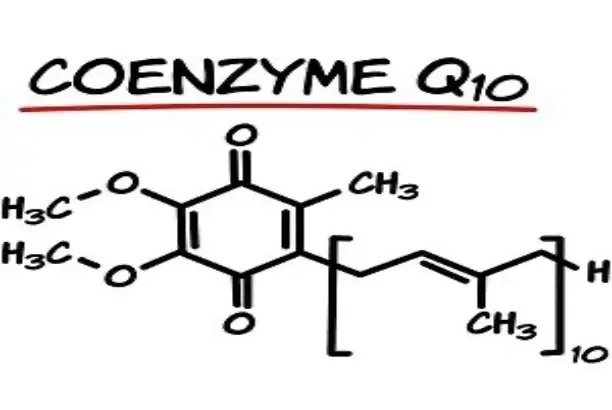
Coenzyme Q10 bulk powder, also known as ubiquinone (CAS 303-98-0), is a vitamin-like biomolecule that dissolves in fat and appears as a yellow or orange-yellow crystalline powder. Its molecular formula is C59H90O4, and its molecular weight is 863.34. This high-purity raw material is mostly made by microbial fermentation with strains like Rhodobacter sphaeroides. It is an important ingredient for companies that make dietary supplements, functional foods, cosmetics, and medicines. In contrast to finished capsules, bulk powder allows full control over the formulation, exact dose customization, and cost-effective large-scale production. It also provides antioxidant and mitochondrial support benefits in a wide range of uses.
Understanding Coenzyme Q10 Bulk Powder
Chemical Nature and Production
Human cells naturally make Coenzyme Q10 bulk powder, which is an important part of how cells make energy. Through advanced fermentation technology, the bulk powder form used in B2B manufacturing is usually 98% pure. This process guarantees bio-identical trans-isomer configuration, which sets pharmaceutical-grade material apart from lower-quality synthetic versions that have cis-isomers that don't do anything. Because it is crystalline, this material can be used in oil-based mixtures, water-dispersible products by microencapsulation, and direct compression tablets as long as the right excipients are added.
Health Benefits Substantiated by Research
In living things, ubiquinone does more than just help with energy metabolism. Research shows that it has big benefits for the heart, especially when it comes to controlling heart failure signs and lowering markers of oxidative stress. Through its ability to move electrons around, the chemical protects cell membranes and mitochondrial processes. Studies show that people with cardiomyopathy and people who are at high risk for heart disease may benefit. Antioxidants also help slow down the aging process of cells by neutralizing free radicals before they damage cell structures.
Applications Across Industries
- Supplement manufacturers incorporate this ingredient to make softgels, pills, and powder mixes that help with energy and heart health. When treated correctly, the material's stable profile meets the needs for a long shelf life.
- Functional food developers use water-dispersible types in energy drinks, nutrition bars, and drinks with added vitamins and minerals. Specialized microencapsulated grades deal with the problems that lipophilic chemicals have with hiding tastes and spreading.
- Cosmetic formulators leverage the antioxidant qualities in anti-aging serums, creams, and skin-rejuvenation items. Because it can get into the dermal layers, the compound is useful for use on the skin to treat oxidative damage.
These different uses show how flexible good bulk powder sellers need to be and how they need to know how to deal with formulation problems that are unique to each business.
CoQ10 Versus Ubiquinol: Critical Differences
Knowing the difference between ubiquinone (CoQ10) and ubiquinol helps buying teams choose where to get things. Ubiquinone is the oxidized form, and ubiquinol is the reduced, electron-rich form. During cellular processes, the body changes ubiquinone to ubiquinol on its own. In clinical studies, ubiquinol has been shown to be more bioavailable, which is especially helpful for people over 40 whose natural conversion efficiency decreases. But ubiquinone bulk powder is more stable while being stored and processed, which makes it a better choice in many industrial settings. Ubiquinone is also cheaper than ubiquinol because it doesn't need as many processing steps. Formulators choose one of these choices based on the target population, the rate of absorption they want, and the stability needs of the formulation.
Key Considerations for CoQ10 Bulk Powder Procurement
Evaluating Quality and Purity Standards
Premium Coenzyme Q10 bulk powder suppliers are different from basic suppliers because they have strict quality control. High-Performance Liquid Chromatography (HPLC) is the standard way to test for purity levels of at least 98% and find degradation products. Gas chromatography (GC) shows that the amount of leftover solvent is still safe, especially for extraction solvents like methanol or n-hexane. Using ICP-MS to test for heavy metals makes sure that the amount of lead stays below 0.5 ppm, the amount of mercury stays below 0.1 ppm, and the amount of arsenic stays below 1 ppm. These are important levels for supplement and drug uses. Microbiological tests must show that the total plate counts are less than 1000 cfu/g and that E. coli is not present at all, alongside the absence of Salmonella and Staphylococcus aureus. Each batch comes with a Certificate of Analysis (COA) document that helps with tracking and following the rules.
Physical Attributes Affecting Performance
The spread of particle sizes has a big effect on absorption and formulation behavior. Laser diffraction analysis checks to see if particles meet the requirements for even distribution in carrier oils or packaging matrices. Smaller particles usually improve uptake rates, but they can be hard to work with during production. To make sure there isn't too much inorganic pollution, the ash level should stay below 0.1%. These physical traits have a direct effect on how quickly the ingredients dissolve, how stable the end formulations are, and, finally, how well the products work for people.
Packaging, Storage, and Handling Best Practices
This sensitive compound is kept safe from damage by the environment when it is properly packaged. Standard items include 1 kg aluminum foil bags for testing and samples, as well as 25 kg fiber drums for large-scale production orders. Both configurations block light and moisture, which are necessary to keep the potency. If the container is properly covered and kept in a dry, cool place out of direct sunlight for two years, the chemicals will stay intact. Changes in temperature speed up rusting, so climate-controlled storage is essential for managing big inventories. When moving from one container to another or between processing equipment, handling protocols should limit the amount of air that is exposed.
Navigating the Market: Selecting the Best CoQ10 Bulk Powder Supplier
Essential Supplier Qualifications
The qualifications for certification are used to judge a seller. Compliance with GMP (Good Manufacturing Practice) shows that quality control is done in a planned way throughout production. Getting an ISO license shows that you follow international rules for management systems and the quality of your products. For U.S. market entry, FDA registration proves regulatory knowledge, and REACH compliance meets standards for the European Union. Getting more certifications, like HALAL, Kosher, and organic, opens up more markets for finished goods. It is important to look at a supplier's manufacturing capabilities because one-line operations are less secure than those with multiple production lines and specialized GMP workshops. Independent labs let you check the quality quickly without having to rely on outside sources.
Partnership Opportunities and Flexibility
With private label and OEM deals, brands can make their products stand out without having to spend on manufacturing facilities. Jianbei Biotechnology runs three production lines in workshops that meet GMP standards. They are helped by two separate labs that do strict quality checks. This infrastructure makes it possible to create custom formulations, unique package designs, and a range of order sizes, with a minimum of 1 kg. This kind of freedom helps businesses try out new recipes or start limited product lines before committing to bigger production runs.
Cost Structures and MOQ Considerations
The price of Coenzyme Q10 bulk powder changes over time based on the cost of fermentation raw materials and changes in demand around the world. Strategic suppliers keep prices stable by making long-term deals and using efficient production methods. The smallest amount you can buy is usually 1 kg, which is enough for research and development. For bigger orders, you can get better prices. The ability to pay in different ways, like through telegraphic transfer, Alipay, PayPal, and Western Union, makes doing business across borders easier. Just-in-time inventory management methods are supported by delivery times that are usually 3–7 working days after payment proof. When procurement professionals understand these business terms, they can negotiate better deals that fit production schedules and cash flow needs.
Usage, Dosage, and Safety Guidelines for CoQ10 Bulk Powder
Industry-Standard Dosage Recommendations
Dietary supplements usually have between 30 and 200 mg per serving, but some products that are designed to help the heart have higher amounts that reach 300 mg. Functional foods usually have 10 to 30 mg of the drug per serve to back up what the label says without making the product too expensive. Cosmetic formulations use concentrations between 0.1 and 1.0% in finished products to balance how well they work with how stable the formulation is. R&D teams should test the security of their matrix specifically because things like pH, temperature exposure during processing, and interactions between co-ingredients can change how well the end product works.
Formulation Integration Strategies
Special methods are needed to add this lipophilic compound to water-based systems. Microencapsulation technologies make powders that can dissolve in water and be used in drinks. Oil-based delivery methods, such as softgel fills, are easy to use and have high solubility. When making direct compression tablets, it's important to choose the excipients carefully so that they are distributed evenly and don't separate during production. Each method has its own benefits that depend on the preferences of the target market and the production capabilities.
Regulatory and Safety Compliance
The substance is generally thought to be safe (GRAS) in many places as long as it is used according to the rules that have already been set. Labels must accurately show the amounts of substances that have been tested analytically. The stability data used to support expiration dates should take into account how people usually store their food. While it's acceptable, being clear about how to use something safely and properly helps protect consumers and a brand's reputation. Health claims must be backed up by evidence that is in line with local rules, like FDA guidelines in the US or EFSA standards in Europe.
Preserving Potency Over Time
Testing Coenzyme Q10 bulk powder for stability under fast conditions shows patterns of decline that help determine the best way to store things. Oxidation happens faster when something is exposed to oxygen, so nitrogen flushing during packaging is a useful way to keep things fresh. Light exposure especially lowers potency, so finished products need to be packed in amber containers or opaque packaging. Chemical purity is kept up by controlling temperatures all along the supply chain, from making the chemicals to delivering them to customers. These tactics for keeping things fresh are especially important for bulk buyers who have to keep track of big inventories over long periods of time.
Conclusion
Choosing the right Coenzyme Q10 bulk powder provider affects the quality of the product, compliance with regulations, and, in the end, the company's success in the market. Procurement experts can make smart choices about where to buy things by reading this book and understanding the technical specifications, quality control protocols, and formulation factors it contains. The difference between ubiquinone and ubiquinol, the significance of particle size distribution, and the value of storing something correctly all have an effect on how well the end product works. Jianbei Biotechnology has a certified manufacturing infrastructure, technical know-how, and flexible business terms that make us a great partner for companies that need high-quality, reliable raw materials. More and more people want products that help mitochondria and keep cells healthy. This is great news for brands that make products with scientifically backed formulas and high-quality ingredients.
FAQ
1. How does bulk powder differ from finished capsules?
Coenzyme Q10 bulk powder is the main ingredient that needs to be mixed with other ingredients to make finished goods. Capsules are ready-to-use dosage types that contain the active drug along with fillers, encapsulation materials, and instructions for how much to take. Bulk powder gives manufacturers full control over the formulation, lower costs through economies of scale, and the freedom to make their own blends. When you buy basic materials, you can choose your own potency levels, delivery systems, and brand names, which you can't do when you buy finished pills.
2. What delivery times should I expect for bulk orders?
Standard arrival times for returning customers are between 3 and 7 business days after payment proof. Initial orders may need more time for export compliance procedures and quality verification paperwork preparation. Large orders of more than 100 kg need to be communicated ahead of time to make sure that production schedules are aligned. International shipping adds factors like clearing customs and managing freight that make total arrival windows longer. Planning purchase processes with enough lead time gaps keeps production from stopping.
3. Can this ingredient work in both supplements and food products?
Yes, but each application has its own design issues that need to be thought through. Bioavailability and therapeutic dosing are important for supplement applications, which usually use oil-based delivery systems. Integrating food products means taking into account taste patterns, processing security during production, and keeping the expected organoleptic qualities of customers. Solubility problems can be fixed with water-dispersible grades made especially for use in beverages. Regulatory frameworks for supplements and foods are different, so label claims and usage amounts need to be backed up properly.
Partner with Jianbei for Premium Coenzyme Q10 Bulk Powder Supply
Jianbei Biotechnology is a reliable source for Coenzyme Q10 bulk powder. They use cutting-edge fermentation technology and strict quality control on three separate production lines. Our factories in Guangzhou Software Park are GMP-certified and make pharmaceutical-grade ubiquinone that meets the standards for FDA, ISO, HALAL, HACCP, and Kosher certification. We have 15 national invention patents that protect our secret methods, and we always deliver 98% purity that is proven by HPLC testing and backed up by full COA documentation for every batch. Ordering in increments of 1 kg up to metric tonnes makes it possible to support both research and development projects and full-scale production needs. If you're making dietary supplements, functional drinks, or cosmetics, our expert team can help you with the formulation so that it works best for your needs. Get in touch with sales@bqingbio.com right away to ask for samples, talk about unique packaging options, or get full price quotes. We guarantee shipping times of 3–7 days and offer multiple payment methods to make your global purchasing easier.
References
1. Crane, F. L. (2001). Biochemical functions of coenzyme Q10. Journal of the American College of Nutrition, 20(6), 591-598.
2. Mortensen, S. A., Rosenfeldt, F., & Kumar, A. (2014). The effect of coenzyme Q10 on morbidity and mortality in chronic heart failure: results from Q-SYMBIO study. JACC: Heart Failure, 2(6), 641-649.
3. Garrido-Maraver, J., Cordero, M. D., Oropesa-Ávila, M., Fernández Vega, A., de la Mata, M., Delgado Pavón, A., & Sánchez-Alcázar, J. A. (2014). Coenzyme Q10 therapy. Molecular Syndromology, 5(3-4), 187-197.
4. Bhagavan, H. N., & Chopra, R. K. (2006). Coenzyme Q10: absorption, tissue uptake, metabolism and pharmacokinetics. Free Radical Research, 40(5), 445-453.
5. López-Lluch, G., Del Pozo-Cruz, J., Sánchez-Cuesta, A., Cortés-Rodríguez, A. B., & Navas, P. (2019). Bioavailability of coenzyme Q10 supplements depends on carrier lipids and solubilization. Nutrition, 57, 133-140.
6. Hidaka, T., Fujii, K., Funahashi, I., Fukutomi, N., & Hosoe, K. (2008). Safety assessment of coenzyme Q10 (CoQ10). BioFactors, 32(1-4), 199-208.