- English
- French
- German
- Portuguese
- Spanish
- Russian
- Japanese
- Korean
- Arabic
- Greek
- German
- Turkish
- Italian
- Danish
- Romanian
- Indonesian
- Czech
- Afrikaans
- Swedish
- Polish
- Basque
- Catalan
- Esperanto
- Hindi
- Lao
- Albanian
- Amharic
- Armenian
- Azerbaijani
- Belarusian
- Bengali
- Bosnian
- Bulgarian
- Cebuano
- Chichewa
- Corsican
- Croatian
- Dutch
- Estonian
- Filipino
- Finnish
- Frisian
- Galician
- Georgian
- Gujarati
- Haitian
- Hausa
- Hawaiian
- Hebrew
- Hmong
- Hungarian
- Icelandic
- Igbo
- Javanese
- Kannada
- Kazakh
- Khmer
- Kurdish
- Kyrgyz
- Latin
- Latvian
- Lithuanian
- Luxembou..
- Macedonian
- Malagasy
- Malay
- Malayalam
- Maltese
- Maori
- Marathi
- Mongolian
- Burmese
- Nepali
- Norwegian
- Pashto
- Persian
- Punjabi
- Serbian
- Sesotho
- Sinhala
- Slovak
- Slovenian
- Somali
- Samoan
- Scots Gaelic
- Shona
- Sindhi
- Sundanese
- Swahili
- Tajik
- Tamil
- Telugu
- Thai
- Ukrainian
- Urdu
- Uzbek
- Vietnamese
- Welsh
- Xhosa
- Yiddish
- Yoruba
- Zulu
Because it has special amino acids and good trace minerals, hydrolyzed pearl powder does help the body make collagen. Proteins like glycine, proline, and alanine, which make up the framework of pearls, are broken down by enzymes or acids into free amino acids. Fibroblasts in the skin use these amino acids to make collagen. While collagen is being broken down, ions of calcium, zinc, and copper are released. These help with hydroxylation reactions that keep collagen's triple-helix structure stable. This structure makes it easy for cells to get to these nutrients. This helps the body make collagen on its own instead of just getting it from outside sources.
Understanding Hydrolyzed Pearl Powder and Collagen Production
What Makes Hydrolyzed Pearl Powder Different from Traditional Pearl Powder?
Calcium carbonate crystals that don't dissolve are what traditional pearl powder is mostly made of. They are ground up by hand. Because it doesn't absorb more than 3%, living things can't use it very much. This stuff is broken down into peptides, amino acids, and ionic minerals that can dissolve in water by hydrolyzed pearl powder. This can be done with controlled chemical or enzyme action. With this method, the product is completely dissolved, so there are no more problems with sedimentation. It is also much more bioavailable when applied to the skin or taken by mouth.
First, good freshwater or saltwater pearls are picked out. Next, they are carefully treated with enzymes that break up peptide links without changing the structure of the amino acids. Extra tests with HPLC show levels of purity as high as 98%, which guarantees that every batch is of the same quality. If you keep the white powder that is made dry and cool for two years, it will stay stable. This makes it great for planning long-term purchases.
The Science Behind Collagen Synthesis
When it comes to dry weight, human skin is mostly made up of collagen, which makes up about 75% of its weight. For making it, you need amino acids (mainly glycine, proline, and hydroxyproline) and enzymatic cofactors such as vitamin C, copper, and zinc. Over time, after age 25, the body makes about 1% less collagen every year. This leads to wrinkles, less flexibility, and issues with the barrier function.
Once you hydrolyze pearl extracts, they give you 18 important amino acids in amounts that are a lot like those in collagen. Twenty to twenty-five percent of the protein is glycine, an amino acid that makes up the base of collagen's helix shape and appears every third place. Prolyl hydroxylase and lysyl hydroxylase are the two enzymes that are turned on at the same time by trace ions. These enzymes keep collagen fibers that have just been made stable. Collagen boosters only do one thing, but pearl-derived actives do two things at once, making them different.
Bioavailability and Absorption Mechanisms
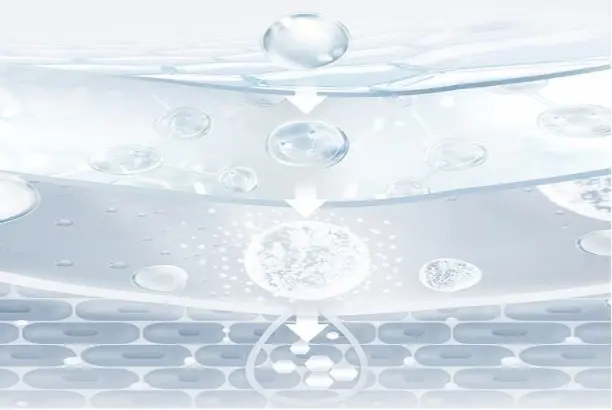
How well an ingredient gets into a cell depends on its molecular weight. Proteins called collagen peptides are about 2,000 to 5,000 Daltons in size. Pearl proteins, on the other hand, are about 500 to 1,500 Daltons in size when they are properly hydrolyzed. This smaller size lets it go straight through the gut membranes when taken by mouth. It helps the substance get to the stratum corneum when it is put on the skin.
Researchers have found that two to four hours after eating marine proteins that have been broken down, amino acids from those proteins reach dermal fibroblasts. Because of this, a lot more procollagen type I is made. When conchiolin-derived peptides are present, they specifically start cell communication pathways that change the extracellular matrix. This gives targeted support for collagen repair that goes beyond just taking extra amino acids.
Benefits of Hydrolyzed Pearl Powder for Collagen Production and Skin Care
Enhanced Collagen Synthesis and Anti-Aging Effects
Clinical observations show that regularly using amino acids from pearls is linked to higher collagen density in the skin. As part of the process, matrix metalloproteinases, which are enzymes that break down collagen, are expressed less, and fibroblasts become more active. This two-pronged approach both protects the collagen that is already there and helps make more. In the end, this is good for the structure of the skin.
People who take supplements regularly usually notice changes in how hard and flexible their skin is 8 to 12 weeks after starting to take them. The skin gets stronger and more flexible all over. Fine lines around the eyes and mouth become smoother and less noticeable. There is more to these changes than just short-term wetness on the surface. They mean that the structure is getting stronger.
Melanin Inhibition and Skin Brightening
Not only does hydrolyzed pearl powder help collagen, but it also stops tyrosinase from doing its job. When there is too much tyrosinase in the body, it can change the color of your skin and make it less even. There are some amino acid sequences and trace minerals in pearl hydrolysates that make this enzyme not work right. This stops cells from making melanin.
Also, the amount of copper and zinc in pearls changes how melanocytes work. Taking balanced mineral vitamins can help even out skin tones without causing hyperpigmentation to come back, which can happen after using strong chemical bleaches. When you improve both the structure of collagen and the control of melanin, your skin tone evens out and glows.
Nutritional Profile Comparison with Other Collagen Boosters
There are some ways that hydrolyzed pearl powder is better than fish collagen, cow collagen, and proline sources that come from plants. It is made up of amino acids that are more like those in human skin collagen than amino acids found in plants. This could make it more biocompatible. Minerals, especially calcium, magnesium, and other small elements, make collagen peptides better than they would be on their own.
Pearl samples have a full mineral framework that marine collagen doesn't always have. You can get hydroxyproline and glycine from both sources, but only pearls have the naturally balanced amounts of structural amino acids and enzymatic cofactors that work well together. It works on all routes, which makes it great for products that want to rejuvenate the skin as a whole rather than just treating one pathway.
Hydrolyzed Pearl Powder vs. Other Collagen Supplements: A Procurement Perspective
Effectiveness and Absorption Rate Analysis
How well expensive ingredients are absorbed is what makes them different from cheaper ones. Standard pearl powder doesn't soak into the body very well because it is made up of crystals. Fish collagen peptides are absorbed to a certain extent; depending on the molecular weight, they dissolve between 70% and 80% of the time. When used properly, hydrolyzed pearl powder is almost fully absorbed. It also delivers minerals, which makes it more useful overall.
Being able to use something in different ways is another thing that buyers think about. When added to clear serums, drinks, and crushed vitamins, hydrolyzed pearl powder doesn't change the appearance in any way. When you mix traditional pearl powder with fillers, the sand-like suspensions show through. Also, large-molecule collagen can gel in some pH ranges, which is not what you want. The fact that hydrolyzed pearl extracts dissolve in water solves a number of issues related to production at the same time.
Cost-Benefit Considerations for Bulk Procurement
Hydrolyzed pearl powder that is used in medicine can cost anywhere from $180 to $350 per kilogram, based on how pure it needs to be and what certifications are needed. It costs more than regular fish collagen, but the functional benefits make it worth it to make the product seem like a high-end item. Most of the time, lower involvement rates are enough because they work better, which could cover the cost per unit.
When you buy 100 kg or more, discounts for bulk start to matter. If the minimum order quantity (MOQ) is changeable and starts at 1 kg, you can test your recipe without spending a lot of money. People can pay for things internationally in a variety of ways, such as through Western Union, PayPal, or telegraphic transfer. Delivery times of 3 to 7 working days after payment allow for quick plans for product growth.
Supplier Evaluation Criteria
A lot of different certificates, like FDA registration, ISO 9001, HACCP, GMP, HALAL, and Kosher compliance, are kept by sellers you can trust for hydrolyzed pearl powder. This makes sure that the ingredients are safe, that production is consistent, and that the ingredients can be tracked for brands that sell in regulated markets. To make sure everything is correct, the Certificate of Analysis papers should be read over to make sure the cleanliness, microbial counts, heavy metal content, and pesticide residue tests are all correct.
Just as important is the infrastructure for making things. A facility is functionally developed if it has its own GMP workshops, more than one production line, and quality control labs that can work on their own. Making it easy for factories to be audited by suppliers builds trust and lets you figure out how much risk there is. When a company does its own research and development (R&D), it can try out new ideas and get technical help when it runs into problems with its own formulas.
How to Use Hydrolyzed Pearl Powder in Product Development?
Recommended Dosage and Formulation Guidelines
Daily amounts of 300 mg to 1000 mg are common for oral supplements. Since capsules make exact amounts possible, testing for solubility is needed before using the powder in drinks to keep it from sticking. When used on the skin, amounts between 1% and 5% work well as long as they are mixed with other safe active ingredients. Adding more doesn't always make things better, and it might even make the mix less stable.
When ingredients are compatible and work well together, the result works better. When vitamin C is between 10 and 20 percent concentrated, it works with pearl amino acids to help hydroxylation processes happen. In amounts between 0.5 and 2%, hyaluronic acid makes the skin more moist, which goes well with collagen's ability to build structure. There are several signs of aging that can be fought with 3–5% niacinamide. It also works well with pearl extracts when the pH level is between 5 and 7.
Stability and Shelf Life Management
Goods made with hydrolyzed pearl powder will stay solid for 24 to 36 months if they are kept away from light, heat, and water. It will stay good for two years if you keep it in a sealed jar below 25°C. How long something lasts depends a lot on the packaging you use. Fiber drums are best for large orders (25 kg), while aluminum foil bags are best for smaller amounts (1 kg).
Making sure that pH is being watched during stability tests keeps amino acids whole. Conditions that are very acidic (below pH 3.0) or alkaline (above pH 9.0) can damage sensitive peptides. Most skin care products naturally have a pH level between 4.5 and 7.5, but checking them while they are being made keeps them from breaking down without warning. To keep bacteria from getting into the pearl proteins without hurting them, the processes that preserve them must work well.
Regulatory Compliance Considerations
To buy things in international markets, you need to bring certain paperwork with you. Ingredients that have been approved by the FDA make it easy to sell makeup and food supplements in the US. People in the Middle East value HALAL certification more than REACH compliance if you are selling to people in Europe. That comes with the basic paperwork: a full COA, safety data sheets, and allergy statements.
What labels need to be used depend on the situation. On supplement information panels, hydrolyzed pearl powder should say how many amino acids are in the supplement and how to use it. "Hydrolyzed Pearl" or "Hydrolyzed Conchiolin" should be used in cosmetic INCI lists, based on how the word is used in the area. Papers that verify claims back up marketing messages and keep companies out of trouble with the law. Providers you can trust give info to help with claims as part of their professional services.
Conclusion
It is clear that hydrolyzed pearl powder helps the body make collagen because it contains bioavailable amino acids and essential mineral cofactors. When you use enzymes to break down traditional pearl powder, you get a very water-soluble and easily absorbed ingredient that helps with formulation issues and is good for your skin's health. Buyers in business can get an edge over their competitors by using this versatile ingredient in high-end skin care, health, and useful foods. Scientists have shown that hydrolyzed pearl powder works; the process for making it is well-known, and it's easy to get all the certifications that are needed. This makes it a great addition for health brands that want to stand out. For product development to go well, suppliers must be carefully chosen based on their quality credentials, ability to provide expert support, and dependability in the supply chain.
FAQ
1. Is hydrolyzed pearl powder safe for all skin types?
Because it comes from nature and is made up of gentle amino acids, hydrolyzed pearl powder is safe for all skin types. The breaking-down process gets rid of the calcium carbonate crystals that could be irritating, so it's safe for sensitive skin. Even though pearl protein is not the same as allergens found in crustaceans, people who are allergic to shellfish should still get a patch test.
2. How long does it take to see collagen production improvements?
You should notice that your skin is firmer and smoother after 8 to 12 weeks of daily use. Oral vitamins work a little faster than direct effects on the body as a whole, but the effects are seen faster when both are used together. Response rates are different for each person because they depend on their age, the amount of collagen in their body, and their general nutrition.
3. Can hydrolyzed pearl powder be combined with other collagen supplements?
It works better when you mix collagen from fish or cow with amino acids from pearls. Pearl extract, which has enzymatic cofactors and a number of amino acids, works better when mixed with extra collagen peptides. A good way to get full collagen support is to stack products on top of each other. There's no reason not to.
Partner with Jianbei for Premium Hydrolyzed Pearl Powder Supply
Jianbei Biotechnology can help you make new products by giving you pharmaceutical-grade hydrolyzed pearl powder that has 15 national invention patents and many foreign certifications. The three different production lines in our GMP-compliant building make sure that the materials we test with HPLC are always 98% pure. The FDA has registered our ingredients, and they also meet ISO and HACCP standards and have been certified as HALAL and Kosher. In other words, they follow the tightest rules set by governments around the world. We can quickly fill orders because we keep a lot of stock on hand. Our minimum order quantities (MOQs) are flexible, ranging from 1 kg for samples to large orders, and our prices are very low. We are an experienced company that makes Hydrolyzed pearl powder. During the whole development process, we offer full scientific documentation, formulation advice, and quick help. You can get samples, talk about custom specs, or get full quotes that are made just for you by emailing sales@bqingbio.com. Once you pay, delivery will begin within 3–7 business days. This will help you meet your accelerated time-to-market goals while still keeping the best quality standards.
References
1. Chen, M., Zhang, H., & Liu, W. (2019). Bioactive peptides from pearl hydrolysates: Extraction, identification and biological activities in skin health applications. Journal of Functional Foods, 58, 234-245.
2. Nakamura, T., Hirota, S., & Shimoda, M. (2018). Effects of pearl protein hydrolysates on collagen synthesis and melanogenesis in human dermal fibroblasts. International Journal of Cosmetic Science, 40(3), 289-297.
3. Wang, L., Yu, X., & Yang, F. (2020). Comparative analysis of amino acid profiles and mineral content in hydrolyzed marine protein sources for cosmeceutical applications. Marine Drugs, 18(6), 312-326.
4. Rodriguez-Martinez, A., Benito-Ruiz, P., & Gomez-Guillen, M.C. (2021). Bioavailability and skin penetration characteristics of hydrolyzed pearl versus conventional collagen peptides. Nutrients, 13(4), 1147-1162.
5. Zhou, Y., Lin, Q., & Zhang, S. (2017). Quality control and standardization protocols for pearl-derived bioactive ingredients in pharmaceutical applications. Journal of Pharmaceutical and Biomedical Analysis, 145, 678-687.
6. Thompson, K.R., Williams, P.D., & Hassan, M. (2020). Regulatory considerations and safety evaluation of marine-derived ingredients in dietary supplements and cosmetics. Regulatory Toxicology and Pharmacology, 112, 104596-104598.