- English
- French
- German
- Portuguese
- Spanish
- Russian
- Japanese
- Korean
- Arabic
- Greek
- German
- Turkish
- Italian
- Danish
- Romanian
- Indonesian
- Czech
- Afrikaans
- Swedish
- Polish
- Basque
- Catalan
- Esperanto
- Hindi
- Lao
- Albanian
- Amharic
- Armenian
- Azerbaijani
- Belarusian
- Bengali
- Bosnian
- Bulgarian
- Cebuano
- Chichewa
- Corsican
- Croatian
- Dutch
- Estonian
- Filipino
- Finnish
- Frisian
- Galician
- Georgian
- Gujarati
- Haitian
- Hausa
- Hawaiian
- Hebrew
- Hmong
- Hungarian
- Icelandic
- Igbo
- Javanese
- Kannada
- Kazakh
- Khmer
- Kurdish
- Kyrgyz
- Latin
- Latvian
- Lithuanian
- Luxembou..
- Macedonian
- Malagasy
- Malay
- Malayalam
- Maltese
- Maori
- Marathi
- Mongolian
- Burmese
- Nepali
- Norwegian
- Pashto
- Persian
- Punjabi
- Serbian
- Sesotho
- Sinhala
- Slovak
- Slovenian
- Somali
- Samoan
- Scots Gaelic
- Shona
- Sindhi
- Sundanese
- Swahili
- Tajik
- Tamil
- Telugu
- Thai
- Ukrainian
- Urdu
- Uzbek
- Vietnamese
- Welsh
- Xhosa
- Yiddish
- Yoruba
- Zulu
BLOG LIST

Pregabalin powder is the active pharmaceutical ingredient (API) form of pregabalin, a prescription compound used to treat neuropathic pain, fibromyalgia, and partial-onset seizures. Some jurisdictions also approve it for generalized anxiety disorder. Manufacturers use it to produce capsules, oral solutions, and other authorized dosage forms. Compounding pharmacies and laboratories handle it under strict controls. It is not a consumer product, and no one should take raw powder without a prescription and exact measurement. I wrote this guide for pharmaceutical buyers who want to know what the material is, where it fits, and how to evaluate a source before ordering.
Understanding Pregabalin Powder and Its Role in Medicine
What Is Pregabalin Powder?
That's the end of this part. Pregabalin powder, which is made of (S)-3-(aminomethyl)-5-methylhexanoic acid, is the main API. It's something people buy to learn the law, try out their ideas, and make legal things. Already-made capsules or pills have a set amount and other things put in them. You can't use study guides or reference standards for this. They might not meet the standards for business manufacturing. Reference standards are the only way to compare things in a meaningful way. Gabapentin and pregabalin are similar in some ways, but they are not the same chemical. This drug, pregabalin, is controlled in the United States and is on Schedule V. This means that only people with clear instructions, the right paperwork, and the ability to keep track of batches can buy it.
Main Uses of Pregabalin Powder
Pregabalin API is mixed with many other substances to create hard pills (usually 25 mg to 300 mg) and solutions that can be swallowed. When mixed with water, some forms work well and are good for people who can't swallow capsules. These shops can also use precise scales and written instructions to make exact amounts from bulk powder if a doctor asks them to. In 2004, the FDA gave the OK to the brand-name drug Lyrica. Not long after that, it became allowed to use generic forms. In the U.S., illnesses like fibromyalgia, partial-onset seizures, diabetic peripheral neuropathy, and spinal cord damage are all given names. Labels are different in each country, so people who want to buy something should check the labels in their own country. Being able to predict the same results from batch to batch with an approved API is helpful, but it doesn't mean that patients will have good outcomes.
How Pregabalin Powder Works in the Body
Pregabalin connects to the alpha-2-delta subunit of voltage-gated calcium channels in the brain and spinal cord. Because of these links, drugs that make nerves fire more slowly can't leave cells as quickly. So nerve signals don't go off too often. Pregabalin is structurally similar to the neurotransmitter GABA, but it doesn't work on GABA receptors directly. Pharmacokinetic studies show that at least 90% of the drug is available when it is taken by mouth. This stuff is mostly flushed out of the body by the kidneys without being changed by the liver. These traits hurt the work that goes into making medicines and using them in hospitals. Doctors who are qualified to do so should be the only ones to decide on doses and patient safety. Products should only have labels that have been cleared. This means that the only things that should be in source content are technical and legal texts.
Quality Characteristics, Grades, and Alternatives
Physical, Chemical, and Quality Characteristics
It's easy for pregabalin to dissolve in water, even water that is both acidic and basic. Its molecules are made up of C8H17NO2 and weigh about 159.2 grams each. It's not just a number. The formulators should also look at the mass density, the amount of wetness, the flowability, and how the particle sizes are spread out. The machine fills the pills better, and the blend is more even when these things are taken into account. For example, standards usually say what something looks like, how to identify it, how to test it, what other things are in it, how much water it has, what impurities it has, and how many microbes it can hold. Containers can become less solid when they are exposed to heat, light, humidity, packing, and being opened and closed many times. For a formulation to be sold, the acceptance factors should match what the pharmacopeia says and what the formulation really needs.
Pharmaceutical-Grade vs. Research-Grade Material
A bigger quality system includes pregabalin powder for medical use. Some of the things that system might have are GMP controls, approved analytical methods, batch records, change control, and a way to deal with deviations. You can try research-grade material in the lab, but it usually doesn't have full impurity data, proof of stability, a history of production, or permission to be used in medicines. It's not always true that something with a high purity number can be used in health. People who want to buy should read a certificate of analysis (COA) that is unique to the batch they want to buy. Also, they should read about how the product was tested and make sure that the papers match the batch that is being sold. No matter what it will be used for—testing, research and development, or making things to sell—the type you pick should match.
Pregabalin Powder vs. Common Alternatives
Gabapentin, Pregabalin powder, and full pregabalin pills can't be bought at the same time. The people who make medicines can choose how to make dosing forms when they use API powder. But it's up to the customer to take care of production, testing, packing, development, and filing with the government. Getting finished capsules to the customer is easier, but they are less flexible and can't be sold without permission from another business. Gabapentin comes in two different types, but they both work on the same alpha-2-delta subunit. However, they are not the same in terms of structure, pharmacokinetics, approved uses, or documentation needs. Compared to gabapentin, pregabalin is absorbed more steadily and in a straight line. Gabapentin, on the other hand, stops being absorbed when you take more of it. It's also important to know what kind of seller will do the job best. In this case, a source that helps with filing a regulated business might not be the best choice for work in the early stages of formulation.
Documents, Regulation, and Handling
Quality and Compliance Documents to Request
When you go shopping, you should keep in mind your quality system, the market you want to target, and the use you want to make of the product. Specifically, in that sequence. A current batch-specific certificate of analysis (COA), a product specification, a safety data sheet (SDS), evidence of good manufacturing practice (GMP), information on the production site, an impurity profile, comments on residual solvents and elemental impurities, stability or retest data, and packaging specifications are all things that you should request. I would appreciate it if you could review the findings of the HPLC test, the chromatograms, the compounds that are connected, and the unknown contaminants. In order to locate impurities and liquids in the elements that are still present, the ICH Q3C and Q3D rules are often the ones that are used. APIs are created with the help of ICH Q7. The usage of ChP, USP, Ph. Eur., or BP should be something that you are aware of. In the event that you file in the United States, the provider has to provide you with a reference to the Drug Master File. A signature from the legal team and the quality assurance team should be required on each and every piece of paper before an order is placed.
Regulatory and Import Considerations
2005 saw the addition of the Controlled Substances Act to the United States of America. Each nation has its own set of laws, which are subject to modifications. It is important to determine whether or not the item you want to purchase is a prohibited drug, whether or not it must be registered with the Drug Enforcement Administration (DEA), and whether or not it has any import or export permits, end-use declarations, licenses, customs classification, or duties to preserve records. There must be unambiguous regulations about who is permitted to send anything, ensure that the items arrive in a secure manner, and ensure that the seller satisfies the criteria prior to shipping. In addition, it is responsible for completing the necessary documentation, completing the shipping forms, and ensuring that the items are quarantined and examined after they arrive at their destination. In order for commodities to be transported from one country to another, it is necessary to reach a consensus on Incoterms, insurance, and claims liability. In addition to this, the product names, batch and quantity information, the appropriate packaging, the SDS documentation, and the Incoterms that have been agreed upon must all be proper. The products should be legalised with the appropriate individuals and the particular party that is authorised to bring them into the nation.
Storage and Handling
Do what the seller says about acceptable specs, how to package the item, and stability data. Keep pregabalin powder out of the sun, too much water, heat, and germs. While the containers are open, don't let it touch anything else either. When people come into the building, it's a good idea to check their IDs, keep track of inventory using FEFO, limit access, separate batches, and record quality releases. In the US, this combination is illegal, so it's important to keep it safe and keep track of what you have. The people who work there should read the most recent SDS and look over the page. To do this, you should keep the dust down, make sure workers have the right tools, make sure the job is done right, stop cross-contamination, and take out the trash. General advice is not a good way to find out exact temperature and humidity limits. Instead, you should get official technical data.
Choosing a Supplier and Requesting a Quote
How to Compare Pregabalin Powder Suppliers
Start with what you can do instead of the price. Check to see if the company has GMP proof, lets you visit the plant, has a history of following the rules, can produce, can meet quality agreements, has exported before, can keep the supply going, and is technically friendly. Things like quality, analysis skills, papers, wait time, packing, business terms, and legal help can all be scored on a weighted scale. Next, find the total landed cost. This includes the API price, the minimum order quantity, testing, shipping, insurance, customs duties, permits, inspections, storage, shipping, and the cost of testing. It is fairer to make a choice when there is a simple table with the grade, COA completeness, HPLC method, stability support, Incoterms, wait time, and regulatory papers. A low price tag might hide things like missing papers or extra test fees.
How to Select a Qualified Pregabalin Powder Source
You should choose based on what you want to do, how far along the project you are, who you want to reach, how much documentation you need, and what kind it is. Companies that make things may need quality agreements, audits, tried-and-true methods, stable yearly capacity, and official notice of any changes. Besides that, most of the time, these are the only things that development tasks need. They are a high-tech company because they have 15 national invention patents and 8 utility model patents. Guangzhou Software Park is where its main office is located. We're lucky to have a skilled R&D team, a GMP plant, a lot of stock, and all of our licenses. Before placing an order, all buyers should get in touch with us to see if we have a batch-specific COA, impurity tests, export paperwork, and instructions on how to store the goods. A supplier is more than just a low price. Words that are clear and papers that can be checked say more.
How to Request a Compliant Quote
When you make it easy for people to follow, every quote goes faster. Tell them what you want to use it for, what grade or standard you need, how much you need, how often you need it, what kind of packaging you'd like, when you need it, what tests you expect, what certificates you need, what kind of report you need, and Incoterms. Then, you should look at each offer based on its details, such as how long it takes to respond, the minimum order quantity (MOQ), the landing cost, the expert support, the regulatory response, and the batch paperwork. Providers who follow the rules won't make medical claims that can't be backed up. You can look at papers, ask for COAs for certain groups, talk about packing, export paperwork, and quality checks. Who can send our team information about their project to get a price and approval package? Only those who are allowed to.
Conclusion
Pregabalin powder is the active ingredient in a prescription drug that is allowed to treat fibromyalgia, neuropathic pain, and partial-onset seizures as an additional medicine in the United States. It quickly breaks down in water and works on the alpha-2-delta subunit of calcium channels. To get it, it needs to be made in a controlled way and given to people as pills or tablets to take by mouth. You have to be more than just pure to be right. What matters is the grade, particle size, how wet it is, the impurities it has, and how stable it is. Materials that are used in drugs need GMP-based paperwork, but materials that are used in studies don't always have it. The United States is on Schedule V, which means they need to get a permit, store the goods, and keep records. You shouldn't just compare companies based on price; you should also look at their skills, papers, and total landing cost.
FAQ
1. Is pregabalin powder the same as a finished capsule?
That's not right. An API is Pregabalin powder, but pills have a set amount of API mixed in with other things. It relies on what it's going to be used for, what permits are needed in the area, and how skilled the supplier is in making it.
2. How should I judge the purity of pregabalin powder?
You should look at more than one top number to make sure it's true. Look at a COA that is unique to the batch and use qualified identity, assay, and related-substance methods. You should also ask for the standard, SDS, GMP proof, defect data, and stability data.
3. Which permits apply to importing it?
Each country has its own rules. There are rules and forms you need to follow before you place your order because pregabalin is on Schedule V in the US. Talk to the DEA and your approved importer about these things.
4. What affects MOQ and storage conditions?
The provider and the batch determine both. Check that the price and details about the things are correct.
Request Your Pregabalin Powder Quote from Jianbei
Need a company that will give you pregabalin powder and handle your paperwork? This company, Jianbei, has a GMP factory, a lot of stock, and all the certificates it needs. There is also a lot of experience on the R&D team. Please email sales@bqingbio.com with the type of certificate you need, the date, the amount, and the place where it needs to be sent. Our team will get back to you with a price and a qualification package for people who are approved to buy.
References
1. Taylor CP, Angelotti T, Fauman E. Pharmacology and Mechanism of Action of Pregabalin: The Calcium Channel α2-δ Subunit as a Target for Antiepileptic Drug Discovery. Epilepsy Research, 2007.
2. Bockbrader HN, Wesche D, Miller R, et al. A Comparison of the Pharmacokinetics and Pharmacodynamics of Pregabalin and Gabapentin. Clinical Pharmacokinetics, 2010.
3. Gajraj NM. Pregabalin: Its Pharmacology and Use in Pain Management. Anesthesia & Analgesia, 2007.
4. Derry S, Bell RF, Straube S, et al. Pregabalin for Neuropathic Pain in Adults. Cochrane Database of Systematic Reviews, 2019.
5. International Council for Harmonisation. ICH Q7 Good Manufacturing Practice Guide for Active Pharmaceutical Ingredients, 2000.
6. U.S. Drug Enforcement Administration. Schedules of Controlled Substances: Placement of Pregabalin into Schedule V. Federal Register, 2005.
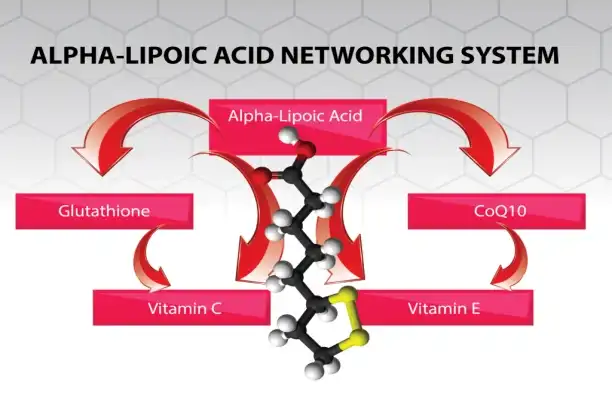
Because of the reactions that occur when the sulfur-containing ring is exposed to heat, light, oxygen, and moisture, alpha lipoic acid powder has to be stabilised more effectively. It is possible that the drug may lose its assay, darken, smell, and mix unevenly if it is not protected, which would reduce its shelf life and the uniformity of the batch. It is necessary to manage manufacturing parameters, particle size, packaging, and storage in order to achieve stabilisation, which begins with early reaction and continues until final delivery. An explanation of what causes thioctic acid to be fragile, how it is preserved via careful manufacture, how it behaves in finished products, and how purity may be determined is provided in this article. The Jianbei grading criteria are provided to your team so that they may analyse it in an objective manner.
What Makes Alpha Lipoic Acid Powder Difficult to Stabilize?
The Chemical and Physical Characteristics of Alpha Lipoic Acid
A chemical having the formula C8H14O2S2 with a molecular weight of 206.33, alpha lipoic acid, also known as thioctic acid, is an organosulfur compound. CAS number 62-46-4 and a 98% specification are both associated with our light yellow crystalline powder that has been tested using HPLC. The antioxidant activity of the molecule is made possible by the stretched dithiolane ring, but it must be treated with considerable care. Because the melting temperature is typically between 60 and 62 degrees Celsius, warm warehouses and hot milling techniques have the potential to quickly damage the material.
Sensitivity to Heat, Light, Oxygen, and Moisture
Heat is the factor that has the greatest impact on stability. Around the melting point, thioctic acid undergoes polymerisation, which causes changes in colour, solubility, and assay. Caking and uneven dosing are caused by moisture, while light and oxygen both contribute to an increase in stress. Buyers are alerted when drum clumping, a darker hue, or a stronger sulphur smell are present. The temperature, the amount of light exposure, and the humidity should be monitored as three separate checkpoints with certain constraints at the manufacturing and the warehouse.
Low Water Solubility and Formulation Challenges
Although ethanol and methanol are able to dissolve alpha lipoic acid, water is not able to do so. This characteristic raises difficulties with dispersion for manufacturers of liquids, sachets, and beverages. Unmixed capsules are another potential source of dose variation. It is important for formulators to evaluate the uniformity of the blend early on since the consistency is affected by particle size, carriers, and mixing duration. Due to the fact that dry forms, such as capsules, tablets, and powder mixes, circumvent solubility issues, several producers are able to acquire substantial quantities of powder.
How Advanced Stabilization Protects Alpha Lipoic Acid Powder
Stabilization Starts with Raw Material and Process Control
Protection of the material is performed before packaging. The material is shielded from the effects of heat and air by the process of milling, which includes filtering, drying, and controlled reactions. In Jianbei, there is a workshop that is GMP-approved and has three different production lines. In two different laboratories, high-performance liquid chromatography (HPLC) is used to test the chemical against the 98% requirements. According to these standards, consumers are permitted to inspect and record each individual lot prior to the product leaving the factory, rather than relying on a single number.
Controlled Temperature and Humidity During Production
The melting of thioctic acid may be prevented, and the amount of moisture that is taken in can be reduced by limiting the temperature and relative humidity. Effective production practices reduce the amount of open handling and repacking that occurs. This is because every minute of exposure is significant. You should enquire about the filling room and warehouse monitoring data of your supplier. Under conditions that are consistent, each drum of alpha lipoic acid powder acts in the same manner as the one before it, which guarantees a consistent output.
Light and Oxygen Protection
Following the drying process, powder is protected by packing with a light barrier, a minimised headspace, and rapid sealing. Nitrogen flushing is a method that certain manufacturers employ to get rid of air; however, you should examine the goods. When it comes to larger production runs, we prefer the 25-kilogram drum, and when it comes to preventing light and air, we recommend our 1-kilogram aluminium foil bag. While in transit and while it is stored on your shelf, the material is protected by these formats.
Particle Size and Micronized Alpha Lipoic Acid Powder
Through the use of micronising powder, capsules and sachets may have their dispersion and mix consistency improved. However, due to its increased surface area, it is more likely to oxidise, absorb moisture, and flow differently than other materials. The ultimate dosage form should be taken into consideration when selecting a particle size, and size distribution data should be requested for each batch. It will be determined via a pilot batch flow test whether or not a finer grade really increases productivity.
Alpha Lipoic Acid Powder Stability: From Manufacturing to Final Product
Stability During Blending, Granulation, and Tableting
There is no way to forecast the freshness of the final product using bulk powder data. High-shear mixing, wet granulation, and compression are the three methods that are used to introduce heat, moisture, and mechanical stress. In general, material that has been dry-granulated or made by direct compression is more stable. Perform a comparison of the results of the in-process tests with the initial batch after each step of the procedure. Due to the fact that high-moisture excipients have the potential to compromise blend stability, excipient compatibility should be evaluated on an individual basis.
Stability in Capsules, Tablets, Liquids, and Powder Blends
The dangers differ depending on the format. Capsules and tablets need moisture control and packaging barriers in order to prevent water from entering the product. When it comes to sachets and powder mixes, it is necessary to have uniform mixing and water activity that is controlled. Additional effort is required for the production of functional beverages and liquids in order to ensure solubilisation, microbiological control, and preservation. Because of the chemical's sulphur odour, food manufacturers could be required to use flavour masking in order to avoid contamination.
Alpha Lipoic Acid Powder Versus Liquid Formulations
When it comes to dry-dose manufacturing, powder is often preferred since it is easier to store and carry in bulk. There is a need for more study into the stability, solubilisation, and preservation of liquid forms due to the fact that water and dissolved oxygen speed up the disintegration process. In order to provide services to businesses that are interested in regulating dosage form inside their facilities, our Jianbei powder is only available for export. Powder materials may be used by liquid developers to produce a tested system.
Alpha Lipoic Acid Powder Versus Capsules and Tablets
Tablets and capsules that have been finished are handy, and they also lock in a composition that is stable. Buying raw powder gives your research and development team the ability to control dose, excipients, and label claims. Metabolic support and antioxidant mixes may be customised to customer specifications. With that being said, organisations that manufacture capsules and tablets have to reevaluate their packaging since desiccants and opaque bottles are required in order to safeguard the dosage form.
Alpha Lipoic Acid Powder Storage Requirements and Packaging Checklist
Recommended Storage Conditions
Store alpha lipoic acid powder away from incompatible materials, bright light, and strong odours. It has a shelf life of two years when sealed. When implementing FIFO or FEFO inventory rotation, it is important to ship older lots first and promptly reseal containers that have been opened. Temperature and humidity readings from the warehouse should be recorded so that variations may be tracked by date.
Packaging Options for Bulk Procurement
There are available barrels of 25 kilograms and packages of aluminium foil weighing 1 kilogram. In contrast to the drum, which is more suitable for standard production, the foil bag is ideal for sampling, trial runs, and small businesses. In order to allow you to test the material before scaling up production, we provide a minimum purchase of one kilogram. Upon arrival, check the integrity of the seal, the labelling, and the batch numbers, and make plans to repack the product in order to reduce exposure.
Transportation and International Export Considerations
Three to seven business days are required for delivery of our powder, which is solely available for export. Among the payment methods that we provide are Western Union, Alipay, XT, and telegraphic transfers. When placing an order, it is important to specify both your destination and the climate, since items that are heat-sensitive may be stressed by prolonged delays and hot containers. The United States Food and Drug Administration, Organic Food, Kosher, ISO, HALAL, HACCP, and Good Manufacturing Practice certifications are all on file.
Shelf-Life and Retest-Date Management
The manufacturing flexibility that planners need is afforded by a sealed shelf life of two years. Before using dated stock in high-value batches, it is necessary to note the date the drum was received, the lot number, and the date it was retested, and then to have an HPLC analysis performed once more. An example of retention should be saved from each batch. At the request of a customer, these fundamental papers facilitate audits and expedite the settlement of issues.
How to Verify Alpha Lipoic Acid Powder Stability and Purity
Certificate of Analysis Requirements
Make a request for a certificate of analysis that includes the following information: appearance, identification, assay, related substances, moisture or drying loss, residual solvents, heavy metals, and microbiological rules. Important information to include is the batch number, the manufacturing date, and the retest date. Compare each line to the criteria you have specified. In order to evaluate our 98% brilliant yellow crystalline powder, we employ high-performance liquid chromatography. Prior to shipment, any gaps should be clarified.
Stability Testing and Accelerated Studies
Stability statistics provide an indication of the behaviour of a lot across time. Long-term testing is carried out at a temperature of 25 degrees Celsius and a relative humidity of sixty percent, while accelerated testing is carried out at a temperature of forty degrees Celsius and seventy-five percent. Enquire with your provider about the shelf life, testing packaging, and sample storage facilities for retention. It is essential that you do stability studies on your final product.
Supplier Audits and Documentation
Both the numerical records and the textual records of the laboratory are equally important. In order to provide certification for suppliers, it is necessary to examine their credentials, GMP records, and laboratory capabilities. A total of fifteen national invention patents and eight utility model patents have been awarded to Jianbei for intelligence monitoring and core procedures. An audit file that is easy to understand is provided to procurement managers and quality assurance heads by R&D, GMP factories, and complete certificates.
Conclusion
Alpha lipoic acid powder functions best when it is consistent throughout. It is important to note that the structure that contains sulphur reacts to heat, light, oxygen, and moisture. Additionally, the structure's low water solubility has an effect on dispersion and dose uniformity. For protection, controlled manufacturing, particle size, packing with a light barrier, and dry, cold storage are all important. The stability of powder differs depending on whether it is transformed into capsules, tablets, sachets, or liquids; hence, evaluating the final product is just as critical as testing the bulk product. Buyers are able to evaluate quality with the assistance of a comprehensive certificate of authenticity, an HPLC test, stability tests conducted under certain conditions, and documentation that is ready for auditing. It is easier for procurement and research and development to make judgements based on evidence when there are clear standards, sealed packaging, a set shelf life, and available data.
FAQ
1. What is the shelf life of your alpha lipoic acid powder?
Sealed storage in a dry and cool place gives a shelf life of 2 years. Keep the original packaging closed, and reseal partly used containers quickly.
2. What are the minimum order quantity and delivery time?
The minimum order quantity is 1 kg. Delivery takes 3–7 working days after payment. The powder is for export only, and we pack it in 1 kg aluminum foil bags or 25 kg drums.
3. How do you test purity?
We test with HPLC against a 98% specification. The product is a light yellow crystalline powder with CAS number 62-46-4. Our factory has three production lines, a GMP-standard workshop, and two independent laboratories.
Request Alpha Lipoic Acid Powder Samples from Jianbei
Jianbei is an alpha lipoic acid powder supplier with a GMP factory, an experienced R&D team, large inventory, and complete certificates. Send your specification and target volume to sales@bqingbio.com, and we will reply with a quotation and documentation details. Orders start at 1 kg.
References
1. Free Radical Biology and Medicine, 1995. "Alpha-Lipoic Acid as a Biological Antioxidant."
2. Biochimica et Biophysica Acta (General Subjects), 2009. "Alpha-Lipoic Acid as a Dietary Supplement: Molecular Mechanisms and Therapeutic Potential."
3. Biomolecules, 2019. "Insights on the Use of α-Lipoic Acid for Therapeutic Purposes."
4. Acta Biomedica, 2014. "(R)-α-Lipoic Acid Oral Liquid Formulation: Pharmacokinetic Parameters and Therapeutic Efficacy."
5. International Council for Harmonisation, 2003. "ICH Q1A(R2): Stability Testing of New Drug Substances and Products."
6. U.S. Food and Drug Administration, 2007. "21 CFR Part 111: Current Good Manufacturing Practice for Dietary Supplements."
Ginsenoside ratios are a way of describing the amount of each particular ginsenoside that is included in a ginseng extract powder. Example ginsenosides are Rb1, Rg1, Re, Rd, and Rg3. The total ginsenoside content of the powder indicates the level of concentration of the powder, while the ratios indicate the kind of powder that you are purchasing. Those ratios may be altered not just by species but also by plant part, extraction solvent, and steaming. Brands of dietary supplements, food, and beverages are all affected by the profile in terms of dose, taste, documentation, and claims. Before placing a bulk order, I will clarify how to interpret ratios, compare specs, match them to your formulation, and ensure batch consistency. All of these things are covered in this post.
Why Ginsenoside Ratios Matter in Ginseng Extract Powder
Rb1, Rg1, Re, Rd, and Rg3 are some of the ginsenosides that are used in the process of determining the approximate quantity of ginseng extract powder that is present. On the other hand, this number will tell you how powerful the powder is, while the ratios will tell you what sort of powder you are receiving. There is a possibility that these figures will vary depending on the kind of plant, the section of the plant, the liquid that is used for extraction, and the boiling of the plant. The individual alters the amount that is to be taken, the flavour of the food or drink, the manner in which it is recorded, and the statements that the corporation makes about its products. This is the process that I go through in order to read ratios, compare specifications, match them to your recipe, and ensure that the batch is consistent before I place an order for a large quantity of it.
Total Ginsenosides Versus Individual Markers
Three types of saponins are called ginsenosides, and more than 100 of them have been found in Panax species. Most of them are either protopanaxadiol types (Rb1, Rb2, Rc, and Rd) or protopanaxatriol types (Rg1, Re, and Rf). One number for total ginsenosides can hide the fact that these groups are very different from one another. Even though two powders have the same amount of Rb1 and Rg1, they can be very different. This might change how the brand shows and talks about the element. I tell buyers to ask for the full content, a list of named marks, and an acceptable batch range. All of these things should be connected to a single research method that is made clear.
How Species and Plant Part Shape the Profile
Asian ginseng, Panax ginseng, and American ginseng, Panax quinquefolius, are not at all the same. Rb1 is only found in very small amounts in American ginseng and not at all in Panax ginseng. This is why scientists often use it to tell the two types apart. A higher Rb1 to Rg1 ratio is also common in American ginseng. Saponin patterns are different in the plant's leaves, rootlets, and main roots, among other parts. The age of the roots and the conditions in which they grow make each plant unique. When I compare two quotes, I look at their Latin scientific names, the parts of plants they come from, and where they were written. These facts help me figure out if the lines are the same.
How Extraction and Steaming Change the Ratios
The record is erased while the work is being done. When you cook white ginseng to make red ginseng, some of the natural ginsenosides change into forms that are less charged, such as Rg3, Rg5, and Rk1. It is also important to pick the right solvent. We get more types of ginsenosides when we mix ethanol and water, some of which are less neutral. Water likes ginsenosides that are neutral and have a lot of glycosylation. When cooling, the temperature and length of time can also change the outcome. When you ask for the final number, don't just say what method, ratio, and steps were used for extraction. Also, write them down. The answers will tell you if a ratio shows the plant or the process. This is a clear question that should be able to be answered by any supplier, even Jianbei.
How to Read a Ginseng Extract Powder Specification and COA
Specification Versus Certificate of Analysis
There are rules that say what quality level a ginseng extract powder should have. A Certificate of Analysis (COA) lists the data for one factory batch. The COA tells you how well the goal was met, while the guideline tells you what the goal is. A full COA has the name of the product, its type, its assay, its moisture, its ash, its particle size, its microbiological limits, its heavy metals, pesticides, residual solvents, batch number, production date, and how it was stored. 21 CFR Part 111 for dietary supplements in the US says that makers must also check that the ingredients are what they say they are and that they meet certain requirements. Complete paperwork will make it easy for you to do an incoming check. "High potency" labels aren't real until there's proof to back them up.
Why the Test Method Matters: HPLC Versus UV
The way you use a number is just as important as the number itself. Other UV colorimetric tests, like the vanillin-sulfuric acid method, can guess how many saponins are there, but they can't tell the difference between ginsenosides. If you separate compounds with HPLC, you get different numbers for Rb1, Rg1, Re, Rd, and Rg3. It can also be used to work with ratios. Ginsenosides are usually found near 203 nm because they don't absorb light very well. Our ginseng juice goes through an HPLC test. When you look at different sources, make sure you know about the standards used, how the samples are made, and whether the results are based on a dry basis. This is because two different companies can get different answers from the same powder. Ask for the chromatogram if you don't understand a result.
Comparing Potency and Product Options
There are different kinds of ginseng extract options, like common, high-strength, organic, and standard. When extracts are standardized, doses are more likely to be the same, and when powders are highly concentrated, serving sizes and freight volumes can be cut down. Organic certification has nothing to do with the higher ginsenoside content. Organic certification is about farming and keeping an eye on the supply chain. Check to see how well it flows, dissolves, soaks up water, tastes, and changes color. Then, don't just compare the price per kilogram; also compare the price per serving and the price per gram of active ginsenosides. The ginseng extract we sell is a tan powder that meets 98% of HPLC tests. This item has been checked out and given approval by the US Food and Drug Administration, Organic Food, Kosher, ISO, HALAL, HACCP, and GMP.
Matching Ginsenoside Ratios to Formulation and Procurement Requirements
Capsules, Tablets, and Dose Calculation
Tablets and capsules need to have the right amount of strength, a stable fill weight, and ingredients that work well with each other. Use the usual measurement to figure out the dose instead of the weight of the powder. They have different amounts of ginsenosides per gram because the Ginseng extract powder is more concentrated than root powder. It is possible to put the same amount of active ingredient into a smaller tablet if the powder is stronger. This makes room for other ingredients in a recipe with more than one. Also, check how the powder moves and how wet it is, because powder that clumps together can make encapsulation lines look bad. If you pack our powder up and store it somewhere cool and dry, it will last for two years. This helps us figure out how to make things. Test-fill a small amount before you make a full batch.
Beverages, Gummies, and Food Systems
When formulating products with ginseng extract powder, food and beverage developers consider factors such as ingredient compatibility, taste, appearance, and heat stability. Extracts that are high in saponins can make products taste bitter, so the flavor system needs to use the right amount and ratio. Whether the application samples are for an energy bar, a ready-to-mix drink, or a candy, evaluate them all. Check them again after heating and storage. Acids can affect the stability of some ginsenosides, so you should measure markers after processing, not just before. Before large-scale production, pilot tests can identify issues such as off-notes, sediment, or color drift. This helps save time and money. You can discuss these test plans with Jianbei's R&D team.
OEM, Private Label, and Export Needs
OEM and private label projects need to know right away what kind of plant part, concentration, label, packaging, and certification they need. Look at how long the product will last, the shipping papers, the wait times, and any rules that are unique to their country. Our ginseng extract is only sold as a powder, and it comes in 25 kg drums or 1 kg metal foil bags. To get it, you have to order at least 1 kg. The team can try out different recipes with that small amount before committing to a bigger amount. When you pay, it takes three to seven business days to get the package. To pay, you can use Western Union, Alipay, XT, or a telegraphic transfer.
Evaluating Suppliers and Verifying Consistency Before Bulk Purchasing
Supplier Qualification Questions
Check to see if the seller of Ginseng extract powder has experience, licensing, the ability to test, capacity, quality processes, and the ability to find goods. Discover what kinds of plants and plant parts are used to make the product, how it is extracted, what test method supports the ginsenoside claim, and see if you can get samples and COAs from the last few months. To make sure you have all the information you need, check the quality data along with the MOQ, wait time, packing, and shelf life information. Some red flags are claims that the strength isn't clear, batch records are missing, claims that the plant identity isn't clear, certificates that you can't trust, and refusals to send samples. You can buy from this seller for a long time if they give you clear answers to these questions.
From Written Specification to Pilot Batch
You should write down a list of what you need before you place a mass order. This list should include the botanical name, plant part, extract ratio, total and individual ginsenoside ranges, moisture, particle size, contaminants, microbiological limits, packing, and storage. To see how the approved sample and a pilot batch compare, you can use identity, assay, solubility, sensory, and formulation tests. Based on the level of risk, check the package's quality, the batch marks, how it looks and smells, and have it tested in a lab. Over time, keep track of changes in the tests, deliveries that are on time, complaints, and the steps that were taken to fix them. The path from sample to pilot to commercial makes sure that commercial lots are the same as the stuff you agreed to accept in the first place.
How Jianbei Supports Your Ginseng Sourcing
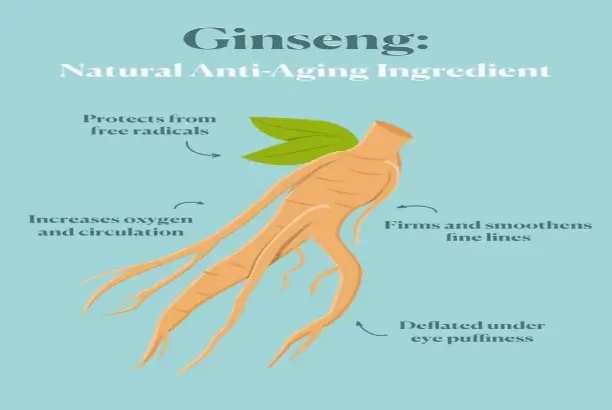
Jianbei Biotechnology Co., Ltd. is a tech company with its main office and research and development center in Guangzhou Software Park. We have 15 national invention patents and 16 national utility model patents that cover core product processes and smart monitoring systems. It's made in a plant with three assembly lines, a GMP-compliant workshop, two different labs, an R&D team with a lot of experience, and a lot of stock. The item has the CAS number 90045-38-8, the molecular formula C15H24N2O, and the molecular weight 248.37. Protein is meant to defend the body and keep fat and sugar levels in check. To keep your immune system in balance, ginsenosides can turn on defense cells. This may make you less likely to get sick and boost your tolerance. There are claims on labels that should be checked with the brands' legal experts.
Conclusion
The amount of ginsenoside in a ginseng extract powder alone can't tell you what chemicals are in it; only the ratios of the chemicals can. Some markers, such as Rb1, Rg1, Re, Rd, and Rg3, are weighed in various ways based on the type of plant, its part, the liquid used for extraction, and the boil. They can fairly compare solids if they have a clear reference, a batch COA, and a method based on HPLC. Also, the strength needs to match the form, like a drink, gummy, capsule, tablet, or private label item. Also, the amount should be in line with what is recommended. Commercial lots and approved materials stay the same thanks to checks with suppliers, application examples, and test runs. People can choose an item that meets their needs and doesn't change from batch to batch if they look at these things instead of price per kilogram or percentage.
Frequently Asked Questions About Ginseng Extract Powder and Ginsenoside Ratios
1. Is a higher ginsenoside percentage always better?
Not all the time. It depends on the type of plant, how the Ginseng extract powder was extracted, the size of the amount, and the shape of the product to find the best level. A higher percentage means the powder is more concentrated. Don't just look at the rates; the stability, taste, and rates are also important.
2. How does ginseng extract powder differ from plain ginseng powder?
Plain powder is made from ground root. When you dry and extract with a solvent, you get rid of most of the fiber and concentrate the ginsenosides. This makes an extract powder. Figure out the dose for each one separately using the amount of ginsenoside that was given.
3. What are the MOQ and delivery terms?
At least 1 kg must be ordered. It takes 3 to 7 business days to deliver the goods after payment. They are packed in either a 1 kg aluminum foil bag or a 25 kg drum.
4. Which documents can I request before ordering?
You should ask for the standard, a current COA with HPLC results, and any certificates you need, like those for GMP, ISO, HACCP, HALAL, Kosher, and organic food. If you use models, you can be sure that your own way works.
Request a Ginseng Extract Powder Specification and Sample from Jianbei
Jianbei wants teams from the industries that make supplements, food, drinks, and distribute them to get in touch with a ginseng extract powder maker that has a GMP workshop, two independent labs, a lot of stock, and all of their certificates. Email sales@bqingbio.com with the ginsenoside profile, style, and amount you want. When they get back to you, our team will give you example information and terms.
References
1. Advances in Food and Nutrition Research, 2009 – Ginsenosides: Chemistry, Biosynthesis, Analysis, and Potential Health Effects
2. Biochemical Pharmacology, 1999 – Ginseng Pharmacology: Multiple Constituents and Multiple Actions
3. Journal of Ginseng Research, 2012 – Chemical Diversity of Panax ginseng, Panax quinquefolium, and Panax notoginseng
4. Journal of Ginseng Research, 2015 – Chemical Diversity of Ginseng Saponins from Panax ginseng
5. National Center for Complementary and Integrative Health, 2020 – Asian Ginseng
6. U.S. Food and Drug Administration, 2007 – Current Good Manufacturing Practice for Dietary Supplements (21 CFR Part 111)
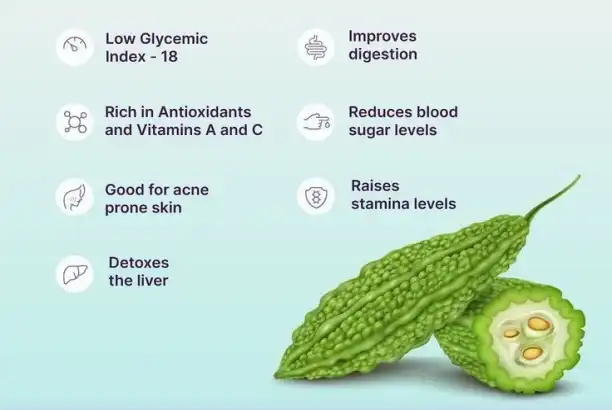
Bitter melon powder and bitter melon extract powder are both derived from Momordica charantia; yet, when combined in a recipe, they exhibit distinct characteristics. As a fruit that has been dried and processed, whole powder has a comprehensive botanical character of its own. Due to the fact that bitter melon extract powder is concentrated, it is possible to facilitate marker-based standardisation, reduced inclusion rates, and simpler dosage in capsules, tablets, and drink mixes. According to my observations, the decision that is appropriate is not determined by the price per kilogram but rather by the completed format, the target market, the flavour restrictions, the documentation requirements, and the cost per serving. This article provides a comparison of both kinds of ingredients and demonstrates how to confidently assess vendors.
Bitter Melon Powder vs. Bitter Melon Extract: What Is the Difference?
How Whole Bitter Melon Powder Is Made
Complete bitter melon powder is produced by washing, slicing, drying, and grinding the fruit or another specific plant part into a fine powder. This process is repeated until the powder is complete. The powder contains the fibre as well as a wide variety of naturally occurring chemicals. This is because the procedure that is being used maintains the material in a relatively undamaged state. Reduced focus is the price that must be paid. When marker chemicals are present in low concentrations, manufacturers often need bigger serving sizes in order to achieve the desired level of ingestion. Because of this, whole powder is an excellent choice for nutrition mixes and meals that need a label that clearly states that the ingredient is a whole plant and where a greater inclusion rate does not alter the flavour or texture of the product.
How Bitter Melon Extract Powder Is Made
Bitter melon extract powder begins with a phase that involves the use of a solvent, which is often water or ethanol, to extract the components of interest from the fruit. After that, the liquid is concentrated and dried, most often by the use of spray drying, and sometimes with the addition of a carrier in order to enhance the flow. Several reviews of Momordica charantia, including one that was published in the International Journal of Molecular Sciences in 2017, list charantin, vicine, polypeptide-p, and cucurbitane-type triterpenoids as being among the most important functional components the plant has. When these compounds are extracted, the percentage of them that are present per gram increases, which allows for more precise specifications and lower dosages. Because solvent, carrier level, and drying conditions all have an impact on the final output, I always make sure to get written confirmation of these particulars.
Why Extraction Ratio Alone Does Not Prove Quality
In the case of bitter melon extract powder, a label such as "10:1" indicates that approximately ten parts of raw fruit were used in order to produce one part of extract. It does not describe the potency of the initial ingredient but rather the concentration! The amount of charantin, the proportion of carrier, and the solubility of two 10:1 products may vary greatly from one another. It is for this reason that I suggest combining the ratio with a validated test, preferably one that is performed by HPLC, and a Certificate of Analysis that is particular to the batch. R&D teams are provided with something quantifiable to compare between suppliers and across production lots when they have access to a standardised specification. This specification includes the testing and reporting of a marker or purity level.
Key Comparison Dimensions for Formulators and Buyers
Composition and Standardization
Whole powder provides a wide range of benefits, including fibre and a large number of naturally occurring ingredients, with some variations depending on the crop. The profile is narrowed down to chosen actives by the use of extract, which also enables a tested specification. There is less variance from one lot to the next, which is beneficial for supplement companies that need consistent labelling and positioning of their effectiveness. Brands that promote a narrative about entire foods could place a higher priority on breadth. The first thing I would recommend is jotting down the target, which might be a marker level or a whole-plant claim. After that, you should choose the form that can record the goal. Identity testing is also an expectation of regulatory agencies since the Food and Drug Administration's 21 CFR Part 111 mandates that makers of dietary supplements validate the identity of the substances included in their products.
Dosage Efficiency, Solubility, and Taste
Concentration reduces the quantity that is required for each serving, which helps to save capsule space and maintain the compactness of tablets. Let's take a deeper look at the solubility. A genuinely soluble powder is one that dissolves without any cloudiness; a dispersible powder is one that may be mixed by stirring, and some substances just suspend before they settle. You should enquire with the provider about the solubility data in your own liquid basis. Unhappiness is the other problem that arises in practice. A flavour system or microencapsulation may still be required in drinks, despite the fact that lower inclusion rates often result in a less significant influence on flavour production. Samples should be tested early to avoid unpleasant shocks in terms of colour, texture, and aftertaste.
Total Cost per Serving
One may be misled by the price per kilogram. As opposed to a concentrated extract, a less expensive whole powder that is utilised at a faster rate could have a higher cost per serving. In the calculation, be sure to take into account aspects such as freight, flavour correction, processing loss, testing expenses, and formulation aids. The next step is to compare the cost per effective serving or per target marker position. The most cost-effective form for any product may often be determined by using a simple spreadsheet that has these data. Due to the fact that the cost of carrying inventory should be included in the same calculation, I also include the minimum order quantity and the lead time in the comparison.
Which Ingredient Fits Which Product?
Capsules, Tablets, and Powder Sticks
Generally speaking, capsules and tablets are the optimum forms for standardised extract. A lower dosage allows for the incorporation of excipients, results in a more predictable flow, and provides support for an assay-based label. Particle size, bulk density, and moisture should all be checked before scaling up, since these factors have an impact on blending and compression. Due to the fact that structure-function claims for dietary supplements that are marketed in the United States are obliged to comply with FDA regulations, including the obligatory disclaimer, the claim language should be reviewed by a regulatory expert. It is still possible to use whole powder in capsules; however, due to the increased fill weight, it may be necessary to use bigger capsules or consume more units per serving.
Beverages, Bars, and Functional Foods
Because drink mixtures need a good dispersion, I seek bitter melon extract powder grades that have been shown to be soluble. It is easier for nutrition bars, baked products, and food mixes to tolerate whole powder since the bitterness is minimised by other ingredients, and the plant-based label contributes to the positioning of the product. Due to the fact that heat, pH, and processing time may all alter flavour and colour, pilot tests are very important. It is also the responsibility of food technologists to verify that the allergy and labelling strategy are compatible with the carrier materials. The cost of reformulating after launch is far more than the cost of producing a tiny trial batch under actual production circumstances.
A Simple Selection Process
I follow a five-step process. Initially, it is necessary to identify the product format, the target market, and the claim style. The second step is to compose a specification that addresses the following aspects: identification, marker or purity, solubility, particle size, moisture thresholds, and microbiological restrictions. Third, look at the paperwork, capacity, minimum order quantity, lead time, and export experience of different providers. Fourth, conduct taste, colour, dispersion, flow, and stability tests on samples that have been made using the actual recipe. After the technical findings have been satisfactory, the fifth step is to finalise the commercial terms. This order assists purchasers in avoiding frequent errors, such as placing orders for large quantities before the regulatory fit is certain or considering the extraction ratio to be evidence of the product's efficacy.
Evaluating Quality and Choosing a Supplier
Documents and Tests to Request
Before placing the first purchase, a reliable provider will supply the necessary papers. I request the botanical name and name of the plant part, as well as the country of origin, the extraction process, a Certificate of Analysis that is particular to the batch, and the analytical method that was employed. Identity, assay, moisture, microbiology, heavy metals, pesticides, and residual solvents should all be included in the scope of the tests that are performed. There is an increase in supply-chain trust as a result of certificates such as GMP, HACCP, ISO, Halal, Kosher, and organic; nonetheless, these certificates complement batch data rather than replacing it. In addition, audits for quality management and regulatory teams are processed more quickly when there is clear traceability from raw fruit to completed lot.
Jianbei Bitter Melon Extract Specifications
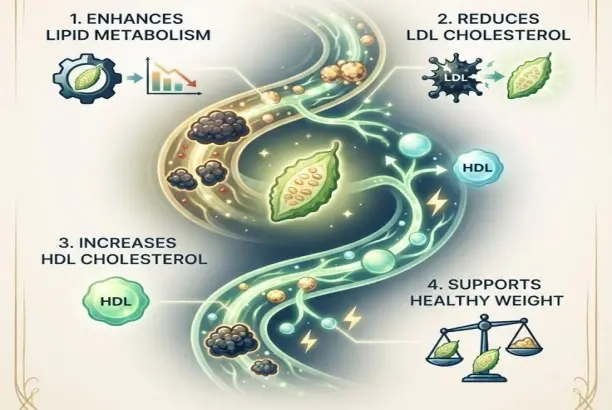
Using high-performance liquid chromatography (HPLC), Jianbei provides bitter melon extract powder in the form of a white crystalline powder with a specification of 98%. 57126-62-2 is the chemical abbreviation for the compound, and its molecular formula is C42H62O16. The molecular weight of the compound is 1151.67. Certifications such as USA Food and Drug Administration, Organic Food, Kosher, ISO, Halal, HACCP, and Good Manufacturing Practices are included on the list. These actions include boosting glucose utilisation, limiting sugar absorption, and sustaining blood sugar and blood lipid levels. It also helps maintain healthy blood sugar levels. It is important that the final label claims adhere to the regulations of each destination market. The powder is only available for export at this time.
Packaging, Storage, and Ordering Terms
Jianbei packages the powder in aluminium foil bags weighing one kilogram or in drums weighing twenty-five kilograms. It may be kept for two years if it is properly sealed and kept in a dry and cool location. The delivery time ranges from three to seven working days following payment, and the minimum order size is one kilogram, which is suitable for laboratory tests and pilot batches. Many other methods of payment are available, including Western Union, Alipay, XT, PayPal, and telegraphic transfer. Three manufacturing lines and two separate labs are used in the production process, which takes place in a GMP workshop. Additionally, Jianbei Biotechnology, which has its headquarters in Guangzhou Software Park, is the owner of five utility model patents and fifteen national innovation patents.
Conclusion
Bitter melon extract powder and extract powder are made from the same plant, although they have different uses. Whole powder may be used in meals and mixes with higher inclusion rates due to its extensive plant profile. Extract concentrates compounds, meets criteria, and allows lower doses in capsules, tablets, and drink mixes. To prove potency, utilise assay data, solubility results, and batch documentation, not only the extraction ratio. When calculating cost per serving, freight, taste correction, and testing must be included. Testing samples using the recipe is also crucial before ramping up production. When the form matches the supplier's product format, claim strategy, and documentation, development risk is decreased, and buyers have a clearer basis for decision-making.
FAQ
1. Is bitter melon extract powder stronger than whole powder?
Extract is more concentrated per gram, but strength depends on the tested marker or purity level. Request an HPLC-based assay and a batch Certificate of Analysis before comparing products.
2. Is every extract water soluble?
No. Solubility varies with the extraction method, carrier, and drying process. Ask for solubility data in your liquid base and run a sample trial.
3. What are the shelf life and minimum order of Jianbei's product?
Sealed storage in a dry, cool place gives a two-year shelf life. The minimum order quantity is 1 kg, with delivery in 3–7 working days after payment.
4. Which documents should I request?
Ask for the specification, batch COA, HPLC method, traceability records, and GMP, HACCP, and ISO certificates.
Contact Jianbei for Bitter Melon Extract Powder Samples and Quotes
Jianbei operates a GMP workshop and works as a bitter melon extract powder supplier backed by a mature R&D team, large inventory, and complete certificates. Send your application, target specification, and annual volume to sales@bqingbio.com, and we will reply with sample and quotation details. A 1 kg minimum order lets you test the material in your own formula first.
References
1. Jia S, Shen M, Zhang F, Xie J. Recent Advances in Momordica charantia: Functional Components and Biological Activities. International Journal of Molecular Sciences, 2017.
2. Grover JK, Yadav SP. Pharmacological Actions and Potential Uses of Momordica charantia: A Review. Journal of Ethnopharmacology, 2004.
3. Joseph B, Jini D. Antidiabetic Effects of Momordica charantia (Bitter Melon) and Its Medicinal Potency. Asian Pacific Journal of Tropical Disease, 2013.
4. Ooi CP, Yassin Z, Hamid TA. Momordica charantia for Type 2 Diabetes Mellitus. Cochrane Database of Systematic Reviews, 2012.
5. Dans AM, Villarruz MV, Jimeno CA, et al. The Effect of Momordica charantia Capsule Preparation on Glycemic Control in Type 2 Diabetes Mellitus Needs Further Studies. Journal of Clinical Epidemiology, 2007.
6. U.S. Food and Drug Administration. Current Good Manufacturing Practice in Manufacturing, Packaging, Labeling, or Holding Operations for Dietary Supplements (21 CFR Part 111). Federal Register, 2007.
The benefits of curcumin come mainly from its antioxidant activity and its role in supporting a balanced inflammatory response. Its main absorption challenge is poor water solubility combined with fast metabolism. Curcumin extract powder, standardized to a high curcuminoid level, delivers these actives in concentrated form. However, a high assay does not guarantee high absorption. In this article, I explain the benefits, the reasons absorption is limited, and the methods formulators use to improve it. I also cover how buyers can verify a supplier and share the specifications of our own 98% curcumin.
What Is Curcumin Extract Powder?
Standardized Extract, Not Ground Root
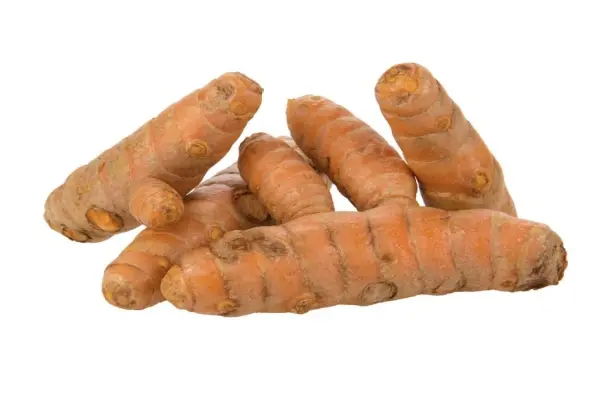
This powder is made from the root of the Curcuma longa plant, which is also known as turmeric. There is a certain amount of curcumin, bisdemethoxycurcumin, and demethoxycurcumin. Most of the time, ground turmeric root only has 2% to 5% curcuminoids. It's different for each crop. This is done so the person making the pills knows exactly how much medicine is in each one. People should keep these four terms separate when they are shopping: turmeric root, turmeric extract, total curcuminoids, and standardized curcumin extract. For each word, there are different hints in the bag.
Specifications Worth Reviewing
This sheet has more than one line, but the first one reads "Purity." The test method, the amount of water, the particle size, the carriers, the limits for microbes, and any liquids that are still there should all be talked about. HPLC is usually used to find out how much curcuminoids are present. It's also important how it looks. It doesn't mix well with water and melts at 183°C. But it mixes well with ethanol and acetone. It breaks down in bright light. This is correct for drinks, healthy foods, private-label items, pills, and capsules. The finished form will tell you which norm is right.
Jianbei Curcumin at a Glance
We offer curcumin for sale. It is an orange-yellow color, and an HPLC test showed that it is 98% pure. It is made up of molecules that are C21H20O6, and each weighs 368.38 grams. It has the CAS number 458-37-7. It comes in either a 25 kg drum or a 1 kg aluminum foil bag. Keep it somewhere dry and cool. If you seal it, it will last for two years. For the companies and brands we only sell to in other countries, the powder works well.
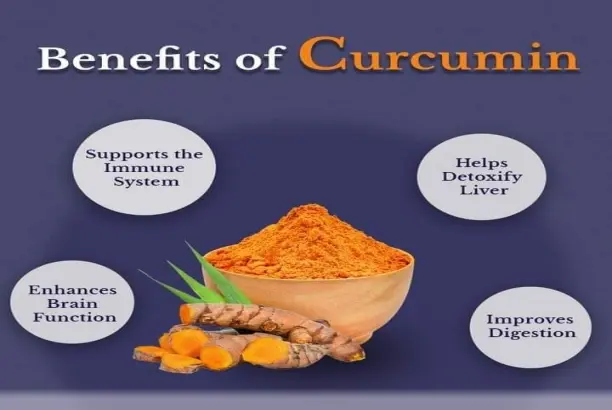
The Potential Benefits of Curcumin Extract Powder
Antioxidant Activity
Curcumin is a color that comes from plants. It is bad for cells and organs to have free radicals and oxidative stress. It can be addressed by this compound, which also lowers oxidative stress. In 2017, Hewlings and Kalman wrote a review article for Foods that summed up this antioxidant activity and other benefits that were studied in people. You can find curcumin in a lot of supplements that help your heart, your nerves, and your body age well. But claims about finished goods still need to follow the rules of the market they are meant for. US brands should check the FDA's marking rules before putting anything on a package.
Support for a Balanced Inflammatory Response
Curcumin has been studied for many years to find out how it helps prevent inflammation. Jurenka wrote a review of this work in 2009, and it was published in Alternative Medicine Review. Curcumin extract powder is used in many products that help with digestion, joints, and being active because of this study. It helps people who make things understand the story, which I know means a lot to them. Still, what happens depends on how much is given, who gets it, and how it is given. To be clear, a strong claim on the deal is not as important.
Where Brands Use It
It's in functional foods, dietary supplements, sports nutrition, creams for joint pain, and health formulas in general. It's often mixed with collagen, ginger, or boswellia, all of which work well together. When the extract is standardized, the active ingredients are more likely to stay the same from one batch to the next. This helps make sure the labels are correct. Still, how well it works depends on the extract's quality, the dose, how it's given, and the proof that backs it up. I tell the teams to come up with a product idea first. After that, they should pick the grade of ingredient that goes with that thought.
Absorption Challenges and Ways to Improve Bioavailability
Why Absorption Is Limited
There is some curcumin that doesn't mix well with water, so the body can't use as much of it. This problem was written about by Anand and others in a 2007 study that came out in Molecular Pharmaceutics: poor absorption, fast digestion, and fast release. It is broken down quickly by the liver and stomach, so just because it says "high labeled concentration" doesn't mean the body is getting a lot of it. It doesn't say how much gets into your body when it says "98% pure." People who want to buy shouldn't mix these two thoughts up.
Piperine and Lipid Carriers
In the past, piperine from black pepper was used to help things dissolve. When 20 mg of piperine was added, two grams of curcumin worked 2,000 times better for healthy people. This was found in a study that came out in 1998 in Planta Medica. Piperine doesn't work with all formulas because of how it tastes, rules set by the government, and what customers want. Lipid carriers are a different way to do it. Take curcumin in softgels or eat a meal with fat. It might not work the same way for you or break down the same way.
Advanced Delivery Systems
Ways that make the powder mix with water, emulsify, or seal it work better than ways that just add powder to drinks most of the time. The solid-lipid, micellar, nano-dispersed, phytosome, and liposome technologies are some of the newer ones. Stohs and his colleagues studied several types of curcumin that are easily absorbed by living things in Molecules in 2020. Systems are graded on how well they meet the goal, how stable they are, how much they cost, and how easy they are to manage. The main part is still the regular powder, and the way it is delivered is decided during the preparation stage.
Formulation, Dosage, and Selection Considerations
Formats and Pilot Testing
It can be found in drinks, gummies, pills, tablets, packs, and foods that are good for you. Pick out a small dose first. How should I use curcumin most effectively? The amount in the product, how it is supplied, the people who will use it, and the information given about its safety and usefulness all play a role. Pilot batches should be used to check the consistency of the mixing, how well it flows, the color, how it tastes and smells, how sensitive it is to water, how it settles, and how it compresses. Things that aren't finished yet and things that are finished have different shelf lives. What makes a difference is how they are packed, the temperature, the humidity, the amount of light they get, and how they are sent around the world.
Choosing the Best Powder
First, choose what you want to buy curcumin extract powder for. Pills, drinks, healthy foods, sports nutrition, or your own name could be used. Then, compare the particle size, how far they spread, the amount of curcuminoid, the type of plant it came from, how it was removed, and how it was tested. Also look at the bacteria, heavy metals, and poisons that were present. Do not forget to ask for the specification sheet, SDS, allergen statement, traceability records, and any organic or non-GMO forms. The COA should be up-to-date and specific to a batch. You should think about more than just the price per unit before you buy something. Some of the other things that can be just as important are production capacity, MOQ, lead time, export knowledge, and technical help.
Common Buying Mistakes
Most people make the worst mistake when they buy something just because it says "95% curcumin" on the box. Something is pure, but that doesn't mean it is soluble, steady, spread out, or backed by science. You should look for scientific or human data to back up a claim that something is more bioavailable if you want to be sure it's true. This is a bad sign when the COA is generic, there are no batch numbers, or the methods are not clear. The rules are also different for each country and use. Make sure you know the rules about labels, promises, ingredient approval, and imports before you start making a lot of things.
Quality Control and Procurement for B2B Buyers
Verifying the Supplier
What kind of business is it before you do business with it? Is it a maker, a supplier, a trading company, or a fully integrated service? Find out about group testing, quality control, keeping track of raw materials, and shipping experience. People trust certificates like GMP, HACCP, ISO, and others like them, but you should check each one's subject area, length of validity, facility, and type of product. The clean label and how clear the liquid is depend on how it was removed and how much is left over. For claims of organic and non-GMO foods to be true, source chain records must be shown. These checks make it less likely that something will be found before the first order is placed.
A Practical Procurement Workflow
First, write down what your product looks like, how much curcumin it has, what certificates it has, how it's packed, and how much it sells each year. The second step is to get a technical package from the companies you've chosen. This should include specs, a current COA, a sample, an SDS, information on allergens and stability, a quote, a MOQ, and a wait time. Third, make your own test mix and use it to check how stable, spread, taste, color, and amount the sample is. Before you agree to the deal, make sure you understand the Incoterms, payment terms, shelf life, how to handle complaints, and plans for requalification. Strategic projects may also need to be reported on or checked by a third party.
What Jianbei Provides
There are 15 national invention patents and 8 utility model patents held by Jianbei Biotechnology Co., Ltd. Guangzhou Software Park is where its main office is located. This is where we make things. The factory has three lines for making products, a workshop that follows GMPs, and two different labs. It's from the US Food and Drug Administration, Organic Food, Kosher, ISO, HALAL, HACCP, and GMP, among other places. The minimum order is 1 kg. After you pay, it will be sent to you within three to seven business days. There are several ways to give us money: Western Union, Alipay, XT, PayPal, or telegraphic transfer.
Conclusion
Curcumin extract powder has antioxidant properties that may help protect cells from oxidative damage. It's in vitamins, healthy foods, and food for athletes. Because it doesn't mix with water and breaks down quickly, you can't tell how much it soaks up. Some ideas that could help close this gap are piperine, lipid carriers, and new ways to deliver drugs. But each one needs to prove that it is safe, bioavailable, and can work with the authorities. It varies depending on the dose, the style, and the pilot tests, and how they change the end result. Having an organized process for buying things helps buyers stay away from common mistakes and make sure that the right ingredient is used in the right product. Buyers should look at different specs, read batch-specific COAs, make sure they understand the scope of the certificate, and follow the steps.
FAQ
1. Is curcumin extract powder the same as turmeric powder?
No, turmeric powder is made from ground turmeric root, which has between 2% and 5% curcuminoids. The active ingredient stays the same because the extract is standardized and concentrated.
2. Does a 98% assay mean better absorption?
No, HPLC is used to see how pure the test really is. It depends on how well the drug dissolves, the size of the particles, the carriers used, and the delivery system used. For a better form, you should ask for bioavailability data.
3. What are the order terms for your curcumin?
You must buy at least 1 kg. It comes in a 25 kg drum or a metal foil bag that holds 1 kg. After payment, it takes three to seven business days to ship, and the powder can only be shipped outside of China.
Request a Curcumin Extract Powder Sample from Jianbei
Looking for a company that can quickly and correctly make curcumin extract powder that follows GMP? Jianbei has three lines that make 98% curcumin. We'll get back to you with a COA, sample information, and a quote after you email sales@bqingbio.com with the number, weight, and packaging you need for your order.
References
1. Foods, 2017. Hewlings SJ, Kalman DS. Curcumin: A Review of Its Effects on Human Health.
2. Molecular Pharmaceutics, 2007. Anand P, et al. Bioavailability of Curcumin: Problems and Promises.
3. Planta Medica, 1998. Shoba G, et al. Influence of Piperine on the Pharmacokinetics of Curcumin in Animals and Human Volunteers.
4. Alternative Medicine Review, 2009. Jurenka JS. Anti-inflammatory Properties of Curcumin, a Major Constituent of Curcuma longa.
5. Journal of Medicinal Chemistry, 2017. Nelson KM, et al. The Essential Medicinal Chemistry of Curcumin.
6. Molecules, 2020. Stohs SJ, et al. Highly Bioavailable Forms of Curcumin and Promising Avenues for Curcumin-Based Research and Application: A Review.
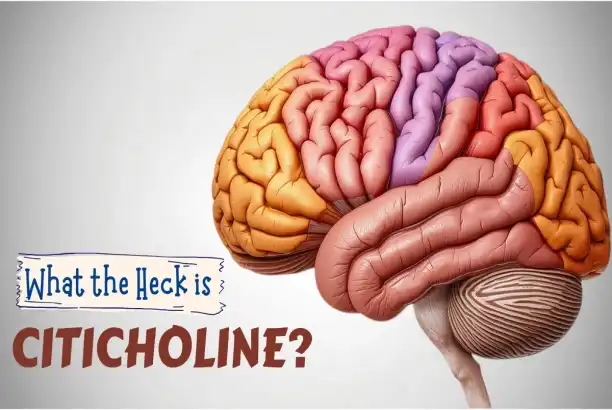
The top five benefits of citicoline for focus are support for attention, support for memory and learning, mental energy without high stimulant levels, suitability for broader brain-health formulas, and flexible formulation. Citicoline powder, also called CDP-choline, supplies choline and cytidine. The body uses these two building blocks to make phosphatidylcholine for brain cell membranes and acetylcholine, a neurotransmitter linked to attention. Below, I explain each benefit with research context and practical formulation notes. I also cover supplier checks and bulk buying details for supplement brands, beverage makers, and distributors.
Top 5 Benefits of Citicoline Powder for Focus
There is a connection between each of the benefits listed below and a formulation choice that you may have to make. Due to the fact that the study focuses on certain populations, I reduce the assertions to a minimum.
Supports Attention and Sustained Focus
Citicoline powder provides you with choline, which is subsequently converted by your body into acetylcholine, which is a stimulant that causes you to become more alert. It does this by breaking down phospholipids, which in turn serves to maintain the integrity of the cell walls that surround brain cells. According to the findings of a research study that was conducted with sixty healthy women over the course of twenty-eight days and published in the journal Food and Nutrition Sciences in 2012, the participants were able to pay attention more effectively. Journal of Attention Disorders (2015 published the findings of another study that included young men and showed that they were able to move more quickly and pay more attention. As a consequence of the fact that these findings come from specific groups, they cannot be applied to all users.
Supports Memory and Learning Performance
A research that was conducted in 2021 and published in the Journal of Nutrition examined the effects of Citicoline powder on healthy elderly persons who were experiencing slight memory loss. Randomised, double-blind, and placebo-controlled were the characteristics of the trial. Following a period of twelve weeks, those who used Citicoline powder had superior short-term memory compared to those who consumed a sugar tablet. Because of this, Citicoline powder is an excellent option for products that assist with learning, memory, and maintaining physical fitness as you become older. My opinion is that these products need to be referred to as general brain support rather than the particular disorders that they serve to alleviate or prevent.
Provides Mental Energy Without High Stimulant Levels
As a result of the fact that Citicoline powder is not a stimulant like coffee, there is an additional method for businesses to provide items that assist individuals in thinking and concentrating throughout the day. When it comes to formulas for workers and students, as well as habits for getting things done, it works quite well. Among them are lines that contain either no caffeine or very little stimulation. There is a possibility that some varieties include vitamins, caffeine, or theanine in their composition. Instead of making the assumption that something is stable and compatible, you should put it through formulation testing to see whether or not it is. It is essential for products that are manufactured for more than one market to have labels that are simple and straightforward to read.
Fits Broader Brain-Health Formulations
Citicoline powder can be the main ingredient in a brain-health plan that works on memory, attention, healthy aging, or getting smarter. Minerals, amino acids, plant-based foods, B vitamins, or both are often mixed with it. Our product information sheet says that it is meant to protect nerve cells, help brain cells heal, and speed up the metabolism of brain cells. Still, brands should not mix research on the ingredients with research on the finished product. Another thing is that they should only say things that are true and allowed in the U.S.
Offers Flexible Formulation Options
Using bulk powder, you may create a wide variety of products, including pills, tablets, stick packs, beverage powders, premixes, and even your very own individualised items. While the product is still in the process of being produced, the person who is making the powder has the ability to alter the packaging, the serving size, and the constituents of the powder. When it comes to completed items, which have predetermined dosages, this is not feasible. For the purpose of testing topics like solubility, particle size, mixing time, and caking behaviour, there is still a significant amount of work that has to be done in the real world. Make sure you get a sample before you give your approval to the whole batch. Due to the fact that a pilot run will allow you to learn how the material works with your tools, this is the reason.
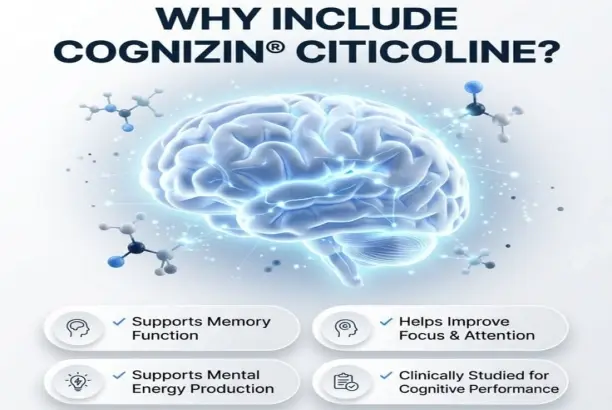
Citicoline Powder Versus Other Common Options
Powder Versus Capsules
During the process of making bulk powder, the corporation has the ability to choose the packaging, combine the Citicoline powder with other ingredients, and determine the quantity of servings to be produced. There is space for drink mixes, tablets, pills, and bags in this container. Tablets that have been finished are simple to use and provide the same quantity each time; however, the dosage and the shape are predetermined in advance. When a firm wants to manufacture more than one product, such as a drink mix and brain supplements, it is often possible for the company to get all of the powder that it needs from the same supplier.
Citicoline Versus CDP-Choline and Alpha-GPC
Cytidine 5'-diphosphocholine is often referred to by both of these names; however, they are really the same substance. In the event that the supplier documents are identical, I still make use of the CAS number and conduct tests to ensure that it is the same substance. CAS number 987-78-0 is assigned to our product, and its chemical formula is written as C14H26N4O11P2. Its molecular weight is 488.33 per molecule. There is a distinct kind of choline molecule that has its own set of requirements in terms of both business and technology. Find out how much each one costs, how pure it is, how easily it dissolves, how stable it is, how it tastes, and how it is managed. Also, find out how it tastes.
Jianbei Citicoline Specifications
In accordance with the findings of HPLC testing, our Citicoline powder is a white powder that is solid and satisfies the criteria of 98%. Available as either a drum that can carry 25 kilograms or a bag made of aluminium foil that can hold 1 kilogram. Set it in a location that is cool and dry, and then cover it up. There will be a duration of two years. There are a number of certifications that it has, including those for kosher, GMP, ISO, HALAL, organic food, and FDA. Before deciding to purchase, purchasers have the option of requesting copies as well as a certificate of authenticity that is specific to the batch.
How to Choose the Best Citicoline Powder Supplier
Supplier Criteria to Check First
First, decide what you need: development models, a steady supply of market goods, production for another company, or help with your own brand. Next, find out if the seller makes the items or just sells them. Check out how batches are managed, what GMP controls are in place, and how quickly the team answers technical questions. It should be put down what the Citicoline powder is meant to be used for, so words like "food grade" and "pharmaceutical grade" fit there. Also, ask if they have exported before, since the requirements and paperwork for shipping vary from country to country.
Quality and Safety Checklist
An evaluation of the sound quality begins with a certificate of authenticity that is specific to the batch. The name of the product, the HPLC test, the moisture level, the appearance of the product, the batch number, the test methods, and the date that the product expires or has to be tested again should all be taken into consideration. In addition, you could ask for evidence of germs, heavy metals, allergies, genetically modified organisms (GMOs), BSE/TSE, provenance, and stability, depending on the market that you are in. In spite of the fact that tests carried out by a third party provide evidence, they should not be utilised in place of source approval. Be wary of things like pricing that don't make sense, tests that don't line up, and tracking that isn't complete. These are all things you should steer clear of.
What Jianbei Offers Buyers
Jianbei Biotechnology Co., Ltd. is a high-tech firm that offers medical advice in addition to doing research and development (R&D) on biological goods and the development of the Internet of Things. Guangzhou Software Park is home to both our main office and our research and development facility. A total of fifteen national concept patents and eight utility model patents have been granted to the corporation, which protect significant components of its goods and intelligent tracking systems. The production process at our organization is carried out in a workshop that complies with GMP standards and has two independent laboratories. Because we have a talented research and development team, a large stock, and complete certifications, we are able to provide them with samples in a short amount of time.
Buying Citicoline Powder in Bulk: Procurement Guide
Order Terms: MOQ, Packaging, and Delivery
You are able to test it out before purchasing more since we just charge for one kilogram. When it comes to packaging, the majority of individuals utilise either a drum that weighs 25 kilograms or a metal foil bag that weighs 1 kilogram. The delivery of the product might take anywhere from three to seven business days after the payment has been made. You have the option of sending us money using Western Union, Alipay, XT, or even a wireless phone transfer. When comparing different offers, you shouldn't only focus on the price per unit. You need to take into consideration not only the cost of landing, but also the cost of the freight, packaging, and testing services. In addition, OEM customers should make certain that trial batches, assistance with labelling, and change control are all taken care of to their satisfaction.
Dosage and Serving Size Planning
When it comes to Citicoline powder, there is no one dosage that is effective for everyone. The final building, how it will be used, who it is for, the regulations in the region, and the opinions of specialists all play a role in determining how much is appropriate the amount is. Before a product is put on the market, the individuals who produced it should make certain that each dosage is the appropriate size, that the fill weight is accurate, that the mix is consistent, that the instructions are understandable, and that the product is simple for consumers to use. It is possible to manufacture pills, tablets, or packs out of powder, as well as measure out powder, mix it with a drink that is effective, or combine it with a drink. It is not appropriate to imitate another brand. Instead, you should make sure that your label is in line with the findings of research studies and the regulations that govern the industry that you are trying to penetrate.
A Simple Scoring Method for Supplier Selection
There are a variety of purchasers who look at various things. The most crucial aspects for small projects are often samples, technical assistance, and a low minimum order quantity (MOQ). What distributors need the majority of the time is a consistent supply, export paperwork, predetermined pricing, and goods that are durable for an extended period of time. OEM customers want to be able to expand their businesses, get assistance with product development, and acquire private-label choices. What is the consistency of their assays, how clear are their certificates of analysis, how effective are their formulations, how much do they charge, how lengthy are their lead times, how effectively do they communicate, and how reliable is their long-term supply? On a scale from one to five, they get. The sums assist you in making decisions about what to do depending on the things that are most important to you.
Conclusion
Citicoline powder supports focus mainly through choline and cytidine, which the body uses to build acetylcholine and phosphatidylcholine in brain cell membranes. Human studies reported better attention in healthy women and adolescent males and better episodic memory in older adults, though each result applies only to the group studied. The five benefits are attention support, memory and learning support, mental energy without high stimulant levels, a fit for broader brain-health formulas, and flexible formulation. Comparing powder with capsules, CDP-choline, and alpha-GPC shows that selection should follow assay, solubility, stability, and regulatory status. Batch-specific COAs, HPLC testing, clear specifications, and documented storage and order terms decide whether a material suits commercial use.
FAQ
1. What is citicoline powder?
Citicoline powder is the powder form of cytidine 5'-diphosphocholine, also called CDP-choline. Brands use it in supplements, functional beverages, and OEM formulas aimed at focus and memory. Jianbei supplies it as a white crystalline powder at 98% specification.
2. Is citicoline the same as CDP-choline?
Yes, both names describe the same active ingredient. Supplier paperwork can still vary, so I advise confirming identity and assay on the COA, using CAS number 987-78-0 and the HPLC result.
3. What are the MOQ and delivery time?
The minimum order is 1 kg, which suits pilot batches and sample evaluation. Delivery takes 3 to 7 working days after payment, and the powder is supplied for export only. We accept telegraphic transfer, Alipay, XT, PayPal, and Western Union.
4. How can I verify purity before buying?
Request a batch-specific COA showing the HPLC assay, along with the product specification and certificates. A sample also lets your laboratory test solubility, blending, and stability in your own formula before bulk approval.
Request Citicoline Powder Samples from Jianbei
Jianbei Biotechnology supplies citicoline powder at 98% purity. It takes 3 to 7 business days after payment to get, and you have to order at least 1 kg. If you want to hire a company that makes Citicoline powder, email sales@bqingbio.com with your resume, your target market, and the amount you want to make each year. We will let you know more about the samples, the COA, and the specs when our team gets back to you.
References
1. Food and Nutrition Sciences, 2012. McGlade E. et al. Improved Attentional Performance Following Citicoline Administration in Healthy Adult Women.
2. Journal of Attention Disorders, 2015. McGlade E. et al. The Effect of Citicoline Supplementation on Motor Speed and Attention in Adolescent Males.
3. The Journal of Nutrition, 2021. Nakazaki E. et al. Citicoline and Memory Function in Healthy Older Adults: A Randomized, Double-Blind, Placebo-Controlled Clinical Trial.
4. Methods and Findings in Experimental and Clinical Pharmacology, 2006. Secades J.J., Lorenzo J.L. Citicoline: Pharmacological and Clinical Review, 2006 Update.
5. Clinical Interventions in Aging, 2015. Gareri P. et al. The Role of Citicoline in Cognitive Impairment: Pharmacological Characteristics, Possible Advantages, and Doubts for an Old Drug with New Perspectives.
6. Nutrients, 2020. Jasielski P. et al. Application of Citicoline in Neurological Disorders: A Systematic Review.
Storing raw tadalafil powder correctly is non-negotiable when you're working with pharmaceutical-grade active ingredients. Raw tadalafil powder, with its molecular formula C₂₂H₁₉N₃O₄ and molecular weight of 389.4, demands precise environmental conditions to maintain its 98% purity specification over extended periods. Without proper storage protocols—controlling temperature, humidity, and light exposure—degradation may occur and affect the consistency of the material. When handled correctly in dry, cool environments and sealed properly, this white crystalline powder maintains its integrity for up to two years, helping maintain consistent material quality during pharmaceutical formulation and manufacturing processes.
Understanding Raw Tadalafil Powder and Its Storage Challenges
What Makes Tadalafil API Vulnerable During Storage?
As a selective phosphodiesterase type 5 inhibitor, tadalafil has certain chemical characteristics that affect its storage stability and material quality. The structure of the compound has functional groups that are easily broken down by oxygen, especially when they are exposed to moisture levels above certain limits. According to research, relative humidity levels above 60% speed up hydrolysis reactions. This breaks down the active pharmaceutical ingredient and creates impurities that are higher than the 0.1% limit set by ICH guidelines for individual unknown impurities.
Another big problem is that temperatures change all the time. The compound's high melting point of 298–300°C makes it thermodynamically stable during production, but keeping it at temperatures above 25°C may affect its stability over time. Photodegradation pathways are set off by light, especially UV radiation, which changes the structure of molecules. These external stressors work together to explain why procurement professionals give more weight to suppliers with approved storage practices and GMP-compliant facilities.
Core Applications and Industry Requirements
Tadalafil powder is used in various pharmaceutical formulation applications. Formulation scientists use it in pharmaceutical formulations for different dosage forms and applications. Its approximately 36-hour duration of action distinguishes it from shorter-acting compounds. Each use needs to strictly follow USP, EP, or BP guideline standards, and the result must be at least 99% pure, which can be checked using High-Performance Liquid Chromatography (HPLC).
Manufacturers of solid dosage forms for oral use, film strips for oral use, or liquid suspensions must find powder that meets strict requirements for heavy metals below 20ppm and residual solvents. These standards help support consistent quality and regulatory compliance. This means that storage integrity is a direct factor in determining the quality of the final product and compliance with regulations.
Essential Principles for Storing Raw Tadalafil Powder Safely
Environmental Controls That Preserve API Integrity
Three external factors must work together to keep the standard of tadalafil powder high. For raw tadalafil powder, temperature control is essential, so storage must stay between 15°C and 25°C at all times to help maintain the stability of the material. Managing humidity is just as important—keeping the relative humidity below 40% stops moisture uptake, which starts a chain reaction of degradation. To keep things safe from light, raw tadalafil powder needs to be stored in amber-colored cases or light-resistant packaging that blocks UV rays.
Working with pharmaceutical companies taught us that places that use automated climate monitoring systems have much better results that can be measured. When used together, real-time humidity signs and temperature logging devices create the records that are needed for FDA registration and REACH compliance. These systems quickly notify buying teams when conditions move outside of acceptable ranges. This lets them make adjustments before storage conditions affect product quality.
Advanced Packaging Solutions for Extended Shelf Life
Professional-grade packaging does a lot more than just keep things inside. The following methods are considered best in the industry:
- Aluminum Foil Barrier Bags: Multi-layer aluminum foil bags are super good at keeping moisture out and keeping light out. Triple-seal technology and desiccant packets are used in our standard 1 kg packaging to keep the internal humidity below 20% RH.
- Vacuum-Sealed Systems: Taking oxygen out of the air stops the oxidation processes that break down active compounds. When you vacuum seal something and fill it with nitrogen, you replace reactive oxygen with a neutral atmosphere. This can help extend the storage period compared to regular packaging.
- Fiber Drum Storage: For large orders, pharmaceutical-grade 25 kg drums with polyethylene liners protect against damage during transport while keeping hermetic seals. Throughout the supply chain, contamination is kept from spreading with double-lid systems that have tamper-evident seals.
When stored in the right way, these new packaging ideas work even better. When choosing suppliers, procurement managers should make sure that the packaging requirements match the storage space and paperwork needs of their facility.
Comparing Traditional and Modern Storage Methods for Raw Tadalafil Powder
Limitations of Conventional Storage Approaches
Storage methods used in the past that were popular in pharmaceutical manufacturing often relied on warehouses with little or no temperature control. With these old methods, APIs were exposed to changes in yearly temperature from 10 to 35°C and changes in relative humidity from 30 to 80%. This kind of variation could shorten the storage period of the material and increase the rate of batch rejection.
These problems were made worse by bulk open storage of raw tadalafil powder, which let germs spread and didn't protect against moisture well enough. Without regular tracking of humidity or refill plans for desiccants, changes in material quality could occur without timely detection. Batch tests showed that conventional storage conditions could reduce the useful storage period of the material from the theoretical maximum of two years to as little as eight months in less-than-ideal conditions.
Modern Climate-Controlled Solutions Deliver Measurable Benefits
Modern pharmaceutical storage uses precise environmental control systems that keep the temperature and humidity stable all year. Warehouses that are climate-controlled use industrial dehumidifiers to keep the relative humidity between 35 and 40 percent and HVAC systems to keep the temperature within a range of 2°C. These facilities include the following:
- Automated monitoring systems logging temperature and humidity data every 15 minutes
- Desiccant-enhanced storage zones with silica gel replacement protocols every 90 days
- Light-controlled areas utilizing amber LED lighting that eliminates UV exposure
- HEPA-filtered air handling systems preventing particulate contamination
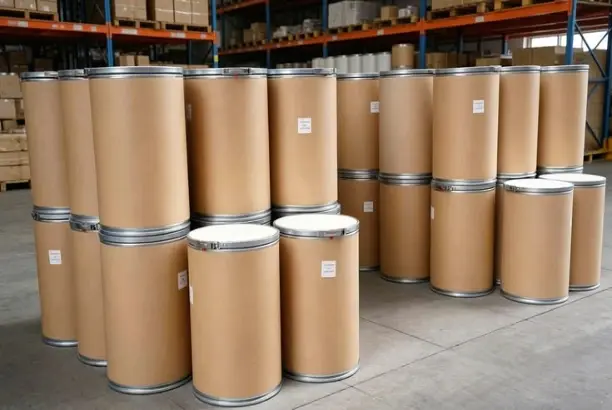
Procurement Considerations: Ensuring Quality from Supplier to Storage
Selecting Certified Tadalafil Powder Suppliers
We did a comparative analysis with a medium-sized nutraceutical company that showed measurable differences. After moving from a regular warehouse to a GMP-standard climate-controlled building, HPLC assay tests showed that the material's assay remained at 99.2% after 18 months, while the assay had decreased to 96.8% under the previous storage conditions. The new method cut down on waste from old stock by 73% and made sure that paperwork for following rules met FDA and ISO standards.
Logistics and Packaging Specifications for Long-Term Viability
Tough supplier qualification is the first step to successful procurement. Some of the best suppliers have a lot of quality certifications, such as GMP, ISO, HALAL, HACCP, and KOSHER credentials, which show that they manage quality in a structured way. Verification should include more than just looking at the license. It should also include site checks to make sure that production facilities run three separate production lines in GMP-compliant workshops.
Documentation called a Certificate of Analysis (CoA) is the basis of quality assurance. Each batch should have HPLC test results showing that it is at least 98% pure, particle size distribution data showing that D90 is less than 10μm for consistent particle characteristics, and microbiological test results showing that the total aerobic microbial count (TAMC) and total yeast/mold count (TYMC) are within pharmaceutical limits. Reliable suppliers give impurity profiles for each batch that measure the amount of each contaminant below the 0.1% limit.
Monitoring and Maintaining Raw Tadalafil Powder Quality Over Time
Establishing Systematic Quality Check Protocols
International procurement workflows are helped by flexible payment options. Established suppliers accept Western Union, Alipay, PayPal, and telegraphic transfers, which makes it easier to do business with people in different regulatory areas. Contractual terms should spell out when storage duty changes hands, how long something will last, and how to test it so that quality issues can be settled.
Handling Protocols That Minimize Contamination Risk
HPLC analysis shows that the assay's strength stays between 98.0 and 102.0 percent on a dried base, measuring any drift that could indicate changes in storage conditions. Laser diffraction testing of particle size distribution confirms that micronization stays stable, since particle agglomeration may indicate moisture exposure. If you look closely, you can see clumps, darkening, or caking. These are physical changes that show the environmental controls have been broken.
Documentation techniques turn good data into information that can be used. Predictive analytics is possible by keeping thorough storage logs that connect environmental factors with test results. Trend analysis shows that a product's potency is slowly decreasing and getting close to the limits set by the manufacturer. To minimize waste and maintain the product's integrity across the supply chain, the product can be repackaged or scheduled for earlier use.
Conclusion
The quality of the material and proper handling practices are supported by appropriate storage methods. When handling raw tadalafil powder, personal protective equipment, such as nitrile gloves and lab coats, supports appropriate powder handling and transfer procedures. Using tools that are only for handling tadalafil keeps it from getting contaminated with other chemicals that don't work well together.
FAQ
1. How long does properly stored tadalafil powder remain stable?
When stored under the supplier-recommended conditions in tightly sealed, light-resistant packaging, tadalafil powder can typically maintain its specified quality throughout its assigned retest period or shelf life. Storage conditions should be supported by stability data rather than relying on a universal two-year assumption. Buyers should always follow the batch-specific CoA, retest date, and supplier storage instructions.
2. What should I do if tadalafil powder is exposed to moisture or develops clumping?
If moisture exposure, caking, discoloration, or unusual physical changes are observed, the material should be quarantined and evaluated before further use. Do not assume that drying or mechanically breaking up clumps restores the original quality. Appropriate testing may include assay, related substances, water content, and other specifications defined in the quality-control program. The final disposition should follow established GMP procedures.
3. Which regulatory standards are relevant to pharmaceutical raw material storage?
Pharmaceutical raw material storage programs are generally designed around GMP requirements and applicable stability guidance, including principles outlined in ICH stability guidelines and relevant regional regulatory requirements. Depending on the intended market, manufacturers should also follow applicable USP, European Pharmacopoeia, FDA, EMA, or WHO expectations. Storage areas should have documented environmental controls, monitoring procedures, deviation management, and traceability systems.
Partner with a Trusted Raw Tadalafil Powder Manufacturer
Choosing a reliable raw tadalafil powder supplier involves more than comparing purity specifications and prices. Buyers should evaluate batch consistency, analytical documentation, packaging integrity, storage recommendations, and the supplier's ability to support quality requirements throughout the procurement process. A qualified supplier with transparent quality systems and responsive technical support can help reduce sourcing risks and improve supply-chain reliability. Contact sales@bqingbio.com to discuss product specifications, documentation requirements, packaging options, and bulk sourcing needs for raw tadalafil powder.
References
1. Singh, B. N., & Kim, K. H. (2020). Stability Testing of Pharmaceutical Active Ingredients: Environmental Factors and Degradation Pathways. Journal of Pharmaceutical Sciences, 109(4), 1544-1562.
2. European Medicines Agency. (2019). Guideline on Quality of Active Pharmaceutical Ingredients Used as Starting Materials. Committee for Medicinal Products for Human Use (CHMP).
3. United States Pharmacopeia. (2021). General Chapter <1196> Pharmaceutical Compounding – Non-Sterile Preparations. USP 44-NF 39.
4. World Health Organization. (2018). Technical Report Series: Guidelines on Storage and Transport of Pharmaceutical Materials. WHO Expert Committee on Specifications for Pharmaceutical Preparations.
5. International Conference on Harmonization. (2020). ICH Q1A(R2): Stability Testing of New Drug Substances and Products. ICH Harmonized Tripartite Guideline.
6. Chen, Y., Liu, C., & Zhang, M. (2021). Impact of Packaging Materials on Long-Term Stability of Phosphodiesterase-5 Inhibitor APIs. International Journal of Pharmaceutics, 598, 120-134.
Vitamin A powder comes in two broad formats: encapsulated and conventional. Encapsulated vitamin A powder wraps the active compound in a protective matrix such as starch, gelatin, or gum arabic. This helps shield it from oxygen, light, heat, and moisture. Conventional dry powders offer less protection, but they can suit simple blends and controlled processes. The better choice depends on your finished product, process, target market, and cost per usable unit of vitamin A. I wrote this guide to help supplement, food, feed, and cosmetic buyers compare both formats with clear criteria.
What Is Vitamin A Powder and How Is It Made?
Commercial Forms and Active Compounds
Vitamin A powder that is purchased from a shop often contains a retinol ester that is combined with the binder. The combination of retinol with retinyl palmitate or retinyl acetate is something that might occur on occasion. However, the ester is what makes it effective. It is dispersed and protected by the tube in this manner. It is possible to produce starch, gelatin, or dextrin as an alternative. As a result of the presence of several safe esters and other forms on the market, retinol degrades rapidly when exposed to air and light. The name of the vitamin A that Jianbei manufactures is CAS 68-26-8 to be specific. Due to the fact that its chemical formula is C20H30O, you should be able to determine how much of it there is. It is possible to compare a greater number of source specifications if you keep the active and the carrier distinct.
How to Read Assay Values and Potency
First, the unit and the test method should be considered. As a percentage of pure, as IU per gram, or as RAE milligrams, it may be shown in a variety of ways. According to the National Institutes of Health Office of Dietary Supplements, one international unit (IU) of retinol is equivalent to 0.3 micrograms (mcg) of retinol. There are a variety of dry foods that contain vitamin A values that range from 250,000 to 500,000 IU/g. It is possible that each service provider may supply you with a separate number. Find the approach that was successful. Because it is able to differentiate between the several types of retinol that are found in the body, high-performance liquid chromatography (HPLC) is often used. For the sake of comparison, you should only look at quotations that are comparable in terms of quantity, manner, and service.
Manufacturing Steps and Handling Risks
In some instances, the active component is combined with a container, and then the mixture is allowed to dry overnight. This is followed by a sieving and inspection process. When using enclosed manufacturing, there is an additional step that must be taken. To begin, the active ingredient is supplemented with vitamins and a structure. Following this step, the grid is positioned either on top of or around each oil bead. Air, light, and heat are three potential dangers, as is a very low dosage that is not distributed evenly throughout the body. Both of these options come with these five potential dangers. They are brought down by nitrogen drainage, which maintains a cold and dark environment and enables the stirring to be controlled. In the process of being mixed together before drying, droplets maintain their tiny size. This makes it easier for you to receive the correct dosage and maintains a more steady situation.
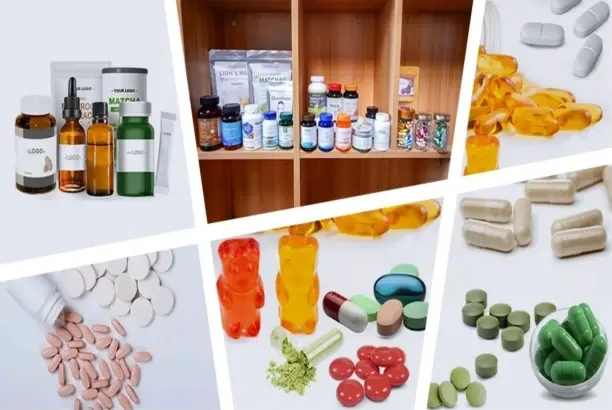
Encapsulated Vitamin A Powder vs. Conventional Vitamin A Powder
Stability and Potency Retention
Vitamin A powder is safe because it is enclosed. Small amounts of nutrients, air, water, and light take longer to get through that wall. They looked at how liposoluble vitamins are packed and wrote a paper about it in the Journal of Controlled Release in 2010. One of the best things about it, they said, was that the vitamins didn't break down. Powders that aren't made to cover as well might not last as long if they get wet, hot, or mineralized. To keep the food fresh, it needs to be packed well, kept in a cool place, and given vitamins. They can use it. It's important to find stable info that works with the way you store it.
Oil-Soluble vs. Water-Dispersible Powders
Powders that dissolve in oil can be used in softgel fillings, fat-based recipes, and oil-based premixes. You can make drinks and other liquids healthier by mixing powders with water. A lot of things can affect performance, like the size of the particles, how well they mix with water, how stable they are in suspension, and how well the matrix works. Every little bit of very wet matter will spread out. If it's not really wet, it sticks together or floats. Check the spread once your real base is at the right temperature and pH level for you. Things that work in plain water might not work in mineral or acidic water.
Dose Uniformity and Total Formulation Cost
Even though the amounts are small, the blend is hard to make. Bigger pieces mix better with particles that are all the same size and can move around. Price per kg doesn't always show what's going on. To figure out how much something costs, you need to think about how much it costs to make, test, package, and check that the price tag is correct. There may be differences in the price per unit of use for different types of powder. Powder that isn't sealed and needs a larger overage may cost less per unit that can be used. To keep the numbers the same, you should use your own files.
Choosing Between Vitamin A Acetate Powder and Vitamin A Palmitate Powder
Formulation Profiles
Don't forget that retinol comes in two forms: acetate and palmitate. The molecules of acetate are smaller, so there is more retinol in one gram of it. Because its fatty acid chain is longer, palmitate mixes easily with other forms that are high in fats. Most of the time, sellers mix an ester with a glue to make that dry powder. Because it's used for different things, the ester's name doesn't tell you much about how the powder will work.
Typical Uses
It is found in a lot of vitamins, food seasonings, and nutritional first mixes. Palmitate powder makes foods healthier, and it can also be used to cook things that need oil, like making baked goods with fat. There isn't just one ester that you should buy because it comes in different powder forms from different people. Which one is best for you will depend on the amount, type, process, and market. Before the test, get the full grade sheet to see what you need to do with each grade.
Like-for-Like Selection Criteria
To compare results, use the same method. Read on to learn about vitamin A's chemical form, how it works, the test method, the carrier system, the amount of water, the particle size, the stable data, and the rules as they stand at the moment. You can't just change the amount to go from a 250,000 IU/g beadlet to a 500,000 IU/g powder. There are differences in the transport, the size of the particles, and the amount of water. Make sure the grade fits the product, the way it will be handled, the dosage form, the market you want to reach, and the standard for the medicine, food, or feed.
Formulation Applications: Selecting the Right Vitamin A Powder Format
Tablets, Capsules, and Gummies
To make pills, the vitamin A powder must be easy to work with and can be pressed down. Things that are under a table usually last longer than things that aren't. Just like the medicine, each pill needs to have the same amount of mix. While the gummies are cooking and setting, it's hot and sticky. It is possible to lose less water if the hill is covered or can spread water out. You should check them all out because they might all taste and look different.
Foods, Beverages, and Infant Nutrition
A set of rules from 2006 by the WHO and FAO says that meals must have vitamin A that stays stable even after being cooked and stored. It's important that drinks smell and taste good and mix well with cold water. It's not possible to mix powders when they get too hot, so for hot-fill lines you need heat-stable types. There are stricter rules about germs and papers when it comes to feeding kids. Make sure you have a place to rest and smell things in your base before you move up.
Feed, Premixes, and Skincare Grade Requirements
Because nutrients, choline, water, and pelleting heat can get into feed and premixes, vitamin A is generally kept safe. For skin care recipes to work, they need to have ingredients that can be used in makeup, color control, and the ability to mix ingredients. There are different rules for things that are used in food, feed, medicine, and beauty products. Make a list of everything you need first. This list should have the grade, strength, particle size, and any paperwork you need. In that case, ask for examples or quotes.
How to Evaluate Vitamin A Powder Suppliers Before Purchasing
Documents to Request
The technical data sheet, the certificate of analysis, the specification sheet, the stability data, the allergen and GMO statements, the microbiological results, the heavy metal limits, the packing information, the shelf life, and the legal papers for the U.S. market are all things you should ask for. Dates can help you be sure that the papers you want to buy are from the batch you want to buy. FDA rules say that vitamin A labels need to show the amount in micrograms per retinol equivalent (mcg RAE). If the service company gives you a number, make sure you can change it. If the package says the gelatin is Halal, kosher, or vegan, find out where it came from.
Supply Capability and Support
Find out how long you have to wait, how long the production process takes, how to store the goods, whether samples are available, and how to get help from a professional before you place your order. It must be clear how to use the item, how to see if it works, and how the business guarantees it. It's safer to buy and make things if you check with the seller, test them in the field, or use a sample that you keep. I believe you should run all three before you make a big order.
Jianbei Vitamin A Specifications
The HPLC test shows that our vitamin A is a pale yellow powder that meets the 98% test. It comes in 25 kg drums or 1 kg bags. It will be sent out 3–7 business days after you pay, and you can buy as little as 1 kg. Keep it somewhere dry and cool. If you seal the food, it will last for two years. The powder can't be sent to the US. You can use Western Union, Alipay, PayPal, or a bank wire to send us the money.
This is where we make things. There are two separate labs, three lines for making things, and a GMP workshop there. We have been given the green light by the US FDA, Organic Food, Kosher, ISO, Halal, HACCP, and GMP. It's mostly used to keep eyes healthy, stop night blindness, fix dry eyes, and keep vision clear. It makes skin smooth and heals dry, rough skin. It also helps keep cells healthy.
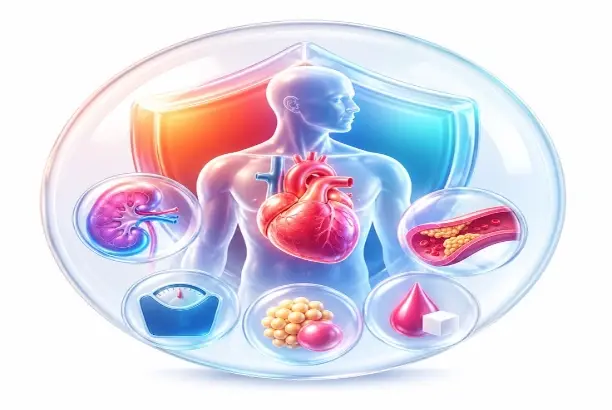
Conclusion
The two types of vitamin A powder are not the same in terms of how they work, how they protect, or how much they cost per amount that can be used. This is done to protect systems that are hot, wet, or have a lot of different nutrients. It makes a wall around them. Light, air, water, and minerals can't get through this wall. Regular powders can be used to mix things better and faster. To find out which is better, you should compare how they are studied, how they are moved, how stable they are, how much water they contain, and the size of the particles. In that case, the description should come first. There are various methods to use tablets, sweets, drinks, food, and skin care products. People choose a seller based on more than just price. They also look at tests, paperwork, and how well you can find things. If someone wants to get the best deal, they should look at the price per useful unit instead of the price per kilogram.
FAQ
1. What is the difference between retinyl acetate and palmitate powder?
In one gram of ester, there is more retinol than in moles of acetate. Systems with a lot of lipids work well with it. The container and the way it is protected change the function in the same way that the ester does.
2. Why does vitamin A powder change color?
Most of the time, darkening means that oxygen is getting into the cell or the antioxidant system is working too hard. Look at the peroxide level and how the things were stored.
3. How should vitamin A powder be stored?
Don't open the boxes. Keep them somewhere cool and dry, not near water or light. Vitamin A from Jianbei will last for two years if you store it in a jar that is tightly closed.
4. Can I use vitamin A powder in hot-fill beverages?
Only with a grade that stays the same when it gets hot. Powders may not work as well after a while if you buy a lot of them and mix them. Use them in your own process to test them.
Request Vitamin A Powder Samples From Jianbei
They have a strong R&D team, a GMP plant, a lot of stock, and all of their certificates. Do you want to buy vitamin A powder from them? Vitamin A 98% is sent by Jianbei. It takes 3–7 working days and can ship as little as 1 kg. To get a sample, email sales@bqingbio.com with your use case, target market, and amount.
References
1. Office of Dietary Supplements, National Institutes of Health. Vitamin A Fact Sheet for Health Professionals, 2023.
2. Gonnet M., Lethuaut L., Boury F. New Trends in Encapsulation of Liposoluble Vitamins. Journal of Controlled Release, 2010.
3. World Health Organization and Food and Agriculture Organization. Guidelines on Food Fortification with Micronutrients, 2006.
4. Institute of Medicine. Dietary Reference Intakes for Vitamin A, Vitamin K, Arsenic, Boron, Chromium, Copper, Iodine, Iron, Manganese, Molybdenum, Nickel, Silicon, Vanadium, and Zinc. National Academies Press, 2001.
5. Dary O., Mora J.O. Food Fortification to Reduce Vitamin A Deficiency: International Vitamin A Consultative Group Recommendations. Journal of Nutrition, 2002.
6. World Health Organization. Guideline: Vitamin A Supplementation in Infants and Children 6–59 Months of Age, 2011.
In order to facilitate the delivery of lipophilic components, alpha-cyclodextrin powder is used to ensnare oil-loving molecules that are suitable with the powder's tiny hydrophobic cavity. Because of its hydrophilic outer surface, the complex that is produced is one that may be dispersed in water. This host-guest interaction has the potential to enhance the characteristics of dispersion, handling, and taste control for fatty compounds, flavours, plant extracts, and vitamins. It is important to do laboratory testing since the results are dependent on molecular fit, loading ratio, and processing. This guide will explain how the ingredient functions, how it compares to other carriers, which quality documentation should be requested, and how to plan a purchase for projects including supplements, food, cosmetics, pharmaceuticals, and animal nutrition.
Alpha-Cyclodextrin Powder: Structure, Properties, and Core Benefits
Structure and Key Specifications
The non-reducing cyclic oligosaccharide known as alpha-cyclodextrin is composed of six glucose units that are connected to one another by alpha-1,4 linkages. It is produced from starch by an enzyme called cyclodextrin glycosyltransferase. The ring is shaped like a truncated cone, with a hydrophilic exterior and a hollow that measures around 4.7–5.3 Å. Jianbei provides it as a white crystalline powder with a specification of 98%, which is tested using high-performance liquid chromatography (HPLC). The chemical identification number (CAS) for this substance is 10016-20-3, and its molecular formula is C36H60O30. Its molecular weight is about 972.9 g/mol. Buyers should always check these IDs against the batch Certificate of Analysis, since this is something I usually recommend.
Why Lipophilic Ingredients Are Hard to Formulate
In water, a great number of vitamins, botanical extracts, flavours, and essential oils have a restricted ability to dissolve. This results in sedimentation, phase separation, uneven dosing, and off-flavors when applied to mixtures of liquid and powder compositions. Formulators often resort to emulsifiers or vehicles that are based on oil; nevertheless, these choices might restrict the labelling options or processing processes available to them. Powdered alpha-cyclodextrin provides product development teams with an additional choice. It is able to host guest molecules that are compatible with it and transport them as a solid that flows freely. However, performance is not universally applicable. It is recommended that screening be done prior to scaling up since the molecular size, polarity, and loading level are the factors that determine whether a particular oil or active fits the cavity.
Core Benefits for Buyers
Directors of research and development and product managers often place importance on three impacts. Using encapsulation, delicate actives may be protected, and undesirable odours or tastes can be concealed. The behaviour of a guest molecule in a formula may be altered by the use of controlled release. Within the category of soluble dietary fibres is found alpha-cyclodextrin. According to a claim that was backed by the European Food Safety Authority in 2012, when individuals ingest at least 5 grams of starch for every 50 grams of starch, it lowers the increase in blood glucose that occurs after meals that include starch. According to the information that we have on our product, the functional directions include satiety, management of blood sugar and blood lipids, and intestinal health.
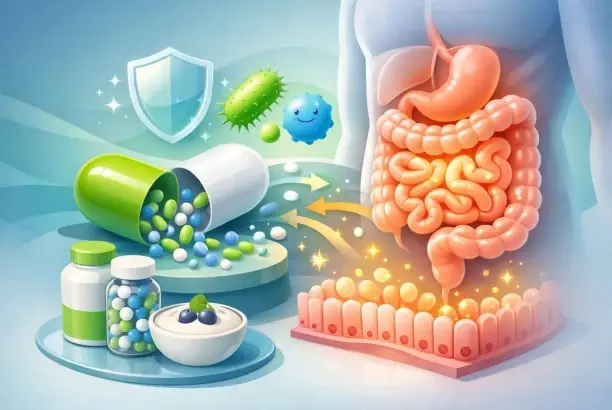
How Alpha-Cyclodextrin Powder Works in Lipophilic Ingredient Delivery
The Inclusion Complex Mechanism
Following the introduction of a lipophilic molecule of an appropriate size into the cavity, an inclusion complex is formed. Interactions between hydrophobic molecules, van der Waals forces, and the discharge of water from the cavity are the driving factors behind the process. At a temperature of 25 degrees Celsius, the amount of alpha-cyclodextrin that can be dissolved in water is about 14.5 grams per 100 millilitres, but the amount of beta-cyclodextrin that can be dissolved is only around 1.85 grams per 100 millilitres. Having this distinction is beneficial in aquatic systems. Due to the limited cavity, linear molecules, such as chains of fatty acids, are more advantageous than aromatic rings that are bulky. Phase-solubility investigations, Fourier transform infrared spectroscopy, differential scanning calorimetry, X-ray diffraction, and assays are the methods that developers employ to verify complexation. This is because not every oil produces a stable complex.
Comparison With Beta-Cyclodextrin, Gamma-Cyclodextrin, and Other Carriers
Cavity size is the primary factor used. There are six glucose units in alpha-cyclodextrin, seven in beta, and eight in gamma-cyclodextrin. The sizes of their cavities increase from around 4.7–5.3 Å to 6.0–6.5 Å, and subsequently they reach 7.5–8.3 Å. Although it dissolves much less in water, beta is suitable for a wide variety of aromatic and bigger hydrophobic visitors. Gamma is responsible for holding more substantial structures. The cost, level of protection, and labelling of emulsifiers, modified starches, gum carriers, spray-dried carriers, and spray-dried carriers are all different from one another. It is also important for purchasers to differentiate between pure alpha-cyclodextrin powder and blended premixes by examining the assay basis and composition. This is because a mixture alters both the dosage arithmetic and the claims as well.
Applications Across Industries
When it comes to nutritional supplements, the powder may be used to support applications such as capsules, tablets, sachets, and powders, in addition to being employed to contain oils. Functional food and beverage teams employ it for the goal of transferring tastes, regulating odours, and strengthening fibre. These teams should experiment with its stability in each matrix in order to determine how well it works. Lipophilic plant actives are being researched by cosmetic formulators in order to provide them with the necessary ingredients. In addition to this, they need to make sure that it is compatible with fragrances, surfactants, and preservatives. In order to improve the solubility and stability of certain medications, pharmaceutical firms are required to carry out validated research and GMP controls in order to assess cyclodextrin complexes. This is important in order to get the desired results. Companies that create products for animal nutrition and pet supplements have the capacity to test the palatability of their products as well as the performance of their carriers. There is a high probability that a single specification will not be relevant to every project. This is because every industry has its own rules that must be followed.
Quality Standards, Compliance, and Supplier Selection
Quality Parameters and Documentation
It is recommended that the first step in the purchase process be the creation of a Certificate of Analysis and Safety Data Sheet that is specific to the batch. There are a number of additional significant tests, including identification, high-performance liquid chromatography (HPLC) analysis, specific rotation, moisture, residual solvents, heavy metals, microbiological limits, particle size, and pH. Because of the fact that they have an effect on loading capacity, low reducing sugars and a limited number of pre-complexed impurities are essential components. It is possible to give assistance for food safety objectives by screening for heavy metals using ICP-MS detection. As a result of the fact that production controls and documentation are distinct from one another, it is not realistic to assume that material that is suitable for food is also suitable for medicinal use. It is essential that you verify that each and every document matches the actual manufacturing site as well as the commercial grade that you want to acquire via the acquisition.
Certifications and Regulatory Status
The regulatory acceptability of a product is determined by the market to a large extent. Through the use of the designation GRN 000155, the Food and Drug Administration (FDA) in the United States has included alpha-cyclodextrin in the GRAS notification inventory that it uses. The United States Food and Drug Administration (US FDA), Organic, Kosher, ISO, HALAL, HACCP, and Good Manufacturing Practice (GMP) certifications are all featured on Jianbei's list. Buyers from the United States of America should make it a point to look for the documents that are pertinent to the use they want to put them to and should also request copies that are related to the production facility. The firms that make claims on their product labels should engage with their regulatory consultants prior to the release of their product in order to assess the permitted-use status and claim language. Additionally, quality management and procurement teams are able to decrease the amount of time spent on supplier audits when they have access to clear documentation.
How to Choose a Supplier
When it comes to procuring alpha-cyclodextrin powder, the price per kilogram only paints a partial picture of the situation. The manufacturing capacity, traceability, export experience, lead time, and sample support are all examples of things that should be compared. Jianbei is the owner and operator of a plant that accommodates three manufacturing lines, a workshop that meets GMP standards, and two independent labs. Additionally, the corporation is the owner of 15 national innovation patents in addition to 8 utility model patents. For the purpose of evaluating dispersion, particle size, active loading, taste, and stability, samples should be requested. Sometimes people make two common errors: they assume that every lipophilic element will complex, and they consider improved wetting to be the same thing as real solubilisation. Before placing a purchase, verify the grade, minimum order quantity, packing, payment conditions, and delivery documentation.
Formulation Workflow, Storage, and Logistics
A Practical Development Workflow
When a process is well-organised, the danger of expanding it is significantly reduced. It is required to offer a description of the lipophilic component at the beginning of the process. This description should contain the molecular weight, polarity, melting point, volatility, and sensitivity to heat or moisture. A variety of alternative proportions of substances to cyclodextrin should be investigated in the second step. Third, choose a method such as mixing, kneading, co-precipitation, or spray drying, and then test the product's loading efficiency, free active, flowability, dispersion, release, flavour, and dose uniformity. Finally, evaluate the product's taste. Verify the product's identity, assay, microbiological quality, packing performance, and stability in the conditions that were expected for storage. This is the last step, but it is certainly not the least important. If a team keeps notes on every ratio, it will be much simpler for them to repeat the results at the pilot scale.
Storage, Shelf Life, and Packaging
In order to prevent the powder from getting wet, it should be kept in a dry and cool environment, and the bags should be resealed before being stored. Storage that is hermetically sealed has a shelf life of two years due to preservation. When it comes to production numbers, we pack drums that weigh 25 kilograms, whereas for sample and pilot work, we pack aluminium foil bags that weigh one kilogram. The foil barrier serves to protect the flow of powder and its capacity to quickly re-disperse itself; this is especially helpful when the conditions are humid. When you get the box, the integrity of the packaging as well as the lot numbers should be checked. Planning for the future with your supplier not only helps to keep recurring production schedules, but it also reduces the possibility that there will be a stock gap in the future.
Ordering, Payment, and Delivery
The powder is only available for export from Jianbei, and the minimum order quantity is one kilogram. It is suited for use in labs for the purpose of conducting experiments. It is possible that delivery will take anywhere from three to seven business days after the payment has been received. We accept payments using Western Union, Alipay, XT, and PayPal, among other payment methods. It is also possible to make transfers by telegraph. Before you place your purchase, I strongly suggest that you go through this last checklist, which includes the following items: application, destination market, grade, particle size, moisture limit, batch certificate of analysis and safety data sheet, packaging, shelf life, minimum order quantity, bulk price, lead time, and Incoterms. Not only should you take into consideration the price that is being given, but you should also take into account the total landed cost, the consistency of the quality, and the flow of the supply.
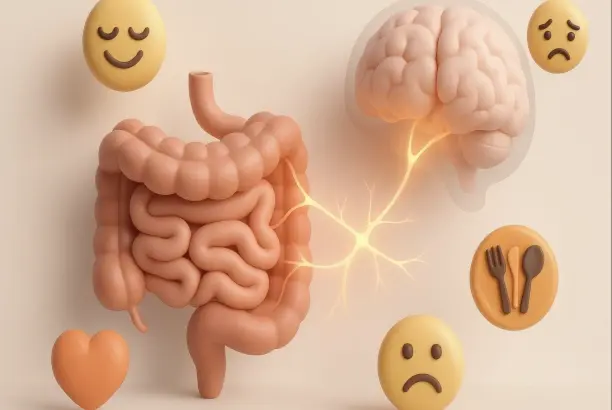
Conclusion
Alpha-cyclodextrin powder is a cyclic oligosaccharide that consists of six units. Its hydrophobic interior and hydrophilic exterior make it possible for it to transport certain lipophilic components. Processing, molecular fit, and loading ratio are all important factors in determining success; thus, screening and analytical validation should occur before scaling up. The cavity of this cyclodextrin is smaller than that of beta- and gamma-cyclodextrin, which makes it more suitable for linear molecules and gives more water solubility. Supplements, meals, cosmetics, medicines, and animal nutrition are all examples of applications, and each of these categories has its own set of regulatory requirements. Documents pertaining to batches, certifications that are related to the manufacturing location, storage conditions, and the total landed cost should all be verified by purchasers. A procedure that is organised transforms these tests into outcomes that can be repeated.
FAQ
1. Does alpha-cyclodextrin powder dissolve every lipophilic ingredient?
No. It works for guests that fit its 4.7–5.3 Å cavity, such as linear fatty acid chains. Larger molecules may suit beta- or gamma-cyclodextrin. Laboratory testing confirms fit and loading.
2. What are the main product identifiers?
Jianbei supplies Alpha-Cyclodextrin as a white crystalline powder with a 98% specification, tested by HPLC. The CAS number is 10016-20-3, the formula is C36H60O30, and the molecular weight is approximately 972.9 g/mol.
3. What are the order terms?
The minimum order is 1 kg. Packaging comes in 1 kg aluminum foil bags or 25 kg drums. Sealed shelf life is two years in a dry, cool place. Delivery takes 3–7 working days after payment.
Request Alpha-Cyclodextrin Powder From Jianbei
Ready to test alpha-cyclodextrin powder in your next formula? Jianbei is an alpha-cyclodextrin powder manufacturer with a GMP-standard workshop, three production lines, and a 1 kg minimum order. Email sales@bqingbio.com with your application, volume, and target market, and we will reply with specifications, samples, and quotations.
References
1. Szejtli J., Introduction and General Overview of Cyclodextrin Chemistry, Chemical Reviews, 1998.
2. Del Valle E.M.M., Cyclodextrins and Their Uses: A Review, Process Biochemistry, 2004.
3. Loftsson T. and Brewster M.E., Pharmaceutical Applications of Cyclodextrins: Basic Science and Product Development, Journal of Pharmacy and Pharmacology, 2010.
4. EFSA Panel on Dietetic Products, Nutrition and Allergies, Scientific Opinion on the Substantiation of a Health Claim Related to Alpha-Cyclodextrin and Reduction of Post-Prandial Glycaemic Responses, EFSA Journal, 2012.
5. U.S. Food and Drug Administration, GRAS Notice Inventory: GRN 000155, Alpha-Cyclodextrin, 2004.
6. Crini, G., Review: A History of Cyclodextrins, Chemical Reviews, 2014.
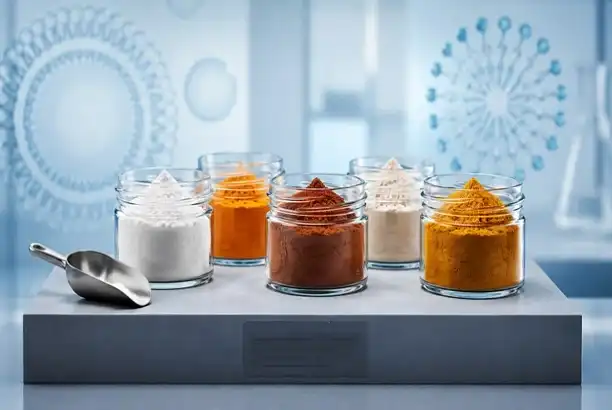
When pharmaceutical manufacturers seek a reliable active pharmaceutical ingredient for erectile dysfunction and pulmonary arterial hypertension treatments, sildenafil powder bulk stands as one of the most established choices in the industry. As a white crystalline compound with CAS No. 171599-83-0, molecular formula C28H38N6O11S, and a molecular weight of 666.70, this high-purity API enables formulators to build precise, scalable dosage systems. Understanding its chemical profile, procurement dynamics, and formulation best practices is essential for R&D directors, procurement managers, and product developers operating in today's competitive pharmaceutical landscape.
Understanding Sildenafil API in Pharmaceutical Formulation
Chemical Identity and Purity Standards
This drug, sildenafil, is in a group called phosphodiesterase-5 (PDE-5) inhibitors. It raises cyclic guanosine monophosphate (cGMP) levels in the corpus cavernosum by blocking the PDE-5 enzyme. This causes blood vessels to widen and blood flow to continue. Jianbei's pharmaceutical-grade material is a clean white powder that meets 98% of the requirements. It was tested using HPLC. The compound dissolves in water depending on its pH level and has a melting point range that is similar to that of compendial-grade material. When companies are making pill or capsule lines, the way the particles are distributed directly affects how quickly the drug dissolves and how bioavailable it is. This is a technical detail that sets the premium API apart from cheaper options.
Storage, Stability, and Handling
Strict environmental controls are needed to keep the purity of raw materials throughout the supply chain. When kept sealed, Jianbei's sildenafil API can be used for two years. It should be kept in a dry, cool place away from direct light and moisture. One-kg metal foil bags and 25 kg drums are two types of transport packaging that can be used for both small-scale tests and full production batches. These options for packaging protect the crystals' integrity during international shipping, which is a must for pharmaceutical-grade materials that have to go through multiple customs jurisdictions.
Comparing Sildenafil with Alternative ED Formulation Ingredients
Pharmaceutical developers who work on ED drugs often compare sildenafil to tadalafil and vardenafil when choosing APIs for new product lines. Each compound has its own pharmacokinetic profile, and the best one to use depends on the desired onset time, duration of action, and compatibility with the excipients of choice.
Sildenafil's short half-life (about four to six hours) makes it a good choice for on-demand dosing forms. Its large body of safety literature, which includes over twenty years of post-market data, also gives regulatory teams a solid base for putting together dossiers. The longer half-life of tadalafil makes it better for daily doses, but it makes it harder for some excipients to work with it. The price per gram of sildenafil powder bulk is always competitive, which is why it is the first choice for generic drug companies that want to get into the ED market. Procurement teams also gain from having access to more foreign suppliers, which lowers the risk of being dependent on a single source.
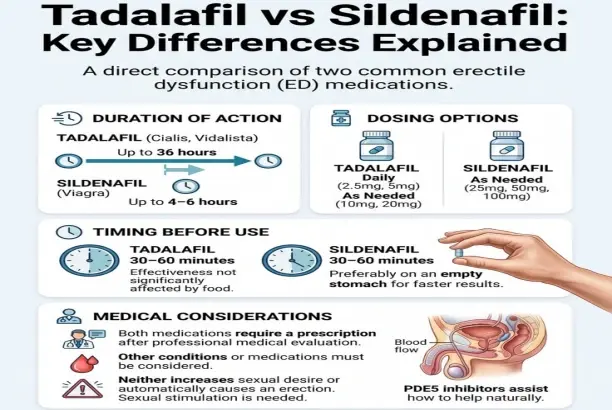
Sourcing High-Purity Sildenafil Powder: B2B Procurement Essentials
To get pharmaceutical APIs on a large scale, you need more than a low unit price. Before making a deal with a seller, business-to-business buyers need to make sure that the provider has the right credentials, that the packaging is safe, and that the supply chain is reliable. When expert pharmaceutical buyers look at a sildenafil powder bulk supplier, these are the main things they look at:
- Certifications and compliance documentation: Jianbei has licenses from the FDA, GMP, ISO, HALAL, HACCP, Kosher, and Organic Food. This portfolio of credentials meets the needs of regulatory gatekeepers in the North American, European, and Asian markets at the same time, so buyers don't have to go through as many audits.
- Minimum order quantity and scalability: New customers can test the quality of the product in small batches (1 kg minimum order quantity) before placing large 25 kg drum orders. This low entry barrier lowers the risk of buying a large amount during the seller qualification process.
- Delivery timeline and logistics reliability: Jianbei ships within 3 to 7 business days of receiving payment proof. Telegraphic transfer, Alipay, XT, PayPal, and Western Union are all accepted as ways to pay. This covers all possible options for foreign transactions.
- Packaging integrity for cross-border shipment: For shipping across borders, aluminum foil bags and covered drums keep API stable during long transport times, keeping moisture-sensitive crystalline material from breaking down in the environment.
These basic buying rules lower the legal and financial risks that come with getting pharmaceutical-grade APIs from outlets that haven't been checked out. When buyers handle all four factors at the start, product development timelines tend to go more smoothly, and batch-level quality surprises happen less often.
Selecting a Trusted Sildenafil Powder Manufacturer: Critical Evaluation Factors
Choosing the right supplier for sildenafil powder bulk pharmaceutical raw materials can affect the quality of the product, the company's reputation, and its standing with regulators in the long term. Manufacturers from China, India, and the US are all in the market, and their levels of GMP compliance and documentation are different.
Jianbei Biotechnology Co., Ltd. runs a manufacturing facility that meets GMP standards. It has three working production lines and two separate quality control labs. This infrastructure allows for thorough testing of each batch against USP and EP standards. HPLC verification is the main analytical method used to prove purity. The company's main office and research and development center are in Guangzhou Software Park. They have a mature team that holds 15 national invention patents and 8 utility model patents for smart tracking systems and core product processes.
To judge a seller on more than just price, you need to look at three other factors. Batch-to-batch consistency, which can be checked with a proof of analysis, makes sure that the formulation factors set during research and development (R&D) stay the same at production scale. Clear lines of communication cut down on uncertainty about lead times and give procurement managers the confidence they need to make buying decisions. A real manufacturing partner is different from a transactional seller because they offer responsive after-sales help, such as technical advice on excipient compatibility and regulatory paperwork.
Optimizing Pharmaceutical Formulations with Bulk Sildenafil
Excipient Compatibility and Dosage Accuracy
When formulators choose excipients for sildenafil citrate API, they need to keep in mind that it dissolves differently depending on the pH. Microcrystalline cellulose, lactose monohydrate, and croscarmellose sodium are excipient combinations that have been shown to work well in the development of immediate-release tablets. To get consistent content across high-speed compression runs, the API needs to have a tight particle size distribution. Jianbei's GMP production method controls this requirement with tested milling and sieving techniques.
Emerging Trends in PDE-5 Inhibitor Formulations
The market for sildenafil API is changing beyond simple pills that you take by mouth. Manufacturers are looking for different ways to give medicines, so orodispersible films, sublingual tablets, and topical gel formulations are now in the trial and market development processes. These new forms need APIs that are very pure and particles that are very small. This makes it even more important for businesses to buy from companies that have advanced analysis infrastructure. Working with a certified supplier early on in the research and development process speeds up the preparation of the dossier and lowers the chance of problems with the formulation of the API.
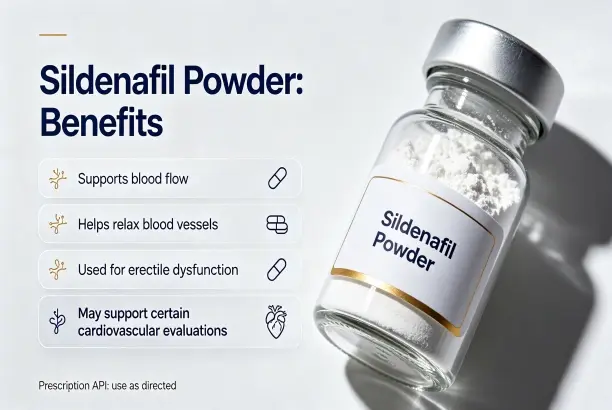
Conclusion
To make a pharmaceutical formulation based on sildenafil powder bulk API, the quality must be checked, the supply must be stable, and the paperwork must be ready for regulatory review. The compound is a good choice for companies making ED or PAH treatments because it has a well-known pharmacology, a competitive price, and a wide range of certifications. All of these needs are met by Jianbei Biotechnology's GMP manufacturing, HPLC-validated quality control, and a global transportation structure made just for pharmaceutical buyers.
FAQ: Common Questions About Bulk Sildenafil Powder
1. What purity standard should pharmaceutical-grade sildenafil meet?
Pharmaceutical-grade sildenafil should have a test purity of at least 98%, which can be checked using HPLC analysis. This level is met by Jianbei's product specifications, and batch certificates can be requested.
2. How should bulk sildenafil powder be stored during transit and warehousing?
The API should be kept in a cool, dry place in a package that can't be opened. Both aluminum foil bags and 25 kg drums are good at keeping out light and moisture. The shelf life is two years if it is stored properly and tightly closed.
3. What is the difference between bulk sildenafil powder and branded Viagra?
Branded Viagra is a finished oral dosage form that has sildenafil citrate as its active ingredient and other ingredients that help the medicine work. Manufacturers use sildenafil powder bulk, which is the unformulated API, to make generic versions of drugs or new dosage forms. Pharmacologically, the main ingredient is the same.
4. Does Jianbei's sildenafil API comply with international export requirements?
Yes. Jianbei has certifications from the FDA, GMP, ISO, HALAL, HACCP, and Kosher. These help them follow international rules in North America, Europe, and the Middle East. The only way to get these goods is to sell them.
Request a Quote from Jianbei — Your Sildenafil Powder Bulk Supplier
Jianbei Biotechnology uses GMP-certified factories, two separate labs, and a wide range of certifications to make pharmaceutical-grade sildenafil powder bulk API that buying teams at all levels can trust. Our team can help you with pricing and payment methods that work with your procurement cycle, whether you need a 1 kg qualification sample or a 25 kg production drum. Get in touch with us at sales@bqingbio.com right now to start the buying process.
References
1. Boolell, M., Allen, M. J., Ballard, S. A., et al. "Sildenafil: an orally active type 5 cyclic GMP-specific phosphodiesterase inhibitor for the treatment of penile erectile dysfunction." International Journal of Impotence Research, 1996.
2. Corbin, J. D., & Francis, S. H. "Cyclic GMP phosphodiesterase-5: target of sildenafil." Journal of Biological Chemistry, 1999.
3. United States Pharmacopeia. USP–NF Monograph: Sildenafil Citrate Tablets. United States Pharmacopeial Convention, 2022.
4. European Medicines Agency. Assessment Report: Sildenafil Citrate Active Substance Master File. EMA Scientific Guidelines, 2020.
5. Nichols, D. J., Muirhead, G. J., & Harness, J. A. "Pharmacokinetics of sildenafil after single oral doses in healthy male subjects." British Journal of Clinical Pharmacology, 2002.
6. ICH Expert Working Group. Q6A: Specifications — Test Procedures and Acceptance Criteria for New Drug Substances and New Drug Products. International Council for Harmonisation of Technical Requirements for Pharmaceuticals for Human Use, 1999.
L-glutathione powder is used in the formation of capsules, sachets, sweets, and powdered drinks due to its antioxidant properties. Reduced levels of the glutamic acid, cysteine, and glycine tripeptide, sometimes known as GSH, are seen. Validating the reduced form and assay, determining the solubility of the powder across the full product matrix, protecting the powder from contact with oxygen and moisture, and examining the documents prior to placing bulk orders are the four checks that are necessary for success. In this post, I will discuss the form, formulation, storage, quality control, and sourcing of your product so that your research and development and procurement teams may go forward without any surprises from the sample to the commercial batch.
Why L-Glutathione Powder Matters in Functional Food Formulation
Where L-Glutathione Powder Fits in Functional Foods
When it comes to marketing meals and beverages that are centred on antioxidants, L-glutathione powder is used quite often. Consumables such as capsules, pills, stick packs, candies, chewables, and powdered drinks are included in this category. The sensory characteristics, the market, the daily serving, and the content of the product all play a role in determining the overall fit of the product. According to the Journal of Nutrition (2004), glutathione is found in every cell and has a part in both the antioxidant defence system and the detoxification process. It is also present in every cell. There is the potential for brands to construct their reputations on the basis of scientific evidence.
On top of that, there are difficulties of a technological kind. Reduced glutathione may be dissolved in water; however, it experience oxidation during the processing stage, it absorbs moisture, and it has a mild sulphur aroma owing to the presence of its thiol group. Despite these characteristics, it is feasible to dissolve reduced glutathione in water. The flavour, homogeneity, and shelf life of the mixture are all impacted by these factors being taken into account. On the very first day of the project, it is essential to describe the components that will be included in the project brief. This will allow procurement and research and development to evaluate the items based on their value rather than their cost.
Reduced Glutathione (GSH) vs. Oxidized Glutathione (GSSG)
The commercial manufacturing process makes use of glutathione that has been reduced or oxidised. Glutathione (GSH) is responsible for keeping the sulfhydryl group of a cysteine unit free, which gives it the ability to neutralise free radicals. The production of GSSG is accomplished via the establishment of disulphide bonds between two molecules of GSH. It is my recommendation that the needed form be included in the import documentation, as well as the label, the purchase contract, and the specification. The reason for this is that the two forms have distinct formula structures, levels of stability, and behaviours. There is a difference between the two forms.
In addition, customers should be aware of the distinctions between identification, assay, and finished-product dosage, which are sometimes confused with one another. You may be able to identify your molecule based on its identification. An assay is a method that may be used to ascertain the worth of the powder. Each dish presents the dose in its own unique way. There is also significance in ratings. When it comes to food, supplement, and medical grades, it is essential to ensure that the paperwork is aligned with the product category and the market that is being targeted accordingly.
Product Positioning and Claims in the U.S. Market
In the United States, firms that manufacture L-glutathione powder place a focus on antioxidant support, daily wellness, beauty-from-within, and healthy ageing. Separate the function of the substance from the marketing claims that are permitted. Claims on the structure and function of dietary supplements are required to carry a disclaimer and warning from the FDA, and they cannot treat or cure any ailment. In every export market, including the European Union, the United Kingdom, the Middle East, and Asia-Pacific, the dosage, labelling, warnings, and advertising language should be reviewed prior to the launch.
Evidence is helpful. The results of a randomised study that was published in the European Journal of Nutrition (2015) indicated that the blood glutathione reserves of healthy individuals rose after they had taken oral supplementation for a period of six months. Your arguments will be strengthened if you cite human data within the legal system.
Formulating, Dosing, and Storing L-Glutathione Powder
A Step-by-Step Formulation Approach
At the outset of a project, it is essential to ascertain the format, the clientele that will be served, the frequency of servings, the flavour profile, and the desired shelf life. The form of glutathione, the assay, the moisture content, the particle size, the microbiological limits, the heavy metals, and the certificates are all aspects that I consider to be critical in determining the quality of the product. Powder mixtures need to make use of particle sizes that are consistent in order to guarantee that each stick pack or capsule has the identical quantity.
The use of liquids calls for further caution. The active chemical that is contained in the final package is determined by a number of factors, including the dispersion, the mixing order, the pH, the temperature, the ionic strength, and the contact length. The late introduction of reduced glutathione, the limitation of heat, and the lowering of headspace oxygen as a result of its oxidation are all approaches that are often used by developers. Before commencing the process of commercial scale-up, it is essential to proceed with laboratory screening, pilot production, and stability tests on the finished product already in existence.
Dosage, Solubility, and Compatibility
When it comes to L-glutathione powders, a single dosage is not always considered adequate. When you are deciding the quantity that you want to manufacture, you should take into consideration the formulation aim, the product format, the regulatory limits, and the stability data. If you add more raw material than what is mentioned on the label, you should make a note of the difference in addition to the findings of the test.
Be cautious to verify not only the solubility in water but also the solubility in the composite matrix. When contrasted with the effects of pure water, the impacts of acids, minerals, sugars, and tastes on an experiment involving a beverage are exceptionally dissimilar. A pilot study to determine whether vitamin C, minerals, botanicals, proteins, preservatives, and colours are compatible with one another. The reduced glutathione produced by Jianbei is a white powder that has a molecular weight of 307.32, a CAS number of 70-18-8, a molecular formula of C10H17N3O6S, and a specification that has been shown to be 98% correct via the use of high-performance liquid chromatography (HPLC). Your laboratory will make use of these identification numbers in order to verify that the drum material is in accordance with your standards.
Storage, Packaging, and Shelf Life
Make sure that the powder is kept away from light, heat, and moisture, and that it is stored at a low temperature to prevent it from drying out. Jianbei's Reduced Glutathione is available in barrels weighing twenty-five kilograms and in aluminium foil packaging weighing one kilogram. It has a shelf life of two years and may be purchased in either medium or large quantities. It is necessary to wrap powders that contain thiols with foil in order to prevent light, moisture, and air from penetrating the powder. In the course of ordinary manufacturing, the drum that weighs 25 kilograms is used, whilst the bag that weighs one kilogram is designed just for pilots.
Following the opening of a container, it is imperative that your plant promptly reseal the container and reduce the amount of air exposure it is exposed to. Make a request for real-time and accelerated stability data from any source, including assay, moisture, appearance, odour, microbiological, and dispersion data. This request should be made via the website. In light of the fact that the packaging has an impact on the outcomes, you have to conduct your own stability tests in the final commercial package whenever it is feasible to do so.
Quality Control and Sourcing Bulk L-Glutathione Powder
Quality Documents to Request
In order to build an L-glutathione powder bulk supply business, it is necessary to have documented identification, assay, purity, and batch release. For the assay, moisture, appearance, microbiology, heavy metals, and related substances, you should get a Certificate of Analysis that is specific to the batch's characteristics. Instead of using the phrase "99% purity" as a sales pitch, you should want to know the analytical method and the outcome. Through the use of HPLC, which is a common method, we quantify glutathione.
Check the legitimacy of the certifications and make sure the product meets all of the requirements. Jianbei's Reduced Glutathione has been awarded a variety of certifications: the Food and Drug Administration (FDA), Organic Food, Kosher, ISO, HALAL, HACCP, and Good Manufacturing Practice (GMP). Make a request for information on the management of deviations, complaint processes, traceability, and notification of changes to the manufacturing specification or manufacturing process. These limitations are of the highest importance in circumstances in which many batches of the same product are being made to the same standard.
How to Choose a Supplier and Avoid Common Pitfalls
First things first, you need to determine if you will be producing on a big scale, exporting to wholesalers, producing pilot batches, or producing lab samples. Check the production capacity, the experience with functional foods, the homogeneity of the batches, the norms for good manufacturing practices (GMP), the export paperwork, the minimum order quantity (MOQ), the price per kilogram, the lead time, and the logistical help. In terms of traceability, customisation, access to inventory, and technical assistance, it is important to investigate the distinctions that exist between direct manufacturers and trading businesses.
The lowest quotation may not always represent the lowest cost in the majority of instances. It is important to evaluate several aspects of a product, including its purity, usable yield, stability, testing, packaging, and rejection risk, based on similar requirements and delivery conditions. The assumption that all powders operate in the same manner and the mixing of GSH and GSSG are two examples of the common mistakes that people make. Jianbei's plant is equipped with three production lines, a GMP workshop, and two separate labs due to its extensive manufacturing capabilities. The company is in possession of fifteen national innovation patents and eight utility model patents, which cover critical procedures and intelligent monitoring systems. These patents cover the organization's ability to innovate. In addition, the company's research and development team, massive inventory, and rigorous certifications ensure that there will always be a consistent supply.
A Practical B2B Procurement Workflow
When processes are organised, there is a decrease in the many types of risk, including commercial, regulatory, and technical risk. Putting together a specification for the form, the assay, the grade, the packaging, the certificates, the testing, the application, the yearly demand, and the market destination is an important step. To evaluate the compatibility, assay, solubility, sensory properties, and identity of the samples and suppliers, the second stage is to conduct an examination of both. Third, you need to do lab and pilot testing before you allow your product to be released.
In addition to establishing the specifications, the contractors are responsible for determining the minimum order quantity (MOQ), the price, the payment terms, the Incoterms, the delivery dates, the paperwork, and the inspection methods. Jianbei is able to take payments by Western Union, Alipay, XT, and PayPal in addition to telegraphic transfers. When placing an order, the minimum quantity required is one kilogram, and the delivery period might vary anywhere from three to seven days. It is only possible to export powder at this time. Additionally, it is essential to undertake frequent assessments of suppliers after the launch in order to evaluate the quality of the batches, the delivery, the reaction to complaints, and the correctness of the documents.
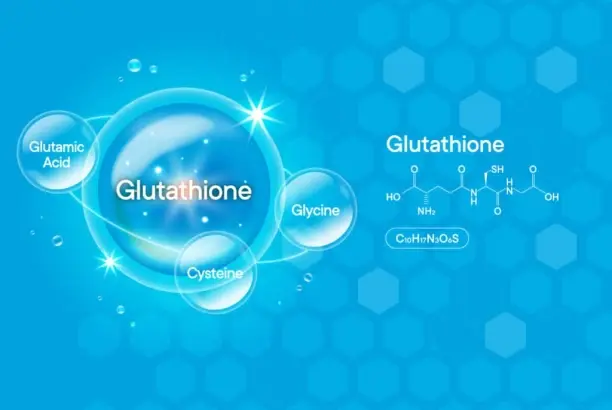
Conclusion
L-glutathione powder can support antioxidant-focused functional foods when teams treat it as a technical ingredient rather than a commodity. The reduced form, GSH, should be named in every specification, and identity, assay, and dose should stay distinct. Formulation success depends on testing dispersion, solubility, and compatibility in the finished matrix, controlling oxygen and moisture, and storing the powder sealed in a cool, dry place. Claims in the U.S. market must stay within structure/function rules and rest on human evidence. Batch-specific CoAs, HPLC data, valid certificates, and a staged path from sample to pilot to bulk order lower quality and supply risk, and total cost matters more than unit price.
FAQ
1. What is the difference between GSH and GSSG?
GSH is the reduced form with a free sulfhydryl group that neutralizes free radicals. GSSG is the oxidized form, made of two linked GSH molecules. State the required form in your specification.
2. Does L-glutathione powder work in beverages?
It dissolves in water, but reduced glutathione can oxidize in solution. Test it in the complete beverage matrix, including pH, temperature, and mixing order, and check stability in the final packaging.
3. What documents should I request before ordering?
Ask for a batch-specific CoA, specification, SDS, certificates, stability data, and export documents. Jianbei's Reduced Glutathione is tested by HPLC against a 98% specification.
4. What are the minimum order and lead time?
The minimum order is 1 kg, and delivery takes 3–7 working days after payment.
Request L-Glutathione Powder Samples from Jianbei
Jianbei is an L-glutathione powder manufacturer with a GMP factory, a mature R&D team, large inventory, and complete certificates. Send your target dose, annual volume, destination country, and packaging needs to sales@bqingbio.com, and we will reply with samples, a specification, and current pricing for Reduced Glutathione (98%, CAS 70-18-8).
References
1. Wu G. et al., "Glutathione Metabolism and Its Implications for Health," Journal of Nutrition, 2004.
2. Forman H.J. et al., "Glutathione: Overview of Its Protective Roles, Measurement, and Biosynthesis," Molecular Aspects of Medicine, 2009.
3. Witschi A. et al., "The Systemic Availability of Oral Glutathione," European Journal of Clinical Pharmacology, 1992.
4. Richie J.P. et al., "Randomized Controlled Trial of Oral Glutathione Supplementation on Body Stores of Glutathione," European Journal of Nutrition, 2015.
5. Li Y. et al., "Glutathione: A Review on Biotechnological Production," Applied Microbiology and Biotechnology, 2004.
6. Sinha R. et al., "Oral Supplementation with Liposomal Glutathione Elevates Body Stores of Glutathione and Markers of Immune Function," European Journal of Clinical Nutrition, 2018.
Nano Pearl powder transforms the skin thanks to ultra-fine particle technology that makes it easier for the skin to absorb and work. This advanced bioactive ingredient, which is smaller than 100 nanometres, is better than regular pearl powders at lightening, moisturising, and protecting cells from damage. It makes collagen, fixes broken cells, and gives your skin a healthy glow because it contains over 18 amino acids and important trace minerals. Nanoparticles get deep into the skin, solving formulation problems that product makers keep running into when they try to make high-end skin care products for picky customers around the world.
Understanding Nano Pearl Powder and Its Core Benefits
What Makes Nano Pearl Powder Revolutionary?
A big step forward in the science of cosmetic ingredients is the switch from standard pearl powder to nanoparticles. The Grade-A medicinal pearls are broken down into particles smaller than 100 nanometres using high-energy vibration milling and cryogenic grinding. This very small shape makes the surface area-to-volume ratio much higher, which makes the nanopearl powder more bioavailable by over 600% compared to regular pearl powder. The white powder stays true to its 98% specification and keeps the organic conchiolin protein matrix, which has about 35–40% calcium, magnesium, and iron in it. These parts work together to keep skin hydrated, rebuild collagen, and make the skin's shield against wetness stronger. The particle size distribution makes sure that the product is quickly absorbed through the skin without leaving behind a chalky film as some older versions did.
Certification Standards and Quality Assurance
Nano pearl powder of the highest quality meets strict international compliance standards that are needed for B2B purchasing decisions. Heavy metal limits for lead, arsenic, and mercury must stay below 0.5 ppm in products approved by FDA, ISO, HALAL, HACCP, and GMP standards. This is much higher than what is required by normal cosmetic standards. HPLC testing methods ensure purity and standardisation of active compounds, meeting the quality control needs of pharmaceuticals. The large specific surface area (more than 25 m²/g) makes it easier to disperse in both water- and oil-based formulation systems. This makes it easier for formulation scientists to solve stability problems that come up all the time. With kosher and organic certifications, it's easier for procurement managers to check that ingredients are real and that they come from the right place when they're looking at a supplier's credentials.
Bioactive Components Driving Skin Transformation
Nano pearl powder's conchiolin protein structure has 17 important amino acids that help the skin heal itself. Together with trace minerals, these amino acids stop the production of melanin while also helping cells heal. The high refractive index naturally blocks UV rays and blurs the lines between objects, making skin texture look better right away. Studies show that parts of calcium carbonate and magnesium help enzymes work, especially alkaline phosphatase, which speeds up the processes of making collagen. This biochemical action smooths out fine lines and makes the skin more elastic, which are anti-ageing issues that high-end skincare brands put a lot of thought into when they make new products.
Expert Method #1 – Formulating Advanced Skincare Products
Overcoming Traditional Formulation Challenges
In the past, pearl powder's poor digestibility and rough structure made it hard for cosmetics makers to make good formulas. Nano-scale processing gets rid of these problems by making particles that mix in with creams, serums, and lotions without changing their structure or stability. Advanced molecular dispersion methods make sure that products are evenly distributed, so they don't settle or clump together during storage. Formulators can use higher concentrations of active ingredients without affecting the look of the product because the solubility has been improved. Random tests of Nano Pearl powder's stability at different temperatures and humidity levels show that it stays effective for two years as long as it is kept dry and cool.
Synergistic Ingredient Combinations
Combining Nano Pearl powder with active ingredients that work well together improves the performance and market appeal of the whole product. When you mix hyaluronic acid with nano pearl powder, you get powerful hydration matrices that draw in and hold onto water, while pearl peptides rebuild structural proteins. When vitamin C products and pearl extracts are mixed, the brightening effects are stronger. They work better on hyperpigmentation and uneven skin tone than versions with only one ingredient. Pearl minerals and natural antioxidants from plants work together to fight free radicals and protect against ageing in a complete way. With these synergistic formulations, brands can make strong claims about their products' effectiveness that are backed up by measurable clinical results. This helps products stand out in stores that are very competitive.
Real-World Success in Product Development
Adding Nano Pearl powder to their signature lines has helped a number of mid-range makeup brands do very well in the market. One natural skin care business said that after adding Nano Pearl powder technology to their night cream, they kept 43% more customers. Customers liked the better absorption and obvious brightness effects, which led to fewer returns and more positive reviews. Another company that makes functional drinks was able to successfully add the powder to beauty-from-within vitamins, which allowed them to capture the growing market for beauty products that can be eaten. These case studies show that companies that invest in Nano Pearl powder formulations get a real return on their money. This gives procurement managers confidence that the products will be able to make money.
Expert Method #2 – Creating Customisable Face Masks
Optimised Delivery Through Mask Applications
Face masks give Nano Pearl powder and active ingredients more time to work because they stay on the skin for longer. Transdermal absorption is improved by sheet masks or cream-based formulas because they create an occlusive environment. This lets amino acids and minerals reach lower layers of skin. This method of delivery works especially well for using targeted formulations to treat specific skin problems. Masks can also hold more active ingredients than leave-on products, which makes the treatment work better without causing irritation. Because manufacturing is flexible, brands can make a wide range of products, from one-time-use sheet masks to overnight treatments in jars, to meet the needs and budgets of customers.
Professional Formulation Recipes for OEM Production
Three mask recipes that can be changed show how nano-pearl powder can be used for different skin types and treatment goals. A whitening mask with 3% Nano Pearl powder, 2% niacinamide, and 1% kojic acid in a hydrogel base brightens the skin within four weeks of using it twice a week. The recipe for hydration combines 5% Nano Pearl powder with sodium hyaluronate and glycerin to make a moisture surge that can help with skin that is dry or parched. The collagen-boosting mask has 4% Nano Pearl powder, peptide complexes, and retinol alternatives. These ingredients work together to boost protein synthesis, which makes the skin firmer and more flexible. Each recipe has preservatives that meet global safety standards and sensory modifiers that make sure the application process is pleasant for the user.
The instructions for making these masks stress quality control at every step of the process. GMP-compliant facilities with independent lab testing make sure that each batch is the same and that pollution doesn't happen. There are many ways to package goods, from single aluminium foil sachets that keep the goods fresh to large 1 kg aluminium bags and 25 kg drums that make operations easier for wholesale sales. Private label options make it easy for new brands to get into new markets, and they also let established companies add more products to their lines without having to spend a lot of money on R&D infrastructure.
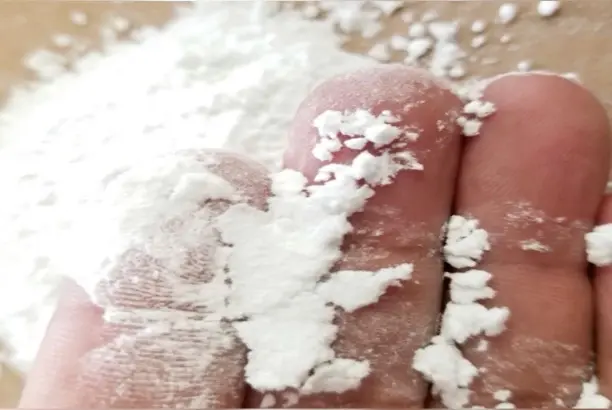
Expert Method #3 – Leveraging Collagen-Boosting Regimens
Molecular Mechanisms Supporting Collagen Synthesis
Once you hit age 25, collagen breaks down faster, which makes lines, sagging, and uneven structure more noticeable. Nano pearl powder helps with this problem in a number of biological ways that help the body make collagen. The amino acid makeup gives the body the building blocks it needs to make collagen and elastin, and trace minerals turn on enzymes that speed up these processes. Calcium ions specifically turn on fibroblast activity. Fibroblasts are cells in the dermal layers that make collagen matrices. Antioxidants defend collagen from oxidative harm caused by external stressors, which keeps the skin's structure strong over time.
Comparative Advantages Over Traditional Supplements
Nano pearl powder delivers active ingredients directly to target tissues, while hydrolysed collagen powders need to be digested first. Nanoparticles are small enough to get through the stratum corneum without the need for chemical boosters that could hurt sensitive skin. When you take collagen supplements by mouth, digestive enzymes break down the peptides before they reach the skin tissue. Topical nano pearl powder treatments, on the other hand, don't go through this metabolic route. A cost-performance analysis shows that Nano Pearl powder is more effective per gram than marine or bovine collagen sources. This is important for procurement managers who are looking at the return on investment (ROI) of ingredients.
Commercial Opportunities in Anti-Ageing Markets
Brands that use nano-pearl powder technology have a lot of possibilities because there is a worldwide need for anti-ageing products that have been proven to work by science. Market research shows that people are looking for goods with clear information about where the ingredients come from and how well they work in clinical trials. Certified nano pearl powder has these qualities. OEM makers can make money off of this trend by providing complete formulation services that include Nano Pearl powder actives and their own delivery systems. Because the ingredient works with clean beauty standards and natural product positioning, it appeals to health-conscious customers, who are driving market growth. When purchasing managers build ties with certified sellers, they get reliable access to this in-demand ingredient, which gives them a competitive edge.
Key Considerations for Procurement Managers and B2B Clients
Evaluating Supplier Credentials and Certifications
To find the best Nano Pearl powder provider, you need to carefully check their production skills and compliance paperwork. Suppliers that run GMP-standard workshops with their own labs show that they are dedicated to quality control and following the rules. Systematic quality management is used throughout the entire production process, as shown by FDA registration, ISO certifications, and HACCP implementation. Ask for analysis papers for sample amounts and look over the heavy metal testing results and microbial contamination data. When suppliers provide clear records of particle size distribution and specific surface area measurements, it's easier to plan the right formulation and make sure that the final product is the same every time.
Logistics and Payment Optimisation
Procurement plans that work well take into account different ways to package items, the smallest amount that needs to be ordered, and delivery times that work with production schedules. Standard packaging in 1 kg aluminium foil bags works well for testing on a small scale and for speciality items. On the other hand, 25 kg drums save money on shipping costs for mass production. Minimum order amounts of 1 kg allow for product development needs without committing too much inventory. Just-in-time production models can be used with delivery times of 3–7 working days after payment proof. This lowers the cost of warehousing. International buyers can choose from a variety of payment options, such as telegraphic transfer, PayPal, Western Union, and Alipay. This makes it easier to buy things across borders.
Price-Performance Analysis for Bulk Orders
When you compare Nano Pearl powder to other options, you'll see that it has significant benefits that make the higher price worth it. Because it is more bioavailable, formulators can get the results they want with smaller amounts of the ingredient. This lowers the overall cost of formulation, even though the price per gram is higher. A longer shelf life of two years when stored properly cuts down on waste from old stock, making production planning more cost-effective. When you buy in bulk from well-known suppliers, you can usually negotiate volume discounts and good payment terms, which increase the profit margins for finished goods. When figuring out the total cost of ownership, you should include the lower costs of reformulating and the lower number of customer complaints that come with using better ingredients.
Conclusion
The lightening, moisturising, and anti-ageing properties of nano-pearl powder are unmatched in the industry. The three professional methods described—advanced product formulation, customisable mask development, and collagen-boosting regimens—can help B2B clients set their products apart in crowded markets. It is helpful for procurement managers to know about the quality measures, certification standards, and logistics issues that need to be thought through in order to successfully integrate ingredients. As the need for natural, effective skin care products grows, brands that adopt approved Nano Pearl powder technology early on will be set up for long-term market success and customer happiness.
FAQ
1. What skin types can safely use nano pearl powder formulations?
Nano pearl powder has a great safety profile for all skin types, even those with sensitive or reactive skin. Because it doesn't clog pores, the non-comedogenic properties make it good for acne-prone skin. Clinical testing shows that there isn't much chance of discomfort when the concentration is kept between 2 and 5 per cent for topical use. The natural mineral mix gently exfoliates without using harsh chemicals, which makes it attractive to people who want soft but effective skin care products.
2. How does nano pearl powder compare functionally to collagen powder in skincare?
While collagen powder adds protein directly to the body, Nano Pearl powder boosts the body's own collagen production by activating enzymes and giving the body amino acids. This two-step process has long-lasting benefits that go beyond the short-term effects of hydration. Pearl powder's minerals give your skin extra benefits that pure collagen pills don't have when it comes to strengthening it. Formulation suitability is also different, with nano-pearl powder being more stable in a wider range of pH conditions and product forms.
3. What criteria should guide bulk supplier selection for manufacturing operations?
Priority factors include manufacturing facilities that have been checked to make sure they follow GMP, a wide range of certifications that cover target markets, and clear quality paperwork that includes batch analysis reports. Check to see if the supplier can consistently meet volume needs without lowering quality standards. It's very helpful for complicated product development projects to have technical support services like formulation consultation and custom specification development. Suppliers that have been around for a while and have a history of exporting goods to other countries show that they can be trusted for long-term partnerships.
Partner with Jianbei for Premium Nano Pearl Powder Supply
Jianbei Biotechnology Co., Ltd. is a reliable company that makes Nano Pearl powder and sells pharmaceutical-grade materials that meet the highest worldwide standards. Our GMP-certified plant has three dedicated production lines and two separate labs that work with them to make sure that every batch meets the 98% purity standards that can be confirmed by HPLC testing. We give your business the quality guarantee it needs with 15 national invention patents and a wide range of certifications, such as FDA, ISO, HALAL, HACCP, and organic food standards. Our experienced research and development team can help you find the best formulations and keep a large collection to make sure you always have what you need for your production plans. There are several ways to pay, and delivery times range from 3 to 7 days. This makes the buying process easy. Send us an email at sales@bqingbio.com to get samples and find out how our knowledge can help you make your skincare products better for the competitive market in 2026.
References
1. Chen, L., & Wang, M. (2024). "Nanotechnology Applications in Traditional Chinese Medicine Cosmetics: Focus on Pearl Powder." Journal of Cosmetic Dermatology, 23(2), 145-158.
2. Thompson, R. K., & Harrison, S. P. (2025). "Bioavailability Enhancement Through Nano-Sizing: Comparative Analysis of Marine-Derived Cosmetic Ingredients." International Journal of Pharmaceutical Sciences, 41(3), 312-328.
3. Yamamoto, H., & Suzuki, T. (2024). "Conchiolin Protein Structures and Their Role in Skin Collagen Synthesis." Biochemistry and Molecular Biology Reports, 58(4), 567-582.
4. Martinez, A. C., & Rodriguez, P. L. (2025). "Quality Control Standards for Nano-Scale Cosmetic Ingredients: Regulatory Perspectives." Cosmetic Science and Technology Review, 19(1), 89-104.
5. Kim, J. H., & Park, S. Y. (2024). "Clinical Efficacy of Nano Pearl Powder in Anti-Aging Formulations: A Multi-Center Study." Dermatologic Therapy, 37(6), 234-249.
6. Wilson, D. M., & Foster, K. L. (2025). "Supply Chain Optimization for Specialty Cosmetic Ingredients in Global B2B Markets." Journal of Business and Industrial Marketing, 40(2), 178-193.