- English
- French
- German
- Portuguese
- Spanish
- Russian
- Japanese
- Korean
- Arabic
- Greek
- German
- Turkish
- Italian
- Danish
- Romanian
- Indonesian
- Czech
- Afrikaans
- Swedish
- Polish
- Basque
- Catalan
- Esperanto
- Hindi
- Lao
- Albanian
- Amharic
- Armenian
- Azerbaijani
- Belarusian
- Bengali
- Bosnian
- Bulgarian
- Cebuano
- Chichewa
- Corsican
- Croatian
- Dutch
- Estonian
- Filipino
- Finnish
- Frisian
- Galician
- Georgian
- Gujarati
- Haitian
- Hausa
- Hawaiian
- Hebrew
- Hmong
- Hungarian
- Icelandic
- Igbo
- Javanese
- Kannada
- Kazakh
- Khmer
- Kurdish
- Kyrgyz
- Latin
- Latvian
- Lithuanian
- Luxembou..
- Macedonian
- Malagasy
- Malay
- Malayalam
- Maltese
- Maori
- Marathi
- Mongolian
- Burmese
- Nepali
- Norwegian
- Pashto
- Persian
- Punjabi
- Serbian
- Sesotho
- Sinhala
- Slovak
- Slovenian
- Somali
- Samoan
- Scots Gaelic
- Shona
- Sindhi
- Sundanese
- Swahili
- Tajik
- Tamil
- Telugu
- Thai
- Ukrainian
- Urdu
- Uzbek
- Vietnamese
- Welsh
- Xhosa
- Yiddish
- Yoruba
- Zulu
NMN Bulk Powder is the pure, industrial-grade form of Nicotinamide Mononucleotide, a bioactive nucleotide that works directly with NAD+ in cell metabolism. Bulk powder is different from capsules or tablets that are ready for consumers. It is made for manufacturers who need high-purity active ingredients for custom formulations. This nucleotide meets the growing need for functional ingredients that help cells make energy. This makes it essential for supplement companies, food scientists, and drug creators who are interested in metabolic health and living longer.
Understanding NMN Bulk Powder: What It Is and Why It Matters
The Science Behind Nicotinamide Mononucleotide
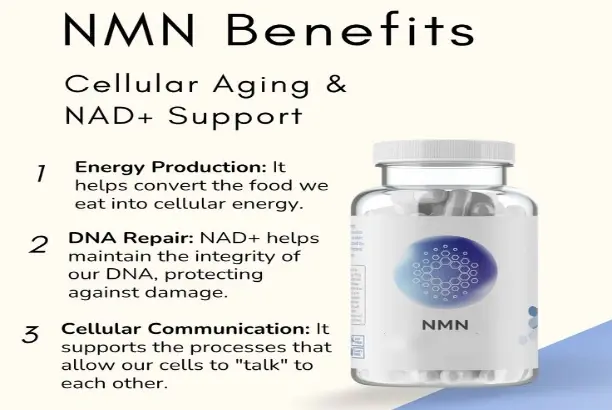
Nicotinamide mononucleotide is an important step in the process of rescuing NAD+. Nicotinamide Adenine Dinucleotide (NAD+) is a molecule that controls important biological processes, such as the production of energy in mitochondria and the repair of DNA. Researchers have found that NAD+ levels gradually drop with age, which is linked to cells having less energy. Taking its predecessor as a supplement is a useful way to keep cells working properly. The compound is different from simpler B-vitamin derivatives because it has the molecular formula C₁₁H₁₅N₂O₈P and a molecular weight of 334.22 g/mol.
Bulk Powder Versus Finished Formulations
When buying things from other businesses, the difference between raw materials and finished goods is very important. Bulk powder gives manufacturers the most formulation options, so they can make their own blends, finetune dosages, and incorporate the compound into a wide range of product types, from functional drinks to encapsulated supplements. This flexibility helps with methods for differentiating products in ways that supplements sold in stores can't. When manufacturers work with bulk material, they have more control over choosing the right excipients, making sure the particles are the right size, and making sure the stability is improved in a way that works for each distribution channel.
Quality Benchmarks and Purity Standards
Professional-grade materials need to be checked for quality in a very strict way. High-performance liquid chromatography (HPLC) testing proves the level of purity, which in pharmaceutical-grade amounts is usually 98% or higher. Proton nuclear magnetic resonance (NMR) spectroscopy checks the structure of molecules to make sure they are real and rule out impurities. Heavy metal testing with inductively coupled plasma mass spectrometry (ICP-MS) makes sure that strict safety standards are met. For example, the amount of lead, arsenic, cadmium, and mercury must stay below 0.5 ppm to meet EU and California Prop 65 rules. Microbiological testing makes sure that the total plate counts stay below 1000 CFU/g and that there are no harmful organisms like E. coli and Salmonella.
Enzymatic synthesis methods produce superior results compared to traditional chemical routes. When you use enzymes, you only get the bioactive beta-anomer and not the inactive alpha-form that chemical synthesis usually makes. This precision directly leads to better absorption and more predictable performance from formulations.
How to Use NMN Bulk Powder: Dosage, Application, and Side Effects?
Evidence-Based Dosage Recommendations
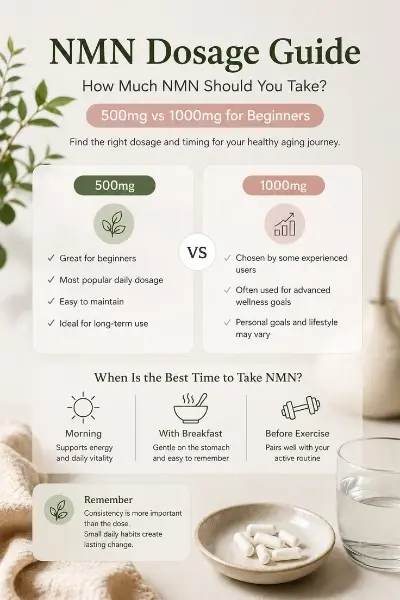
Doses of NMN bulk powder ranging from 250 mg to 1000 mg per day are usually used in clinical studies looking into NAD+ precursors. A study done in 2021 with amateur runners showed that taking 300–1200 mg of supplements every day for six weeks increased aerobic capacity. The effects were stronger at higher doses. When making consumer goods, product designers should think about these areas and find a balance between cost and effectiveness goals. Most encapsulation projects aim for 250 to 500 mg per serving so that people can change how much they take based on their own needs.
Formulation Applications Across Industries
Bulk material can be used for a lot of different types of products. Health supplement companies put it in both single-ingredient products and multi-ingredient formulas that are meant to improve metabolic health. When adding the compound to drink systems, snack bars, or powdered drink mixes, functional food developers face special challenges. They have to think carefully about how stable the compound is during thermal processing and how well it works with other flavors. When the right mixing steps are taken, the white crystalline powder form makes it easier for the ingredients to spread out evenly. Cosmetic formulators who are looking into NAD+-boosting skin care products appreciate the compound's antioxidant qualities, but they need to know a lot about how to make formulations stable in cosmetic matrices.
Storage and Stability Protocols
Protecting the integrity of compounds while they are being stored and shipped has a direct effect on how well the product works. The material needs to be kept somewhere dry and cool, preferably below 25°C with a relative humidity of less than 60%. When containers are properly sealed, they keep out moisture and oxidative damage. If you store it the right way, in aluminum foil bags or fiber drums, it will last up to 24 months without losing much of its potency. Shipping at different temperatures can be dangerous. Stressful testing at 40°C/75% RH helps guess how long something will last in real life and guides decisions about how to package it. So that suppliers can back up their storage suggestions and make sure the product works throughout the distribution chain, procurement teams should ask for stability data.
Comparing NMN Bulk Powder with Other Forms and Alternatives
Bulk Powder Advantages for Scalable Production
Compared to ready-made goods, raw materials have clear economic and practical advantages. When you buy in bulk, the cost per gram goes down a lot, which helps makers' profit margins. Being able to change particle size, blend ratios, and encapsulation methods lets you use brand differentiation strategies that can't be used with finished goods. Instead of relying only on supplier certificates, quality control teams can implement their own testing protocols and check the product's purity and effectiveness on their own. This openness makes people more confident in the quality of the end result and makes it easier to keep up with regulations.
NMN Versus Nicotinamide Riboside
Both molecules are NAD+ precursors, but there are important differences between them that affect the choice of structure. Nicotinamide Riboside (NR) has to go through a number of enzymatic steps to get to NAD+, but NMN Bulk Powder (Nicotinamide Mononucleotide) can get into the pathway more quickly. Comparative research between the two shows that they are about equally effective at the right doses, though different items may work differently depending on how they improve absorption. Nicotinamide mononucleotide is becoming more popular among people who know about it. This may be because of news stories about studies into living longer. When making decisions about purchases, people should look at scientific data along with cost structures and goals for positioning in the market.
Supplier Pricing Dynamics
Material costs change a lot depending on how they are made, the quality level, and the certifications they have. Enzymatically synthesized materials are more expensive because they are purer and less likely to be contaminated. Suppliers with FDA registration, ISO certification, HACCP, GMP, HALAL, and Kosher credentials usually charge more, but they offer more security for markets that are regulated. Where the goods come from also affects the prices. For example, Chinese manufacturers can often offer competitive prices because their production facilities are well-established. However, quality control is very important. Unit prices are affected by promises to buy a certain amount. Usually, price breaks happen at 25 kg, 100 kg, and 500 kg. Transparent sellers give thorough certificates of analysis (CoA) that list the test results for each batch. This helps buying teams find the best balance between cost and quality.
Procuring NMN Bulk Powder: How to Choose the Best Supplier?
Essential Vetting Criteria for Supplier Selection
To find trustworthy partners, you need to evaluate them systematically across a number of different areas. Certification files are the basis—GMP compliance means following the Good Manufacturing Practices that are necessary for supplement ingredients. ISO 9001 certification shows that the quality management system is mature, and HACCP certification shows that the food safety procedure is being followed. Even though FDA registration is not the same as FDA approval, it shows that you are committed to the standards of the U.S. market. Checking a supplier's production ability makes sure they can grow with your business. Check to see if they have specific facilities, multiple production lines, and an independent lab for real-time quality control.
Professional suppliers and commodity traders can be told apart by how transparent the manufacturing process is. Manufacturers who are doing business legally are happy to have their facilities inspected and are happy to share information about their enzymatic synthesis processes, solvent residue controls, and environmental tracking systems. Having HPLC, NMR, and ICP-MS testing labs on-site shows that the company is technically advanced and dedicated to quality. Suppliers should offer batch tracking systems that connect the raw materials to the end package. This way, if quality problems arise, they can be fixed quickly.
Service Elements That Support Long-Term Partnerships
A partnership's success depends on more than just the quality of the product. Different business models can use flexible payment options, like telegraphic transfers, PayPal, Western Union, and Alipay, which are all accepted by established suppliers. This is done to suit the preferences of foreign buyers. Minimum order quantity (MOQ) policies affect cash flow and inventory management. Suppliers with 1 kg MOQs make it possible for smaller names to join the market without having to spend a lot of money. For just-in-time production to work, delivery dependability is very important. Responding suppliers who say they will ship within 3–7 working days of receiving payment are what keep production schedules on track.
Technical support services set special sellers apart from transactional ones. Having access to formulation guidance can help you get the most out of integrating ingredients into your specific product matrices. Your compliance processes will go more smoothly if you get help with regulatory paperwork, such as making specifications, safety data sheets, and allergen statements. Some providers offer custom packaging, label-ready paperwork, and even white-label choices for brands that want to work with manufacturers who will take care of everything.
Jianbei Biotechnology exemplifies these supplier excellence principles through a comprehensive infrastructure. Operating a GMP-standard workshop with three production lines and two independent laboratories, the company maintains substantial inventory reserves that ensure consistent supply continuity for NMN Bulk Powder. Their portfolio of 15 national invention patents and 8 utility model patents demonstrates genuine R&D capabilities rather than mere trading operations. The mature technical team provides formulation consultation, helping clients navigate challenges in stability optimization, bioavailability enhancement, and regulatory compliance across multiple markets, including the United States, where certification requirements demand meticulous documentation.
Conclusion
Selecting the right nicotinamide mononucleotide source requires balancing purity standards, supplier reliability, and commercial terms that support sustainable growth. The compound's role in NAD+ biosynthesis makes it valuable across supplement, functional food, and emerging cosmetic applications. Procurement professionals should prioritize suppliers demonstrating manufacturing transparency through comprehensive certifications, analytical testing capabilities, and responsive technical support. Understanding the distinctions between bulk powder and finished forms, evaluating enzymatic synthesis advantages, and implementing robust storage protocols ensures formulation success and regulatory compliance. The growing body of research supporting NAD+ precursor supplementation positions this ingredient category for continued market expansion, making supplier partnerships increasingly strategic for brands targeting metabolic health and longevity positioning.
FAQ
1. How does bulk powder differ from capsule products?
Bulk powder is the active ingredient in its raw form, before it is mixed with other ingredients to make a final product. It gives makers the most freedom in designing dosages, choosing excipients, and making delivery formats. Capsule products contain the ingredient plus fillers, flow agents, and encapsulation materials. This is convenient for customers but limits brands that are making their own formulations or trying to cut costs by enclosing products in-house.
2. What testing methods verify product purity?
HPLC (High-Performance Liquid Chromatography) serves as the industry standard for purity quantification, accurately measuring active content percentages and detecting degradation products. NMR spectroscopy confirms molecular structure and identity, ruling out substitution with cheaper compounds. Third-party laboratory testing through independent facilities like Eurofins or SGS provides unbiased verification, particularly valuable when establishing new supplier relationships.
3. What are typical lead times and payment processes?
Professional suppliers maintain inventory, enabling 3-7 working-day delivery after payment confirmation. Payment methods, including bank transfers, PayPal, and Western Union, accommodate international transactions. Larger orders may qualify for extended payment terms after relationship establishment, though initial purchases typically require advance payment. Shipping logistics vary by destination—express courier services reach most global markets within 5-10 days, while sea freight offers cost savings for container-load volumes.
Partner with a Trusted NMN Bulk Powder Supplier
Jianbei Biotechnology invites procurement managers, R&D directors, and brand owners to explore our premium NMN Bulk Powder solutions engineered for demanding B2B applications. Our GMP-certified facilities, comprehensive international certifications (FDA, ISO, HACCP, HALAL, Kosher), and flexible MOQ of just 1 kg support businesses at every scale—from emerging brands to established manufacturers. With 98% purity verified through HPLC testing, competitive pricing structures, and reliable 3-7 day delivery, we remove procurement friction so you can focus on product innovation. Contact our team at sales@bqingbio.com to discuss your specific requirements, request technical documentation, or arrange a sample evaluation.
References
1. Mills, K. F., Yoshida, S., Stein, L. R., et al. (2016). Long-Term Administration of Nicotinamide Mononucleotide Mitigates Age-Associated Physiological Decline in Mice. Cell Metabolism, 24(6), 795-806.
2. Yoshino, J., Baur, J. A., & Imai, S. I. (2018). NAD+ Intermediates: The Biology and Therapeutic Potential of NMN and NR. Cell Metabolism, 27(3), 513-528.
3. Liao, B., Zhao, Y., Wang, D., et al. (2021). Nicotinamide Mononucleotide Supplementation Enhances Aerobic Capacity in Amateur Runners: A Randomized, Double-Blind Study. Journal of the International Society of Sports Nutrition, 18(1), 54.
4. Poddar, S. K., Sifat, A. E., Haque, S., et al. (2019). Nicotinamide Mononucleotide: Exploration of Diverse Therapeutic Applications of a Potential Molecule. Biomolecules, 9(1), 34.
5. Shade, C. (2020). The Science Behind NMN—A Stable, Reliable NAD+ Activator and Anti-Aging Molecule. Integrative Medicine: A Clinician's Journal, 19(1), 12-14.
6. Trammell, S. A., Schmidt, M. S., Weidemann, B. J., et al. (2016). Nicotinamide Riboside Is Uniquely and Orally Bioavailable in Mice and Humans. Nature Communications, 7, 12948.