- English
- French
- German
- Portuguese
- Spanish
- Russian
- Japanese
- Korean
- Arabic
- Greek
- German
- Turkish
- Italian
- Danish
- Romanian
- Indonesian
- Czech
- Afrikaans
- Swedish
- Polish
- Basque
- Catalan
- Esperanto
- Hindi
- Lao
- Albanian
- Amharic
- Armenian
- Azerbaijani
- Belarusian
- Bengali
- Bosnian
- Bulgarian
- Cebuano
- Chichewa
- Corsican
- Croatian
- Dutch
- Estonian
- Filipino
- Finnish
- Frisian
- Galician
- Georgian
- Gujarati
- Haitian
- Hausa
- Hawaiian
- Hebrew
- Hmong
- Hungarian
- Icelandic
- Igbo
- Javanese
- Kannada
- Kazakh
- Khmer
- Kurdish
- Kyrgyz
- Latin
- Latvian
- Lithuanian
- Luxembou..
- Macedonian
- Malagasy
- Malay
- Malayalam
- Maltese
- Maori
- Marathi
- Mongolian
- Burmese
- Nepali
- Norwegian
- Pashto
- Persian
- Punjabi
- Serbian
- Sesotho
- Sinhala
- Slovak
- Slovenian
- Somali
- Samoan
- Scots Gaelic
- Shona
- Sindhi
- Sundanese
- Swahili
- Tajik
- Tamil
- Telugu
- Thai
- Ukrainian
- Urdu
- Uzbek
- Vietnamese
- Welsh
- Xhosa
- Yiddish
- Yoruba
- Zulu
Vitamin A powder comes in two broad formats: encapsulated and conventional. Encapsulated vitamin A powder wraps the active compound in a protective matrix such as starch, gelatin, or gum arabic. This helps shield it from oxygen, light, heat, and moisture. Conventional dry powders offer less protection, but they can suit simple blends and controlled processes. The better choice depends on your finished product, process, target market, and cost per usable unit of vitamin A. I wrote this guide to help supplement, food, feed, and cosmetic buyers compare both formats with clear criteria.
What Is Vitamin A Powder and How Is It Made?
Commercial Forms and Active Compounds
Vitamin A powder that is purchased from a shop often contains a retinol ester that is combined with the binder. The combination of retinol with retinyl palmitate or retinyl acetate is something that might occur on occasion. However, the ester is what makes it effective. It is dispersed and protected by the tube in this manner. It is possible to produce starch, gelatin, or dextrin as an alternative. As a result of the presence of several safe esters and other forms on the market, retinol degrades rapidly when exposed to air and light. The name of the vitamin A that Jianbei manufactures is CAS 68-26-8 to be specific. Due to the fact that its chemical formula is C20H30O, you should be able to determine how much of it there is. It is possible to compare a greater number of source specifications if you keep the active and the carrier distinct.
How to Read Assay Values and Potency
First, the unit and the test method should be considered. As a percentage of pure, as IU per gram, or as RAE milligrams, it may be shown in a variety of ways. According to the National Institutes of Health Office of Dietary Supplements, one international unit (IU) of retinol is equivalent to 0.3 micrograms (mcg) of retinol. There are a variety of dry foods that contain vitamin A values that range from 250,000 to 500,000 IU/g. It is possible that each service provider may supply you with a separate number. Find the approach that was successful. Because it is able to differentiate between the several types of retinol that are found in the body, high-performance liquid chromatography (HPLC) is often used. For the sake of comparison, you should only look at quotations that are comparable in terms of quantity, manner, and service.
Manufacturing Steps and Handling Risks
In some instances, the active component is combined with a container, and then the mixture is allowed to dry overnight. This is followed by a sieving and inspection process. When using enclosed manufacturing, there is an additional step that must be taken. To begin, the active ingredient is supplemented with vitamins and a structure. Following this step, the grid is positioned either on top of or around each oil bead. Air, light, and heat are three potential dangers, as is a very low dosage that is not distributed evenly throughout the body. Both of these options come with these five potential dangers. They are brought down by nitrogen drainage, which maintains a cold and dark environment and enables the stirring to be controlled. In the process of being mixed together before drying, droplets maintain their tiny size. This makes it easier for you to receive the correct dosage and maintains a more steady situation.
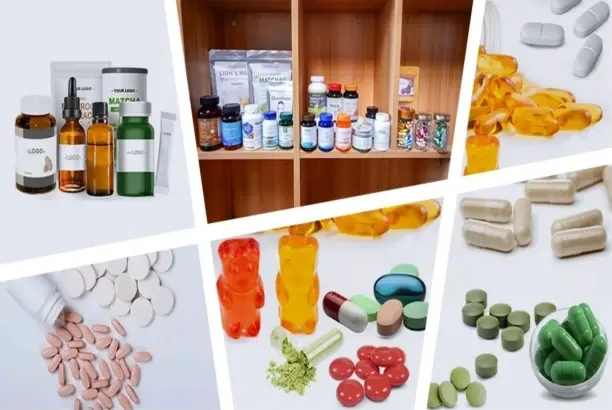
Encapsulated Vitamin A Powder vs. Conventional Vitamin A Powder
Stability and Potency Retention
Vitamin A powder is safe because it is enclosed. Small amounts of nutrients, air, water, and light take longer to get through that wall. They looked at how liposoluble vitamins are packed and wrote a paper about it in the Journal of Controlled Release in 2010. One of the best things about it, they said, was that the vitamins didn't break down. Powders that aren't made to cover as well might not last as long if they get wet, hot, or mineralized. To keep the food fresh, it needs to be packed well, kept in a cool place, and given vitamins. They can use it. It's important to find stable info that works with the way you store it.
Oil-Soluble vs. Water-Dispersible Powders
Powders that dissolve in oil can be used in softgel fillings, fat-based recipes, and oil-based premixes. You can make drinks and other liquids healthier by mixing powders with water. A lot of things can affect performance, like the size of the particles, how well they mix with water, how stable they are in suspension, and how well the matrix works. Every little bit of very wet matter will spread out. If it's not really wet, it sticks together or floats. Check the spread once your real base is at the right temperature and pH level for you. Things that work in plain water might not work in mineral or acidic water.
Dose Uniformity and Total Formulation Cost
Even though the amounts are small, the blend is hard to make. Bigger pieces mix better with particles that are all the same size and can move around. Price per kg doesn't always show what's going on. To figure out how much something costs, you need to think about how much it costs to make, test, package, and check that the price tag is correct. There may be differences in the price per unit of use for different types of powder. Powder that isn't sealed and needs a larger overage may cost less per unit that can be used. To keep the numbers the same, you should use your own files.
Choosing Between Vitamin A Acetate Powder and Vitamin A Palmitate Powder
Formulation Profiles
Don't forget that retinol comes in two forms: acetate and palmitate. The molecules of acetate are smaller, so there is more retinol in one gram of it. Because its fatty acid chain is longer, palmitate mixes easily with other forms that are high in fats. Most of the time, sellers mix an ester with a glue to make that dry powder. Because it's used for different things, the ester's name doesn't tell you much about how the powder will work.
Typical Uses
It is found in a lot of vitamins, food seasonings, and nutritional first mixes. Palmitate powder makes foods healthier, and it can also be used to cook things that need oil, like making baked goods with fat. There isn't just one ester that you should buy because it comes in different powder forms from different people. Which one is best for you will depend on the amount, type, process, and market. Before the test, get the full grade sheet to see what you need to do with each grade.
Like-for-Like Selection Criteria
To compare results, use the same method. Read on to learn about vitamin A's chemical form, how it works, the test method, the carrier system, the amount of water, the particle size, the stable data, and the rules as they stand at the moment. You can't just change the amount to go from a 250,000 IU/g beadlet to a 500,000 IU/g powder. There are differences in the transport, the size of the particles, and the amount of water. Make sure the grade fits the product, the way it will be handled, the dosage form, the market you want to reach, and the standard for the medicine, food, or feed.
Formulation Applications: Selecting the Right Vitamin A Powder Format
Tablets, Capsules, and Gummies
To make pills, the vitamin A powder must be easy to work with and can be pressed down. Things that are under a table usually last longer than things that aren't. Just like the medicine, each pill needs to have the same amount of mix. While the gummies are cooking and setting, it's hot and sticky. It is possible to lose less water if the hill is covered or can spread water out. You should check them all out because they might all taste and look different.
Foods, Beverages, and Infant Nutrition
A set of rules from 2006 by the WHO and FAO says that meals must have vitamin A that stays stable even after being cooked and stored. It's important that drinks smell and taste good and mix well with cold water. It's not possible to mix powders when they get too hot, so for hot-fill lines you need heat-stable types. There are stricter rules about germs and papers when it comes to feeding kids. Make sure you have a place to rest and smell things in your base before you move up.
Feed, Premixes, and Skincare Grade Requirements
Because nutrients, choline, water, and pelleting heat can get into feed and premixes, vitamin A is generally kept safe. For skin care recipes to work, they need to have ingredients that can be used in makeup, color control, and the ability to mix ingredients. There are different rules for things that are used in food, feed, medicine, and beauty products. Make a list of everything you need first. This list should have the grade, strength, particle size, and any paperwork you need. In that case, ask for examples or quotes.
How to Evaluate Vitamin A Powder Suppliers Before Purchasing
Documents to Request
The technical data sheet, the certificate of analysis, the specification sheet, the stability data, the allergen and GMO statements, the microbiological results, the heavy metal limits, the packing information, the shelf life, and the legal papers for the U.S. market are all things you should ask for. Dates can help you be sure that the papers you want to buy are from the batch you want to buy. FDA rules say that vitamin A labels need to show the amount in micrograms per retinol equivalent (mcg RAE). If the service company gives you a number, make sure you can change it. If the package says the gelatin is Halal, kosher, or vegan, find out where it came from.
Supply Capability and Support
Find out how long you have to wait, how long the production process takes, how to store the goods, whether samples are available, and how to get help from a professional before you place your order. It must be clear how to use the item, how to see if it works, and how the business guarantees it. It's safer to buy and make things if you check with the seller, test them in the field, or use a sample that you keep. I believe you should run all three before you make a big order.
Jianbei Vitamin A Specifications
The HPLC test shows that our vitamin A is a pale yellow powder that meets the 98% test. It comes in 25 kg drums or 1 kg bags. It will be sent out 3–7 business days after you pay, and you can buy as little as 1 kg. Keep it somewhere dry and cool. If you seal the food, it will last for two years. The powder can't be sent to the US. You can use Western Union, Alipay, PayPal, or a bank wire to send us the money.
This is where we make things. There are two separate labs, three lines for making things, and a GMP workshop there. We have been given the green light by the US FDA, Organic Food, Kosher, ISO, Halal, HACCP, and GMP. It's mostly used to keep eyes healthy, stop night blindness, fix dry eyes, and keep vision clear. It makes skin smooth and heals dry, rough skin. It also helps keep cells healthy.
Conclusion
The two types of vitamin A powder are not the same in terms of how they work, how they protect, or how much they cost per amount that can be used. This is done to protect systems that are hot, wet, or have a lot of different nutrients. It makes a wall around them. Light, air, water, and minerals can't get through this wall. Regular powders can be used to mix things better and faster. To find out which is better, you should compare how they are studied, how they are moved, how stable they are, how much water they contain, and the size of the particles. In that case, the description should come first. There are various methods to use tablets, sweets, drinks, food, and skin care products. People choose a seller based on more than just price. They also look at tests, paperwork, and how well you can find things. If someone wants to get the best deal, they should look at the price per useful unit instead of the price per kilogram.
FAQ
1. What is the difference between retinyl acetate and palmitate powder?
In one gram of ester, there is more retinol than in moles of acetate. Systems with a lot of lipids work well with it. The container and the way it is protected change the function in the same way that the ester does.
2. Why does vitamin A powder change color?
Most of the time, darkening means that oxygen is getting into the cell or the antioxidant system is working too hard. Look at the peroxide level and how the things were stored.
3. How should vitamin A powder be stored?
Don't open the boxes. Keep them somewhere cool and dry, not near water or light. Vitamin A from Jianbei will last for two years if you store it in a jar that is tightly closed.
4. Can I use vitamin A powder in hot-fill beverages?
Only with a grade that stays the same when it gets hot. Powders may not work as well after a while if you buy a lot of them and mix them. Use them in your own process to test them.
Request Vitamin A Powder Samples From Jianbei
They have a strong R&D team, a GMP plant, a lot of stock, and all of their certificates. Do you want to buy vitamin A powder from them? Vitamin A 98% is sent by Jianbei. It takes 3–7 working days and can ship as little as 1 kg. To get a sample, email sales@bqingbio.com with your use case, target market, and amount.
References
1. Office of Dietary Supplements, National Institutes of Health. Vitamin A Fact Sheet for Health Professionals, 2023.
2. Gonnet M., Lethuaut L., Boury F. New Trends in Encapsulation of Liposoluble Vitamins. Journal of Controlled Release, 2010.
3. World Health Organization and Food and Agriculture Organization. Guidelines on Food Fortification with Micronutrients, 2006.
4. Institute of Medicine. Dietary Reference Intakes for Vitamin A, Vitamin K, Arsenic, Boron, Chromium, Copper, Iodine, Iron, Manganese, Molybdenum, Nickel, Silicon, Vanadium, and Zinc. National Academies Press, 2001.
5. Dary O., Mora J.O. Food Fortification to Reduce Vitamin A Deficiency: International Vitamin A Consultative Group Recommendations. Journal of Nutrition, 2002.
6. World Health Organization. Guideline: Vitamin A Supplementation in Infants and Children 6–59 Months of Age, 2011.