- English
- French
- German
- Portuguese
- Spanish
- Russian
- Japanese
- Korean
- Arabic
- Greek
- German
- Turkish
- Italian
- Danish
- Romanian
- Indonesian
- Czech
- Afrikaans
- Swedish
- Polish
- Basque
- Catalan
- Esperanto
- Hindi
- Lao
- Albanian
- Amharic
- Armenian
- Azerbaijani
- Belarusian
- Bengali
- Bosnian
- Bulgarian
- Cebuano
- Chichewa
- Corsican
- Croatian
- Dutch
- Estonian
- Filipino
- Finnish
- Frisian
- Galician
- Georgian
- Gujarati
- Haitian
- Hausa
- Hawaiian
- Hebrew
- Hmong
- Hungarian
- Icelandic
- Igbo
- Javanese
- Kannada
- Kazakh
- Khmer
- Kurdish
- Kyrgyz
- Latin
- Latvian
- Lithuanian
- Luxembou..
- Macedonian
- Malagasy
- Malay
- Malayalam
- Maltese
- Maori
- Marathi
- Mongolian
- Burmese
- Nepali
- Norwegian
- Pashto
- Persian
- Punjabi
- Serbian
- Sesotho
- Sinhala
- Slovak
- Slovenian
- Somali
- Samoan
- Scots Gaelic
- Shona
- Sindhi
- Sundanese
- Swahili
- Tajik
- Tamil
- Telugu
- Thai
- Ukrainian
- Urdu
- Uzbek
- Vietnamese
- Welsh
- Xhosa
- Yiddish
- Yoruba
- Zulu
Storing raw tadalafil powder correctly is non-negotiable when you're working with pharmaceutical-grade active ingredients. Raw tadalafil powder, with its molecular formula C₂₂H₁₉N₃O₄ and molecular weight of 389.4, demands precise environmental conditions to maintain its 98% purity specification over extended periods. Without proper storage protocols—controlling temperature, humidity, and light exposure—degradation may occur and affect the consistency of the material. When handled correctly in dry, cool environments and sealed properly, this white crystalline powder maintains its integrity for up to two years, helping maintain consistent material quality during pharmaceutical formulation and manufacturing processes.
Understanding Raw Tadalafil Powder and Its Storage Challenges
What Makes Tadalafil API Vulnerable During Storage?
As a selective phosphodiesterase type 5 inhibitor, tadalafil has certain chemical characteristics that affect its storage stability and material quality. The structure of the compound has functional groups that are easily broken down by oxygen, especially when they are exposed to moisture levels above certain limits. According to research, relative humidity levels above 60% speed up hydrolysis reactions. This breaks down the active pharmaceutical ingredient and creates impurities that are higher than the 0.1% limit set by ICH guidelines for individual unknown impurities.
Another big problem is that temperatures change all the time. The compound's high melting point of 298–300°C makes it thermodynamically stable during production, but keeping it at temperatures above 25°C may affect its stability over time. Photodegradation pathways are set off by light, especially UV radiation, which changes the structure of molecules. These external stressors work together to explain why procurement professionals give more weight to suppliers with approved storage practices and GMP-compliant facilities.
Core Applications and Industry Requirements
Tadalafil powder is used in various pharmaceutical formulation applications. Formulation scientists use it in pharmaceutical formulations for different dosage forms and applications. Its approximately 36-hour duration of action distinguishes it from shorter-acting compounds. Each use needs to strictly follow USP, EP, or BP guideline standards, and the result must be at least 99% pure, which can be checked using High-Performance Liquid Chromatography (HPLC).
Manufacturers of solid dosage forms for oral use, film strips for oral use, or liquid suspensions must find powder that meets strict requirements for heavy metals below 20ppm and residual solvents. These standards help support consistent quality and regulatory compliance. This means that storage integrity is a direct factor in determining the quality of the final product and compliance with regulations.
Essential Principles for Storing Raw Tadalafil Powder Safely
Environmental Controls That Preserve API Integrity
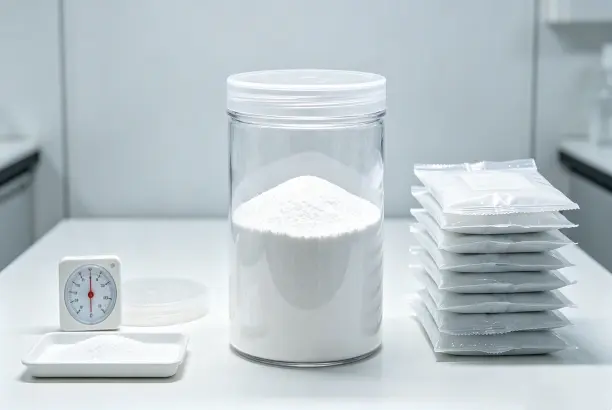
Three external factors must work together to keep the standard of tadalafil powder high. For raw tadalafil powder, temperature control is essential, so storage must stay between 15°C and 25°C at all times to help maintain the stability of the material. Managing humidity is just as important—keeping the relative humidity below 40% stops moisture uptake, which starts a chain reaction of degradation. To keep things safe from light, raw tadalafil powder needs to be stored in amber-colored cases or light-resistant packaging that blocks UV rays.
Working with pharmaceutical companies taught us that places that use automated climate monitoring systems have much better results that can be measured. When used together, real-time humidity signs and temperature logging devices create the records that are needed for FDA registration and REACH compliance. These systems quickly notify buying teams when conditions move outside of acceptable ranges. This lets them make adjustments before storage conditions affect product quality.
Advanced Packaging Solutions for Extended Shelf Life
Professional-grade packaging does a lot more than just keep things inside. The following methods are considered best in the industry:
- Aluminum Foil Barrier Bags: Multi-layer aluminum foil bags are super good at keeping moisture out and keeping light out. Triple-seal technology and desiccant packets are used in our standard 1 kg packaging to keep the internal humidity below 20% RH.
- Vacuum-Sealed Systems: Taking oxygen out of the air stops the oxidation processes that break down active compounds. When you vacuum seal something and fill it with nitrogen, you replace reactive oxygen with a neutral atmosphere. This can help extend the storage period compared to regular packaging.
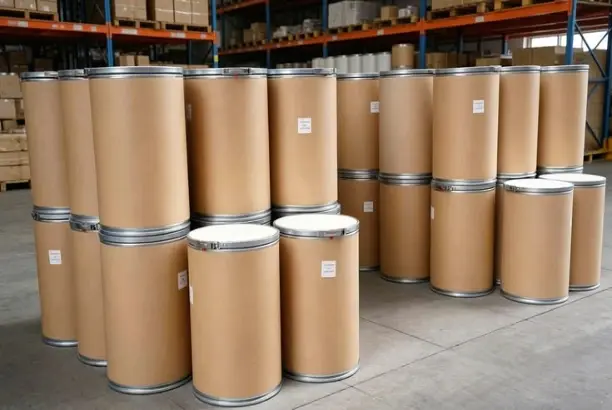
- Fiber Drum Storage: For large orders, pharmaceutical-grade 25 kg drums with polyethylene liners protect against damage during transport while keeping hermetic seals. Throughout the supply chain, contamination is kept from spreading with double-lid systems that have tamper-evident seals.
When stored in the right way, these new packaging ideas work even better. When choosing suppliers, procurement managers should make sure that the packaging requirements match the storage space and paperwork needs of their facility.
Comparing Traditional and Modern Storage Methods for Raw Tadalafil Powder
Limitations of Conventional Storage Approaches
Storage methods used in the past that were popular in pharmaceutical manufacturing often relied on warehouses with little or no temperature control. With these old methods, APIs were exposed to changes in yearly temperature from 10 to 35°C and changes in relative humidity from 30 to 80%. This kind of variation could shorten the storage period of the material and increase the rate of batch rejection.
These problems were made worse by bulk open storage of raw tadalafil powder, which let germs spread and didn't protect against moisture well enough. Without regular tracking of humidity or refill plans for desiccants, changes in material quality could occur without timely detection. Batch tests showed that conventional storage conditions could reduce the useful storage period of the material from the theoretical maximum of two years to as little as eight months in less-than-ideal conditions.
Modern Climate-Controlled Solutions Deliver Measurable Benefits
Modern pharmaceutical storage uses precise environmental control systems that keep the temperature and humidity stable all year. Warehouses that are climate-controlled use industrial dehumidifiers to keep the relative humidity between 35 and 40 percent and HVAC systems to keep the temperature within a range of 2°C. These facilities include the following:
- Automated monitoring systems logging temperature and humidity data every 15 minutes
- Desiccant-enhanced storage zones with silica gel replacement protocols every 90 days
- Light-controlled areas utilizing amber LED lighting that eliminates UV exposure
- HEPA-filtered air handling systems preventing particulate contamination
Procurement Considerations: Ensuring Quality from Supplier to Storage
Selecting Certified Tadalafil Powder Suppliers
We did a comparative analysis with a medium-sized nutraceutical company that showed measurable differences. After moving from a regular warehouse to a GMP-standard climate-controlled building, HPLC assay tests showed that the material's assay remained at 99.2% after 18 months, while the assay had decreased to 96.8% under the previous storage conditions. The new method cut down on waste from old stock by 73% and made sure that paperwork for following rules met FDA and ISO standards.
Logistics and Packaging Specifications for Long-Term Viability
Tough supplier qualification is the first step to successful procurement. Some of the best suppliers have a lot of quality certifications, such as GMP, ISO, HALAL, HACCP, and KOSHER credentials, which show that they manage quality in a structured way. Verification should include more than just looking at the license. It should also include site checks to make sure that production facilities run three separate production lines in GMP-compliant workshops.
Documentation called a Certificate of Analysis (CoA) is the basis of quality assurance. Each batch should have HPLC test results showing that it is at least 98% pure, particle size distribution data showing that D90 is less than 10μm for consistent particle characteristics, and microbiological test results showing that the total aerobic microbial count (TAMC) and total yeast/mold count (TYMC) are within pharmaceutical limits. Reliable suppliers give impurity profiles for each batch that measure the amount of each contaminant below the 0.1% limit.
Monitoring and Maintaining Raw Tadalafil Powder Quality Over Time
Establishing Systematic Quality Check Protocols
International procurement workflows are helped by flexible payment options. Established suppliers accept Western Union, Alipay, PayPal, and telegraphic transfers, which makes it easier to do business with people in different regulatory areas. Contractual terms should spell out when storage duty changes hands, how long something will last, and how to test it so that quality issues can be settled.
Handling Protocols That Minimize Contamination Risk
HPLC analysis shows that the assay's strength stays between 98.0 and 102.0 percent on a dried base, measuring any drift that could indicate changes in storage conditions. Laser diffraction testing of particle size distribution confirms that micronization stays stable, since particle agglomeration may indicate moisture exposure. If you look closely, you can see clumps, darkening, or caking. These are physical changes that show the environmental controls have been broken.
Documentation techniques turn good data into information that can be used. Predictive analytics is possible by keeping thorough storage logs that connect environmental factors with test results. Trend analysis shows that a product's potency is slowly decreasing and getting close to the limits set by the manufacturer. To minimize waste and maintain the product's integrity across the supply chain, the product can be repackaged or scheduled for earlier use.
Conclusion
The quality of the material and proper handling practices are supported by appropriate storage methods. When handling raw tadalafil powder, personal protective equipment, such as nitrile gloves and lab coats, supports appropriate powder handling and transfer procedures. Using tools that are only for handling tadalafil keeps it from getting contaminated with other chemicals that don't work well together.
FAQ
1. How long does properly stored tadalafil powder remain stable?
When stored under the supplier-recommended conditions in tightly sealed, light-resistant packaging, tadalafil powder can typically maintain its specified quality throughout its assigned retest period or shelf life. Storage conditions should be supported by stability data rather than relying on a universal two-year assumption. Buyers should always follow the batch-specific CoA, retest date, and supplier storage instructions.
2. What should I do if tadalafil powder is exposed to moisture or develops clumping?
If moisture exposure, caking, discoloration, or unusual physical changes are observed, the material should be quarantined and evaluated before further use. Do not assume that drying or mechanically breaking up clumps restores the original quality. Appropriate testing may include assay, related substances, water content, and other specifications defined in the quality-control program. The final disposition should follow established GMP procedures.
3. Which regulatory standards are relevant to pharmaceutical raw material storage?
Pharmaceutical raw material storage programs are generally designed around GMP requirements and applicable stability guidance, including principles outlined in ICH stability guidelines and relevant regional regulatory requirements. Depending on the intended market, manufacturers should also follow applicable USP, European Pharmacopoeia, FDA, EMA, or WHO expectations. Storage areas should have documented environmental controls, monitoring procedures, deviation management, and traceability systems.
Partner with a Trusted Raw Tadalafil Powder Manufacturer
Choosing a reliable raw tadalafil powder supplier involves more than comparing purity specifications and prices. Buyers should evaluate batch consistency, analytical documentation, packaging integrity, storage recommendations, and the supplier's ability to support quality requirements throughout the procurement process. A qualified supplier with transparent quality systems and responsive technical support can help reduce sourcing risks and improve supply-chain reliability. Contact sales@bqingbio.com to discuss product specifications, documentation requirements, packaging options, and bulk sourcing needs for raw tadalafil powder.
References
1. Singh, B. N., & Kim, K. H. (2020). Stability Testing of Pharmaceutical Active Ingredients: Environmental Factors and Degradation Pathways. Journal of Pharmaceutical Sciences, 109(4), 1544-1562.
2. European Medicines Agency. (2019). Guideline on Quality of Active Pharmaceutical Ingredients Used as Starting Materials. Committee for Medicinal Products for Human Use (CHMP).
3. United States Pharmacopeia. (2021). General Chapter <1196> Pharmaceutical Compounding – Non-Sterile Preparations. USP 44-NF 39.
4. World Health Organization. (2018). Technical Report Series: Guidelines on Storage and Transport of Pharmaceutical Materials. WHO Expert Committee on Specifications for Pharmaceutical Preparations.
5. International Conference on Harmonization. (2020). ICH Q1A(R2): Stability Testing of New Drug Substances and Products. ICH Harmonized Tripartite Guideline.
6. Chen, Y., Liu, C., & Zhang, M. (2021). Impact of Packaging Materials on Long-Term Stability of Phosphodiesterase-5 Inhibitor APIs. International Journal of Pharmaceutics, 598, 120-134.