- English
- French
- German
- Portuguese
- Spanish
- Russian
- Japanese
- Korean
- Arabic
- Greek
- German
- Turkish
- Italian
- Danish
- Romanian
- Indonesian
- Czech
- Afrikaans
- Swedish
- Polish
- Basque
- Catalan
- Esperanto
- Hindi
- Lao
- Albanian
- Amharic
- Armenian
- Azerbaijani
- Belarusian
- Bengali
- Bosnian
- Bulgarian
- Cebuano
- Chichewa
- Corsican
- Croatian
- Dutch
- Estonian
- Filipino
- Finnish
- Frisian
- Galician
- Georgian
- Gujarati
- Haitian
- Hausa
- Hawaiian
- Hebrew
- Hmong
- Hungarian
- Icelandic
- Igbo
- Javanese
- Kannada
- Kazakh
- Khmer
- Kurdish
- Kyrgyz
- Latin
- Latvian
- Lithuanian
- Luxembou..
- Macedonian
- Malagasy
- Malay
- Malayalam
- Maltese
- Maori
- Marathi
- Mongolian
- Burmese
- Nepali
- Norwegian
- Pashto
- Persian
- Punjabi
- Serbian
- Sesotho
- Sinhala
- Slovak
- Slovenian
- Somali
- Samoan
- Scots Gaelic
- Shona
- Sindhi
- Sundanese
- Swahili
- Tajik
- Tamil
- Telugu
- Thai
- Ukrainian
- Urdu
- Uzbek
- Vietnamese
- Welsh
- Xhosa
- Yiddish
- Yoruba
- Zulu
Lidocaine is an amide-type local anesthetic and a Class Ib antiarrhythmic agent. It blocks voltage-gated sodium channels in nerve membranes, which stops pain signals from travelling and produces temporary numbness. Its main uses include topical, mucosal, and injectable formulations, and its interaction profile depends on other anesthetics, antiarrhythmic medicines, and liver metabolism pathways. Lidocaine powder, the raw material behind these products, comes as a base or a hydrochloride salt, and each form behaves differently in formulation. In this guide, I explain the science and the buying points that matter to pharmaceutical teams.
What Lidocaine Powder Is and Where Manufacturers Use It
Chemical Identity and Common Forms
When it is in its basic form, it is referred to as 2-(diethylamino)-N-(2,6-dimethylphenyl)acetamide, and its chemical abbreviation is 137-58-6. The chemical formula for this item is C14H22N2O, and it weighs 234.34 grams. The base is a powder that ranges from white to light yellow and has the appearance of diamonds. The temperature at which it melts is often described as being between 66 and 69 degrees Celsius. In water, it does not decompose very well, but on the other hand, it does in alcohol and oils. Hydrochloride of lidocaine is the salt form, and water is what breaks it down into its component parts. The manner in which it is handled, the amount of documentation that is required, and how it is broken down all vary as the form changes. It is for this reason that I encourage purchasers to review the form and verify that each value corresponds to the COA and specifications of the most recent batch.
Applications Across Dosage Forms
Medications such as creams, gels, ointments, sprays, and patches all include lidocaine powder, which is what makes them effective. It is also used by a great number of research groups for the purpose of conducting critical investigations, stability testing, and compatibility checks. The medicine that is included inside it numbs the region and prevents irregular heartbeats. The nerves immediately cease transmitting information as soon as the local anaesthesia is made available to the patient. The discomfort and discomfort associated with medical treatment or surgery are reduced as a result of this. To choose the appropriate substance, the grade, dosage type, and mode of administration are taken into consideration. In the process of determining which batches to make larger, formulators often take into consideration a number of factors, including the degree of reliability of the test, the degree to which contaminants are contained, the amount of water present in the mixture, the shape of the particles, and how effectively they interact with the excipients.
Pharmaceutical Grade and Research Grade
Drug-grade materials, also known as API-grade materials, fulfill the requirements of Good Manufacturing Practice (GMP) documentation and may be used in the production of medications for either humans or animals. If something is successful in the laboratory and in the preliminary tests of its development, then it is suitable for study. Using something just because it is clean does not guarantee that it is safe to do so. Before it can be used on a broad scale, it is necessary for a significant number of individuals to verify that the grade is satisfactory. HPLC was used to verify the 98% claim made by Jianbei lidocaine powder, and the manufacturing facility was found to be in compliance with GMP requirements. The United States Food and Drug Administration, Organic Food, Kosher, ISO, HALAL, HACCP, and Good Manufacturing Practices are only a few of the certifications that it has. Due to the fact that the powder is exclusively purchased by individuals located outside of China, our documentation is designed specifically for them.
Lidocaine Mechanism of Action and Interaction Considerations
How Lidocaine Blocks Nerve Signals
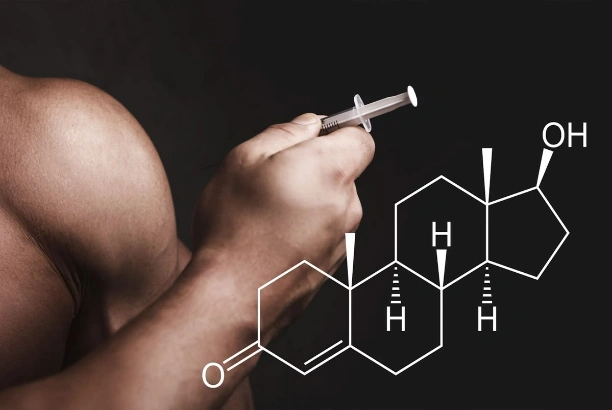
Lidocaine enters nerve cells in its uncharged form and then binds to voltage-gated sodium channels. This prevents sodium ions from crossing the membrane as easily, blocking the nerve's ability to generate and transmit action potentials. For a short time, this reduces sensation in the affected area. William Catterall's research on sodium-channel gating and drug block helps explain this mechanism. The pKa of lidocaine is approximately 7.7–7.9, meaning that a proportion remains uncharged at tissue pH and can pass through cell membranes. Understanding this mechanism is important when evaluating lidocaine powder, particularly because pH can affect its membrane penetration and local anesthetic activity.
Antiarrhythmic Classification
On the Vaughan Williams scale, it is a Class Ib antiarrhythmic drug. Class Ib drugs work on sodium channels in the heart muscle. They work better on cells that are firing quickly or have lost their charge. The lab of Collinsworth and his friends wrote about how it worked in animals in the journal Circulation in 1974. It's very important that you only take antiarrhythmics if your doctor tells you to. One molecule has been used in drugs for a long time and is known to do two well-known jobs in the market. This is the most important thing for formulators.
Interaction Considerations for Formulation Teams
The first step is the interaction review part of the planning stage. Chemicals, local anesthetics, and drugs that stop irregular heartbeats are some of the drugs that researchers are looking at to see how lidocaine works with them. It's also important to know how the liver works. In 2000, Wang et al. wrote in Drug Metabolism and Disposition that CYP1A2 and CYP3A4 help break down lidocaine. People who work in health and safety should write them down in product files and marking plans. I believe that when working with raw materials, you should always follow the SDS, the site risk assessment, the air rules, and the PPE instructions.
Lidocaine Powder Compared with Other Forms, and How to Judge Quality
Base Versus Hydrochloride
Lidocaine base can work well with some creams and ointments that aren't water-based. Lidocaine hydrochloride can be mixed with water to make creams and other treatments that use water. The pH is another change. It is slightly acidic because of the salt, and it is more lipophilic because of the base. This means that the grade is low in water. This is important for things that get damaged easily by water. You shouldn't guess; instead, choose the form based on how well you want it to dissolve, the processing temperature, the pH range, and how stable the add-ins need to be. The form of CAS 137-58-6 that we sell is the base form. This is the same as topical development that doesn't need water.
Comparison with Benzocaine and Prilocaine
This is benzocaine, a type of topical sedative. That's where you can mostly find it; it doesn't mix well with water. Lidocaine and prilocaine are both amides, and creams that numb the skin often have both of them mixed together. Different chemicals work on different sodium channels to slow down nerve messages. The chemicals are different in what they are, how they look, when they start to work, and how they are managed. To trade them for each other, we need to make them more stable and change the way they are put together. This drug has been used for a long time and comes in many different forms that people who make medicines still like.
Evaluating a Batch with COA and HPLC
The batch number is the first thing I look at. It should say what the product is, what its lot number is, how it was tested, what the real results were, when it was made, and when it expires or needs to be tested again. A few of the most important tests are assay and related chemicals by HPLC, identification, water content by Karl Fischer or loss on drying, particle size, trace elements, and liquids that are still present. To make sure our lidocaine powder meets a 98% standard, we use HPLC. Two different labs help us keep an eye on quality. They should ask for proof of GMP, quality agreements, and tracking records for each lot so that they can find out how it was made.
Choosing a Supplier and Planning Procurement
Supplier Qualification Steps
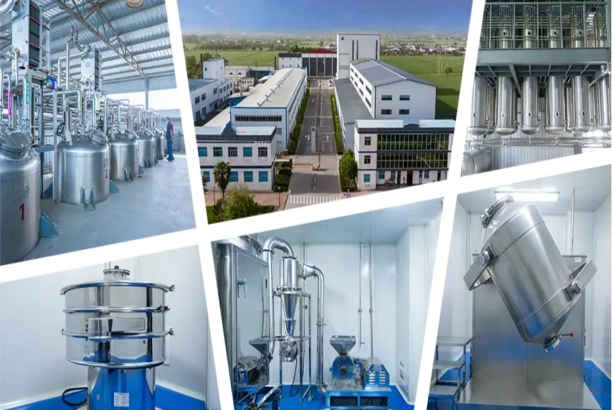
Before you ask for quotes, you need to know the chemical's form, grade, use, daily volume, test quantity, final market, packaging, and delivery schedule. Then look at how each supplier handles changes and complaints, whether they have GMP proof, how much they can produce, and how uniform their batches are. The total value of the purchase is more important than the price per unit. This is because cost is affected by things like the quality of the paperwork, how long it takes to process, the chance of being turned down, and how easy it is to get help. The plant that Jianbei Biotechnology Co., Ltd. runs has three production lines, a GMP-compliant workshop, and two different labs. Our R&D team has been working on patents for 15 years. They now have 15 national idea patents and 8 utility model patents.
Order Terms and Supply Planning
This is how we describe our Lidocaine Powder. To ship it, you only need to buy 1 kg. After payment, it takes three to seven working days. You can get it in a 25 kg drum or a 1 kg silver foil bag. You can mail money to us, or use Western Union, Alipay, XT, or PayPal to send money. The powder should be kept in a cool, dry place for two years after it has been sealed. A quote should include the price, the time you have to wait, the payment terms, the Incoterms, the length of time the quote is good for, and the cost of the paperwork. People who buy on these terms can be sure of their plans for demand and their safety stocks.
Common Mistakes and Receiving Checklist
A lot of people make the same mistakes when they buy things over and over again. People who buy something often mix up the base and hydrochloride, trust a generic purity claim without a batch COA, pick a seller based only on price, or don't check the rules in the country where the product will be used. The quality and regulatory teams should look over the rules for things going to the US right away. When it gets there, the amount, the batch number, the information on the label, the COA match, and any damage or contamination that can be seen are all checked against the ticket. This is so that packages don't get held up or turned down. The buying, quality, and legal teams look at them right away. It also keeps a lot of stock on hand so that it can keep restocking.
Conclusion
There is a type of amide local anesthetic this is. Lidocaine is another Class Ib antiarrhythmic drug that blocks voltage-gated sodium channels to do its job. You can find lidocaine powder in a lot of medicines and skin care items. Which form, base or hydrochloride, to use depends on the dose, pH, and amount of water present. You keep an eye on trends, handle things according to the SDS, and store things correctly when you do responsible development work. They need to test each batch with HPLC and show that they follow GMP rules to prove that the quality is good. When you choose a provider, you should think about more than just price. You should also think about the price, the wait time, the packaging, and the technical help. People who buy drugs can be sure they will always have what they need if they find the right form, grade, and source.
FAQ
1. What is the difference between lidocaine base and lidocaine hydrochloride?
Because the base breaks down in alcohol and oils, it works well in creams and ointments. Because it dissolves in water, hydrochloride can be used in gels and solutions that are based on water.
2. What are the CAS number and molecular formula?
This is the basic shape. It has a CAS number of 137-58-6 and a molecular weight of 234.34.
3. Which documents should I request?
If you decide to buy from someone, make sure they give you a COA, SDS, TDS, product specification, and any other regulatory statements you need. These should be specific to the batch.
4. What are the MOQ and delivery time?
You must buy at least 1 kg. It gets to you in 3–7 business days after you pay.
Request Lidocaine Powder Specifications and a Quotation from Jianbei
Lidocaine powder comes from a GMP plant that has all the right licenses, a lot of stock, and an R&D team that knows what they're doing. If you need Lidocaine Powder, email sales@bqingbio.com with the type, grade, amount, and location you need. Our team will then make a quote based on what you say.
References
1. Novartis Foundation Symposium, 2002. Catterall WA. Molecular Mechanisms of Gating and Drug Block of Sodium Channels.
2. Circulation, 1974. Collinsworth KA, Kalman SM, Harrison DC. The Clinical Pharmacology of Lidocaine as an Antiarrhythmic Drug.
3. Anesthesia Progress, 2012. Becker DE, Reed KL. Local Anesthetics: Review of Pharmacological Considerations.
4. Drug Metabolism and Disposition, 2000. Wang JS, et al. Involvement of CYP1A2 and CYP3A4 in Lidocaine N-Deethylation and 3-Hydroxylation in Humans.
5. StatPearls, 2023. Beecham GB, Nessel TA, Goyal A. Lidocaine.
6. International Council for Harmonisation, 2000. ICH Q7: Good Manufacturing Practice Guide for Active Pharmaceutical Ingredients.