- English
- French
- German
- Portuguese
- Spanish
- Russian
- Japanese
- Korean
- Arabic
- Greek
- German
- Turkish
- Italian
- Danish
- Romanian
- Indonesian
- Czech
- Afrikaans
- Swedish
- Polish
- Basque
- Catalan
- Esperanto
- Hindi
- Lao
- Albanian
- Amharic
- Armenian
- Azerbaijani
- Belarusian
- Bengali
- Bosnian
- Bulgarian
- Cebuano
- Chichewa
- Corsican
- Croatian
- Dutch
- Estonian
- Filipino
- Finnish
- Frisian
- Galician
- Georgian
- Gujarati
- Haitian
- Hausa
- Hawaiian
- Hebrew
- Hmong
- Hungarian
- Icelandic
- Igbo
- Javanese
- Kannada
- Kazakh
- Khmer
- Kurdish
- Kyrgyz
- Latin
- Latvian
- Lithuanian
- Luxembou..
- Macedonian
- Malagasy
- Malay
- Malayalam
- Maltese
- Maori
- Marathi
- Mongolian
- Burmese
- Nepali
- Norwegian
- Pashto
- Persian
- Punjabi
- Serbian
- Sesotho
- Sinhala
- Slovak
- Slovenian
- Somali
- Samoan
- Scots Gaelic
- Shona
- Sindhi
- Sundanese
- Swahili
- Tajik
- Tamil
- Telugu
- Thai
- Ukrainian
- Urdu
- Uzbek
- Vietnamese
- Welsh
- Xhosa
- Yiddish
- Yoruba
- Zulu
There are two main ways that heat and humidity change alpha lipoic acid powder. Chemical changes happen faster in hot places, and the substance melts at around 60–62°C. This means that warm warehouses and shipping containers can make the substance soften, harden, and lose its effectiveness. When it's humid, water is added, which makes it harder for powder to flow, weigh accurately, and blend evenly. When moisture and heat come together, they can shorten the shelf life of food. These things are made better by light and air. If buyers store their goods in a cool, dry place, use sealed moisture-barrier packaging, get batch-specific HPLC testing, and make sure the supplier oversees production and shipping, they can limit the damage. The steps are broken down below.
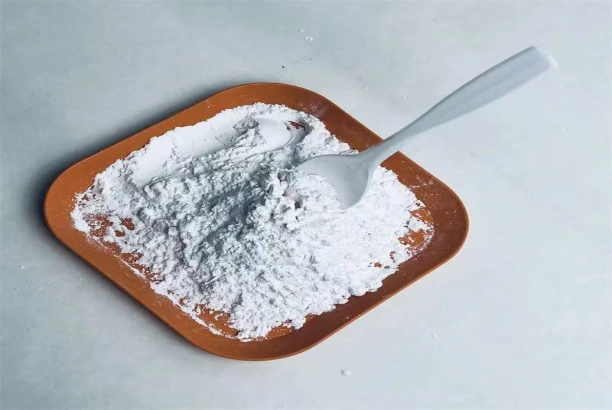
How Heat and Humidity Change Alpha Lipoic Acid Powder
Why Heat Matters for a Low-Melting Crystal
Alpha lipoic acid has a melting point that falls somewhere between sixty and sixty-two degrees Celsius. Organosulfur is present in this compound, which is a compound. The level of this component is not particularly high when compared to the vast majority of other components that can be found in nutraceuticals. It is possible that the material will come close to reaching its softening point if it is placed in a hot dock, a container that does not have any airflow, or a warm blending room. There is also the possibility that light and heat can cause the dithiolane ring to polymerize, which not only changes the way the component functions but also the way it appears. Early warning signs include a darker color, clumping, and a stronger smell of sulfur. These are all indicators that something is wrong. The temperature is the first thing that I make an effort to control because a change in temperature can have an effect on the results of a test before they are even visible. I will make every effort to control the temperature. Each of the three processes of drying, granulating, and compressing tablets ought to be approached with the same degree of caution.
What Moisture Does to Flow and Dosing
The level of moisture is the second variable to consider. When there is an increase in the relative humidity, a fine powder that is crystalline can absorb water from the air surrounding it. Because of this, particles may become entangled with one another and cease to move in a smooth manner through hoppers. Subsequently, capsule fillers deliver varying doses, scales shift, and tablet blends become less consistent. Additionally, it is possible for moisture to begin taking in slowly, which means that a container may appear to be in good condition even though its loss-on-drying value is increasing. The distribution of the finished product and the way it interacts with water are both altered by the presence of additional water, which is an important consideration for those who manufacture functional foods and beverages. The variation that it causes from batch to batch is something that auditors can observe in supplement manufacturers. The likelihood of these issues occurring is reduced when there is a dry room available for weighing and quickly resealing bags that have been opened.
Why the Two Factors Work Together
It is not typical for heat and humidity to act in the manner that they do on their own. Warm air has the ability to hold more water, and condensation can form inside of a container if the temperature of the container rises during the day and falls during the night. In order to hasten the process of chemical and physical transformations, heat and moisture work together. According to the ICH Q1A(R2) guideline, drug substances are tested at a temperature of 25 degrees Celsius and a relative humidity of sixty percent. It tests them at a temperature of forty degrees Celsius and a relative humidity of seventy-five percent. It is important for purchasers to compare the stability data to those conditions and inquire about the type of packaging that was tested. An open scoop in a humid plant may not always produce the same results as a result from foil bags that have been sealed after being used.
Storage, Packaging, and Shipping Controls
Warehouse Storage Rules
The thioctic acid is stored in a dry and cool location, and we make sure that the package is kept closed at all times. If it is stored in a non-accessible location, it has a shelf life of two years. It is important to keep bags and drums off the ground, away from walls on the outside where condensation can form, and completely out of the direct sunlight. You should make use of a data logger to monitor the temperature and humidity, and you should also move the stock around so that the items that are the oldest are removed first. Any lot that was subjected to a heat excursion should be placed in quarantine until the laboratory verifies the results of the tests and the appearance of the specimen. When you open a container, make sure to use clean and dry tools to remove only the portion of the contents that you require, and then immediately replace the lid. In the case of containers that are only partially utilized, you should draft an internal hold-time rule.
Packaging That Protects the Powder
The first thing that keeps heat, moisture, light, and air out is the packaging. Jianbei sells alpha lipoic acid powder in 25 kg drums for large production runs and 1 kg aluminum foil bags for samples and pilot runs. A drum keeps the bags from getting damaged by being crushed or handled, and aluminum foil blocks light and slows the transfer of moisture. When it gets there, check the seals, make sure the batch numbers and dates are correct, and look for dents or signs of moisture. Before you place your first order, if your line uses a certain pack format, ask to see pictures of the pack-out and be told about the closure.


Export Shipping and Lead Time
Each and every order that we take is accompanied by a shipping plan. This is due to the fact that our powder can only be shipped to countries that are not the ones in which it is sold. At ports and while they are being moved, the temperatures inside containers can reach levels that are dangerously high even if they are not moving. It is my recommendation to purchasers in the United States that they steer clear of storing goods at the destination for extended periods of time and instead make it their priority to move the goods into a warehouse that is climate-controlled as quickly as they can. Due to the fact that the minimum order size is only one kilogram, this enables research and development teams to test a pilot lot before committing to volume. It is possible for delivery to take anywhere from three to seven working days after the payment has been received or processed. We are able to accept payments made through Western Union, Alipay, XT, or a telegraphic transfer. These are all acceptable methods of payment.
Testing, Documentation, and Quality Systems
Tests That Detect Heat and Moisture Damage
Despite the fact that visual checks are able to identify caking, they are not able to determine whether or not the medication is effective. It has been determined that the required level of thioctic acid is 98% after our thioctic acid has been subjected to HPLC testing. In the context of quality control at your location, in addition to testing for purity, you might also consider things like smell, appearance, loss on drying, melting range, particle size, and flow. These are all aspects that you might take into consideration. A small melting range in the range of 60–62 degrees Celsius indicates that the metal is extremely pure, whereas a large or low melting range indicates that you should take a closer look at the metal. Experiments of the same kind ought to be carried out on the samples that were stored at predetermined intervals. This demonstrates how a lot behaves in your own warehouse, so you don't have to rely solely on the data sheet that a supplier provides you with.
Stability Data and Batch Records
You ought to make a request for a certificate of analysis that is specific to the batch rather than a sheet that is generic in nature. Additionally, you should make sure to request a safety data sheet in addition to a specification during the process. When working on projects that will take a significant amount of time, it is essential to make a request for real-time and accelerated stability results that are associated with a specific packaging format. The rule that the Food and Drug Administration (FDA) has established for dietary supplements is known as 21 CFR Part 111. This rule stipulates that manufacturers are obligated to establish standards for the ingredients that they use and to ensure that those specified standards are met. As a result, the records that are supplied by suppliers are directly incorporated into the compliance file that you maintain for yourself. You will also be able to compare lots over time and identify drift before it reaches the finished product if you keep consistent batch records. This will take place if you maintain consistent batch records.
Certificates and Factory Capability
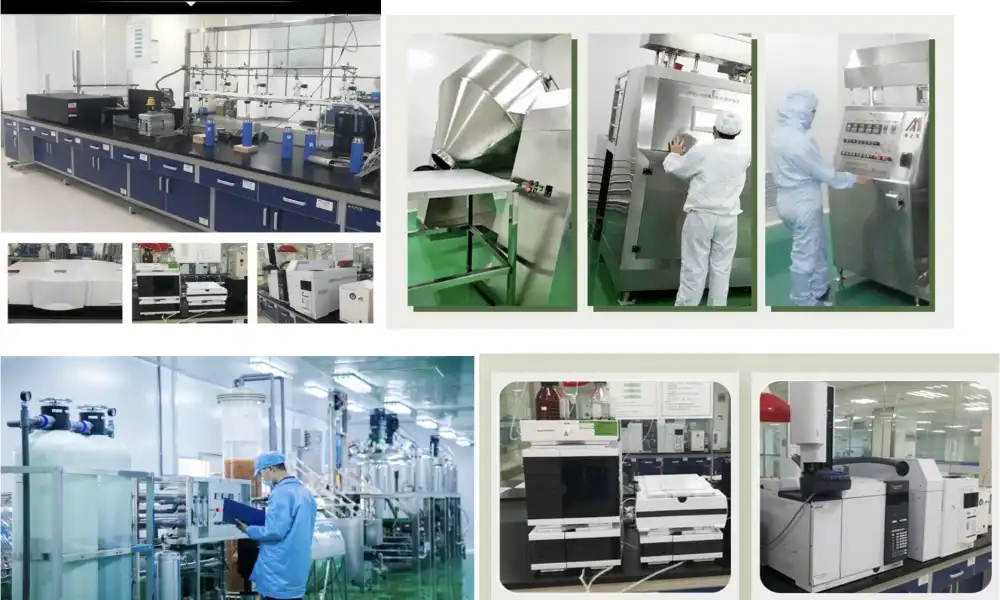
The profile for our ingredient is shown here. This is thioctic acid, also known as alpha lipoic acid powder or alpha-lipoic acid. It is a light yellow crystalline powder with the chemical formula C8H14O2S2 and a molecular weight of 206.33. Organic Food, Kosher, ISO, HALAL, HACCP, and GMP are some of the groups that our certificates cover. There are three production lines, a GMP-compliant workshop, and two separate labs in the factory where the goods are made. Jianbei also has 15 national invention patents and 8 utility model patents that cover smart monitoring systems and core product processes. Ask for up-to-date copies of any certificates your quality team needs.
Choosing a Supplier and Matching Controls to Your Application
Supplier Criteria Beyond Price
The price of a service provider is not the only factor to consider when evaluating them; you should also take into account their level of expertise and dependability. Effective checks include having a GMP workshop, having raw materials that can be traced, having batch records, having change control, having sample support, and having storage instructions that are easy to understand. A qualified research and development team, a factory that adheres to good manufacturing practices (GMP), a sizable inventory, and all of the necessary certificates are all things that Jianbei possesses in order to guarantee that customers are able to obtain what they require at any given time. Take a look at the differences and similarities that exist between the different batches, as well as the test results, minimum order quantity, lead time, shipping terms, and total landed cost. In addition to the absence of documents, uncertainty regarding the origins of the product, and product descriptions that differ from one quote to the next, all of these are warning signs that ought to be taken very seriously.
Matching Controls to Capsules, Tablets, and Foods
Make sure your controls work with the process. Capsule makers need to keep an eye on flow, dosing accuracy, and the consistency of the blend. Tablet makers should keep the temperatures for drying and compressing tablets well below the melting range of 60–62°C and keep an eye on the granulation moisture. Developers of functional foods and drinks should test the spread, color, taste, and water activity in a real food matrix. In our product data, we list the functions of antioxidants: controlling blood sugar, protecting nerves and the liver, and supporting healthy aging. Talk to your regulatory team about how to word your claims for the US market. You should also test the finished product because data on the raw materials alone can't tell you how the excipients will behave.
A Practical Pre-Order Checklist
Before you place your order, you will need to determine the grade, purity, particle size, moisture limit, packaging, shelf life, documents, quantity, and delivery location. When they arrive, make sure to check the quantity of the goods, as well as the seals, labels, and dates. During the time that it is being stored and made, it is important to monitor the temperature and humidity levels, limit exposure while it is being dispensed, and quickly seal the containers once more. Take a record of every trip, and before you let go, check the parking lot. The first step in a well-thought-out plan would be to take a sample of one kilogram, then proceed to conduct a pilot test, and finally, after your team has evaluated several batches, proceed to 25-kilogram drums.
Conclusion
Temperature and humidity affect how alpha lipoic acid powder works from the time it is stored until it is used. Since the substance melts at around 60–62°C, heat can soften, harden, and change its chemical make-up. Moisture, on the other hand, makes flow, dosing accuracy, and blend uniformity worse. There is stability guidance like ICH Q1A(R2) that pairs temperature and relative humidity because the two things work together. Exposure can be limited by keeping things cool and dry, sealing them in foil bags or drums, and getting them quickly after export shipping. Visual checks alone can't prove quality; HPLC tests, batch-specific certificates, and stability records can. Both product quality and production schedules are kept safe by matching controls to capsules, tablets, or food systems and judging suppliers on their consistency, documentation, and capacity.
FAQ
1. What storage conditions suit alpha lipoic acid powder?
Always make sure to store it in a cool, dry, and dark location that does not receive any light. Our food that has been sealed won't go bad for two years. Because the powder melts at temperatures between 60 and 62 degrees Celsius, you should steer clear of hot docks and containers that do not have airflow. You are required to adhere to the label and the safety data sheet that are included with each lot.
2. How can I tell whether humidity has affected a lot?
Check for crystals that stick together, don't flow well, or look wet, and then confirm with loss on drying and an HPLC analysis. It is important to do lab tests because quiet moisture uptake can happen without any changes being seen. Check the results against the certificate of analysis for the batch.
3. What are the minimum order and delivery terms?
The smallest amount you can order is 1 kg, which is sent in 1 kg aluminum foil bags or 25 kg drums. It takes 3–7 business days to deliver after payment. The powder can only be sent abroad.
Request Alpha Lipoic Acid Powder Samples from Jianbei
Get in touch with Jianbei to get a sample of our alpha lipoic acid powder or to talk about becoming a long-term supplier of alpha lipoic acid powder. Jianbei has a GMP factory, a large inventory, full certificates, a minimum order size of 1 kg, and delivery in 3–7 working days after payment. Send your application, grade, volume, and destination to sales@bqingbio.com.
References
1. Free Radical Biology and Medicine, 1995 – Packer, Witt, and Tritschler, "Alpha-Lipoic Acid as a Biological Antioxidant"
2. Biochimica et Biophysica Acta (General Subjects), 2009 – Shay et al., review of alpha-lipoic acid as a dietary supplement
3. Pharmacological Reports, 2011 – Gorąca et al., "Lipoic Acid – Biological Activity and Therapeutic Potential"
4. Biomolecules, 2019 – Salehi et al., review of alpha-lipoic acid uses
5. ICH Q1A(R2), Stability Testing of New Drug Substances and Products, 2003
6. U.S. Food and Drug Administration, 21 CFR Part 111, Current Good Manufacturing Practice for Dietary Supplements, 2007