- English
- French
- German
- Portuguese
- Spanish
- Russian
- Japanese
- Korean
- Arabic
- Greek
- German
- Turkish
- Italian
- Danish
- Romanian
- Indonesian
- Czech
- Afrikaans
- Swedish
- Polish
- Basque
- Catalan
- Esperanto
- Hindi
- Lao
- Albanian
- Amharic
- Armenian
- Azerbaijani
- Belarusian
- Bengali
- Bosnian
- Bulgarian
- Cebuano
- Chichewa
- Corsican
- Croatian
- Dutch
- Estonian
- Filipino
- Finnish
- Frisian
- Galician
- Georgian
- Gujarati
- Haitian
- Hausa
- Hawaiian
- Hebrew
- Hmong
- Hungarian
- Icelandic
- Igbo
- Javanese
- Kannada
- Kazakh
- Khmer
- Kurdish
- Kyrgyz
- Latin
- Latvian
- Lithuanian
- Luxembou..
- Macedonian
- Malagasy
- Malay
- Malayalam
- Maltese
- Maori
- Marathi
- Mongolian
- Burmese
- Nepali
- Norwegian
- Pashto
- Persian
- Punjabi
- Serbian
- Sesotho
- Sinhala
- Slovak
- Slovenian
- Somali
- Samoan
- Scots Gaelic
- Shona
- Sindhi
- Sundanese
- Swahili
- Tajik
- Tamil
- Telugu
- Thai
- Ukrainian
- Urdu
- Uzbek
- Vietnamese
- Welsh
- Xhosa
- Yiddish
- Yoruba
- Zulu
Citicoline sodium powder is the sodium salt of citicoline, also called CDP-choline. The body uses this compound to build phosphatidylcholine, a key phospholipid in neuronal membranes. Brands choose the powder for brain-health supplements, functional drinks, and pharmaceutical projects because it dissolves in water and supplies both choline and cytidine. In this guide, I cover its chemistry, quality checks, storage, formulation, and bulk buying, so your team can compare suppliers clearly. I also share the specifications of the material we supply at Jianbei, including a 98% HPLC assay.
Citicoline Sodium Powder Basics and Science
Before you compare providers, it's helpful to agree on what the thing is and what it does.
What Is Citicoline Sodium Powder?
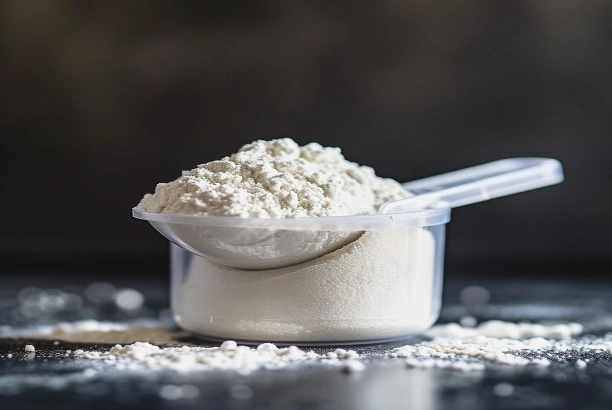
Citicoline Sodium powder is useful for business since it is the sodium salt of CDP-choline. Before I compare rates, I always look at the CAS number (33818-15-4) because customs records, scientific studies, and pharmacopeias all have more than one name. The chemical weight of our stuff is 510.31, and it's called C14H25N4NaO11P2. It looks like a white, solid powder, and HPLC tests show that it is 98% pure. In the making process, these little things are important. When you blend, encapsulate, tablet, or mix drinks, some of these things can change: solubility, particle size, bulk density, bacterial quality, and how well they dissolve. Please check each parameter against the most current data sheet from the seller and the batch's COA.
Benefits, Uses, and Mechanism of Action
After being taken, it is broken down in the body into choline and cytidine. Weiss wrote an article about them in 1995 for Life Sciences. More phosphatidylcholine is made in the brain with their help. Acetate is another thing that can be made from choline. You'll remember things and pay attention better after taking this. Studies have shown that citicoline can help people concentrate, remember things, and use their brains better. A study published in the Journal of Nutrition in 2021 found that healthy older people remembered things better. There was a review in 2002 in Stroke that looked at citicoline taken by mouth after an ischemic stroke. It's not true that everyone will have the same thing happen. The information about our product says that its main job is to help the brain and nervous system get better after a heart attack or brain damage. It keeps the brain healthy, protects nerve cells, and helps brain cells grow back. It can be mixed with nootropics, added to functional drinks, foods, some drugs, health supplements, and health supplements.
Citicoline Sodium vs. Alpha GPC, Choline Bitartrate, and Phosphatidylcholine
People who want to buy choline often look at citicoline next to other options. These two things are not the same in real life. AKG and choline bitartrate get choline into cells. It brings choline and cytidine into cells. Phosphatidylcholine is not the same as a powder that dissolves in water. This is because phosphatidylcholine is a finished phospholipid that is generally provided in lipid-based forms. The least expensive choice is choline bitartrate. Citicoline and Alpha GPC are the best for your brain's health. You can't use these things together instead of one another. It's not enough to just think about the amount of choline. The manufacturing goal, the clinical evidence that is available, how well it breaks, the regulatory state in the market you want to sell it in, and the total cost per serve are also things you should think about.
Quality, Grades, and Storage
A good paper will show you if the seller can back up their claim as long as the science behind the product makes sense.
Technical Specifications and Quality Parameters
You can't just look at the number itself when evaluating citicoline sodium powder. There are different kinds of checks, like active content, identity testing, assay, and purity. There may be more than one way for a provider to do research. Our test says that the number is 98% by HPLC, so I think you should ask each provider how they got their number. Check how the product reacts with heavy metals, microbes, particles, and solvents that are still present. Also, check how well it dissolves in water and how much water it can hold. See how these things fit with the people you want to buy them. Everything about the clearance, test methods, real results, and batch number is written down in a full COA. You should also ask for proof, like the SDS, TDS, stability data, allergen statements, and production certificates.
Food, Supplement, and Pharmaceutical Grade: How to Compare Them
From a sticker or an assay number, you can't tell the difference between food grade, supplement grade, and pharmaceutical grade. Depending on the monographs, the place they are going to, the regulatory route, and the use they are meant for, they can mean different things. 21 CFR Part 111 has rules from the FDA about good production practices for finished dietary products made in the US. This time, the papers you sent about the ingredients will be added to that file. That's what I think you should do: look at different ways to track, validate, and set up batch releases and change controls. Next, check each COA to see what chemicals were used, how they were made, if there is any damage, wetness, heavy metals, microbes, test dates, or information about who worked in a different lab. More tests don't always mean better quality or that it fits the rules better.
Stability, Storage, and Shelf Life
Since Citicoline Sodium powder soaks up water, it's important to keep it from getting too wet. Things like heat, light, oxygen, and how well the packaging lets air through can also change how they look, how they move, and how long they last. Boxes can be opened and closed many times. It needs to be kept cool, dry, and out of direct sunlight in cases that can be closed tightly. Food can be kept for two years if it is sealed. Each package weighs 1 kg, and the drums can hold 25 kg. Pick a pack based on how heavy your order is, the weather where it's going, how long it will take to ship, and how your building works. If you want to make things often, drums work best. For tests and pilot runs, foil bags work best. If you are somewhere wet, I think you should weigh the powder somewhere dry.
Formulation, Dosage, and Selection
Next, put what you've learned to use by turning a raw material into a finished product.
Dosage and Regulatory Considerations
The dish and the ingredients are not all the same size. You can't tell how much someone takes every day from a 98% test. Different types of drugs have different dosage forms that are based on clinical proof, the drug's claims, and the rules in your area. There have already been studies that used different amounts and lengths of time, so I think you should match the amount of time you serve to the evidence that supports your claim. It's up to supplement labels in the US to say what they want about structure and function, as long as they have the right statement and an FDA notice. Still, they can't say anything about how to treat sickness. There are rules for every market. Make sure that formulation, medical, and regulatory experts look over the final dose, the labels, and the language used to talk about brain health.
Application and Formulation Guidance for Different Product Formats
For capsules and tablets, check how well they resist water, break down, and dissolve, as well as how well they flow, compress, fill, and work with other ingredients. It is best to keep the air dry while the powder is being pressed and filled. This is because the powder soaks up water. Check the taste, pH, clarity, flavor mixes, and how well the package can handle getting wet for powdered drinks and useful drinks. Caffeine, L-theanine, B vitamins, herbs, and amino acids should not be thought of as different ingredients when they are used together; they should be thought of as whole systems. What temperature do the foods go through, how active is the water, how long do they last, and how do they taste? Test runs should be done first, and stable copies of the end result should be saved.
Choosing the Best Citicoline Sodium Powder for Your Application
First, you have to decide what the citicoline sodium powder will be used for, who it will be sold to, how much to give, how often a year, whether it needs to be certified, and how it will be packed. Papers are often looked at by people who make supplements to make sure everything is the same. The people who make drinks care about how things look and smell. Pharmaceutical teams want to see records and specs, while distributors want to know about lead time and pack size. Test results, stability data, tracking, minimum order quantity (MOQ), wait time, experience with shipping, and expert help from each provider should all be looked at to see how consistent they are. Giving more weight to quality and consistency than to price is one way it helps you decide what to do. Add up all the costs that came with the package, such as tests, delays, extra work, customs fees, and packing. Our MOQ is 1 kg, which lets us test things out before we say anything more important.
Sourcing Citicoline Sodium Powder in Bulk
After you've taken care of the technical side, you should also be careful when you buy something.
Buying Citicoline Sodium Powder in Bulk
The best ways to buy in bulk are to first get samples, then do test output, then buy in bulk, and finally make a deal to supply every year. First, you should choose the MOQ, grade, packing, location, custom specs, wait time, Incoterms, and payment terms. Then you can compare prices. The grade, the amount, the tests, the certificates, the packing, the freight, the market conditions, and the assay all affect the price per kilogram. Get a full price quote. Check samples to see how they look, how well they run and dissolve, how much water they have, how well they work with the test, how well they work with the excipients, and how stable the finished formula is. Our powder can only be shipped. You can pay us with Western Union, T/T, Alipay, or XT. Your package will arrive 3–7 business days after you pay. Pay attention to the packing lists, certificates of origin, customs data, SDS, and declarations for the market you want to reach.
Working with a Citicoline Sodium Powder Manufacturer or Supplier
Suppliers can come in many forms, such as factory-direct, ingredient distributors, selling companies, and area agents. Each type can meet different needs. Things that are made might do better with big orders and lots of specific questions. For someone who sells things, it might be better to get small orders from people nearby. Before you accept what someone says, look at the certification's scope, issuing body, validity, site address, product coverage, and audit status. It has three lines for making things, two labs, and a workshop that meets GMP standards. The plant is run by Jianbei. These are the licenses we have: GMP; Organic Food; Kosher; ISO; Halal; and licenses from the US Food and Drug Administration. If you want, we can send you a copy. There should also be consistent batches, change messages, complaint handling, kept samples, and quick technical responses from a good partner. Because OEMs and private labels talk to us about packaging and labels, we're happy to do what they ask.
Common Mistakes When Buying Citicoline Sodium Powder
The cheap item is what most people choose, which is wrong. You might find that the test scope, records, packaging, factory rules, and shipping terms are not the same when you compare prices. Alpha GPC, choline bitartrate, phosphatidylcholine, and Citicoline Sodium are not all the same thing. Some things that are wrong with a COA are that it doesn't have batch numbers, test methods, specific results, or lab names. Lots of people forget to plan how to store powder, which is important for powder that soaks up water. Lastly, before you go live, look over what each market says about performance, brain health, and cognitive health. This is because some words and sentences may not be appropriate in a different place.

Conclusion
Citicoline sodium powder is made up of the sodium salt of CDP-choline. Acetylcholine and phosphatidylcholine can't be made by the body without choline and cytidine. People who used this guide learned that to be sure that something is real, they should look at the CAS number, read the test using the HPLC method, and decide what grade it is based on quality systems and COA information instead of labels. Due to its ability to absorb water, the powder stays safe to handle and lasts longer when it is kept dry, sealed, and the temperature is controlled. One thing that should be done to get ready is to look over the rules again. Dosage and claims depend on the product that is being sold and where it is being sold. It's not enough to just look at price when choosing what to buy. You should look at Alpha GPC, choline bitartrate, and phosphatidylcholine side by side, rate providers on how much they weigh, take samples in stages, and add up the total cost of landing.
FAQ
1. Is Citicoline Sodium the same as CDP-choline?
In this case, Citicoline Sodium is the sodium salt of CDP-choline. Make sure the CAS number 33818-15-4 is correct because files have different names.
2. Is the powder water soluble?
It does break down in water. Before letting it grow, test it in the field to see how well it works. Things like purity, particle characteristics, temperature, pH, and formulation conditions can still change how well it works.
3. What purity and MOQ do you offer?
We need at least 1 kg of the product and 98% by HPLC. After payment is made, it will be sent within 3–7 business days.
4. How should I store it?
Keep the powder somewhere dry and cool, and make sure the pack is closed. It is still good after being locked up and kept for two years.
Request Citicoline Sodium Powder Samples or a Bulk Quote from Jianbei
It has a GMP plant, a lot of stock, an experienced R&D team, and all the licenses it needs to make citicoline sodium powder. You can order as little as 1 kg of powder that has been checked for 98% HPLC. When you pay, it takes three to seven business days to get the package. Send an email to sales@bqingbio.com with the grade, quantity, location, and packaging needs.
References
1. Life Sciences, 1995 – Metabolism and Actions of CDP-Choline as an Endogenous Compound and Administered Exogenously as Citicoline.
2. Stroke, 2002 – Oral Citicoline in Acute Ischemic Stroke: An Individual Patient Data Pooling Analysis of Clinical Trials.
3. The Journal of Nutrition, 2021 – Citicoline and Memory Function in Healthy Older Adults: A Randomized, Double-Blind, Placebo-Controlled Clinical Trial.
4. Methods and Findings in Experimental and Clinical Pharmacology, 2006 – Citicoline: Pharmacological and Clinical Review, 2006 Update.
5. Clinical Interventions in Aging, 2013 – Effectiveness and Safety of Citicoline in Mild Vascular Cognitive Impairment: The IDEALE Study.
6. Federal Register, 2007 – Current Good Manufacturing Practice in Manufacturing, Packaging, Labeling, or Holding Operations for Dietary Supplements.