- English
- French
- German
- Portuguese
- Spanish
- Russian
- Japanese
- Korean
- Arabic
- Greek
- German
- Turkish
- Italian
- Danish
- Romanian
- Indonesian
- Czech
- Afrikaans
- Swedish
- Polish
- Basque
- Catalan
- Esperanto
- Hindi
- Lao
- Albanian
- Amharic
- Armenian
- Azerbaijani
- Belarusian
- Bengali
- Bosnian
- Bulgarian
- Cebuano
- Chichewa
- Corsican
- Croatian
- Dutch
- Estonian
- Filipino
- Finnish
- Frisian
- Galician
- Georgian
- Gujarati
- Haitian
- Hausa
- Hawaiian
- Hebrew
- Hmong
- Hungarian
- Icelandic
- Igbo
- Javanese
- Kannada
- Kazakh
- Khmer
- Kurdish
- Kyrgyz
- Latin
- Latvian
- Lithuanian
- Luxembou..
- Macedonian
- Malagasy
- Malay
- Malayalam
- Maltese
- Maori
- Marathi
- Mongolian
- Burmese
- Nepali
- Norwegian
- Pashto
- Persian
- Punjabi
- Serbian
- Sesotho
- Sinhala
- Slovak
- Slovenian
- Somali
- Samoan
- Scots Gaelic
- Shona
- Sindhi
- Sundanese
- Swahili
- Tajik
- Tamil
- Telugu
- Thai
- Ukrainian
- Urdu
- Uzbek
- Vietnamese
- Welsh
- Xhosa
- Yiddish
- Yoruba
- Zulu
Zinc L carnosine powder represents a chelated nutritional compound that merges zinc with the dipeptide L-carnosine, creating a specialized ingredient recognized as a specialized zinc-L-carnosine ingredient for gastrointestinal-focused formulations. This chelated form maintains stability in gastric environments, offering distinct advantages over standard zinc supplements. For B2B procurement professionals managing supplement brands, functional food companies, and pharmaceutical manufacturers, understanding this compound's technical specifications, quality standards, and sourcing considerations becomes essential when developing formulations targeting digestive wellness and functional food applications. The growing consumer demand for gut health solutions positions this ingredient as a strategic component for product differentiation across nutraceutical and functional food portfolios.
Introduction
The world market for dietary supplements is focusing more and more on gut health as more people realize the link between gut health and general health. Zinc L carnosine powder is a new functional ingredient that is getting a lot of attention from R&D directors, product managers, and procurement specialists who are looking for compounds that meet established quality standards and technical specifications.
This chemical, which is also called polaprezinc (CAS 107667-60-7), binds zinc ions to L-carnosine and forms a stable complex with special drug-like features. It was first developed in Japan for pharmaceutical applications, but now it is also used in functional drinks, food supplements, and pharmaceutical products. The formula for the molecule, C9H12N4O3Zn, shows a precise structural arrangement that helps define its behavior and characteristics in digestive tract formulations.
Knowing about this ingredient's technical features, quality standards, and sourcing options helps people make decisions about which suppliers to work with, how to negotiate good terms, and how to use this compound in successful product formulations. This guide tells procurement professionals how to check specifications, make sure they're following the rules, buy in bulk, and evaluate suppliers. These are all important things to know when looking for high-purity functional ingredients for competitive markets.

Understanding Zinc L-Carnosine Powder
This compound's chelated structure makes it different from other zinc supplements because it works biologically and delivers the zinc in a different way. When zinc binds to L-carnosine, the complex is more stable in acidic environments, which lets it stay in contact with the stomach lining for longer. This longer residence time is an important characteristic of the compound in gastrointestinal-focused formulations.
Chemical Composition and Physical Properties
Zinc L carnosine powder is usually a white to off-white crystalline powder that is very stable at high temperatures and has a molecular weight of about 289.61 g/mol. Quality standards usually call for at least 98% purity, with zinc levels between 20% and 23% and L-carnosine levels between 77% and 80%. The substance doesn't dissolve well in water, but it breaks apart in acidic conditions (pH 1.0–4.0) like those found at the stomach wall, which contributes to its behavior under acidic conditions.
High-performance liquid chromatography (HPLC) is the standard way to check for purity and find related substances, and atomic absorption spectroscopy makes sure that the amount of metal is exactly right. These testing methods are in line with the USP and Japanese Pharmacopeia papers, which means that they provide consistent standards for judging quality.
Historical Development and Technical Background
Originally created in Japan in the 1990s, this chelated complex came about from research into specialized zinc compounds for pharmaceutical and nutritional applications. Several studies have examined its interaction with the mucosa, inflammatory markers, and epithelial barrier characteristics. Because the compound can carry both zinc and L-carnosine to specific tissues, they form a combined complex with characteristics that differ from those of the individual components.
Mechanisms of Action
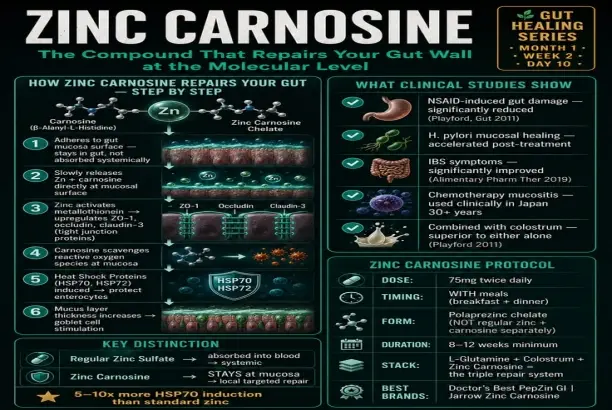
The compound has several characteristics that are relevant to digestive-focused formulations. Its plastic structure sticks to the stomach lining and creates a barrier that keeps stomach acid and other irritants from hurting damaged tissue. The zinc part helps make proteins, which are needed to repair tissues, and the L-carnosine part protects against free radical damage. Because it has multiple functional characteristics related to the gastrointestinal environment, it is relevant to a range of digestive-focused formulations.
Key Characteristics and Quality Profile
Multiple applications for this chelated complex have been examined in research. This makes it useful in supplement formulations that aim to support formulations focused on digestive, nutritional, and functional ingredient applications. Knowing these benefits helps people who make products place formulations correctly and make sure that claims are supported by scientific evidence.
Gastrointestinal Healing and Protection
Studies have shown that zinc L carnosine powder has been studied in relation to stomach and intestinal mucosal characteristics and the mucus barrier. The compound makes the tight junctions between epithelial cells stronger. This characteristic is relevant to research involving intestinal barrier properties. This characteristic has been examined in relation to intestinal barrier function and inflammatory markers. Formulations that include this ingredient may be considered for products designed around gastrointestinal-focused nutritional applications.
Antioxidant and Anti-Inflammatory Properties
The L-carnosine part is a strong antioxidant that has antioxidant-related characteristics that are relevant to digestive-focused formulations. Studies have examined this compound in relation to inflammation markers and other antioxidant-related parameters. This characteristic is relevant to formulations that include antioxidant-oriented ingredients. These traits have benefits that go beyond the digestive system. They help keep cells healthy all over the body and contribute to the overall health benefits that people are looking for more and more in functional supplements.
Safety and Dosage Considerations
Common formulation levels reported for adults are usually between 37.5 mg and 150 mg per day. Inorganic zinc salts and chelated zinc forms have different formulation characteristics, which should be considered when selecting an ingredient. Product formulators should know that zinc citrate and zinc gluconate have different bioavailability properties, so when switching between forms, dosing calculations need to be changed. Japanese pharmaceutical use provides historical information that can be considered when evaluating formulation and sourcing requirements. However, B2B clients must make sure that final goods come with correct usage directions and appropriate product labeling and usage directions for the intended market.
Comparing Zinc L-Carnosine Powder with Other Zinc Supplements
When purchasing professionals are looking at zinc sources for supplement formulations, it's helpful to know how the different forms compare in terms of their benefits. Each zinc substance has its own unique properties that affect its bioavailability, fitness for use, and cost.
Bioavailability and Absorption Characteristics
Zinc picolinate and zinc citrate are commonly selected based on their absorption characteristics for general zinc formulations. Zinc oxide, on the other hand, is a cheap option for basic supplementation even though it has lower bioavailability. The chelated L-carnosine complex is better for focused transport in the digestive system because it stays in the stomach for a longer time, resulting in characteristics that differ from those of forms that are absorbed quickly. Because it works specifically on the digestive system, this substance is very useful for formulations that focus on gut health rather than general mineral supplementation.
Therapeutic Applications and Market Positioning
Zinc gluconate is commonly used in various zinc-containing formulations, and zinc sulfate is used in pharmaceuticals that require the exact amounts of zinc. The L-carnosine chelate, on the other hand, is used in gastrointestinal-focused formulations. Products with this ingredient are considered high-end in the functional supplement market, appealing to smart shoppers who are willing to spend more on specialized formulas backed by clinical research. This market placement affects how prices are set and who the target customers are when product ranges are being made.
Quality Evaluation Criteria for Supplier Selection
When purchasing managers look at zinc L carnosine powder suppliers, they should make sure that they follow strict quality control rules. Important inspection criteria include test purity between 98.0 and 102.0 percent on a dried basis, heavy metal specifications that follow applicable USP guidelines, and keeping an eye on related substances to make sure of the stability of the chelated bonds. When making a lot of something, the particle size distribution is very important for making sure the blend is uniform, and this usually means going through 80-mesh screens all the way through. Microbial screening must meet applicable microbiological specifications, and gas chromatography tests for leftover solvents make sure that the rules set by ICH Q3C are followed.
Reliable providers give full certificates of analysis for each production lot that list these factors, along with legal certifications like FDA registration, ISO, HALAL, HACCP, and GMP compliance. These certifications make sure that manufacturing standards are met and speed up the process of getting finished products approved by regulators in target markets.
Procurement and Bulk Purchasing Guide for Zinc L-Carnosine Powder
Finding sources for this unique ingredient means finding the right balance between quality control, lowering costs, and making sure the supply chain works well. To make sure you always have access to high-purity materials, you need to carefully evaluate vendors and manage your relationships with them because there aren't many of them.
Supplier Landscape and Sourcing Channels
Asia is where most of the world's production is concentrated, with China and Japan being the main suppliers to the market. Chinese companies like Jianbei Biotechnology have reasonable prices and modern production methods. They also have many patents covering core processes and keep their buildings GMP-certified with their own testing labs. Their three production lines allow them to meet the bulk buying needs of mid-sized to large nutraceutical companies by producing a range of amounts. Japanese providers usually charge more, but they stress pharmaceutical-grade standards that work well for highly controlled uses.
Packaging and Minimum Order Considerations
Standard packaging includes 1 kg aluminum foil bags for samples and smaller production runs and 25 kg drums for manufacturers who need to make a lot of products but want to save money. Minimum order quantities usually start at 1 kg, which is enough for developing a formula for the first time before moving up to commercial production amounts. Purchasing managers should make sure that the materials used for packaging meet standards for food or medicine and offer enough protection during foreign shipping. This is especially important for compounds that are sensitive to wetness and need to be stored in dry, cool conditions.
Pricing Dynamics and Negotiation Strategies
Market prices are based on the cost of raw materials, the size of the production run, the certification requirements, and the position of the supplier. When you sign a long-term supply agreement, you can often get volume discounts and first choice when supplies are low. Another point of negotiation is payment flexibility. Suppliers who accept wire transfer, PayPal, Western Union, and Alipay can work with a variety of buying processes. Buyers should ask for detailed price breakdowns that separate the costs of base materials from the costs of testing, certification, and logistics. This will allow them to accurately compare costs across different potential suppliers.
Logistics and Lead Time Planning
Delivery times are usually between three and seven working days after payment is confirmed, as long as the materials are in stock. Custom manufacturing runs that need specific particle sizes or extra licensing paperwork may make wait times longer, so it's important to plan ahead for when products need to be released. When shipping something internationally, you need to make sure you have the right paperwork to get it through customs, keep the goods at the right temperature during travel, and follow the rules that the country you're sending it to has for food ingredients or applicable formulation materials.
Conclusion
For formulations focused on gastrointestinal applications and specialized nutritional ingredients, zinc L carnosine powder represents a functional ingredient with a technical and research background. Because of its special chelated structure, growing market acceptance, and established research background, it is becoming an important part of strategies for supplement brands, functional food developers, and drug companies that want to stand out by making products with differentiated ingredient profiles. To make a good purchase, you need to pay attention to quality factors like purity requirements, heavy metal tests, microbial limits, and seller certifications that confirm production standards. Procurement professionals can get reliable access to high-quality materials that help with product development and market positioning in the growing gut health category by working with experienced suppliers that offer GMP-certified production, full testing capabilities, and regulatory compliance documentation.
FAQ
1. What quality parameters should B2B buyers prioritize when sourcing this ingredient?
Assay purity should be between 98 and 102% on a dried basis, heavy metals should meet USP standards, particle size distribution should be looked at to make sure it can be used in manufacturing, and microbial testing results should be looked at. Supplier certificates, such as FDA registration, ISO, GMP, HACCP, and HALAL, prove that output standards are met and that rules are followed.
2. How does this chelated form compare to standard zinc supplements for gut health applications?
The L-carnosine chelate has distinct gastrointestinal formulation characteristics related to its residence time in the stomach. This creates distinct formulation characteristics in specific areas that aren't possible with forms that are quickly absorbed, like zinc citrate or zinc picolinate. Because of this, it is especially useful for formulations that focus on digestive health rather than general mineral supplementation.
3. What documentation should suppliers provide to support regulatory compliance?
Manufacturers of finished goods can meet quality standards and regulatory requirements in all target markets by providing full technical data sheets, certificates of analysis for each production lot, safety data sheets, documentation for GRAS status, allergen statements, GMO declarations, and the right pharmacopeial compliance certifications.
Partner with Jianbei for Premium Zinc L Carnosine Powder Supply
Jianbei Biotechnology sells zinc L carnosine powder for pharmaceutical and nutritional applications. Their production is GMP-certified, and they test the quality using HPLC. They also provide all the necessary paperwork for regulatory agencies, such as FDA, ISO, HALAL, and HACCP certifications. With three production lines and a large inventory, we can reliably meet the needs of supplement makers, functional food developers, and pharmaceutical businesses that need stable quality and flexible order amounts starting at 1 kg. As a manufacturer with a lot of experience in making zinc L carnosine powder, we can offer you reasonable bulk prices, fast delivery (3–7 working days), and technical help from our experienced R&D team, which has 15 invention patents in functional ingredient processing. You can email our procurement specialists at sales@bqingbio.com to talk about custom supply strategies, ask for samples, or get detailed specifications that will help you reach your product development goals.
References
1. Matsukura, T., & Tanaka, H. (2000). Applicability of zinc complex of L-carnosine for medical use. Biochemistry (Moscow), 65(7), 817-823.
2. Hewlings, S., & Kalman, D. (2020). A review of zinc-L-carnosine and its positive effects on oral mucositis, taste disorders, and gastrointestinal disorders. Nutrients, 12(3), 665.
3. Shimada, T., et al. (1999). Zinc in gastric mucosal protection against acid: role of endogenous metallothionein and zinc transporter. Journal of Pharmacological Sciences, 81(2), 213-219.
4. Kashimura, H., et al. (1999). Polaprezinc, a mucosal protective agent, in combination with lansoprazole for the treatment of gastric ulcers. Alimentary Pharmacology & Therapeutics, 13(4), 483-490.
5. Odashima, M., et al. (2006). Zinc L-carnosine protects colonic mucosal injury through induction of heat shock protein 72 and suppression of inflammatory mediators. Life Sciences, 79(24), 2245-2250.
6. Mahmood, A., et al. (2007). Zinc carnosine is a health food supplement that stabilizes small bowel integrity and stimulates gut repair processes. Gut, 56(2), 168-175.