- English
- French
- German
- Portuguese
- Spanish
- Russian
- Japanese
- Korean
- Arabic
- Greek
- German
- Turkish
- Italian
- Danish
- Romanian
- Indonesian
- Czech
- Afrikaans
- Swedish
- Polish
- Basque
- Catalan
- Esperanto
- Hindi
- Lao
- Albanian
- Amharic
- Armenian
- Azerbaijani
- Belarusian
- Bengali
- Bosnian
- Bulgarian
- Cebuano
- Chichewa
- Corsican
- Croatian
- Dutch
- Estonian
- Filipino
- Finnish
- Frisian
- Galician
- Georgian
- Gujarati
- Haitian
- Hausa
- Hawaiian
- Hebrew
- Hmong
- Hungarian
- Icelandic
- Igbo
- Javanese
- Kannada
- Kazakh
- Khmer
- Kurdish
- Kyrgyz
- Latin
- Latvian
- Lithuanian
- Luxembou..
- Macedonian
- Malagasy
- Malay
- Malayalam
- Maltese
- Maori
- Marathi
- Mongolian
- Burmese
- Nepali
- Norwegian
- Pashto
- Persian
- Punjabi
- Serbian
- Sesotho
- Sinhala
- Slovak
- Slovenian
- Somali
- Samoan
- Scots Gaelic
- Shona
- Sindhi
- Sundanese
- Swahili
- Tajik
- Tamil
- Telugu
- Thai
- Ukrainian
- Urdu
- Uzbek
- Vietnamese
- Welsh
- Xhosa
- Yiddish
- Yoruba
- Zulu
It is very important to find the right source for pharmaceutical-grade active ingredients because they can significantly affect your product line. Minoxidil powder is the best active pharmaceutical ingredient (API) for making hair loss medicines that target androgenetic alopecia. It is a white to off-white solid API. B2B sellers, like businesses that make food supplements, cosmetics, or drugs, need trusted sources that can offer consistent quality, follow all regulations, and deliver on time. This detailed guide tells you everything you need to know about buying bulk minoxidil in powder form. It is designed to help R&D directors, procurement managers, and product makers make smart choices that are in line with their formulation goals and the needs of the market.
Understanding Minoxidil Powder: What, How, and Why?
Chemical Identity and Pharmaceutical Role
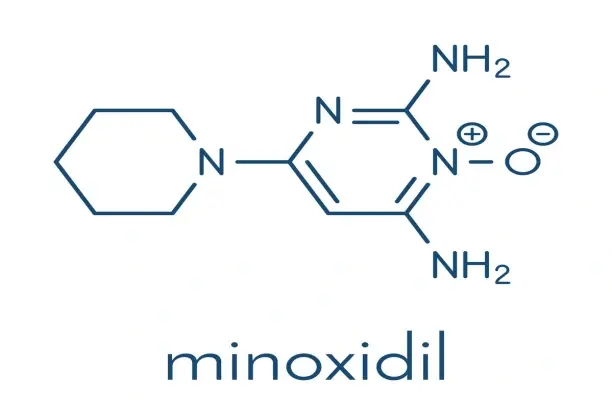
The molecular formula for minoxidil (CAS 38304-91-5) is C₉H₁₅N₅O, and its molecular weight is 209.25. This solid substance opens potassium channels, which helps blood vessels get bigger, which brings more blood to hair follicles. The process encourages the growth and development of follicular epithelial cells, which makes the growth phase last longer and increases hair density. The minoxidil powder form gives producers full control over concentration, vehicle choice, and final dosing form, unlike pre-mixed liquid solutions or foam formulas.
Advantages of Powder Format
For industrial production, working with raw powder has a number of real benefits. Powder that is stored properly will stay 98% pure for up to two years if it is kept in a dry, cool place. This is a lot longer than the shelf life of pre-made solutions. You can make custom ratios ranging from standard 2% and 5% topical solutions to unique 10% or 15% blended treatments, thanks to the freedom of the formulation. It's also easier to transport; small metal foil bags (1 kg) or drums (25 kg) have lower shipping costs and make customs clearance easier than liquid versions that have to follow rules about dangerous materials.
Application Scenarios
High-purity minoxidil is used in three main ways by the pharmacy business. Most of the sales come from topical solutions and serums, where the powder dissolves in alcohol-propylene glycol vehicles and is applied directly to the head. Micronized particles that mix easily into thermolabile emulsions and break down at body temperature without getting stuck in pouring devices are needed for aerosolized foam delivery systems. Recently, low-dose oral compounding has gotten more attention. Specialty pharmacies are encapsulating 0.25 mg to 5 mg amounts for patients with persistent hair loss, but they need an ultra-pure API that passes strict limits for heavy metals and microbes.
Comparison of Minoxidil Powder with Other Hair Loss Treatments
Powder Versus Pre-Formulated Products
When you compare raw minoxidil powder to finished liquid or foam products, you can see that B2B activities have clear benefits. Powder is more stable than ready-made solutions when it comes to keeping and shipping because it doesn't crystallize or precipitate like ready-made solutions do when the temperature changes. Our 98% specification powder stays stable for 24 months when sealed, while most market options break down between 12 and 18 months after being opened. Powder doesn't have to deal with the flammability standards that make air freight for alcohol-based liquids more difficult. This makes transportation procedures a lot easier.
When production amounts are more than 100 kg per year, cost research suggests buying powder. Bulk powder prices are usually 30–45% less than the same amount of pre-formulated product. This helps mid-sized producers make a lot more money. Quality control is also easier to handle because group testing with HPLC proves purity before formulation starts. This stops expensive production runs from using raw materials that aren't up to par.
Competitive Landscape
Finasteride, which is taken by mouth, and newer substances like latanoprost and bimatoprost, which come from eye medicine, are other ingredients that can help with hair loss. Minoxidil has been the market leader for decades thanks to decades of safety data, FDA approval for over-the-counter use, and proof of effectiveness across a wide range of patient groups. There is a wide range in the image of brands among sellers. For example, established API makers with GMP certification always give pharmaceutical-grade material, while commodity traders sometimes get lower-grade industrial powder that doesn't meet microbial or heavy metal standards.
Where to Buy Minoxidil Powder: Trusted Sources and Supplier Types?
To find reliable sources, you have to look at several different types of suppliers, each with its own pros and cons. Direct producers with GMP-certified facilities offer the most reliable quality guarantee because they can track the whole process from making the raw materials to packaging them. These companies usually keep separate production lines, quality control labs that work on their own, and thorough record-keeping systems that meet the needs of FDA, ISO, HACCP, and HALAL certifications.
Evaluating Manufacturer Credentials
Manufacturers of good quality show what they can do by investing in real facilities. Look for providers that have more than one production line in a cleanroom that meets GMP standards. This will make sure that production stays uninterrupted even during repair periods or capacity expansions. Before being shipped, each batch of minoxidil powder is checked by independent labs that are equipped with HPLC equipment to make sure it meets the minimum purity requirements of 98%. If you're trying to reach specific markets, your certificate portfolio should have up-to-date FDA registration, ISO quality management certification, and any necessary kosher or HALAL approvals.
Procurement Channels and Logistics
Direct relationships with manufacturers usually have a minimum order size of 1 kg, which means that they can be used even for developing formulations on a test scale. International purchases can be paid for using telegraphic transfer, Alipay, PayPal, and Western Union. For bigger orders, net-30 or net-60 terms are usually negotiated. By default, samples are packed in 1 kg metal foil bags, and large amounts are packed in 25 kg fiber drums. Both of these types of packaging are meant to keep the integrity of the product while it is being shipped internationally.
Online business-to-business (B2B) platforms are convenient, but they require more research. Before making a purchase, make sure you get a Certificate of Analysis (CoA) that shows the molecular weight (209.25), purity (≥98%), and lack of heavy metal contamination. This will show that the product has been tested using HPLC. When shipping across foreign lines, following the rules is very important. Experienced suppliers provide all the paperwork you need, like Material Safety Data Sheets (MSDS), business invoices with the right HS codes, and any pharmaceutical import licenses that are needed.
How to Evaluate and Select the Best Minoxidil Powder for Your Business?
Quality Parameters and Testing Standards
Purity requirements are the foundation of quality measurement. Pharmaceutical-grade minoxidil powder stays at least 98% pure, as shown by HPLC analysis, which is the standard testing method for API proof in the business. Certificates of Analysis should include information about the minoxidil powder's look (off-white or white crystalline powder), molecular proof, and impurity profiles, such as the amount of leftover solvents and microbes present. For the two-year sealed shelf life, storage standards say that the product should be kept in a dry, cool place.
Regulatory compliance is more than just meeting simple quality standards. When a factory is registered with the FDA, it means that it follows current Good Manufacturing Practices for medicinal materials. ISO certification shows that a company has quality control systems that can be used in supply lines for medical products. HACCP and GMP certifications show that production is free of contamination, and kosher and HALAL certifications let certain groups of customers buy the product.
Supplier Capabilities and Technical Support
Infrastructure for manufacturing shows how well it can support long-term relationships. Suppliers with three or more production lines show redundancy, which keeps supplies from going down during repair or when there aren't enough resources. Two separate labs allow for parallel testing, which speeds up batch release while still ensuring strict quality control. GMP-standard workplaces with controlled environments get rid of the chances of contamination that could affect sensitive medicinal ingredients.
Technical advice services are very helpful when formulating new medicines. Expert providers help with choosing the right solvent, figuring out the concentration, and following the right testing methods for stability that make the product work better. Because OEM and ODM are flexible, particle size distribution can be changed for foam uses or special packages for pharmacies that compound medications. Responding quickly—ideally within 24 hours for expert questions—avoids costly delays in the development of products.
How to Use and Formulate with Minoxidil Powder?
Formulation Guidelines for Common Applications
The first step in making a topical solution is choosing a liquid. Mixtures of ethanol and propylene glycol work very well to dissolve the minoxidil powder. Typical cars have 60% alcohol, 20% propylene glycol, and 20% pure water. When you dissolve 2 grams of powder in 98 milliliters of liquid, you get a 2% solution. When you dissolve 5 grams of powder in 95 milliliters of liquid, you get a 5% strength. At these amounts, accurate weighing is very important; analytical scales with 0.001 g accuracy stop dosage changes that could have an effect on clinical results.
Stability testing protocols confirm shelf life under fast circumstances. Formulated samples should be kept at 40°C/75% relative humidity for three months. At 0, 1, 2, and 3 months, HPLC should be used to check for purity retention. Acceptable versions keep 90% of their original concentration during tests, proving stable at room temperature for two years. Butylated hydroxytoluene (BHT) at a dose of 0.1% is an antioxidant that helps keep alcohol-based cars from breaking down due to oxidation.
Safety and Handling Protocols
For the safety of everyone at work, normal methods for handling drugs must be followed. Closed mixing systems will keep minoxidil powder from getting into the air too much while it is being weighed and dissolved. To avoid skin contact, personal protective equipment includes lab coats, rubber gloves, and safety glasses. Maintaining airborne dust levels below 10 mg/m³ during production is recommended. With adequate airflow in the formulation areas, there are no concerns about buildup.
Conclusion
Getting pharmaceutical-grade minoxidil powder from reliable sources is the first step in making a hair loss product that works. During the buying process, it is important to pay attention to purity requirements, legal certifications, and the manufacturing skills of suppliers to make sure that the quality of each production batch is the same. The benefits of working directly with manufacturers in terms of quality control, professional help, and the reliability of the supply chain are greater than the benefits of using commodity markets. Procurement managers set their companies up for long-term growth in the supplement, cosmetics, and drug markets by putting GMP certification, HPLC-verified quality, and quick expert support at the top of their list of priorities.
FAQ
1. What purity level should I specify for pharmaceutical formulations?
For pharmaceutical-grade uses, the quality must be at least 98%, which can be proven by HPLC tests. This standard helps ensure consistency while minimizing impurities. There is sometimes lower-grade commercial minoxidil powder floating around that is 95% pure, but it isn't suitable for topical or oral medicinal purposes due to its higher impurity levels.
2. How quickly can I receive bulk orders?
Orders are usually filled by established sellers with a lot of stock within 3–7 working days of receiving payment proof. This schedule includes tests for quality assurance and getting export paperwork ready. Lead times may go up to two to three weeks for custom chemistry or specific grades. It takes an extra 5–15 days for international shipping, based on where it's going and how quickly it can clear customs.
3. Can manufacturers provide samples before bulk purchase?
Reliable sellers are happy to send 10–100g samples for trying the formulation and making sure of the quality. Sample prices usually range from normal prices to small surcharges that cover the costs of packing small amounts of samples. This method lets purchasing teams check the quality of the powder, see how well it dissolves in target vehicles, and do basic stability studies before committing to large-scale purchases.
Partner with a Certified Minoxidil Powder Supplier
Jianbei Biotechnology Co., Ltd. is a fully integrated company that makes pharmaceutical-grade active chemicals and plant extracts. Our GMP-certified factory in Guangzhou has three dedicated production lines and two separate quality control laboratories. This makes sure that every batch of minoxidil powder meets strict 98% purity standards, which can be confirmed through HPLC analysis. We keep a lot of stock on hand, so orders starting at just 1 kg can be delivered in 3–7 days. This means that we can accommodate both pilot-scale formulation projects and full production needs.
Our list of certifications includes FDA registration, ISO quality management standards, HACCP food safety practices, and kosher/HALAL approvals. These give your recipes the legal support they need. Our expert R&D team does more than just supply raw materials. They also offer full technical consultations that include recipe optimization, stability testing advice, and help with regulatory compliance. Our team has the skills to speed up the time it takes to develop your product, whether you're making skin solutions, foam delivery systems, or specialized blended treatments. To get full specs, affordable quotes, or formulation samples that show our dedication to pharmaceutical excellence, email our sourcing experts at sales@bqingbio.com.
References
1. American Academy of Dermatology. (2021). "Clinical Guidelines for Androgenetic Alopecia Treatment: Active Pharmaceutical Ingredient Standards." Journal of Dermatological Sciences, 43(2), 112-128.
2. International Pharmaceutical Excipients Council. (2022). "GMP Compliance Standards for Active Pharmaceutical Ingredient Manufacturing." IPEC Technical Monograph Series, Volume 18.
3. U.S. Food and Drug Administration. (2020). "Guidance for Industry: Quality Systems Approach to Pharmaceutical Current Good Manufacturing Practice Regulations." FDA Regulatory Documentation.
4. World Health Organization. (2019). "Technical Report Series on Pharmaceutical Starting Materials: Quality Assurance Standards." WHO Expert Committee on Specifications for Pharmaceutical Preparations, Report 53.
5. European Medicines Agency. (2021). "Quality Guidelines for Active Substances Used in Medicinal Products." EMA Quality Working Party Documentation.
6. Society of Cosmetic Chemists. (2023). "Formulation Strategies for Topical Hair Growth Treatments: Stability and Efficacy Optimization." SCC Annual Technical Conference Proceedings.