- English
- French
- German
- Portuguese
- Spanish
- Russian
- Japanese
- Korean
- Arabic
- Greek
- German
- Turkish
- Italian
- Danish
- Romanian
- Indonesian
- Czech
- Afrikaans
- Swedish
- Polish
- Basque
- Catalan
- Esperanto
- Hindi
- Lao
- Albanian
- Amharic
- Armenian
- Azerbaijani
- Belarusian
- Bengali
- Bosnian
- Bulgarian
- Cebuano
- Chichewa
- Corsican
- Croatian
- Dutch
- Estonian
- Filipino
- Finnish
- Frisian
- Galician
- Georgian
- Gujarati
- Haitian
- Hausa
- Hawaiian
- Hebrew
- Hmong
- Hungarian
- Icelandic
- Igbo
- Javanese
- Kannada
- Kazakh
- Khmer
- Kurdish
- Kyrgyz
- Latin
- Latvian
- Lithuanian
- Luxembou..
- Macedonian
- Malagasy
- Malay
- Malayalam
- Maltese
- Maori
- Marathi
- Mongolian
- Burmese
- Nepali
- Norwegian
- Pashto
- Persian
- Punjabi
- Serbian
- Sesotho
- Sinhala
- Slovak
- Slovenian
- Somali
- Samoan
- Scots Gaelic
- Shona
- Sindhi
- Sundanese
- Swahili
- Tajik
- Tamil
- Telugu
- Thai
- Ukrainian
- Urdu
- Uzbek
- Vietnamese
- Welsh
- Xhosa
- Yiddish
- Yoruba
- Zulu
Buyers should check five things in a lotus leaf extract COA: the product identity and botanical source, the active-compound result, the physical and chemical specifications, the contaminant and microbial data, and proof that the report is authentic and matches the shipped batch. A COA covers one lot, so every number should agree with the agreed specification. I use it to confirm what the powder contains, how the laboratory measured it, and whether the lot fits the intended product and market. A COA has limits. It does not prove long-term quality, and a supplier-issued report differs from an internal quality record or an independent laboratory result. Treat it as one part of supplier qualification, together with specifications, samples, and audits. The sections below follow the order I use when reviewing a report.
Confirm Identity, Source, and Active Compound Data
Verify the Botanical Identity and Plant Part
To begin, the name should be written in scientific terminology. It is recommended that the plant be referred to as Nelumbo nucifera, and the leaf should be referred to as the plant portion. It is for this reason that a label that just states "lotus extract" is not particularly accurate. The rhizome, flower, and seed of the lotus plant each have their own unique set of compounds. In 2017, Phytotherapy Research conducted a study of the chemistry of the species and discussed nuciferine, which is present in the leaf and is considered to be one of the primary alkaloids. Additionally, take a look at the form: is it a powder, a homogeneous extract, or a liquid medium? It is required by 21 CFR Part 111 that businesses in the United States that manufacture food supplements verify the authenticity of each individual product. As a result, having a distinct identifying line allows the tests to be completed more quickly.
Review Extraction Details and Traceability
Following that, read the explanation of how it was manufactured. Obtain information on the origin of the leaves, the nature of the extraction liquid, and the means by which the lot may be traced. The amount of raw leaf that was utilised to manufacture the extract may be determined by seeing this number. It is not the strength of anything, and two products that have the same ratio might have significantly varied levels of nuciferine depending on the circumstance. You should enquire about the data on the solvent that was left behind if the approach employs ethanol. In addition, according to ICH Q3C, the maximum concentration of ethanol that may be present is 5,000 parts per million. Make sure that the process overview is in agreement with the COA before you grant the vendor permission to proceed.
Evaluate Nuciferine and Standardization Data
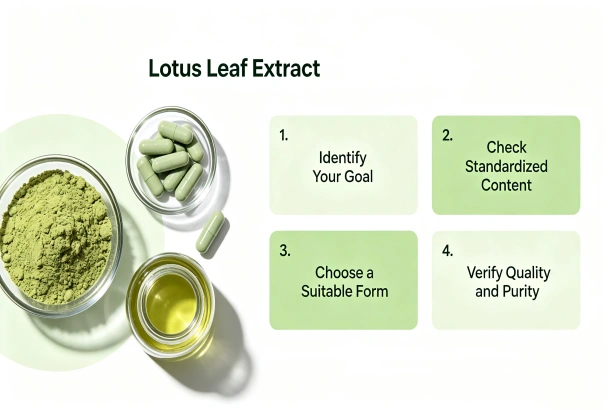
If the material is compatible with your name and formula, as well as whether or not it contains active molecules, it will inform you. The level that was provided, the HPLC technique, the units, the permitted range, and the batch result itself are all things that you need to check for. HPLC was used in order to verify that our lotus leaf extract is a powder that is brownish-yellow in colour and conforms to the 98% standard. This substance is composed of 295.38 molecules, and its chemical formula is C19H21NO2. Its CAS number is 475-83-2, if you are interested. In accordance with the findings of the research, these IDs ought to correspond to the standard average.
To summarise, nuciferine is not the same as flavonoids, polyphenols, or total phenolics, and the nutritional value does not provide a lot of information about the active element. Look up the meaning of the phrase "standardised extract" while you are writing. After that, evaluate the final product in relation to the specifications, the batches that came before it, and your ultimate objective. A number of studies conducted on animals, such as the ones conducted by Ono et al. (Journal of Ethnopharmacology, 2006) and Du et al. (Journal of Biomedical Science, 2010), found that leaf extracts had the potential to assist models who were following a high-fat diet in increasing their weight loss and decreasing their cholesterol levels. According to the findings of that research, individuals are interested in finding techniques to reduce their blood fat and lose weight. One last thing that has to be evaluated for your market is the final label claims.
Check Specifications and Safety Testing
Match Physical and Chemical Specs to Your Application
How lotus leaf extract performs on your production line depends on the characteristics of the material. Check the particle size, moisture content, ash content, bulk density, solubility, and appearance and odour. The COA should specify the powder's colour, which is described as brown-yellow for our product. Moisture content and bulk density affect flow and capsule filling, while particle size influences blending and tablet compression. For clear drinks such as teas, powder sticks, and functional beverages, solubility, dispersion, and sedimentation are particularly important. Skincare manufacturers may also need additional checks for colour, odour, and formulation compatibility. Before reviewing the report, define the intended application and the amount of powder required per serving.
Read Heavy Metal and Microbial Results
So, read each line of the safety data. It's possible for contamination to get in through the ground, water, handling, or storage. You shouldn't just see that all heavy metals pass, like lead, arsenic, cadmium, and mercury. You should see numbers for each one. People often do tests for yeast and mold, E. coli, Salmonella, and the total plate count in microbiology. It's important to match each limit to the product type and target market, since the standards for a vitamin, a drink, and a makeup can be different. Your quality team can check that the reasoning makes sense by looking at a report that shows the method, the limit, and the measured number. It only takes one "pass" to hide all three.
Request Extra Tests When the Use Requires Them
Some apps need more than one screen. If your risk assessment or the customer asks for them, you should look for chemical residues, solvents that have been used up, aflatoxins, ochratoxin A, and PAHs. Fill in the blanks with information about ethylene oxide, irradiation status, allergen statements, and GMOs for projects that need to be sold in strict stores. It is well known that the ICH Q3C(R8) guideline from 2021 sets the limits for residual solvents. The "Official Methods of Analysis" from AOAC International is a list of methods that are legal and are used by many labs. Include these extras in the buy specification so the seller knows what they are before the work begins.
Verify Authenticity, Compliance, and Batch Consistency
Confirm the COA Is Authentic and Traceable
Just because the COA is shiny doesn't mean it's real. The certificate's approval signature, report number, batch number, manufacturing date, test date, expiration or retest date, and the lab or quality department that issued it should all be looked at. The batch number should match the shipping papers and items that are packed. Real numbers are better than pass/fail words. The lab should confirm each result, and nuciferine chromatograms should be provided. Find out what method was used to get each result. Third-party testing by a recognized organization gives you more peace of mind when you check out a new source, buy pricey materials, or start your own brand. Inside our factory, there are two separate labs. Customers who send samples to a lab outside of our factory are welcome to do so.
Match Certificates to the Site and Product
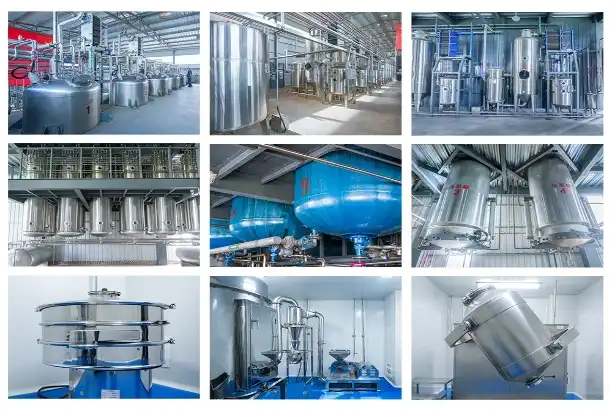
A COA can only be backed up by certificates that are valid for the right place and type of goods. The US Food and Drug Administration, Organic Food, Kosher, ISO, Halal, HACCP, and GMP have all given their approval for this item. Our base has three lines for making things and a workshop that meets GMP requirements. Ask for copies, look at the times they were issued and when they expire, and be sure you know what they cover. After that, write down the goal values, average values, minimums, and maximums in the COA and compare them to the standard that everyone agreed on. There are many useful supporting files, such as an SDS, allergen and non-GMO statements, stability data, details about the packing, and country-of-origin papers that are ready to be exported.
Compare Batches, Packaging, and Shelf Life
One good report doesn't show a steady supply. You can compare two or three new batches of COAs by looking at how they look, how much heavy metal is in them, and how many bacteria are in them. Being able to explain a small difference is better than always getting the same result. After that, check out the closet. Lotus leaf extract from us comes in 25 kg drums or 1 kg metal foil bags. Keep it somewhere dry and cool. Once sealed, it's good for two years. Find out what kind of proof of security supports that date and how often tests need to be done. Things don't get wet, light, or smelly when they're packed in foil and drums, so they last longer in your building.
Compare Suppliers and Build an Approval Process
Judge Suppliers on Total Procurement Value
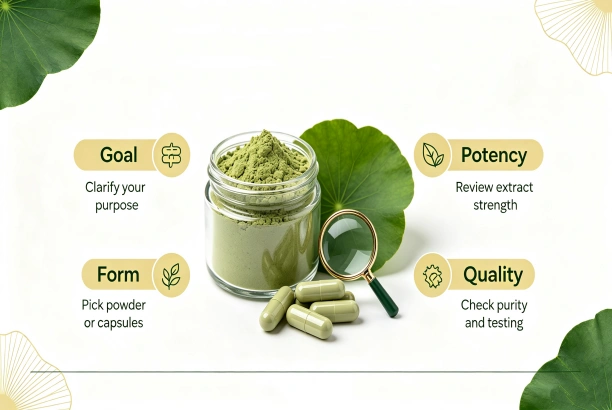
Every kilogram is priced at a single rate. The Certificate of Authority (COA) provides information on the openness of the testing, the consistency of each batch, the capacity, the minimum order quantity, the wait time, the many options for packaging, the technical assistance, and the experience of exporting. Telegraphic transfers, Alipay, XT, PayPal, and Western Union are all means of payment that we are able to accept. 1 kilogram is the smallest quantity that may be ordered. Following the receipt of payment, the delivery time ranges from three to seven business days. The powder may only be sent to other countries. In addition to asking about fair production timelines and individualised packaging, original equipment manufacturer (OEM), original design manufacturer (ODM), and private-label teams should also enquire about these other aspects. It is important to utilise the same documented standard when comparing each supplier. There are distinct regulations that apply to cosmetics, capsules, tea, and beverages, as well as bulk powder.
Follow a Four-Stage Approval Workflow
During the course of a fixed process, choices are made about files, and these decisions must be made repeatedly. The first stage is to make the goal and the audience of the project very apparent. Within the second stage, specifics are established for a variety of aspects, including but not limited to identification, marker chemicals, moisture, particle size, solubility, bacteria, toxins, packaging, and shelf life. In the third phase, the samples are compared to the most recent certificates of authenticity for the batch. The fourth step involves the addition of controls that continue to operate. A number of them include reviewing the COA before shipment, inspecting the items when they are received, doing random tests on your own, informing others about any modifications that have been made, dealing with materials that do not meet criteria, requalifying vendors, and maintaining records for checks. It is possible for teams to resolve differences more quickly when they set out these processes since everyone is aware of the boundaries in advance.
Spot the Common COA Red Flags
On the other hand, there are certain goods that have defects that cause you to reconsider purchasing them. The batch numbers could not match, the test date might not be evident, the lab might not be liable, or there might not be a botanical name or a plant part. All of these things might be the case. It is possible that the report may sometimes modify its units, make use of extraction ratio rather than strength, or include lines that simply state "complies." When the findings of more than one batch are identical, when certifications have been achieved, when recent records are not shared, when the certificate of authenticity and the standard do not coincide, or when samples are not associated with a specific batch, it is necessary to conduct a more in-depth investigation into the matter. One of the flags can be simple to respond to. There are a few of them that provide the impression that you need to look for a new vendor.
Conclusion
A COA for lotus leaf extract is most useful for lowering risk, not just for looks. The review starts with details about the plant part, its name, and how it was extracted. Then it goes on to nuciferine data, physical specs, and results for contaminants. Real records have details about the lab, like batch numbers, times, methods, and values that were recorded. On top of that, the place and product must match the certificates. If you look at new batches, packing, and shelf life side by side, you can tell if the quality stays the same over time. There are written rules and a staged review process that make sure the choices are always the same. There needs to be more proof when there are red flags like mixed units, general "complies" statements, or samples that don't go together. All of these checks work together to cut down on differences in recipes, arguments about quality, and wait times caused by rules.
FAQ: Lotus Leaf Extract COA Purchasing Questions
1. Which COA fields matter most?
Check the botanical name, plant part, batch number, test date, nuciferine result with the HPLC method, moisture, heavy metals, and microbiology. Measured values with units matter more than pass statements.
2. When is nuciferine testing necessary?
Test it whenever you label, standardize, or market the product on nuciferine content, or when your formula depends on a defined active level.
3. Is a supplier-issued COA enough for bulk purchasing?
It is a starting point. I suggest reviewing two or three recent batch COAs and adding independent testing for new suppliers, high-value lots, or sensitive markets.
4. How is a COA different from a specification sheet?
A specification lists the agreed limits. A COA reports measured results for one batch against those limits. Requirements also vary by supplement, food, beverage, or cosmetic use.
Request a Lotus Leaf Extract Quality and Supply Review
In order to improve the quality and supply of our lotus leaf extract, Jianbei wants purchasing teams, formulators, distributors, and OEM clients to check it out. Lotus leaf extract is what we sell, and we have a strong research and development team, a GMP factory, a lot of stock, and all the right certificates. We can tell you about the latest specs, sample information, MOQ, and lead time. The first one is from Phytotherapy Research (2017) and is a review of the chemical profile of Nelumbo nucifera. You can email sales@bqingbio.com with your task, the people you want to reach, and the amount of the order.
References
1. Phytotherapy Research, 2017 – review of the chemical profile of Nelumbo nucifera.
2. Journal of Ethnopharmacology, 2006 – anti-obesity effects of Nelumbo nucifera leaf extract in mice and rats.
3. Journal of Biomedical Science, 2010 – lotus leaf hot water extract with taurine in rats fed a high-fat diet.
4. Code of Federal Regulations, Title 21, Part 111, 2007 – current good manufacturing practice for dietary supplements.
5. ICH Q3C(R8), 2021 – guideline for residual solvents.
6. AOAC International, Official Methods of Analysis, 2023 – 22nd edition.