- English
- French
- German
- Portuguese
- Spanish
- Russian
- Japanese
- Korean
- Arabic
- Greek
- German
- Turkish
- Italian
- Danish
- Romanian
- Indonesian
- Czech
- Afrikaans
- Swedish
- Polish
- Basque
- Catalan
- Esperanto
- Hindi
- Lao
- Albanian
- Amharic
- Armenian
- Azerbaijani
- Belarusian
- Bengali
- Bosnian
- Bulgarian
- Cebuano
- Chichewa
- Corsican
- Croatian
- Dutch
- Estonian
- Filipino
- Finnish
- Frisian
- Galician
- Georgian
- Gujarati
- Haitian
- Hausa
- Hawaiian
- Hebrew
- Hmong
- Hungarian
- Icelandic
- Igbo
- Javanese
- Kannada
- Kazakh
- Khmer
- Kurdish
- Kyrgyz
- Latin
- Latvian
- Lithuanian
- Luxembou..
- Macedonian
- Malagasy
- Malay
- Malayalam
- Maltese
- Maori
- Marathi
- Mongolian
- Burmese
- Nepali
- Norwegian
- Pashto
- Persian
- Punjabi
- Serbian
- Sesotho
- Sinhala
- Slovak
- Slovenian
- Somali
- Samoan
- Scots Gaelic
- Shona
- Sindhi
- Sundanese
- Swahili
- Tajik
- Tamil
- Telugu
- Thai
- Ukrainian
- Urdu
- Uzbek
- Vietnamese
- Welsh
- Xhosa
- Yiddish
- Yoruba
- Zulu
Vitamin A powder is a stabilized, high-potency micronutrient ingredient widely used in food fortification programs to address nutritional gaps across global populations. Available as a pale yellow, free-flowing powder with a 98% specification (CAS: 68-26-8, molecular formula C₂₀H₃₀O, molecular weight 286.45), it delivers retinol activity in a format compatible with diverse food manufacturing systems. For B2B procurement professionals in nutraceutical, functional food, and supplement industries, sourcing a certified, high-purity retinol powder means securing both product efficacy and regulatory confidence across domestic and international markets.
Understanding Vitamin A Powder and Its Role in Food Fortification
What Makes Retinol Powder Essential for Modern Fortification?
A lack of vitamin A continues to be a significant problem in terms of public health. Vitamin A deficiency affects around 190 million children of preschool age throughout the globe, according to the World Health Organization. Consequently, fortification is one of the most cost-effective methods that may be used to enhance nutritional quality. Powders of retinol acetate and retinyl palmitate are the two types of esterified forms that are most often used in dry fortification techniques. Each one has its own unique stability and strength profile, and it is most effective when used with certain kinds of food.
When it comes to the production of food, one of the most significant challenges is that raw retinol oil is inherently unstable. This issue may be resolved by using the powdered form. Microencapsulating or spray-drying the active ingredient inside a starch or dextrin matrix results in the formation of a free-flowing granular structure. This structure allows for the active ingredient to be equally distributed throughout dry blends, tablets, or premix packages without causing any issues with hot-spot concentration.
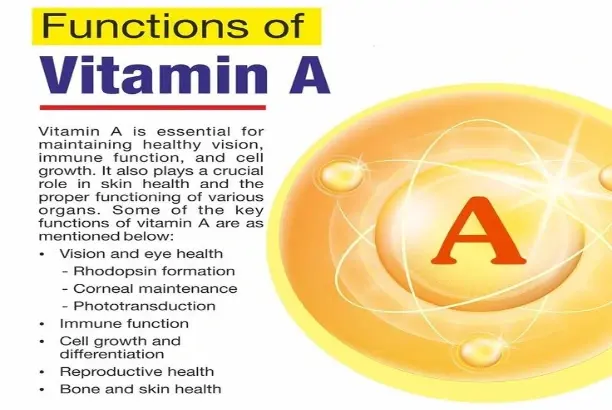
In addition to assisting with production, sourcing teams are able to create more convincing product claims when they have a better understanding of how this nutrient functions inside the body. Vitamin A powder helps retinal cells produce rhodopsin, promotes the generation of haemoglobin, protects against night blindness and dry eye syndrome, and maintains the functionality of the skin layer by managing keratinocyte differentiation. All of these benefits of vitamin A powder contribute to the maintenance of healthy eyes. Messages in completed products regarding eye health, face cleanliness, and immunity are directly supported by these advantages that have been demonstrated to be beneficial by medical science.

Key Considerations When Using Vitamin A Powder for Food Fortification
Dosage, Stability, and Bioavailability in Food Systems
To choose the right vitamin A powder formula, you have to weigh safety against effectiveness. The U.S. National Academies of Sciences set the Tolerable Upper Intake Level (UL) at 3,000 mcg RAE per day for adults. It is important to carefully compare fortification amounts to what people in target groups normally eat.
When it comes to matrix compatibility, the following are the most essential technical parameters that product developers and procurement teams need to take into consideration when selecting a Vitamin A supplier:
- The microencapsulated vitamin A powders that are considered standard are able to withstand temperatures of up to about 80 degrees Celsius during the production stage. Beadlet kinds that are very heat-resistant are required for use in hot-fill beverage applications. If this is not the case, the processing may result in a loss of 20–30% of the strength.
- Even when it is in powder form, vitamin A powder may still be photo-oxidized due to its sensitivity to light and oxygen. By including antioxidants in the capsule matrix, such as mixed tocopherols or BHT, it is possible to prevent the peroxide value from increasing while the capsule is being stored.
- The compatibility of the food matrix is: When used in dry cereal mixes, cheese premixes, and vitamin powders, vitamin A powder performs very well. The use of cold-water dispersible (CWD) grades is beneficial for water systems since these grades maintain homogeneity without dividing phases.
The length of time something is able to endure, and the degree of safety it provides for customers, are both directly influenced by these security criteria. Using HPLC-based potency testing when the products are received and at defined storage durations provides quality teams with the figures they need to ensure that the active Vitamin A concentration of the product remains within the ranges that are stated on the label for as long as the product is sold.
The formulation itself is important, but proper storage is just as important. Ensure that the vitamin A powder is stored in a dry and cool location, away from water and direct sunlight (if possible). There is a helpful guideline for organising the supply chain and rotating stock that states that high-quality commodities may remain effective for up to two years if they are appropriately packaged.
Comparative Insights: Choosing the Best Vitamin A Powder for Procurement
Powder vs. Other Forms: Why Powder Wins in Industrial Applications
There are some problems with making a lot of liquid retinol esters, pill mixes, and pure crystalline retinol. Vitamin A powder concentrate works better than these options in a number of business areas. It can be added to dry-mix production lines without the need for special liquid dose equipment. It has a steady particle size distribution (usually 100–400 microns) for even mixing, and it doesn't need to be kept in a cold chain like liquid forms do.
Natural beta-carotene powder, which is a form of Vitamin A carotenoid, is an alternative that is often used in goods with clean labels or that are organic. On the other hand, it is much less effective than premade retinyl esters at turning into active Vitamin A in the body. This means it is not as good for fortification programs that focus on precise IU delivery.
Supplier certification is a non-negotiable qualifier in professional procurement. A Vitamin A seller for the U.S. market must have at least the following reliable paperwork: FDA registration, GMP-compliant manufacturing, HACCP-certified methods, ISO quality management standards, and HPLC testing by a third party to confirm the product's potency. More certifications, like HALAL, Kosher, and Organic Food certification, make the ingredient more marketable to a wider range of customers.
Procurement Guide: Where and How to Buy Vitamin A Powder for Food Fortification
Evaluating Suppliers and Managing Logistics
A structured method for evaluating suppliers keeps buying teams safe from quality problems that might affect the compliance of the end product. The review should be based on three main areas: the infrastructure for making things, the accuracy of the paperwork, and the ability to handle logistics.
Jianbei Biotechnology Co., Ltd. has a GMP-standard workshop with three dedicated production lines and two separate quality laboratories. This gives them the manufacturing depth they need to make sure that output is consistent from batch to batch. The company has certifications from the FDA, ISO, HACCP, GMP, HALAL, Kosher, and Organic Food. They offer a full compliance package for both domestic supplement brands and buyers from other countries.
From a logistics standpoint, Vitamin A powder is stored in 1 kg aluminum foil bags or 25 kg drums, which makes it easy to handle both small research orders and large production amounts. Since the smallest order size is 1 kg, it can be used for recipe tests without having to commit to large inventory. Delivery is made within 3–7 business days of proof of payment, which helps meet tight start deadlines. There are many ways to pay, such as Western Union, Alipay, XT, and telegraphic transfer.
Future Trends and Innovations in Vitamin A Powder Food Fortification
Microencapsulation, Regulatory Evolution, and Market Growth
As a result of an increase in the number of individuals who desire accurate nutrition and clear labelling, the market for fortification chemicals is undergoing rapid change. New breakthroughs in nano-encapsulation and lipid-based delivery systems are making it simpler for the body to absorb vitamin A powder in problematic meal types. This is particularly true for plant-based and low-fat diets, which naturally make it more difficult for fat-soluble vitamins to be absorbed by the body.
In addition, regulatory systems are becoming more stringent throughout the globe. More foods are going to need to have vitamins and minerals added to them since the Food and Drug Administration (FDA) in the United States is mandating this. At the same time, Southeast Asia, Sub-Saharan Africa, and Latin America are putting in place their very own national fortification regulations, which results in a consistent need for ingredients that are of an export-grade vitamin A powder. The procurement teams who are able to establish connections with verified suppliers will have an economic advantage over the long run as regulatory challenges continue to increase.
The demands of consumers regarding transparency are driving businesses to provide complete traceability data, beginning with the origin of raw materials and continuing through the testing of final items. If suppliers invest money in robust quality systems and licensing today, they will be of great assistance to purchasers of ingredients in the future when laws grow more stringent.
Conclusion
Vitamin A powder is still one of the most useful and adaptable micronutrients that supplement and food makers can use. The first step in making safe, effective fortified products is to find a supplier whose GMP production has been checked, who has all the necessary certifications, and who has experience with formulating. If you want to make nutritional premixes, functional cereals, or dietary supplements, you should only use high-purity, stabilized Vitamin A powder that comes from a reputable producer. This will give your products scientific integrity and market authority. Jianbei Biotechnology has the good infrastructure and technical depth that procurement teams need to do their jobs well.
FAQ
1. What is the shelf life of retinol powder in food applications?
High-grade Vitamin A powder stays fully active for up to two years if kept in a sealed jar in a cool, dry place. Exposure to heat, wetness, or light speeds up the breakdown process, so it is highly suggested that you store food in aluminum foil and keep the temperature stable.
2. How do I verify potency and purity before purchasing?
High-Performance Liquid Chromatography (HPLC) is the usual way to measure the quantity of retinol in the body. Ask your supplier for a Certificate of Analysis (CoA) that includes HPLC-confirmed potency data and, if possible, third-party verification.
3. Can retinol powder be used in both solid and liquid food matrices?
When used in dry conditions, standard microencapsulated powder works well. For liquid systems, you should specify a cold-water dispersible (CWD) grade to make sure that the mixture stays stable and doesn't settle down.
4. What certifications should a compliant vitamin A supplier hold?
Check for FDA registration, GMP, HACCP, and ISO standards at the very least. The HALAL and Kosher certifications make it easier for goods that are meant for a wide range of consumers to get into markets.
Partner with Jianbei — Your Trusted Vitamin A Powder Supplier
Jianbei Biotechnology has three dedicated production lines and two separate labs that work together to make pharmaceutical-grade vitamin A powder. Their products are certified by FDA, GMP, HACCP, ISO, HALAL, and Kosher. We make buying easy by requiring a minimum order of 1 kg, giving you a number of payment options, and delivering within 3–7 days. Reach out directly at sales@bqingbio.com to get samples, detailed data sheets, or a personalized quote.
References
1. World Health Organization. Global Prevalence of Vitamin A Deficiency in Populations at Risk. WHO Press, 2009.
2. Institute of Medicine (U.S.). Dietary Reference Intakes for Vitamin A, Vitamin K, Arsenic, Boron, Chromium, Copper, Iodine, Iron, Manganese, Molybdenum, Nickel, Silicon, Vanadium, and Zinc. National Academies Press, 2001.
3. Sommer, A., & West, K. P. Vitamin A Deficiency: Health, Survival, and Vision. Oxford University Press, 1996.
4. Tanumihardjo, S. A. "Vitamin A: Biomarkers of Nutrition for Development." The American Journal of Clinical Nutrition, 2011.
5. Food and Agriculture Organization of the United Nations. Food Fortification Technology and Quality Control. FAO Food and Nutrition Paper, 1996.
6. Allen, L., de Benoist, B., Dary, O., & Hurrell, R. Guidelines on Food Fortification with Micronutrients. World Health Organization & FAO, 2006.