- English
- French
- German
- Portuguese
- Spanish
- Russian
- Japanese
- Korean
- Arabic
- Greek
- German
- Turkish
- Italian
- Danish
- Romanian
- Indonesian
- Czech
- Afrikaans
- Swedish
- Polish
- Basque
- Catalan
- Esperanto
- Hindi
- Lao
- Albanian
- Amharic
- Armenian
- Azerbaijani
- Belarusian
- Bengali
- Bosnian
- Bulgarian
- Cebuano
- Chichewa
- Corsican
- Croatian
- Dutch
- Estonian
- Filipino
- Finnish
- Frisian
- Galician
- Georgian
- Gujarati
- Haitian
- Hausa
- Hawaiian
- Hebrew
- Hmong
- Hungarian
- Icelandic
- Igbo
- Javanese
- Kannada
- Kazakh
- Khmer
- Kurdish
- Kyrgyz
- Latin
- Latvian
- Lithuanian
- Luxembou..
- Macedonian
- Malagasy
- Malay
- Malayalam
- Maltese
- Maori
- Marathi
- Mongolian
- Burmese
- Nepali
- Norwegian
- Pashto
- Persian
- Punjabi
- Serbian
- Sesotho
- Sinhala
- Slovak
- Slovenian
- Somali
- Samoan
- Scots Gaelic
- Shona
- Sindhi
- Sundanese
- Swahili
- Tajik
- Tamil
- Telugu
- Thai
- Ukrainian
- Urdu
- Uzbek
- Vietnamese
- Welsh
- Xhosa
- Yiddish
- Yoruba
- Zulu
The benefits of curcumin come mainly from its antioxidant activity and its role in supporting a balanced inflammatory response. Its main absorption challenge is poor water solubility combined with fast metabolism. Curcumin extract powder, standardized to a high curcuminoid level, delivers these actives in concentrated form. However, a high assay does not guarantee high absorption. In this article, I explain the benefits, the reasons absorption is limited, and the methods formulators use to improve it. I also cover how buyers can verify a supplier and share the specifications of our own 98% curcumin.
What Is Curcumin Extract Powder?
Standardized Extract, Not Ground Root
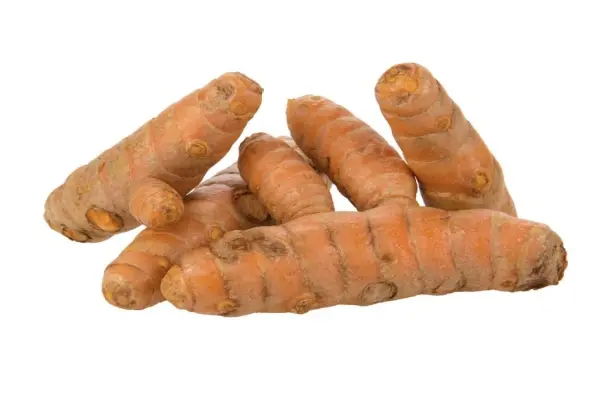
This powder is made from the root of the Curcuma longa plant, which is also known as turmeric. There is a certain amount of curcumin, bisdemethoxycurcumin, and demethoxycurcumin. Most of the time, ground turmeric root only has 2% to 5% curcuminoids. It's different for each crop. This is done so the person making the pills knows exactly how much medicine is in each one. People should keep these four terms separate when they are shopping: turmeric root, turmeric extract, total curcuminoids, and standardized curcumin extract. For each word, there are different hints in the bag.
Specifications Worth Reviewing
This sheet has more than one line, but the first one reads "Purity." The test method, the amount of water, the particle size, the carriers, the limits for microbes, and any liquids that are still there should all be talked about. HPLC is usually used to find out how much curcuminoids are present. It's also important how it looks. It doesn't mix well with water and melts at 183°C. But it mixes well with ethanol and acetone. It breaks down in bright light. This is correct for drinks, healthy foods, private-label items, pills, and capsules. The finished form will tell you which norm is right.
Jianbei Curcumin at a Glance
We offer curcumin for sale. It is an orange-yellow color, and an HPLC test showed that it is 98% pure. It is made up of molecules that are C21H20O6, and each weighs 368.38 grams. It has the CAS number 458-37-7. It comes in either a 25 kg drum or a 1 kg aluminum foil bag. Keep it somewhere dry and cool. If you seal it, it will last for two years. For the companies and brands we only sell to in other countries, the powder works well.
The Potential Benefits of Curcumin Extract Powder
Antioxidant Activity
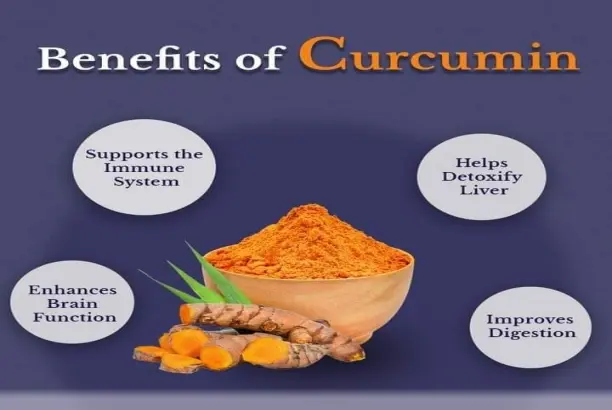
Curcumin is a color that comes from plants. It is bad for cells and organs to have free radicals and oxidative stress. It can be addressed by this compound, which also lowers oxidative stress. In 2017, Hewlings and Kalman wrote a review article for Foods that summed up this antioxidant activity and other benefits that were studied in people. You can find curcumin in a lot of supplements that help your heart, your nerves, and your body age well. But claims about finished goods still need to follow the rules of the market they are meant for. US brands should check the FDA's marking rules before putting anything on a package.
Support for a Balanced Inflammatory Response
Curcumin has been studied for many years to find out how it helps prevent inflammation. Jurenka wrote a review of this work in 2009, and it was published in Alternative Medicine Review. Curcumin extract powder is used in many products that help with digestion, joints, and being active because of this study. It helps people who make things understand the story, which I know means a lot to them. Still, what happens depends on how much is given, who gets it, and how it is given. To be clear, a strong claim on the deal is not as important.
Where Brands Use It
It's in functional foods, dietary supplements, sports nutrition, creams for joint pain, and health formulas in general. It's often mixed with collagen, ginger, or boswellia, all of which work well together. When the extract is standardized, the active ingredients are more likely to stay the same from one batch to the next. This helps make sure the labels are correct. Still, how well it works depends on the extract's quality, the dose, how it's given, and the proof that backs it up. I tell the teams to come up with a product idea first. After that, they should pick the grade of ingredient that goes with that thought.
Absorption Challenges and Ways to Improve Bioavailability
Why Absorption Is Limited
There is some curcumin that doesn't mix well with water, so the body can't use as much of it. This problem was written about by Anand and others in a 2007 study that came out in Molecular Pharmaceutics: poor absorption, fast digestion, and fast release. It is broken down quickly by the liver and stomach, so just because it says "high labeled concentration" doesn't mean the body is getting a lot of it. It doesn't say how much gets into your body when it says "98% pure." People who want to buy shouldn't mix these two thoughts up.
Piperine and Lipid Carriers
In the past, piperine from black pepper was used to help things dissolve. When 20 mg of piperine was added, two grams of curcumin worked 2,000 times better for healthy people. This was found in a study that came out in 1998 in Planta Medica. Piperine doesn't work with all formulas because of how it tastes, rules set by the government, and what customers want. Lipid carriers are a different way to do it. Take curcumin in softgels or eat a meal with fat. It might not work the same way for you or break down the same way.
Advanced Delivery Systems
Ways that make the powder mix with water, emulsify, or seal it work better than ways that just add powder to drinks most of the time. The solid-lipid, micellar, nano-dispersed, phytosome, and liposome technologies are some of the newer ones. Stohs and his colleagues studied several types of curcumin that are easily absorbed by living things in Molecules in 2020. Systems are graded on how well they meet the goal, how stable they are, how much they cost, and how easy they are to manage. The main part is still the regular powder, and the way it is delivered is decided during the preparation stage.
Formulation, Dosage, and Selection Considerations
Formats and Pilot Testing
It can be found in drinks, gummies, pills, tablets, packs, and foods that are good for you. Pick out a small dose first. How should I use curcumin most effectively? The amount in the product, how it is supplied, the people who will use it, and the information given about its safety and usefulness all play a role. Pilot batches should be used to check the consistency of the mixing, how well it flows, the color, how it tastes and smells, how sensitive it is to water, how it settles, and how it compresses. Things that aren't finished yet and things that are finished have different shelf lives. What makes a difference is how they are packed, the temperature, the humidity, the amount of light they get, and how they are sent around the world.
Choosing the Best Powder
First, choose what you want to buy curcumin extract powder for. Pills, drinks, healthy foods, sports nutrition, or your own name could be used. Then, compare the particle size, how far they spread, the amount of curcuminoid, the type of plant it came from, how it was removed, and how it was tested. Also look at the bacteria, heavy metals, and poisons that were present. Do not forget to ask for the specification sheet, SDS, allergen statement, traceability records, and any organic or non-GMO forms. The COA should be up-to-date and specific to a batch. You should think about more than just the price per unit before you buy something. Some of the other things that can be just as important are production capacity, MOQ, lead time, export knowledge, and technical help.
Common Buying Mistakes
Most people make the worst mistake when they buy something just because it says "95% curcumin" on the box. Something is pure, but that doesn't mean it is soluble, steady, spread out, or backed by science. You should look for scientific or human data to back up a claim that something is more bioavailable if you want to be sure it's true. This is a bad sign when the COA is generic, there are no batch numbers, or the methods are not clear. The rules are also different for each country and use. Make sure you know the rules about labels, promises, ingredient approval, and imports before you start making a lot of things.
Quality Control and Procurement for B2B Buyers
Verifying the Supplier
What kind of business is it before you do business with it? Is it a maker, a supplier, a trading company, or a fully integrated service? Find out about group testing, quality control, keeping track of raw materials, and shipping experience. People trust certificates like GMP, HACCP, ISO, and others like them, but you should check each one's subject area, length of validity, facility, and type of product. The clean label and how clear the liquid is depend on how it was removed and how much is left over. For claims of organic and non-GMO foods to be true, source chain records must be shown. These checks make it less likely that something will be found before the first order is placed.
A Practical Procurement Workflow
First, write down what your product looks like, how much curcumin it has, what certificates it has, how it's packed, and how much it sells each year. The second step is to get a technical package from the companies you've chosen. This should include specs, a current COA, a sample, an SDS, information on allergens and stability, a quote, a MOQ, and a wait time. Third, make your own test mix and use it to check how stable, spread, taste, color, and amount the sample is. Before you agree to the deal, make sure you understand the Incoterms, payment terms, shelf life, how to handle complaints, and plans for requalification. Strategic projects may also need to be reported on or checked by a third party.
What Jianbei Provides
There are 15 national invention patents and 8 utility model patents held by Jianbei Biotechnology Co., Ltd. Guangzhou Software Park is where its main office is located. This is where we make things. The factory has three lines for making products, a workshop that follows GMPs, and two different labs. It's from the US Food and Drug Administration, Organic Food, Kosher, ISO, HALAL, HACCP, and GMP, among other places. The minimum order is 1 kg. After you pay, it will be sent to you within three to seven business days. There are several ways to give us money: Western Union, Alipay, XT, PayPal, or telegraphic transfer.
Conclusion
Curcumin extract powder has antioxidant properties that may help protect cells from oxidative damage. It's in vitamins, healthy foods, and food for athletes. Because it doesn't mix with water and breaks down quickly, you can't tell how much it soaks up. Some ideas that could help close this gap are piperine, lipid carriers, and new ways to deliver drugs. But each one needs to prove that it is safe, bioavailable, and can work with the authorities. It varies depending on the dose, the style, and the pilot tests, and how they change the end result. Having an organized process for buying things helps buyers stay away from common mistakes and make sure that the right ingredient is used in the right product. Buyers should look at different specs, read batch-specific COAs, make sure they understand the scope of the certificate, and follow the steps.
FAQ
1. Is curcumin extract powder the same as turmeric powder?
No, turmeric powder is made from ground turmeric root, which has between 2% and 5% curcuminoids. The active ingredient stays the same because the extract is standardized and concentrated.
2. Does a 98% assay mean better absorption?
No, HPLC is used to see how pure the test really is. It depends on how well the drug dissolves, the size of the particles, the carriers used, and the delivery system used. For a better form, you should ask for bioavailability data.
3. What are the order terms for your curcumin?
You must buy at least 1 kg. It comes in a 25 kg drum or a metal foil bag that holds 1 kg. After payment, it takes three to seven business days to ship, and the powder can only be shipped outside of China.
Request a Curcumin Extract Powder Sample from Jianbei
Looking for a company that can quickly and correctly make curcumin extract powder that follows GMP? Jianbei has three lines that make 98% curcumin. We'll get back to you with a COA, sample information, and a quote after you email sales@bqingbio.com with the number, weight, and packaging you need for your order.
References
1. Foods, 2017. Hewlings SJ, Kalman DS. Curcumin: A Review of Its Effects on Human Health.
2. Molecular Pharmaceutics, 2007. Anand P, et al. Bioavailability of Curcumin: Problems and Promises.
3. Planta Medica, 1998. Shoba G, et al. Influence of Piperine on the Pharmacokinetics of Curcumin in Animals and Human Volunteers.
4. Alternative Medicine Review, 2009. Jurenka JS. Anti-inflammatory Properties of Curcumin, a Major Constituent of Curcuma longa.
5. Journal of Medicinal Chemistry, 2017. Nelson KM, et al. The Essential Medicinal Chemistry of Curcumin.
6. Molecules, 2020. Stohs SJ, et al. Highly Bioavailable Forms of Curcumin and Promising Avenues for Curcumin-Based Research and Application: A Review.