- English
- French
- German
- Portuguese
- Spanish
- Russian
- Japanese
- Korean
- Arabic
- Greek
- German
- Turkish
- Italian
- Danish
- Romanian
- Indonesian
- Czech
- Afrikaans
- Swedish
- Polish
- Basque
- Catalan
- Esperanto
- Hindi
- Lao
- Albanian
- Amharic
- Armenian
- Azerbaijani
- Belarusian
- Bengali
- Bosnian
- Bulgarian
- Cebuano
- Chichewa
- Corsican
- Croatian
- Dutch
- Estonian
- Filipino
- Finnish
- Frisian
- Galician
- Georgian
- Gujarati
- Haitian
- Hausa
- Hawaiian
- Hebrew
- Hmong
- Hungarian
- Icelandic
- Igbo
- Javanese
- Kannada
- Kazakh
- Khmer
- Kurdish
- Kyrgyz
- Latin
- Latvian
- Lithuanian
- Luxembou..
- Macedonian
- Malagasy
- Malay
- Malayalam
- Maltese
- Maori
- Marathi
- Mongolian
- Burmese
- Nepali
- Norwegian
- Pashto
- Persian
- Punjabi
- Serbian
- Sesotho
- Sinhala
- Slovak
- Slovenian
- Somali
- Samoan
- Scots Gaelic
- Shona
- Sindhi
- Sundanese
- Swahili
- Tajik
- Tamil
- Telugu
- Thai
- Ukrainian
- Urdu
- Uzbek
- Vietnamese
- Welsh
- Xhosa
- Yiddish
- Yoruba
- Zulu
It's important to know what you want to do and how much sorbitol powder you need before you use it. CAS 50-70-4 says that the sorbitol powder bulk is 98% pure. It dissolves quickly in both cold and warm liquids, which makes it useful for many recipes. Based on how sweet you want the food to be and how much moisture you want to keep in, it is generally used between 0.5% and 5% in food work. 10% to 30% of it is often used by drug makers to hold pills together and fill them up. When making a new product, you should always start with less and then test it to see what changes you need to make to get the best smoothness, stability, and usability.
Understanding Sorbitol Powder Bulk
Sorbitol powder bulk is a very useful ingredient that helps makers in a lot of different fields. This white, solid powder has the molecular formula C₆H₁₄O₆ and the molecular weight 182.17. It is a sugar alcohol that is made from glucose by hydrogenation with a catalyst. It can be used in a lot of different ways, which other sweets can't do. As more people look for products that are safe for teeth, this one meets that need. It can absorb water, which keeps things dry, and it doesn't cause cavities.
Chemical Composition and Production Methods
The process of making good sorbitol is complicated and closed-loop. It starts with getting glucose from good food sources. Companies get very pure glucose solutions from enzyme hydrolysis, which are checked carefully before going on to hydrogenation. High-pressure reactors with nickel-based catalysts and very precise temperature and pressure settings are used for the catalytic hydrogenation process. This makes sorbitol products with conversion rates of more than 98%, which is a sign of quality.
The next steps are crystallisation and filtering, which include centrifuging to separate the sorbitol crystals and cooling the crystallisation process. Activated carbon decolourisation and recrystallisation get rid of bits and colours, making the product look better and cleaner. By vacuum drying, the amount of wetness stays at ≤1.0%, which helps keep things stable while they are being moved and kept. After being crushed and sieved, the pieces are all the same size and can be used in a number of business settings.
Nutritional Profile and Metabolic Benefits
About 2.6 kcal/g of sorbitol is equal to 4 kcal/g of sugar. It's good for low-calorie meals because of this. There is no need for insulin because the body breaks it down slowly. This makes it a low-glycaemic sweetener that helps keep blood sugar in check. This biochemical method is very helpful for making recipes for weight loss and foods that are safe for diabetics.
Sorbitol does more than just lower calories; it also helps keep your gut system healthy by acting like prebiotics. In real life, it has been shown to help with constipation and make the movement of food through the intestines better. The substance can also help with diuretics and be used to treat kidney hypertension and brain swelling, but it has to be made according to pharmaceutical standards and with a doctor's approval.
Regulatory Compliance and Safety Standards
Quality control is still the most important thing to look for in D-glucitol for business use. A lot of different licences are kept by premium providers, such as FDA registration, ISO standards, HALAL, HACCP, and GMP compliance. These licenses make sure that things meet safety standards around the world and make it easier to clear customs when they are sent to other countries. High-Performance Liquid Chromatography (HPLC) and other testing methods look for possible contaminants and check how clean something is.
Food and drug companies need producers with GMP-compliant workplaces and their own labs to make sure the paperwork is right for sorbitol powder bulk. When your goods have to pass strict regulatory checks in places like the EU and the US, you need full certificates of analysis, batch tracking, and heavy metal testing records for sorbitol powder bulk.
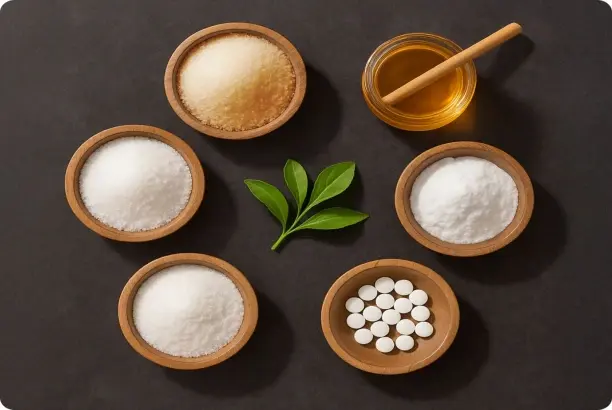
How to Use Sorbitol Powder in Bulk Effectively?
To really know how to use this polyol ingredient, you need to pay close attention to the concentration ratios, working conditions, and rules for dealing that are unique to your business. The substance is sweet and has humectant properties that keep moisture in. It also has texturising properties that improve the taste and binding properties that make the product last longer. Mastering sorbitol powder bulk requires careful integration into your manufacturing workflow.
Dosage Guidelines for Different Industries
Sorbitol is usually put between 10 and 30 per cent when making medicine pills to act as a straight filler and glue that can be compressed. Its high flowability makes sure that doses are spread out evenly in spinning presses that work at high speeds. Its compressibility makes pills harder without slowing down the time it takes for them to break down. When sorbitol and microcrystalline cellulose are mixed together, the mechanical properties of the pills are often better than when only one ingredient is used.
For food and drink, you need different ways to focus. Because it doesn't mix with Maillard processes when heated, 40 to 60 per cent sorbitol is often used in hard treats by companies that make sugar-free sweets. When added to frozen treats, 3-8% gives them cryoprotection, which keeps the structure smooth during freeze-thaw cycles. Inclusion rates of 2 to 5 per cent help baked goods stay soft and wet for longer without changing the sweetness levels too much.
Because it keeps things moist and makes them more flexible, sorbitol is found in toothbrushes and mouthwash in amounts between 5 and 15 per cent. This part of the paste stops it from getting hard when it comes in touch with air, and it makes it smooth like a ribbon. Skin care items use concentrations between 2% and 10% to make them easier to spread and more soothing.
Processing Techniques and Mixing Procedures
The right mixing steps and tools must be used to get a uniform spread. Putting the dry powder mix through the right mesh sizes (usually 20–60 mesh) before adding sorbitol keeps it from sticking together. Functional actives don't break down when they are mixed with other powdered ingredients first, then the heat-sensitive parts are added.
Since sorbitol works best in liquids, it should be mixed with water or alcohol at room temperature and stirred. The substance breaks down to about 70 grammes for every 100 millilitres of water at room temperature. When this number gets hot, it goes up a lot. If you don't want heat-sensitive items to turn brown or break down, don't break them at temperatures above 70°C. The best way to keep most recipes stable while mixing is to keep the pH between 4 and 7.
High-shear mixing tools work well when things that are thick need to be spread out quickly. Ribbon blenders and V-blenders are better for making a lot of things at once, while planetary mixers are better for mixing small amounts. If you keep an eye on the relative humidity while you work with powder, it won't soak up water, which could make it harder to work with.
Storage Conditions and Shelf Life Management
If you store your items the right way, they will stay safe and continue to work. To keep sorbitol powder from caking, keep it in a dry, cool place with a relative humidity below 50%. This is because it draws water. It works best when the temperature is between 15°C and 25°C, but it can handle small temperature changes without breaking.
Keeping the food covered in its original box is the best way to make it last up to two years longer. If you still have food left over after it's been opened, put it in covered containers with moisture barriers. Aluminium foil bags and fibre bins with plastic layers are good ways to keep things safe for a long time. For normal stocking movement, the first-in, first-out rule makes sure that the quality of the goods stays the same.
Tests are done on a regular basis to make sure that the standards are still being met after keeping the sorbitol powder bulk. Every three months, check the amount of wetness, the spread of particle sizes, and the number of microbes in things that have been stored for more than six months. By following these steps for quality control, you can keep making things and be sure that the end products always meet the standards.
Procuring Sorbitol Powder Bulk: A B2B Buyer's Guide
To find polyol goods in a smart way, you need to do more than just look at prices. When you look at providers, you need to plan ahead. If the unit price changes, it has a bigger impact on your production costs and the way your product looks than if the quality stays the same, you follow the law, and your supply chain stays reliable. Strategic procurement of sorbitol powder bulk ensures long-term manufacturing stability.
Supplier Evaluation Criteria
A provider's certification files show that they care about quality systems and follow the rules. Farmers should make sure that their GMP registrations, ISO 9001 quality control systems, and HACCP food safety methods are always up to date. There will be more ways to sell your finished goods once you are registered with the FDA and have kosher or halal licences. Check the specs against the most recent production runs and ask for proof of analysis. Your needs should be met.
Stable supply is directly linked to the structure of production. It shows that a supplier can handle large orders and keep backup lines going while main lines are being fixed if they have more than one. Without having to rely on outside sources that could slow down shipping, independent labs let you test quality quickly. Workshops that meet GMP standards show that more money needs to be spent on infrastructure to meet the needs of pharmaceutical-grade output.
There is a difference between premium suppliers and product dealers: premium suppliers offer expert help. Answering questions about preparation helps people get the most out of their products and fix processing issues. Having application labs where you can do simple, stable tests or process trials cuts down on the risks of development and speeds up the time it takes to market.
Packaging Options and Minimum Order Quantities
Industrial packing designs meet both the need for safety and the need for ease of handling. Most of the time, standard 25 kg fibre drums with plastic bottoms work well because they don't let water in and are easy to move by hand. When you use a lot of them and have the right tools to move them, bigger 500 kg super sacks cut down on packing waste and labour costs. Smaller metal foil bags that weigh 1 kg can hold study samples and the first steps of making a product.
As a sample, the minimum order amount is usually set at 1 kg. This lets you make a full assessment before committing to production numbers. When people buy things for their businesses, they usually order 100 kg to 1000 kg. They do this by weighing the benefits of buying in bulk against the costs of storing the goods. Setting up regular buying habits can help sellers keep track of when their goods are made, which could lead to better prices.
Logistics and International Trade Considerations
The amount of stuff that is needed and how production plans are made are both affected by delivery times. Trustworthy sellers always send in-stock items within 3–7 business days of getting proof of payment. Shipping goods to other countries can take longer to clear customs. It can take an extra one to two weeks, depending on the country and how much paperwork there is. When you have the right amount of extra stock on hand, you can keep making things even when demand is high, or shipping takes longer than planned.
Paperwork that shows you follow export rules keeps problems with customs to a minimum. Sellers should give you full business bills, packing lists, certificates of origin, and any safety data sheets you need. Goods that are going to be used in medicines need extra paperwork that shows they were made in a GMP environment and that each batch can be tracked. Some stores need certificates that are unique to their country, like EU REACH compliance statements or FDA registration numbers.
Flexibility in payments makes it easier to deal with short-term funds. Reliable companies let you pay in a number of ways, including PayPal, Western Union, Alipay, telegraphic transfer, and sorbitol powder bulk, so they can meet the needs of people doing business in other countries. When you buy something, you should also talk about the unit price because the payment terms affect your cash flow.
Conclusion
To be good at using sorbitol powder in bulk, you need to know what it is, how to get it, and how to use it. A lot of different medicines, foods, and personal care items can use this ingredient because it can be used to sweeten, hold water, and thicken. To get the same efficiency and quality every time, dosing, processing, and storage must be done properly. When weighed against other polyols and sugars, sorbitol is a good-tasting sweetener that doesn't cost too much. When you buy strategically, you look at more than just the unit price. You also look at seller certifications, expert help, and how reliable the supply chain is. Case studies from real life show that adding sorbitol to recipes properly can improve the quality of the product, its shelf life, and the ease of the manufacturing process.
FAQ
1. What is the recommended starting concentration for sorbitol powder in new formulations?
Start testing at 2% to 5% for food and between 10 and 15% for drug pills. To find out how useful sorbitol powder bulk is, these normal concentrations can be used. You can also make small changes based on your success goals. If you want your product to last as long as possible, make sure you test its stability over that time. Only then should you start making a lot of it.
2. How does particle size affect sorbitol powder performance?
For chewables, 80-mesh mesh sizes break down the material more quickly and make it easier. For straight compression tabletting, 20–40 mesh sizes that are bigger move around better. Before you start working, make sure that the particle size specs work with the tools you have and the job you need to do.
3. Can sorbitol powder replace sugar completely in recipes?
Sorbitol is only 50–60% as sweet as sucrose, so partial replacement works better most of the time. Taking out 30–50% of the sugar keeps the food tasting sweet and adds useful benefits like keeping the wetness in and making it last longer. There needs to be more high-intensity sweets to make up for the lack of sweetness caused by taking away all the sugar.
4. What quality tests should I request from suppliers?
Need research reports that show the product is pure (at least 98%), has no moisture (≤1.0%), has been screened for heavy metals, and has microbe counts. The readings are right, as shown by the HPLC test. Do not ask for general standard sheets; instead, ask for information that is unique to the batch.
Partner with Jianbei for Premium Sorbitol Powder Bulk Supply
Talk to Jianbei about getting a lot of high-quality sorbitol powder bulk. Jianbei Biotechnology has three separate production lines in buildings that are GMP-certified. Two different labs check each batch to make sure it meets the strict 98% clean standards. Our 15 national idea patents and 8 usage model patents back up the technical know-how that makes our production stand out. We have a lot of stock on hand, so we can send within 3–7 business days of getting proof of payment. This means there won't be any delays in production that cause your plans to fall through.
Our many certificates, such as FDA, ISO, HALAL, HACCP, and Kosher approvals, make it easy for you to follow the rules in every market around the world. Every step of the way, from the first research and development (R&D) phase to mass production for the market, we can help you. Flexible packaging comes in a range of sizes and shapes, from 1 kg metal foil bags to 25 kg drums. Each type can be used for a different purpose. For a reliable supply, contact our technical team at sales@bqingbio.com to talk about your specific manufacturing needs and get expert help.
References
1. Mitchell, H.L. (2006). Sweeteners and Sugar Alternatives in Food Technology. Blackwell Publishing, Oxford, UK.
2. Rowe, R.C., Sheskey, P.J., Quinn, M.E. (2009). Handbook of Pharmaceutical Excipients, Sixth Edition. Pharmaceutical Press, London.
3. Grembecka, M. (2015). Sugar alcohols—their role in the modern world of sweeteners: A review. European Food Research and Technology, 241(1), 1-14.
4. Payne, A.N., Chassard, C., Lacroix, C. (2012). Gut microbial adaptation to dietary consumption of fructose, artificial sweeteners and sugar alcohols: implications for host–microbe interactions contributing to obesity. Obesity Reviews, 13(9), 799-809.
5 .Lisowska, A., Filipiak-Florkiewicz, A., Cieslik, E. (2011). Sorbitol and xylitol as sugar substitutes in food manufacturing. Food Science and Technology Quality, 18(1), 20-32.
6. Dwivedi, S.K., Sattari, S., Jamzad, F., Halquist, M.S. (2014). Biopharmaceutical characterization and in vivo absorption of metformin HCl polyol solid dispersion. Drug Development and Industrial Pharmacy, 40(8), 1085-1094.