- English
- French
- German
- Portuguese
- Spanish
- Russian
- Japanese
- Korean
- Arabic
- Greek
- German
- Turkish
- Italian
- Danish
- Romanian
- Indonesian
- Czech
- Afrikaans
- Swedish
- Polish
- Basque
- Catalan
- Esperanto
- Hindi
- Lao
- Albanian
- Amharic
- Armenian
- Azerbaijani
- Belarusian
- Bengali
- Bosnian
- Bulgarian
- Cebuano
- Chichewa
- Corsican
- Croatian
- Dutch
- Estonian
- Filipino
- Finnish
- Frisian
- Galician
- Georgian
- Gujarati
- Haitian
- Hausa
- Hawaiian
- Hebrew
- Hmong
- Hungarian
- Icelandic
- Igbo
- Javanese
- Kannada
- Kazakh
- Khmer
- Kurdish
- Kyrgyz
- Latin
- Latvian
- Lithuanian
- Luxembou..
- Macedonian
- Malagasy
- Malay
- Malayalam
- Maltese
- Maori
- Marathi
- Mongolian
- Burmese
- Nepali
- Norwegian
- Pashto
- Persian
- Punjabi
- Serbian
- Sesotho
- Sinhala
- Slovak
- Slovenian
- Somali
- Samoan
- Scots Gaelic
- Shona
- Sindhi
- Sundanese
- Swahili
- Tajik
- Tamil
- Telugu
- Thai
- Ukrainian
- Urdu
- Uzbek
- Vietnamese
- Welsh
- Xhosa
- Yiddish
- Yoruba
- Zulu
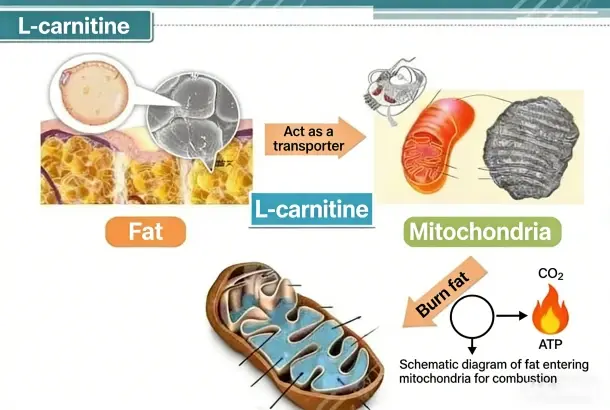
L-Carnitine Pure Powder works by taking fatty acids straight to the mitochondria, which are the energy makers in your cells. There, they are burned off and turned into energy that your body can use. This bioactive amino acid product speeds up the breakdown of fat, which helps people lose weight and keep their energy up all day. When taken with balanced nutrition and regular exercise, high-purity carnitine supplements at 98% specification can speed up fat burning by a large amount while keeping energy balance at its best. This makes it an important ingredient for making weight management and performance-enhancing products that work.

Understanding L-Carnitine Pure Powder: Functions and Benefits
The molecular formula for L-carnitine is C7H15NO3, and its molecular weight is 161.2. It is a naturally occurring quaternary ammonium molecule. Unlike capsuled or liquid forms, the pure powder form gives product makers the most options for exact dosing and easy integration into a wide range of delivery systems. This white crystalline powder, which has the CAS number 541-15-1, is the most concentrated and cost-effective way to buy in bulk. It is especially valuable in the nutraceutical industry.
The Biochemical Role in Fat Metabolism
Many of the benefits of carnitine come from its ability to move long-chain fatty acids across the mitochondrial membrane. These fatty acids can't get to the places where beta-oxidation happens if there isn't enough carnitine. Fats are broken down into acetyl-CoA molecules during this metabolic process. These molecules then go into the Krebs cycle to make adenosine triphosphate, which is the energy currency of cells. This molecular route explains why taking carnitine supplements is especially helpful when you are cutting back on calories, and your body starts to use stored fat for fuel more. Researchers have found that the amount of carnitine in the body directly affects how fast fatty acids are burned. This makes it very important for people who want to lose fat.
Energy Production Beyond Fat Burning
Carnitine does a lot more for cellular energy balance than just help with weight loss. Carnitine helps athletes and other busy people heal faster from high-intensity workouts by lowering the amount of lactate that builds up. The chemical also protects mitochondrial health by getting rid of harmful fatty acid byproducts that could otherwise damage cell function. Studies with endurance athletes show that taking carnitine supplements regularly is linked to less muscle pain and faster healing times. These results are very important for people who make sports nutrition goods. When made correctly, pure powder carnitine is bioavailable, which means it can be quickly absorbed and sent to muscle cells, which need energy the most when you're working out.
Suitability Across Dietary Preferences
More and more, modern customers are looking for vitamins that are compatible with certain diets. L-Carnitine Pure Powder meets these needs well because it can be made through fermentation methods that are suitable for vegans and vegetarians. Certified makers use production methods that make sure the finished product doesn't contain any animal-derived ingredients. This means that it can be used in more markets. This is especially important for brands that want to attract health-conscious people who value plant-based or ethically sourced products. Manufacturers with HALAL and Kosher licenses can reach even more customers because they follow religious food rules that affect large groups of people around the world.
Effective Usage Guidelines for L-Carnitine Pure Powder
To figure out the right dosing methods, you need to know how intake levels, time rules, and the results you want to achieve are related. The basis for making goods that give measurable results while still being safe for a wide range of consumers is recommendations that are based on evidence.
Optimal Dosage Recommendations
According to clinical studies, the best dose for most uses is between 500 mg and 2,000 mg per day. People who want to lose weight usually do well with 1,000 mg to 2,000 mg split into two daily doses. People who just want to boost their energy may find 500 mg to 1,000 mg to be enough. These factors come from controlled studies where people's body composition markers changed in ways that were statistically significant. When making supplements for consumers, people who make the supplements should think about these amounts based on evidence and make sure that the label claims are in line with dosing methods that have been proven to work by science. The powder form makes it easier to measure accurately, so users can change how much they take based on their own tolerance levels and goals. Starting with smaller amounts and slowly raising them over two weeks helps keep adaptation times to a minimum while improving the efficiency of absorption.
Strategic Timing for Maximum Efficacy
When carnitine enters the body in relation to food and exercise has a big effect on how well it works. When the compound is eaten 30 to 60 minutes before working out, its peak blood concentrations happen at the same time as the body's higher metabolic needs during training. This timing approach makes sure that the body can move the most fatty acids when it needs them the most, when it is using the most energy. Some study shows that splitting the daily dose and taking one part before a workout and another with a meal high in carbohydrates earlier in the day may help the body use it better overall. The idea behind this is to keep plasma levels steady while taking advantage of insulin's ability to help muscle cells take in carnitine. For people who aren't athletes or who are just trying to lose weight, taking carnitine with breakfast and lunch keeps the metabolism going strong during the busy day.
Real-World Applications and Expected Outcomes
When put into practice, the effects are different based on the person's starting fitness level, diet, and training intensity. In one case, a group of fairly busy people took an extra 2,000 mg every day for twelve weeks while on a managed caloric deficit. The participants lost an average of 3.2% of their body fat, compared to 1.8% in the control group. They also said they felt more energetic while doing daily tasks. Another study that looked at trained athletes found that taking carnitine supplements improved recovery signs. This meant that they could train harder without showing more tiredness. These examples from real life show how important it is to combine carnitine with a healthy lifestyle instead of just taking supplements. Product designers can use these kinds of results as examples when writing marketing stories that set realistic goals for customers and show real benefits.
Comparing L-Carnitine Pure Powder with Other Forms and Alternatives
There are different kinds of carnitine molecules and different ways to deliver them. Each has its own properties that make it useful for different tasks. By knowing about these differences, you can make smart purchasing choices that are in line with goal product profiles and customer tastes.
Chemical Variants: L-Carnitine vs. Acetyl L-Carnitine vs. L-Carnitine Tartrate
For general supplementation reasons, standard L-Carnitine Pure Powder is the easiest to understand because it is the same type that is naturally found in human cells. Acetyl L-Carnitine has an acetyl group attached that makes it easier for it to cross the blood-brain barrier. This makes it a better choice for formulas that support cognitive function rather than those that only support metabolism. L-Carnitine Tartrate is made by mixing carnitine with tartaric acid to make a salt form that is very stable and quickly absorbed, which is especially useful in sports nutrition settings. Each version has a unique molecular weight and bioavailability profile, which affect how well the end product works and how much to use. Manufacturers who want to make claims about weight loss and energy production usually choose normal L-Carnitine or the tartrate form because they offer the best fatty acid transport capabilities without the higher prices that come with acetylated versions. Cost should be taken into account along with practical needs during the selection process, especially when making goods for price-conscious market groups.
Delivery Format Considerations
Powder, pill, and liquid forms all have their own benefits that depend on how the product is positioned and the habits of the target consumers. As far as preparation goes, pure powder gives you the most options. It's easy to add to drinks, protein shakes, and foods, and you can precisely control the dose. This format has the lowest cost per serve, which is important for large-scale production and private label relationships. People who want things to be as simple as possible like capsules because they are convenient and already have the right amount of medicine in them. However, making them requires more steps and different ingredients, which makes the process more difficult. Liquid versions allow for fast uptake, but they are less stable and cost more to ship because of their weight and volume. Absorption kinetics studies show that properly designed powders and liquids don't vary much from one another. This suggests that the choice is mostly based on buyer taste rather than bioavailability concerns. Brands aimed at fitness fans who already use protein powders may find that unflavored carnitine powder fits in well with their current habits. On the other hand, business health programs may prefer capsule forms because they are easier to distribute.
Quality and Price Determinants
The purity and market worth of carnitine raw materials are affected by a number of things. Chemical synthesis is usually a cheaper way to make synthetic materials than organic fermentation methods. However, both can reach purity levels above 98% that are suitable for medicinal use if the right quality controls are put in place. Even though they cost more, organic licenses give people access to markets for natural goods where people are willing to pay more. When you buy in bulk, the price per kilogram is usually much lower than when you buy a small amount. This is because of economies of scale. In addition to stated prices, procurement professionals should look at testing methods, group consistency records, and certification files that show compliance with international standards to get a better idea of what suppliers can do. A company with GMP production facilities, FDA registration, ISO certification, HACCP compliance, and ISO certification shows that they have the quality infrastructure needed for long-term relationship success. These qualifications are especially important for businesses that focus on exports, as regulations require a lot of paperwork and the ability to track goods all the way through the supply chain.
Navigating Procurement: How to Source High-Quality L-Carnitine Pure Powder?
In order to build solid supply relationships, possible partners need to be carefully evaluated in more ways than just price. The following things should be thought about when choosing a supplier: minimizing risk while maximizing value supply.
Essential Supplier Credentials and Quality Markers
Manufacturers of carnitine with a good reputation keep a full range of certifications that show they follow international quality and safety standards. Check to see if the seller is registered with the FDA. This shows that they are regulated and can sell their goods in the United States. ISO standards, especially ISO 9001 for quality management and ISO 22000 for food safety, show that consistency and contamination control are handled in a planned way. HACCP licensing makes sure that important control points in the production process are monitored and fixed according to the right procedures. GMP compliance makes sure that the places where drugs are made are clean and run smoothly enough to meet pharmaceutical standards. This lowers the risk of contamination and batch variation. HALAL and Kosher approvals open up new markets and show that production is closely supervised. In addition to certificates, you should ask to see current Certificates of Analysis that show the real test results for heavy metals, microbial numbers, leftover solvents, and purity. Suppliers who use HPLC testing methods give the most accurate purity checks because this method accurately measures the amounts of active compounds. Getting together with a partner that keeps its own labs shows that you are committed to quality control in more ways than just third-party testing.
Pricing Structures and Order Flexibility
Knowing the minimum order amounts helps make sure that purchasing matches the skills needed for managing stockpiles and the needs of cash flow. A lot of good sellers set their minimum order quantities at 1 kg, which works for both small-scale businesses and initial trial orders. Volume-based price levels reward larger promises, with big drops in the cost per unit usually starting at 25 kg orders and getting even bigger at 100 kg. Flexible payment terms help with managing working capital. Reliable suppliers usually accept telegraphic transfer, PayPal, Western Union, and, more and more, cryptocurrency choices that make foreign operations easier. Negotiating payment plans that work with production cycles and customer records can make operations run much more smoothly. Some makers offer consignment plans or delayed payments for repeat orders. These options are especially helpful for growing brands that need to manage the growth phase. Asking for detailed quotes that include the prices of base materials, testing fees, package requirements, and shipping figures can help you avoid unexpected costs and make accurate margin calculations while your product is being developed.
Logistics and Service Support
Delivery times that work well for L-Carnitine Pure Powder have a direct effect on production schedules and store change rates. When standard packaging is used, which means 1 kg aluminum foil bags or 25 kg drums, orders from leading providers are usually filled within 3 to 7 working days after payment proof. If you need something quickly, you may be able to find expedited choices, but they usually come with higher freight costs. Make sure that the package you're using fits the export standards for the countries you want to sell to. This is especially important for features that keep the product's integrity during foreign shipping, like light and moisture barriers. To keep the two-year shelf life that is normal for properly packaged carnitine powder, it needs to be stored in cool, dry places. This should be taken into account when planning the layout of your building and how you rotate your inventory. In addition to how quickly and easily transactions can be completed, you should also look at the technical help that providers provide. Access to formulation advice, help with legal paperwork, and quick contact lines is very helpful, especially when making new goods or going into areas you don't know well. When manufacturers offer these consulting services, they act as real partners instead of just vendors, sharing their knowledge to speed up development times and cut down on costly re-formulation processes.
Conclusion
L-Carnitine Pure Powder is an ingredient that has been scientifically proven to help people lose weight and get more energy. Because it makes it easier for fatty acids to get into mitochondria, it has measurable metabolic benefits when added to overall health programs. Product makers can make effective solutions that meet customer needs and keep their marketplace competitive by learning about the best dosing methods, time strategies, and format considerations. For procurement to go well, they need to work with certified manufacturers who can show they have good infrastructure, follow the rules, and offer expert help. All of these things are available at Jianbei Biotechnology, along with open buying, fast delivery, and expert advice that helps you reach your product development goals more quickly.

FAQ
Q1: What distinguishes L-Carnitine Pure Powder from capsule or liquid formats?
Pure powder provides superior formulation flexibility, allowing precise custom dosing and seamless integration into beverages, protein shakes, or food matrices. The format eliminates excipients and fillers required for capsule production, delivering maximum active ingredient concentration per serving. Liquid formats often contain preservatives and sweeteners that some consumers prefer to avoid, while powder maintains ingredient simplicity. From a procurement perspective, powder achieves the lowest per-serving cost and longest shelf stability when properly stored, making it the economically optimal choice for bulk manufacturing operations.
Q2: How can I verify product quality and purity when ordering in bulk quantities?
Request comprehensive Certificates of Analysis from your supplier covering each production batch. These documents should detail HPLC test results confirming purity percentages, heavy metal screening results, microbial contamination testing, and residual solvent analysis. Reputable manufacturers provide these certificates proactively and maintain traceability systems linking each batch to specific production dates and raw material sources. Consider conducting independent third-party testing on initial shipments to validate supplier claims before committing to large-volume contracts. Suppliers with in-house laboratory facilities and ISO certification demonstrate a systematic quality control infrastructure that reduces variability risks across successive orders.
Q3: What certifications should I prioritize when selecting a carnitine supplier?
FDA registration confirms the manufacturer operates under regulatory oversight applicable to U.S. market access, a baseline requirement for North American distribution. GMP certification validates pharmaceutical-grade production environments that minimize contamination risks. ISO standards, particularly ISO 9001 and ISO 22000, demonstrate systematic quality management and food safety protocols. HACCP certification indicates critical control point monitoring throughout production. HALAL and Kosher certifications expand addressable markets while reflecting rigorous production oversight. Organic certification, while adding cost, accesses premium market segments willing to pay higher prices for natural production methods. The ideal supplier maintains a comprehensive portfolio addressing your target markets' specific regulatory requirements.
Ready to Source Premium L-Carnitine Pure Powder from a Trusted Manufacturer?
Jianbei Biotechnology invites procurement managers, formulators, and distributors to experience the difference that certified quality and dedicated partnership deliver. As a leading L-Carnitine Pure Powder supplier, we offer comprehensive support from initial samples through full-scale production orders. Contact our team at sales@bqingbio.com to request Certificates of Analysis, discuss custom formulation requirements, or obtain detailed quotations tailored to your specific volume needs. Our experts stand ready to guide you through product selection, regulatory documentation, and technical specifications that ensure your formulations achieve their performance targets. Visit jbeibio.com to explore our complete ingredient portfolio and discover how our GMP facilities, extensive certifications, and innovation-driven approach can strengthen your competitive position in the global nutraceutical marketplace.
References
1. Fielding R, Riede L, Lugo JP, Bellamine A. L-Carnitine Supplementation in Recovery after Exercise. Nutrients. 2018;10(3):349.
2. Pooyandjoo M, Nouhi M, Shab-Bidar S, Djafarian K, Olyaeemanesh A. The effect of L-carnitine on weight loss in adults: a systematic review and meta-analysis of randomized controlled trials. Obesity Reviews. 2016;17(10):970-976.
3. Stephens FB, Wall BT, Marimuthu K, Shannon CE, Constantin-Teodosiu D, Macdonald IA, Greenhaff PL. Skeletal muscle carnitine loading increases energy expenditure, modulates fuel metabolism gene networks and prevents body fat accumulation in humans. Journal of Physiology. 2013;591(18):4655-4666.
4. Karlic H, Lohninger A. Supplementation of L-carnitine in athletes: does it make sense? Nutrition. 2004;20(7-8):709-715.
5. Brass EP. Pharmacokinetic considerations for the therapeutic use of carnitine in hemodialysis patients. Clinical Therapeutics. 2015;37(11):2469-2477.
6. Rebouche CJ. Kinetics, pharmacokinetics, and regulation of L-carnitine and acetyl-L-carnitine metabolism. Annals of the New York Academy of Sciences. 2004;1033(1):30-41.