- English
- French
- German
- Portuguese
- Spanish
- Russian
- Japanese
- Korean
- Arabic
- Greek
- German
- Turkish
- Italian
- Danish
- Romanian
- Indonesian
- Czech
- Afrikaans
- Swedish
- Polish
- Basque
- Catalan
- Esperanto
- Hindi
- Lao
- Albanian
- Amharic
- Armenian
- Azerbaijani
- Belarusian
- Bengali
- Bosnian
- Bulgarian
- Cebuano
- Chichewa
- Corsican
- Croatian
- Dutch
- Estonian
- Filipino
- Finnish
- Frisian
- Galician
- Georgian
- Gujarati
- Haitian
- Hausa
- Hawaiian
- Hebrew
- Hmong
- Hungarian
- Icelandic
- Igbo
- Javanese
- Kannada
- Kazakh
- Khmer
- Kurdish
- Kyrgyz
- Latin
- Latvian
- Lithuanian
- Luxembou..
- Macedonian
- Malagasy
- Malay
- Malayalam
- Maltese
- Maori
- Marathi
- Mongolian
- Burmese
- Nepali
- Norwegian
- Pashto
- Persian
- Punjabi
- Serbian
- Sesotho
- Sinhala
- Slovak
- Slovenian
- Somali
- Samoan
- Scots Gaelic
- Shona
- Sindhi
- Sundanese
- Swahili
- Tajik
- Tamil
- Telugu
- Thai
- Ukrainian
- Urdu
- Uzbek
- Vietnamese
- Welsh
- Xhosa
- Yiddish
- Yoruba
- Zulu
Choosing the right lotus leaf extract specification starts with understanding your application, target bioactive markers, and compliance requirements. Whether you're developing a weight management supplement, a functional beverage, or a cosmetic formulation, the nuciferine concentration, purity grade, and physical form of your extract will directly determine efficacy and regulatory suitability. A standardized extract verified by HPLC—such as a 98% nuciferine specification—delivers measurable, reproducible performance. Mismatched specs lead to failed formulations and wasted procurement budgets. This guide walks you through every critical decision point.
Defining the Procurement Challenge: Why Specification Matters
Lotus leaf extract, which comes from the dried leaves of Nelumbo nucifera, is now used in a lot of different products besides just traditional plant treatment. It is highly valued for its ability to stop lipase activity, lower fat absorption from food, and support healthy blood lipid levels. These properties make it an appealing ingredient for products that help with weight loss, heart health, and skin antioxidants.
But procurement workers often run into three problems that make it take longer to make choices about where to buy things:
Quality variability is most of the time the reason people are unhappy. Seasonal changes in raw botanical materials mean that two batches of seemingly similar extract can have very different amounts of nuciferine if the supplier doesn't follow strict standardization methods.
Specification mismatch happens when someone buys a purity grade that is best for one use and then tries to use it for another. A cosmetic-grade extract that focuses on flavonoid stability is not the same as a pharmaceutical-grade concentrate that is made for consistent delivery of nuciferine.
Compliance risk is created when there are holes in certification. Before a botanical item can officially enter the supply chain, it needs to be registered with the FDA, certified by GMP, and in line with HACCP rules in international markets, especially the United States.
It's not enough to just want clear specs when you buy something; they're also necessary for a product claim to be defended and for the supply chain to be legal.
Key Specifications to Evaluate When Choosing Lotus Leaf Extract
Standardized Bioactive Markers: Nuciferine and Flavonoids
Nuciferine (CAS 475-83-2, molecular formula C₁₉H₂₁NO₂, molecular weight 295.38) is the main alkaloid in lotus leaf that changes the way fats are absorbed and used. For general supplement use, most clinical study on metabolic benefits uses products that are standardized to have between 2% and 10% nuciferine. Jianbei's top specification is 98% nuciferine pure, which is made for high-potency formulations that need to be delivered precisely and at a low dose. Along with nuciferine, flavonoid content affects claims of anti-inflammatory and antioxidant activity, making it an additional sign that should be mentioned in cosmetic and functional food uses.
Physical Form and Processing Method
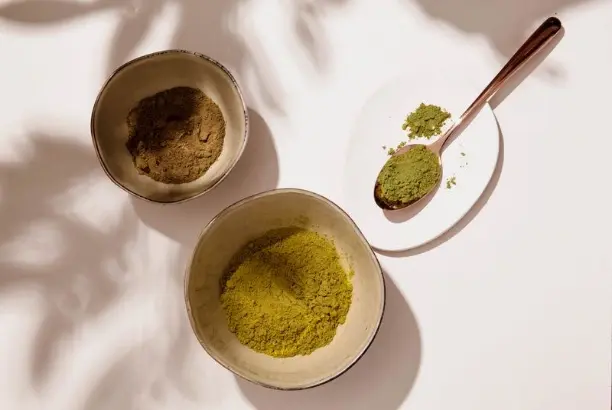
The lotus leaf extract comes in the form of a brownish-yellow powder, which is the best way to make supplements, functional foods, and skin products. Powder form allows for accurate doses, even mixing, and a longer shelf life. Jianbei's product is extracted with food-grade ethanol and then dried using advanced spray drying, which makes sure that any liquids left over are well below the ICH Q3C standards. HPLC is the approved test method used to make sure that each production batch has the right amount of bioactive material.
Purity Grade and Certification Alignment
There are different rules for each purity grade. To help B2B buyers, here are the qualification levels that matter the most:
- 98% HPLC-verified nuciferine is good for nutraceutical companies that need concentrated actives for small-dose capsules or tablets, as well as for pharmaceutical-like formulations that need strict standardization.
- Organic-certified grades are used by natural food companies and supplement brands with clean labels that follow the USDA NOP or a similar organic structure.
- HALAL- and Kosher-certified batches meet the needs of faith-based markets without sacrificing the bioactive purity.
These differences in quality and certification have a direct effect on price levels and label claims that come after. To protect both margins and compliance, make sure that your specifications are in line with your target market before you buy.
Matching Lotus Leaf Extract Specifications to Procurement Needs
Different specification versions are needed for truly different end-use applications. Aligning standard choices with application context speeds up time-to-market and cuts down on the number of times products need to be reformulated.
For weight management and lipid control supplements, the 98% nuciferine concentration provides the most powerful base. The way it works is well known: nuciferine stops pancreatic lipase and amylase from working, which stops the intake of fats and carbohydrates in the intestines and speeds up the breakdown of fats. A 2019 study in the journal Phytomedicine confirmed that a lotus leaf extract high in nuciferine lowered plasma triglycerides in animal models at doses that were similar to those found in standard human supplements.
For functional food and beverage applications, stability during thermal processing is the most important factor. A finely ground, spray-dried powder with known solubility information mixes easily into drink mixtures without settling to the bottom. Before placing a large order, you should check with your provider to make sure that the particle size specifications and water dispersibility are correct.
For cosmetic formulations, nuciferine concentration is less important than flavonoid content and antioxidant ORAC values. Heavy metal limits and microbial numbers should be written down for skin-compatible grades, as they have a direct effect on cosmetic safety ratings.
Regarding operational logistics, Jianbei offers transport packaging in 1 kg aluminum foil bags and 25 kg drums, with a minimum order quantity of 1 kg. This makes the product easy to sample for research and development at smaller scales and affordable for production volumes. The shelf life is two years if it is kept sealed and in a dry, cool place.
Evaluating Supplier Capabilities and Ensuring Product Quality
Certifications as a Trust Signal
The best way to figure out how risky a purchase is is to look at a supplier's list of certifications. Any ingredient supply chain that deals with the US should have to meet certain basic standards, such as FDA registration, GMP-standard manufacturing, ISO certification, HACCP compliance, and third-party organic verification. Jianbei's lotus leaf extract is certified by the FDA, Organic, Kosher, ISO, HALAL, HACCP, and GMP, which means it meets all the standards for nutrition, food, and cosmetic use.
Manufacturing Infrastructure
Every uniform standard is backed up by the ability to make the product. Jianbei runs three separate production lines in a workshop that meets GMP standards. Two separate quality control labs help the company. This infrastructure makes it possible to achieve batch-to-batch consistency, which is a must for nutraceutical brands that make claims of standard efficacy. The company has 15 national idea patents and 8 utility model patents, which shows that it has continued to invest in its own technology for extraction and standardization.
Authenticity Verification and Adulteration Risk
Plant extracts being tampered with is still a known problem in the industry. Buyers should demand a COA along with HPLC chromatograms for every package to prove that the nuciferine level meets the requirements. As a standard part of the contract, ask to keep samples. Every batch of products made by Jianbei is tested for HPLC in-house by two separate labs, and there is proof to show that the products are legal to import in controlled markets.
Finalizing Your Specification Decision: Best Practices and Procurement Tips
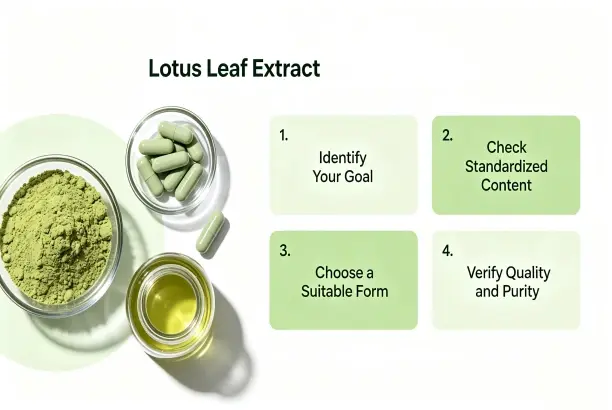
A disciplined specification choice is made after a series of reasonable steps. Before you commit to bulk buying, you should look at your application's bioactive needs and then compare them to the legal framework of your target market. Make sure that your supplier's documentation package meets both requirements.
Some common mistakes that should not be made when buying things are choosing a standard based only on price without looking at the HPLC method or bioactive marker range, not looking at solubility data for liquid format uses, and not checking the certification validity dates before putting the product on the market.
Another useful variable is the wait time for delivery. Jianbei ships within 3–7 business days of receiving proof of payment, which works with rapid product development schedules. Telegraphic transfer, Alipay, XT, PayPal, and Western Union are all acceptable forms of payment for both domestic and international procurement workflows.
Conclusion
Choosing the right standard for a plant-based ingredient like lotus leaf extract involves many factors, such as bioactive chemistry, legal compliance, formulation suitability, and the dependability of the provider. When buyers are clear about what they need—by application type, target marker concentration, purity grade, and certification needs—they always get better products and fewer problems with the supply chain. The 98% nuciferine specification, which is backed by HPLC validation, full certification coverage, and GMP manufacturing, is a good place to start for most serious B2B procurement situations.
Frequently Asked Questions
1. What nuciferine concentration is standard for weight management supplements?
For general metabolic support, most weight loss products use nuciferine amounts of 2% to 10%. Specifications for 98% nuciferine are used to give exact amounts at low inclusion rates in high-potency uses, such as concentrated capsule forms.
2. How is purity confirmed in each production batch?
The approved test method is HPLC, which stands for "High-Performance Liquid Chromatography." It accurately measures the amount of nuciferine and other bioactive markers present, giving chromatographic data that is used as the main quality assurance record for regulatory applications.
3. What certifications are required for US market entry?
Registration with the FDA and GMP approval are the most basic needs. HACCP licensing adds paperwork to the food safety system. For products that say they are organic, they also need to be approved by a known organic certification group.
4. What is the minimum order quantity?
The smallest amount you can buy is 1 kg, which is packed in metal foil bags. For large-scale production, 25 kg drums can be used for bulk sales.
Partner with Jianbei for Reliable Lotus Leaf Extract Supply
Jianbei Biotechnology provides fully approved, HPLC-verified lotus leaf extract manufacturer-grade supply. They use GMP standards for production, keep a lot of stock on hand, and provide all the paperwork needed to meet global regulatory requirements. Our R&D team can help you come up with custom specifications, and you can look at samples to get an idea of what they're like. To get product information and start the buying process right away, email sales@bqingbio.com.
References
1. Enforced Quality Standards for Botanical Dietary Supplements — Journal of Dietary Supplements, 2021
2. Nuciferine and Lipid Metabolism: Mechanistic Insights from Nelumbo nucifera — Phytomedicine, 2019
3. Botanical Extracts in Functional Food Formulation: Stability and Bioavailability Considerations — Food Chemistry, 2020
4. GMP Compliance in Nutraceutical Manufacturing: A Regulatory Review — Regulatory Toxicology and Pharmacology, 2022
5. Antiobesity Effects of Plant Alkaloids: A Systematic Review — Nutrients, 2021
6. Quality Assurance of Herbal Extracts Using HPLC: Standards and Practices — Journal of Chromatographic Science, 2020