- English
- French
- German
- Portuguese
- Spanish
- Russian
- Japanese
- Korean
- Arabic
- Greek
- German
- Turkish
- Italian
- Danish
- Romanian
- Indonesian
- Czech
- Afrikaans
- Swedish
- Polish
- Basque
- Catalan
- Esperanto
- Hindi
- Lao
- Albanian
- Amharic
- Armenian
- Azerbaijani
- Belarusian
- Bengali
- Bosnian
- Bulgarian
- Cebuano
- Chichewa
- Corsican
- Croatian
- Dutch
- Estonian
- Filipino
- Finnish
- Frisian
- Galician
- Georgian
- Gujarati
- Haitian
- Hausa
- Hawaiian
- Hebrew
- Hmong
- Hungarian
- Icelandic
- Igbo
- Javanese
- Kannada
- Kazakh
- Khmer
- Kurdish
- Kyrgyz
- Latin
- Latvian
- Lithuanian
- Luxembou..
- Macedonian
- Malagasy
- Malay
- Malayalam
- Maltese
- Maori
- Marathi
- Mongolian
- Burmese
- Nepali
- Norwegian
- Pashto
- Persian
- Punjabi
- Serbian
- Sesotho
- Sinhala
- Slovak
- Slovenian
- Somali
- Samoan
- Scots Gaelic
- Shona
- Sindhi
- Sundanese
- Swahili
- Tajik
- Tamil
- Telugu
- Thai
- Ukrainian
- Urdu
- Uzbek
- Vietnamese
- Welsh
- Xhosa
- Yiddish
- Yoruba
- Zulu
For businesses looking to produce high-performance drugs, useful foods, and nutritional supplements, Coenzyme Q10 bulk powder is a crucial ingredient. There is a natural substance called Coenzyme Q10 bulk powder that helps cells make energy and protect themselves from free radicals. It has become famous in many fields. Professionals in procurement can make smart decisions that help set products apart and follow the rules when they know about their properties, where to get them, and how to use them correctly. People in business around the world who want to buy Coenzyme Q10 bulk powder will find this book useful because it goes into technical details, quality standards, and smart ways to find suppliers.
What is Coenzyme Q10 Bulk Powder? Understanding Its Role and Production
Chemical Identity and Physical Characteristics
Coenzyme Q10 bulk powder is also known as ubiquinone. Its molecular formula is C59H90O4, and its CAS number is 303-98-0. The molecular weight of this solid powder is 863.34, and it is yellow to orange-white. Different kinds of liquids break it down in different ways. Water doesn't dissolve it very well, but ether and alcohol do. HPLC tests make sure that every batch is the same and works well, which shows that high-quality materials must be at least 98% pure.
Biological Function and Industrial Significance
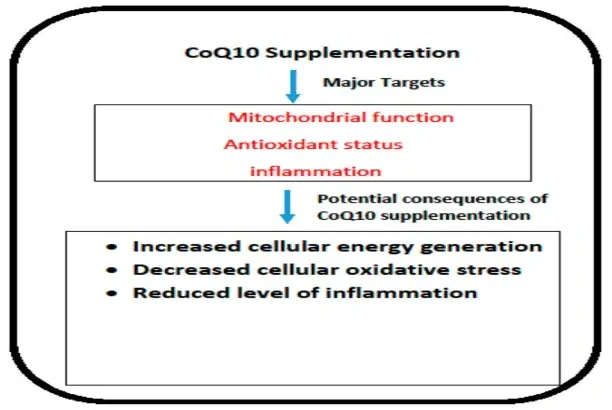
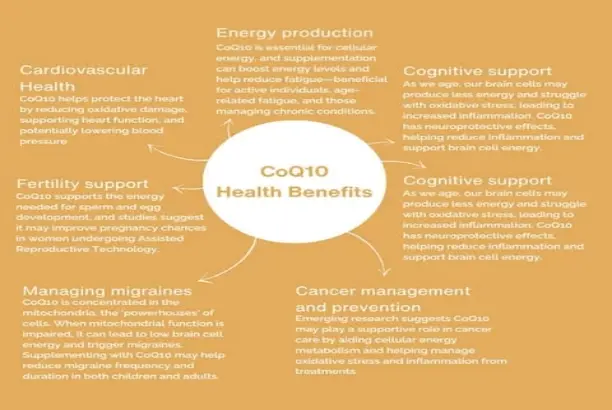
An important coenzyme that works inside of cells is Coenzyme Q10 bulk powder. Damage from free radicals is stopped, and the mitochondria are able to use energy better. Because it slows down cellular aging and protects membrane integrity, it can be used in a lot of different ways, from heart-healthy formulas to anti-aging skin care products. Manufacturers like how flexible it is and how well it backs up claims that finished goods give you more energy, make your immune system stronger, and lower oxidative stress.
Manufacturing Methods and Quality Assurance
In microbial fermentation, Rhodobacter sphaeroides or Agrobacterium tumefaciens are most often used to make Coenzyme Q10 bulk powder. The bio-identical trans-isomer configurations that these organisms make are better than synthetic ones. Strict rules for quality control are followed at every stage of the production process. Chromatographic purity analysis is one way to make sure that overall impurities stay below 1% and cis-isomer contamination stays very low. There must be no more than 0.5 parts per million of lead, 0.1 parts per million of mercury, or 1 part per million of arsenic in the water. An ICP-MS is used for this. Class 2 liquids like hexane and ethanol must be present for the pharmacopoeial standards to be met. Microbial testing confirms that overall plate counts stay below 1000 cfu/g and that pathogens like E. coli and Salmonella are not present at all.
These strict quality controls help supplement makers who need pure, consistent products that meet FDA, REACH, and ISO standards so they can get approval. Production sites that follow GMP rules and have their own labs can make sure that the quality of each batch is the same, which helps with long-term supply agreements.
Coenzyme Q10 Bulk Powder vs. Other Forms: Making the Right Choice for Your Business
Cost Efficiency and Formulation Flexibility
Bulk powder formats are much better than finished-dose forms in many ways. It costs less per unit when purchasing teams buy things in 25 kg drums or 1 kg aluminum foil bags. It saves money on packing and lets you make your own dose plans. Companies can mix Coenzyme Q10 bulk powder with other ingredients that work well with it, change the amounts based on the people they want to help, and come up with their own ways to give the drug that make it more bioavailable. For example, they could use microencapsulation or lipid-based matrices.
Natural Fermentation versus Synthetic Production
The amount of all-trans isomers is higher than 99% when fermentation happens naturally. This has to do with biological activity compared to synthetic methods that could add cis-isomers that don't do anything. Ingredients from natural sources are getting more and more support from the government, especially in the organic and clean-label product categories. It costs a little more, but people who want to sell to high-end customers find that naturally fermented Coenzyme Q10 bulk powder backs up their marketing claims and builds trust with customers.
Critical Quality Metrics for Procurement Decisions
There are a few things you should look at to find the best bulk powder. Pure amounts that have been checked by following the USP, EP, or JP monographs meet guidelines for pharmaceutical use. How the particle size distribution changes bioavailability affects how well the product works. Micronized standards, which have smaller bits, work better in oil-based softgel matrices and help the body absorb them better in the bowels. Getting supplier documents like FDA registration, HALAL, Kosher, HACCP, and GMP proof from the company shows that they know how to make the product and follow the rules.
Ashes with less than 0.1% show that there are no added chemicals, and a controlled bulk density of 0.4 to 0.6 g/ml makes it easier for machines that make pills and fill capsules to mix the material evenly. When purchasing managers know these things, they can compare different suppliers and make deals that protect product quality while cutting costs as much as possible.
How to Choose the Best Coenzyme Q10 Bulk Powder Supplier: A Procurement Guide?
Core Procurement Criteria
It's important to know the minimum order amounts in order to find trusted companies. For example, they can start with as little as 1 kg for trial batches. This lets the formulation team see how stable the product is before committing to larger amounts. The way prices are set should reflect the state of the market, taking into account differences in quality. For instance, prices that are too low for no reason are often a sign of lower purity or bad quality control. Logistics for shipping are very important, and trustworthy buyers will send the item within 3–7 business days of getting payment through Alipay, PayPal, Western Union, or telegraphic transfer.
Verification of Production Capabilities
You can trust manufacturers to keep specialized sites with multiple production lines that follow GMP rules. You are scientifically savvy if you can use separate labs that have HPLC for testing assays, gas chromatography for testing residual solvents, and ICP-MS for heavy metal screens. Patent portfolios that cover quality systems and extraction processes, as well as well-established certification frameworks that cover ISO, HACCP, and organic food standards, can be used to measure a company's ability to make things.
Comparative Analysis Strategies
Teams in charge of buying Coenzyme Q10 bulk powder should ask for Certificates of Analysis (COA), which have important information like test results, particle size data, microbial profiles, and stability indicators. When you compare COAs from various suppliers, you can see if the quality is consistent and find any red flags, such as test parameters that are missing or numbers that are getting close to the limits of what is allowed. Each area has different regulatory needs. For instance, buyers in Europe put a lot of weight on REACH registration, while buyers in North America put a lot of weight on FDA compliance and USP monograph compliance. Premium suppliers are different from basic suppliers in more ways than one. They offer lead times and have systems for tracking batches.
If you want to work with a seller for a long time, you should find out how quickly they answer technical questions, how willing they are to give you special specs, and how much they can make as your business grows. These links help keep problems in the supply chain to a minimum and raise the quality of the goods.
Optimal Usage and Dosage of Coenzyme Q10 Bulk Powder in Supplement Manufacturing
Recommended Dosage Ranges
Between 30 mg and 200 mg of Coenzyme Q10 bulk powder are found in most products. 100 mg to 200 mg a day is usually enough to keep your heart healthy. Products that give you energy may have 50–100 mg, and skin care products that fight aging use amounts that are based on studies that show how well they work directly. The dose is chosen based on the product's health claims, customer feedback, and how it stacks up against other products in the same market area.
Formulation Best Practices
The best way to make things more stable is to store them in cool, dry places out of direct sunlight. This can last up to 24 months if it is packed properly. As Coenzyme Q10 bulk powder is lipophilic, it is important to think about different ways to transport it. Oil-based softgels, liposomal solutions, and cyclodextrin complexes are a few examples of different types of absorption profiles. Because Coenzyme Q10 bulk powder doesn't dissolve well in water on its own, mixing it with vitamin E, piperine, or medium-chain fats makes it easier for the body to absorb.
Heat and oxygen can break down Coenzyme Q10 bulk powder, so this needs to be thought about when it is made. To make sure the product works for as long as possible, it's best to store it in a neutral environment, add antioxidant co-factors, and use the right packing materials. As part of quality control, things should be tested for stability so that people can guess how well they will work in real life.
Innovative Applications
Big businesses come up with new ways to use Coenzyme Q10 bulk powder. Functional beverage makers use special carriers to make water-dispersible forms of medicines that keep the medicine's clarity while still giving the right amount. Sports nutrition makers mix Coenzyme Q10 bulk powder with B vitamins and adaptogens to help with energy in a variety of ways. Coenzyme Q10 bulk powder is being added to more and more pet supplements for heart health as the demand for natural, science-based pet health products grows.
These uses show that Coenzyme Q10 bulk powder can be used in a lot of different products. This can help your business stand out, which can help you charge more, and it can also keep health-conscious customers loyal to your brand.
Conclusion
For businesses producing health goods with scientific backing, Coenzyme Q10 bulk powder is an essential element. People use it in supplement, food, drug, and beauty products businesses. To buy well, you need to know the technical terms that describe quality, check the track records of suppliers in a thorough way, and use formulation strategies that make the product more stable and bioavailable. The market needs materials that are very clean and follow strict rules set by the government. A very important business decision is which service to use. Putting certifications, production capabilities, and quality stability at the top of their list of priorities helps procurement teams find reliable supply chains that help them make products and stand out in the market while also following all international rules and laws.
FAQ
1. What distinguishes ubiquinone from ubiquinol forms?
Ubiquinone, which is the oxidized form of Coenzyme Q10 bulk powder, is most often used in large powder forms. Ubiquinol, on the other hand, is the active form that has been reduced. The body turns ubiquinone into ubiquinol, but some research shows that people who have trouble doing this can benefit from taking vitamins that are just ubiquinol. It is cheaper and more steady to get ubiquinone instead of ubiquinol when people buy powder in bulk. This is because ubiquinol needs special technologies to stay stable, which cost more to make.
2. How can buyers verify product purity and authenticity?
To make sure something is real, you should first look at the full Certificates of Analysis. These have HPLC test results, isomeric purity data, residue solvent testing, heavy metal screening, and microbiological samples on them. You can feel even better about your tests if you ask for reference standards and have them done by a third-party lab. It is easier to believe a seller when their facilities are inspected, their certifications are confirmed by the groups that gave them, and customer references are checked. So that they can be tracked, materials should come with the right paperwork that lists batch numbers, manufacturing dates, and how to store them.
Partner with Jianbei for Premium Coenzyme Q10 Bulk Powder Supply
Pharmaceutical-grade Coenzyme Q10 bulk powder is sold by Jianbei Biotechnology. It is made in GMP-certified facilities and is protected by 15 national invention patents that cover new ways to ferment and purify it. Our skilled research and development team has three separate labs and three separate production lines to make sure that every batch meets the highest international standards, like those set by FDA, ISO, HALAL, HACCP, and Kosher. That's why we keep a lot of stock: we can send it anywhere in the world in 3–7 business days, whether you need samples starting at 1 kg or big sales in 25 kg drums. We are a trustworthy company that sells Coenzyme Q10 bulk powder. Our prices are clear, we offer full technical support, and we can make solutions that fit the needs of your specific formulation. You can email our team at sales@bqingbio.com to tell us what you need and to get prices that are fair and show how committed we are to quality, reliability, and working together.
References
1. Crane, F. L. (2001). Biochemical functions of coenzyme Q10. Journal of the American College of Nutrition, 20(6), 591-598.
2. Garrido-Maraver, J., et al. (2014). Coenzyme Q10 therapy. Molecular Syndromology, 5(3-4), 187-197.
3. Pravst, I., et al. (2010). Coenzyme Q10 contents in foods and fortification strategies. Critical Reviews in Food Science and Nutrition, 50(4), 269-280.
4. Bhagavan, H. N., & Chopra, R. K. (2006). Coenzyme Q10: Absorption, tissue uptake, metabolism and pharmacokinetics. Free Radical Research, 40(5), 445-453.
5. Hernández-Camacho, J. D., et al. (2018). Coenzyme Q10 supplementation in aging and disease. Frontiers in Physiology, 9, 44.
6. López-Lluch, G., et al. (2010). Bioavailability of coenzyme Q10 supplements depends on carrier lipids and solubilization. Nutrition, 26(11-12), 1118-1123.